
How Often Should You Have Your Roof Inspected in Columbia, MO?
Most homeowners in Columbia should schedule a professional roof inspection about once a year, and again after any serious hail, high-wind, or debris event. If your roof is older, has already been repaired, or is showing signs of wear, a once-a-year rhythm may not be enough.
That timeline is not about being overly cautious. It is about catching small flashing failures, granule loss, storm impact, and ventilation problems before they turn into interior leaks or a much larger repair bill. If you need a starting point, our Columbia roofing team helps homeowners figure out whether the next step is simple monitoring, targeted repair, or a closer inspection.
Why Columbia roofs need a closer eye
Mid-Missouri roofs deal with more than age. Hail, wind-driven rain, summer heat, winter freeze-thaw cycles, and tree debris all work on the same roof system year after year. A roof can look mostly fine from the driveway and still have loosened shingles, bruising from hail, lifted flashing, or soft spots around penetrations.
That is why a routine inspection matters in Columbia. You are not just checking whether the roof still exists. You are checking whether it is still doing its job before moisture gets into decking, insulation, or interior finishes.
A practical inspection schedule for most homeowners
Once a year for most roofs
If your roof is in generally good shape and you have not had recent storm trouble, an annual inspection is usually a solid baseline. Many homeowners schedule one in spring after winter stress or in fall before colder weather sets in.
After hail, high winds, or falling branches
You should not wait for your annual check if Columbia gets hit by hail or strong winds. Storm damage is often subtle at first. Missing tabs, lifted shingles, damaged ridge caps, dented vents, and loosened flashing can all lead to leaks later if nobody catches them early.
More often for older or previously repaired roofs
If your roof is getting up in age, has a history of leak repairs, or has already taken a few Missouri storms, a more frequent inspection schedule may make sense. That does not always mean replacement is around the corner. It means you need cleaner visibility so you can make decisions before the roof makes them for you. If you need professional help, contact our team for storm damage repair services.
Signs you should schedule an inspection sooner
Do not wait for the calendar if you are already seeing warning signs. Call for an inspection if you notice:
- water stains on ceilings or around attic penetrations
- missing, curling, or cracked shingles
- granules collecting in gutters or at downspouts
- bent flashing around chimneys, walls, or vents
- tree impact or debris after a storm
- a roofline that looks uneven or visibly sagged
If you are seeing one or more of those issues, it is smarter to book a roof inspection in Columbia than to guess from the ground.
What a good roof inspection should actually check
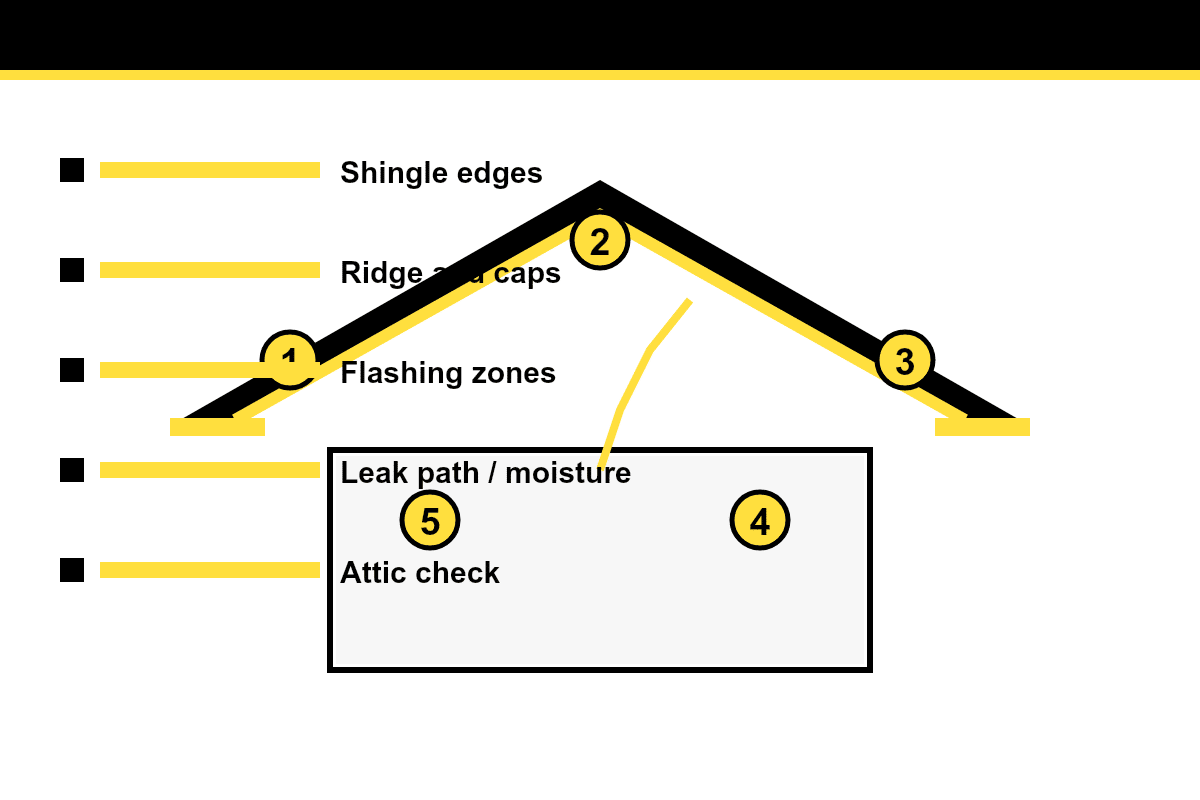
A worthwhile inspection is more than someone glancing at shingles for five minutes. A thorough inspection should look at the parts of the roof system that tend to fail first in Mid-Missouri conditions:
{
}
- shingle wear, impact marks, and exposed fasteners
- ridge caps, valleys, pipe boots, and wall flashing
- gutters and drainage paths
- signs of trapped moisture or poor ventilation
- deck movement, sagging, or soft spots where visible
- storm-related damage that could support an insurance conversation
If a contractor cannot explain what they found in plain language, that is a problem. You should leave an inspection understanding whether you need maintenance, a focused repair, or a serious conversation about replacement.
Why timing matters if insurance may be involved
After a storm, timing matters. Waiting too long can make it harder to connect roof damage to a specific event, and small problems can worsen while you assume everything is fine. An inspection does not automatically mean you need to file a claim, but it can give you a documented starting point if hail or wind damage is present.
CoMo Premium Exteriors works with Mid-Missouri homeowners who want an honest read on storm damage before they make the next call. As Columbia’s only triple-certified exterior contractor, the team is used to helping homeowners separate normal wear from damage that actually needs action. If you want that baseline, request a free inspection and get clear guidance on what the roof is doing now.
A simple rule of thumb
For most Columbia homeowners, once a year is a smart roof-inspection baseline. After hail, high winds, visible leaks, or any sign the roof may have been compromised, you should move faster. The goal is simple: catch trouble while repair is still an option and before interior damage starts multiplying the cost.
If you are unsure whether your roof is due, start with the facts. A professional inspection can tell you whether you are looking at normal aging, storm damage, or a roof system that needs more than another patch.
Frequently Asked Questions
Is once a year enough for most roofs in Columbia?
Usually, yes. An annual inspection is a strong baseline for many homes. Older roofs, previously repaired roofs, and roofs that have taken repeated storm hits may need more frequent checks.
Should I get my roof inspected after hail even if I do not see a leak?
Yes. Hail damage does not always show up as an immediate interior leak. Bruising, granule loss, and flashing damage can stay hidden until the next stretch of heavy rain.
What time of year is best for a roof inspection in Mid-Missouri?
Spring and fall are both practical times. Spring helps you catch winter wear and early storm issues. Fall helps you address problems before colder weather and freeze-thaw cycles make them worse.
Can I inspect my own roof from the ground?
You can spot obvious issues like missing shingles, dented gutters, or debris, but you usually cannot confirm flashing problems, soft spots, or subtle storm damage from the ground. A professional inspection gives you a much clearer picture.
Does an inspection always mean I need a roof replacement?
No. Many inspections end with a repair recommendation or simple monitoring plan. The point is to understand the condition of the roof before a manageable issue becomes a much bigger one.
Can a roof inspection help with an insurance claim?
It can. If storm damage is present, an inspection gives you documented findings that can help you decide whether it makes sense to involve your insurer.
