
7 Signs You Need a Roof Replacement, Not Just a Repair
Key Takeaways
- This guide helps Mid-Missouri homeowners quickly determine whether their roof needs a full replacement or if another patch repair makes sense for their situation.
- Multiple leaks, widespread shingle damage, or visible sagging typically point toward replacement, especially on roofs that are 15–25+ years old in Central Missouri’s demanding climate.
- Storm and hail damage in Mid-Missouri can accelerate roof failure well before the “textbook” lifespan is reached, sometimes by 2–5 years compared to national averages.
- CoMo Exteriors offers free, no-pressure roof inspections and can help you understand whether repair or replacement makes more financial sense for your specific situation.
- Below, we’ll walk through the 7 most important signs to watch for, plus how insurance and costs factor into your decision.
Introduction: Repair vs. Replacement in Mid-Missouri
If you own a home in Columbia, Jefferson City, or anywhere around Lake of the Ozarks, you already know our weather doesn’t take it easy on roofs. Between the hail that rolls through every spring, high winds during summer storms, and the freeze-thaw cycles that crack and age materials faster than you might expect, Mid-Missouri roofs work harder than roofs in many other parts of the country. NOAA records show our region experiences 100+ hail days per decade, and that adds up.
So when should you patch a few missing shingles after a storm versus accept that your old roof has reached the end of the road? The answer depends on age, overall condition, and how much damage has accumulated. A roof that’s 8 years old with a handful of damaged shingles is usually a straightforward repair. A roof that’s 20+ years old with the same damage? That’s often the tipping point where replacement becomes the smarter long-term investment.
Most asphalt shingle roofs in Mid-Missouri last somewhere between 15 and 25 years, depending on the quality of materials, ventilation, and how many major storms they’ve weathered, which lines up with typical roof lifespan expectations in Mid-Missouri. That’s 2–5 years shorter than national averages due to our climate. At CoMo Exteriors, we’re a triple-certified, locally owned roofing contractor that focuses on giving you honest assessments, not band-aid fixes that leave you calling us again next year. Let’s walk through the signs that tell you it’s time to stop patching and start planning for a new roof.

Sign 1: Your Roof Is Nearing the End of Its Lifespan
Age is often the first clue that replacement, not another repair, makes the most sense. Every roofing material has an expected service life, and in Mid-Missouri, those numbers tend to run on the shorter end due to our weather patterns.
Here’s what you can typically expect from common roof types in our area:
- 3-tab asphalt shingles: 15–20 years
- Architectural (dimensional) shingles: 20–30 years
- Metal roofing: 40–70 years with proper maintenance
- Low-slope systems (TPO/EPDM): 10–20 years depending on maintenance
If your roof was installed before 2005–2010 and has never been professionally inspected, there’s a good chance it’s at or beyond its intended service life, and a full assessment by a Mid-Missouri exterior remodeling specialist can clarify your options. Even if it looks okay from the ground, underlying materials may have lost significant integrity.
What does an old roof look like? You’ll often notice shingles losing their original color, edges that appear brittle or cracked, and a wavy or uneven appearance across sections. These visual clues signal that the protective layers are breaking down.
Here’s the practical rule: if your roof is within 3–5 years of its expected lifespan and now needs major work, a full roof replacement usually delivers better long-term value than sinking money into repeated repairs on aging materials.
Sign 2: Widespread Curling, Cracked, or Missing Shingles
Shingle condition is often the easiest thing homeowners can spot from the ground without climbing a ladder.
Curling happens when asphalt dries out from years of solar heat exposure. In Mid-Missouri, summer temperatures regularly exceed 95°F. You’ll see edges lifting a quarter-inch or more, shingles that no longer lie flat, and what roofers call “cupping” where the middle of the shingle sinks. When shingles curl, wind-driven rain can get underneath and reach your wood decking. The National Roofing Contractors Association reports that 60% of replacement jobs cite shingle deformation as a primary factor.
Random isolated damage, a few missing shingles from one section after a storm, can usually be repaired. But when you’re seeing clusters of cracked, broken, or missing shingles across multiple slopes, that’s different. It suggests the entire roof system is failing, not just one spot.
Walk the perimeter of your property in good daylight. Look for bare patches where underlayment is exposed, shingles that have landed in your yard, and sections that simply look different from the rest of the roof. If more than one area needs attention, or if every storm creates new damage, replacement is typically more cost effective than constant patching.
Sign 3: Sagging Rooflines or Soft Spots
Sagging is a structural red flag that almost always requires more than a surface repair.
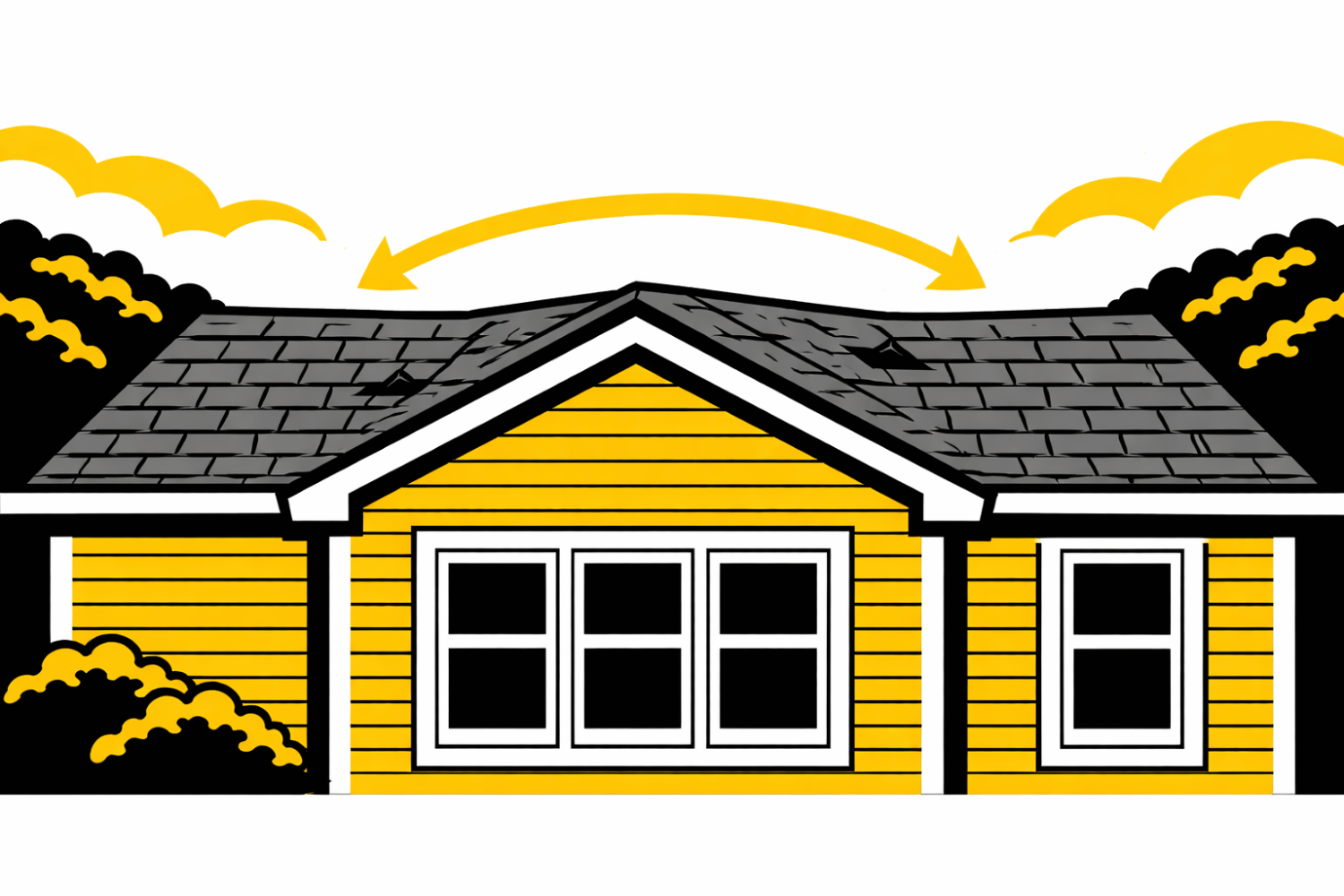
From the street, look for a visible dip in the ridge line, wavy roof planes, or valleys that appear to sink lower than they should. Any of these signs indicate that something underneath the shingles has failed, usually the wood decking or rafters themselves.
In Central Missouri, this often happens from repeated moisture intrusion that eventually requires help from an experienced roofing and exterior home improvement company. Water finds its way through worn shingles, saturates the decking, and over freeze-thaw cycles, the wood expands and contracts. Eventually, it rots. Industry data shows that roughly 25% of roof replacements uncover decking issues that weren’t visible from outside.
A 1-inch sag over 10 feet is a serious structural concern. While a localized framing repair might be possible in limited cases, significant sagging usually means tearing off the existing roofing and rebuilding damaged decking and supports underneath.
One important safety note: never walk on a visibly sagging roof. If you notice these signs, call a roofing professional immediately rather than trying to inspect it yourself.
Sign 4: Granule Loss and Bald Shingles
The granules on asphalt shingles aren’t just for color. They’re the protective armor that shields the underlying mat from UV radiation and physical damage.
After heavy rains, check your gutters and the splash blocks at the bottom of downspouts. If you’re finding significant amounts of black, sand-like material, especially on roofs more than 8–10 years old, that’s granule loss in action. According to the Asphalt Roofing Manufacturers Association, finding more than a cup of granules in gutters signals it’s time to consider replacement.
Some granule shedding is perfectly normal in the first year or two after a new roof installation. But heavy ongoing loss later in the roof’s life means the protective surface is wearing away. Once those granules are gone, the exposed mat underneath ages rapidly. UV exposure and hail both accelerate deterioration on bald spots.
We’ve seen this play out locally with homeowners who eventually needed a trusted roofing and exterior services company in Mid-Missouri. One Lake Ozark homeowner ignored ongoing granule loss for several years; the exposed areas eventually led to leaks and a $12,000 mold remediation claim. When granule loss is widespread across your roof, not just a spot or two, replacing the entire system typically makes more sense than trying to patch problem areas while the rest continues to fail.

Sign 5: Repeated Leaks, Interior Stains, or Attic Moisture
Interior signs of roof failure often show up before you notice any problems from outside.
Watch for brown ceiling rings, peeling paint near the tops of walls, damp insulation in your attic, and musty smells in upstairs rooms. Any of these can indicate water is finding its way through your home’s roof and into living spaces.
A single leak on a relatively young roof, especially if it’s in a clearly identifiable spot like around a vent boot, can often be repaired effectively by a top-rated exterior remodeling company in Columbia. But multiple leaks showing up in different rooms? That pattern usually indicates a failing system, not isolated damage.
After a strong storm, grab a flashlight and inspect your attic. Look for active dripping, darkened or swollen roof decking, and rust on nails or metal plates. These signs point to ongoing moisture problems that go beyond what a patch can fix.
Here’s the financial reality: if leaks have been patched several times over the past few years and keep returning, you’re likely spending more on repeated repairs than a replacement would cost. The Insurance Institute for Business & Home Safety notes that water damage leading to mold growth can cost anywhere from $2,000 to $30,000 to remediate. That is often far more than addressing the root cause with a new roof.
Sign 6: Damaged Flashing, Valleys, and Critical Roof Areas
Flashing and valleys are among the most common leak points on any roof, and they take particular abuse during Mid-Missouri wind and hail storms, which is why many homeowners turn to a full-service exterior remodeling company in Mid-Missouri when these areas begin to fail.
Flashing is the metal (typically galvanized steel or aluminum) that seals joints around chimneys, skylights, sidewalls, and vents. When functioning properly, it creates a watertight barrier where the roof meets vertical surfaces. What you’re looking for during an inspection: rust, gaps between the flashing and surface, lifted or bent metal edges, and missing sealant. In our region, flashing typically corrodes in 10–15 years due to slightly acidic rainwater.
Valleys, where two roof planes meet and direct water downward, are equally critical. Look for heavy granule loss, cracking, or exposed metal in these areas. Roofing Contractor magazine reports that 80% of leaks stem from valley failures. Once valleys start failing, water can quickly reach your wood decking and framing.
The key distinction: a small, isolated flashing repair on a newer roof is straightforward. But when multiple details are failing simultaneously, several flashing points, worn valleys, and deteriorating pipe boots, that pattern indicates the entire roof system has aged out. Piecemeal repairs in this situation rarely hold up for long.
Sign 7: Major Storm or Hail Damage Across the Roof
Spring and summer in Mid-Missouri bring reliable storm seasons. Columbia, Jefferson City, and Boonville all see regular hail events, and derecho winds have hit 100 mph in recent years. This kind of weather can cause damage that exceeds what any repair can address.
Hail damage shows up as bruised shingles with soft spots you can feel, circular impact marks, and random “spatter” patterns of missing granules. Wind damage often strips shingles from edges, ridges, and exposed sections. When this damage is scattered over a wide area of the roof, affecting multiple slopes or quadrants, repair attempts often miss hidden damage and can actually void manufacturer warranties.
Here’s what Missouri homeowners should know about insurance: many policies will consider full replacement when storm damage is widespread, even if the roof hasn’t reached the end of its expected lifespan, and working with a trusted Mid-Missouri exterior remodeling company can help you navigate that process. The key is proper documentation.
Before you file a claim with your insurance company, contact a qualified roofing contractor for a documented inspection with photos, or schedule a visit from a Jefferson City-based roofing and siding contractor if you’re in that area. This ensures you understand your options and have evidence of all damage, not just the obvious spots. At CoMo Exteriors, we help homeowners navigate this process every year after storm season rolls through.
Roof Repair vs. Roof Replacement: How to Decide
When you’re facing roof damage, the repair-versus-replace decision comes down to three main factors: cost comparison, roof age, and your future plans for the home.
A useful decision framework: if repair estimates are approaching 25–30% of what a full roof replacement would cost, replacement almost always makes more financial sense. You’re getting entirely new materials, modern installation techniques, and fresh warranties instead of extending the life of aging materials by just a few years. For most Mid-Missouri homes, this means when repairs are quoted at $2,500–$5,000+ on a roof that could be replaced for $10,000–$15,000, the math favors replacement.
Consider how long you plan to stay in your home. If you’re looking at 5–7 more years or longer, investing in a new roof eliminates ongoing maintenance stress and potential emergency repairs. It also positions your property better if you do decide to sell. Buyers notice roof condition immediately, and appraisers factor it into valuations.
At CoMo Exteriors, we walk homeowners through multiple options with transparent pricing, and our Boonville exterior remodeling team offers the same approach in that community. Sometimes a targeted repair makes sense. In rare situations, partial replacement works. Often, full replacement is the clear winner for long-term value. As a triple-certified installer (GAF Master Elite, Owens Corning Platinum, and James Hardie Elite), we can offer enhanced manufacturer warranties that aren’t typically available with basic repair work. These warranties that reflect confidence in materials and installation quality.
How Roof Age and Material Impact Replacement Timing
Understanding your roof’s age and material helps you anticipate when replacement will make sense, ideally before emergency situations force your hand.
Common Mid-Missouri roofing materials have different expected lifespans:
- Standard 3-tab asphalt shingles typically last 15–20 years locally
- Architectural asphalt shingles can reach 20–30 years with good ventilation
- Metal roofing often lasts 40–70 years with proper maintenance
- Low-slope membrane systems (TPO/EPDM) generally last 15–25 years
Real-world lifespans in our region often run shorter than manufacturer claims. Poor attic ventilation, common in older Columbia and Jefferson City homes, can “cook” shingles from below, shortening their life by several years. Combined with our hail exposure and freeze-thaw cycles, roofs simply work harder here.
If you’re not sure when your roof was installed, check your closing documents or contact your local building department for permit records. For roofs older than about 15 years in storm-prone neighborhoods, annual professional roof inspection is worth the minimal cost. Catching early signs of failure gives you time to plan and budget rather than scrambling after water is already coming through your ceiling.
Insurance and Financing: Making a New Roof Affordable
Many roof replacements in Mid-Missouri happen after hail, wind, or fallen-tree claims. But not all damage is automatically covered, and understanding how the process works helps you avoid surprises.
Insurance typically covers sudden, accidental storm damage. What it usually won’t cover: normal wear and tear, age-related deterioration, or damage that resulted from deferred maintenance. If your roof was already failing before a storm hit, insurers may only cover the storm-related portion of replacement costs.
Documentation is critical. CoMo Exteriors helps homeowners properly document storm damage, coordinate with adjusters, and ensure legitimate damage is fully noted in the claim file. We speak the language adjusters use and understand what details need to be captured for claims to be processed fairly. Many reliable roofing contractors offer this advocacy, but as a company that’s handled hundreds of storm claims across Mid-Missouri, we’ve developed systems that maximize approval rates.
For out-of-pocket expenses, deductibles or non-claim replacements, we can discuss payment options and available financing. Our goal is to make quality work accessible without pressure tactics or hidden fees. Before major storm season, review your homeowners insurance policy and understand whether you have Actual Cash Value (ACV) or Replacement Cost Value (RCV) coverage. The difference can mean thousands of dollars in a claim situation. If you’re unsure, call your agent with questions now rather than after damage occurs.
Why Work with a Local, Triple-Certified Contractor Like CoMo Exteriors
Choosing the right roofing company matters as much as deciding between repair and replacement. Here’s what we bring to the table.
CoMo Exteriors has served Mid-Missouri homeowners since 2010, operating from locations in Columbia, Jefferson City, Boonville, Moberly, and Lake of the Ozarks, with a dedicated Boonville exterior remodeling company team and specialized deck replacement and exterior home services available for homeowners looking to upgrade outdoor spaces along with their roof. We’re not a storm-chasing crew that disappears after collecting payment. We’re your neighbors, and we plan to be here serving this community for decades to come.
Our triple-certification (GAF Master Elite, Owens Corning Platinum, and James Hardie Elite) means we meet the highest standards set by major manufacturers. GAF Master Elite status, for example, is held by only the top 3% of roofing contractors nationwide and requires maintaining a 4.0+ customer rating along with annual factory training. These certifications translate directly to better warranty coverage for you, backed by manufacturers who trust our installation quality.
We offer a limited lifetime workmanship warranty because we stand behind our work. When you hire CoMo Exteriors for a roofing project, you’re working with a company that expects to be around in 10–20 years if any issues arise.
Ready to find out where your roof stands? Schedule a free inspection and get a clear written estimate. We’ll walk you through your options, explain what we’re seeing, and help you make the decision that fits your situation and budget. No pressure, no obligation, just honest advice from people who’ve done this a thousand times.

FAQs
How often should I have my roof inspected in Central Missouri?
We recommend scheduling a professional roof inspection at least every 1–2 years, plus after any major hail or wind events. Early spring and late fall are ideal timing in Mid-Missouri before and after our main storm seasons. These inspections catch small issues before they become full replacement projects. CoMo Exteriors offers free inspections, so there’s no cost to find out where your roof stands.
Can I wait a year or two before replacing a roof that’s showing these signs?
It depends on severity. Some minor issues can be monitored, but significant sagging, widespread leaks, or documented hail damage should be addressed quickly. Delaying replacement when wood decking is already wet or rotting dramatically increases total cost and risks serious interior water damage. Have a roofing professional assess urgency, and if needed, install temporary protections like tarps until a replacement date is scheduled.
Does a new roof really improve my home’s resale value?
In most Mid-Missouri markets, a new roof is a significant selling point. Homes with newer roofs typically sell faster and closer to asking price. Buyers and inspectors routinely flag aging roofs as negotiation points, which can reduce offers or delay closings. Impact-resistant shingles are particularly attractive to buyers because they may qualify for insurance discounts and provide added protection against our regular hail events.
Can I just replace one side or section of my roof?
Partial replacements are sometimes possible but come with trade-offs. New shingles next to weathered shingles create noticeable color and aging mismatches that can affect curb appeal. Additionally, manufacturer warranties and local building codes often favor full-system replacements for long-term performance. CoMo Exteriors can walk you through when partial replacement makes sense and when it could create bigger problems later.
How long does a typical roof replacement take in Mid-Missouri?
Most single-family asphalt shingle roofs in the Columbia and Jefferson City areas are completed in 1–2 days, depending on size and complexity. Projects requiring extensive wood decking repair, metal roofing, specialty materials, or weather delays may take longer. CoMo Exteriors keeps homeowners updated on scheduling, daily progress, and cleanup so you know exactly what to expect throughout your roofing project.
