

Why Missouri Homes Need Impact Resistant Shingles and When to Upgrade
Key Takeaways
- Missouri experiences over 60 severe weather events annually, making Class 4 impact-resistant shingles essential for protecting homes from hail damage up to 2 inches in diameter
- Impact-resistant shingles can reduce insurance premiums by 15-35% and qualify for manufacturer warranties up to 50 years, offsetting higher upfront costs
- Homeowners should upgrade when shingles are 15+ years old, after major storms, or when planning roof replacement to maximize protection and savings
- Professional installation by certified contractors ensures proper performance and maintains warranty coverage for impact-resistant roofing systems
- Columbia and central Missouri homes benefit most from upgrading due to frequent hailstorms and tornado activity in “Tornado Alley”
Missouri’s Severe Weather Demands Superior Roof Protection
Missouri homeowners face a harsh reality every spring and summer: their state ranks among the nation’s most hail-prone regions. Central Missouri experiences hailstones up to 5 inches in diameter traveling at speeds exceeding 90 mph, creating devastating conditions that standard asphalt shingles simply cannot withstand.
Missouri ranks in top 10 states for hail damage claims, reflecting the severe impact of extreme weather on residential properties throughout the state. The Columbia area alone experiences an average of 8-12 severe hailstorms per year between April and August, making impact resistant shingles not just a luxury but a necessity for protecting Missouri homes.

Standard 3-tab asphalt shingles fail catastrophically under Missouri’s extreme weather conditions. When hailstones strike traditional shingles at high velocity, they create cracks, splits, and granule loss that compromise the roof’s protective barrier. This damage leads to costly repairs, interior water damage, and premature roof replacements that can devastate homeowners financially.
The unpredictable nature of Missouri’s storm patterns makes impact resistant shingles essential for long term protection. Unlike other regions with predictable weather seasons, Missouri homeowners face severe weather threats from spring through early fall, requiring roofing materials capable of withstanding repeated impacts throughout extended storm seasons.
The Hidden Costs of Standard Roofing in Missouri
Standard asphalt shingles typically require replacement every 12-15 years in Missouri’s harsh climate, compared to 20-25 years in milder regions. This shortened lifespan results from cumulative damage caused by hail impact, high winds, and extreme temperature fluctuations that characterize central Missouri weather patterns.
Water damage from failed shingles can cost Missouri homeowners between $5,000-$15,000 in interior repairs. When traditional shingles crack or lose protective granules, moisture penetrates the roof system, causing damage to insulation, drywall, flooring, and personal belongings. These repair costs often exceed the expense of upgrading to impact resistant materials.
Insurance deductibles for storm damage claims average $1,000-$2,500 per incident in Missouri. Homeowners with standard shingles frequently file multiple claims throughout their roof’s lifespan, accumulating thousands in out-of-pocket costs while risking policy cancellation or premium increases due to claims frequency.
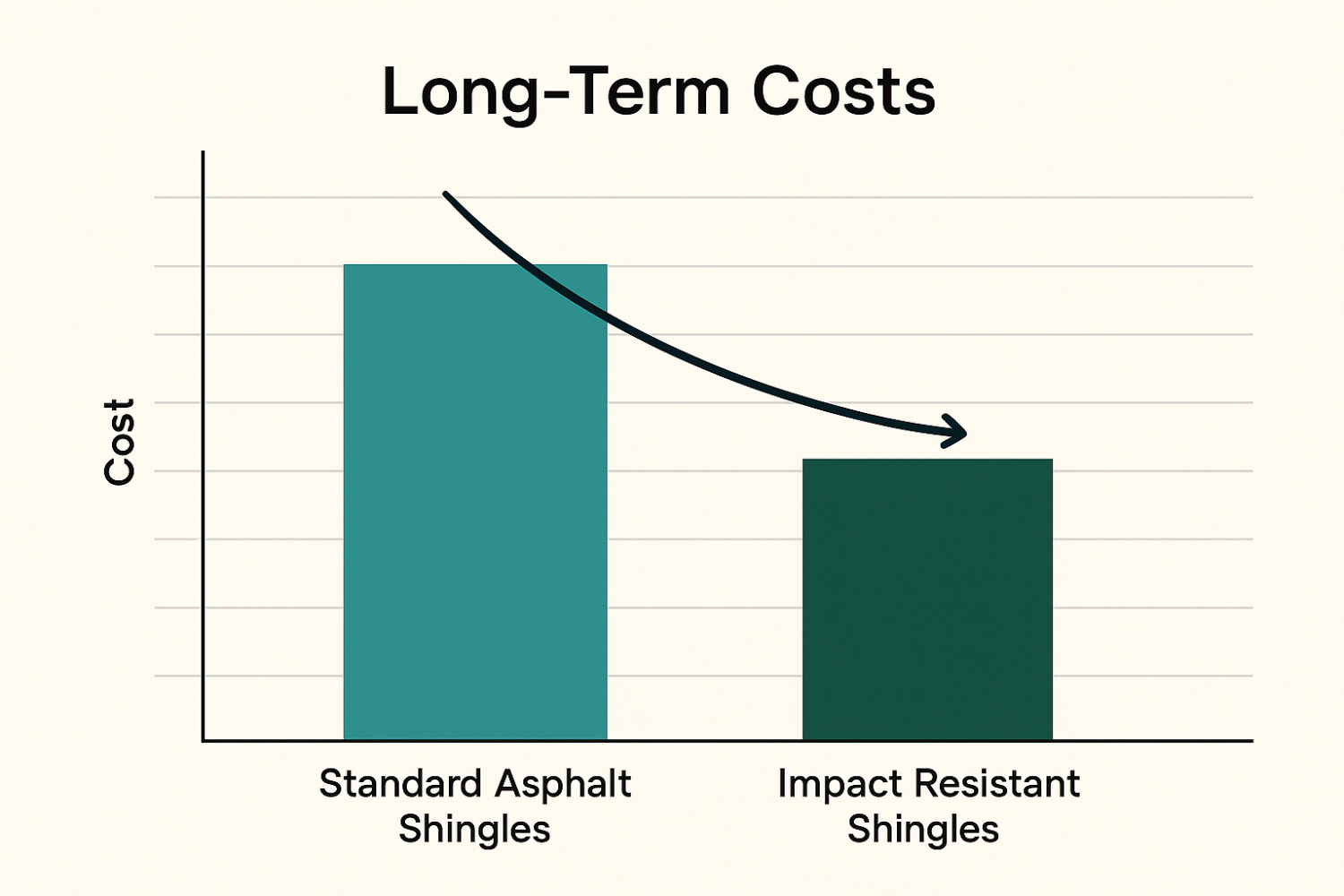
The false economy of choosing cheaper roofing materials becomes apparent when calculated over decades. Frequent repairs, early replacements, and damage claims make standard asphalt shingles significantly more expensive than impact resistant alternatives when viewed through a long term value perspective.
Understanding Impact Resistant Shingles and UL Rating System
Impact resistant shingles represent advanced roofing technology specifically engineered to withstand severe weather conditions common in Missouri. These specialized roofing materials undergo rigorous testing by Underwriters Laboratories (UL) using the UL 2218 standard, which simulates real-world hail impacts through controlled steel ball drop tests.
The UL rating system classifies impact resistance from Class 1 through Class 4, with each level representing progressively higher protection levels. Class 1 shingles withstand impacts from 1.25-inch diameter steel balls, while Class 4 impact resistant shingles—the highest available rating—successfully resist impacts from 2-inch diameter steel balls dropped from 20 feet multiple times without cracking or splitting.
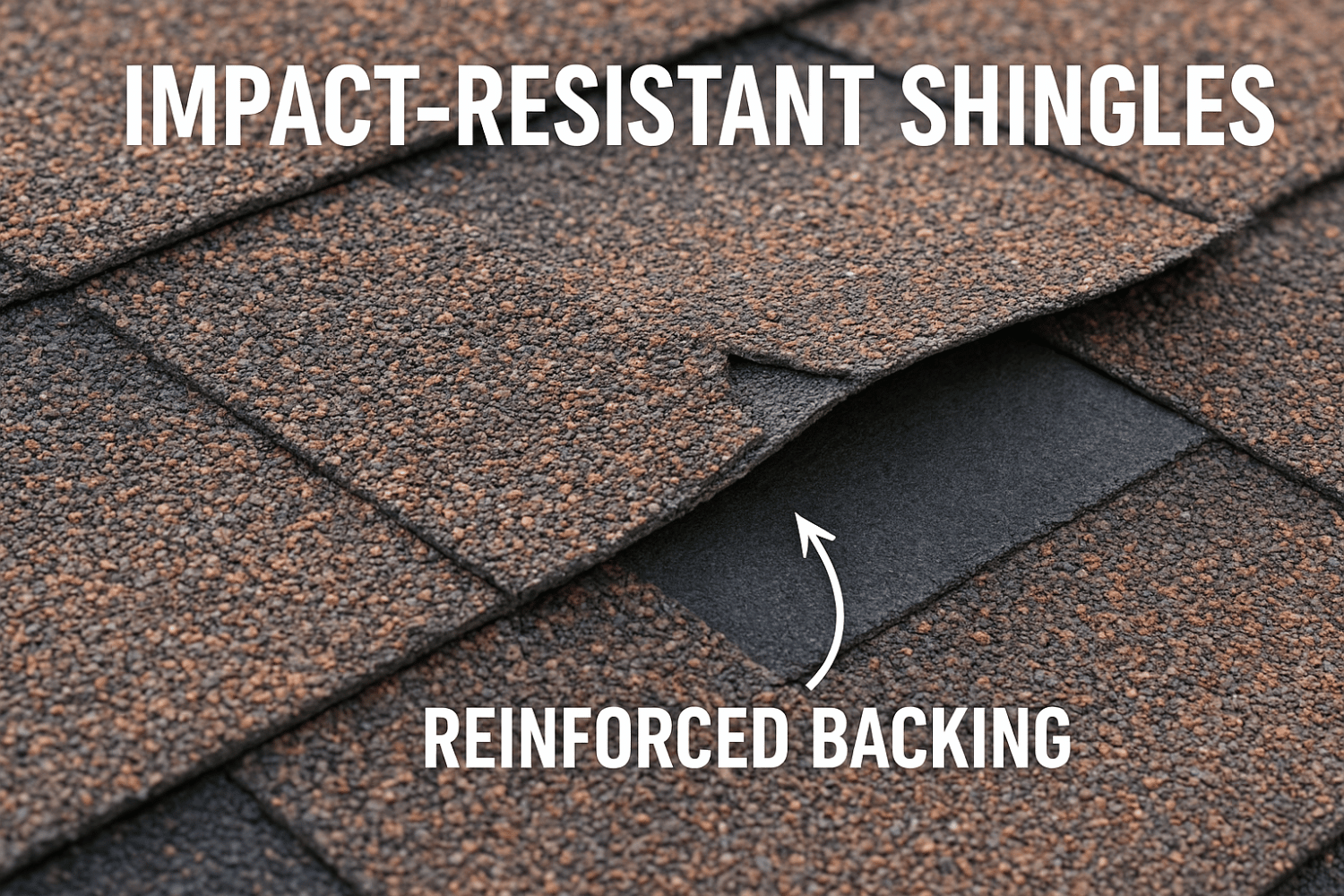
Class 4 rating requirements are particularly important for Missouri homeowners because this classification provides maximum insurance discounts and represents the gold standard for hail resistance. The steel ball testing protocol accurately simulates hailstone impacts, ensuring that Class 4 resistant shingles protect homes against approximately 85-90% of Missouri’s hailstorms.
Leading manufacturers like GAF, CertainTeed, and Owens Corning offer Class 4 impact resistant options featuring advanced materials and construction techniques. These products combine traditional asphalt with polymer reinforcements, specialized backing materials, and enhanced granule systems designed for superior protection against Missouri’s severe weather.
Types of Impact Resistant Roofing Materials
Modified asphalt shingles represent the most popular choice for Missouri homeowners seeking impact resistance. These products feature SBS (styrene-butadiene-styrene) polymer backing that provides flexibility and energy absorption during hail impacts. The rubber-like properties allow shingles to flex and recover rather than crack under stress.
Metal roofing with standing seam or stone-coated steel construction offers exceptional impact resistance and longevity. While metal roofs require higher upfront investment, they provide decades of maintenance-free protection against Missouri’s severe weather while qualifying for substantial insurance discounts.
Synthetic slate and shake materials combine aesthetic appeal with practical impact resistance. These products replicate the appearance of natural materials while providing Class 4 protection and lighter weight compared to traditional slate or wood options.
Architectural asphalt shingles with impact resistant features provide enhanced protection compared to standard 3-tab products. These dimensional shingles offer improved wind resistance and durability while maintaining the traditional appearance preferred by many Missouri homeowners.
When Missouri Homeowners Should Upgrade to Impact Resistant Shingles
Immediate upgrade becomes necessary after hail damage, even when shingles appear intact from ground level. Hail impacts create micro-cracks and granule displacement that may not be visible initially but compromise long term performance and water resistance. Professional inspection after any hailstorm helps identify hidden damage requiring attention.
Proactive replacement should occur when roofs reach 15-20 years old, particularly before peak storm season beginning in March. Missouri homeowners who wait for visible damage risk experiencing devastating storms with compromised roof protection, leading to extensive interior damage and costly emergency repairs during peak contractor demand periods.
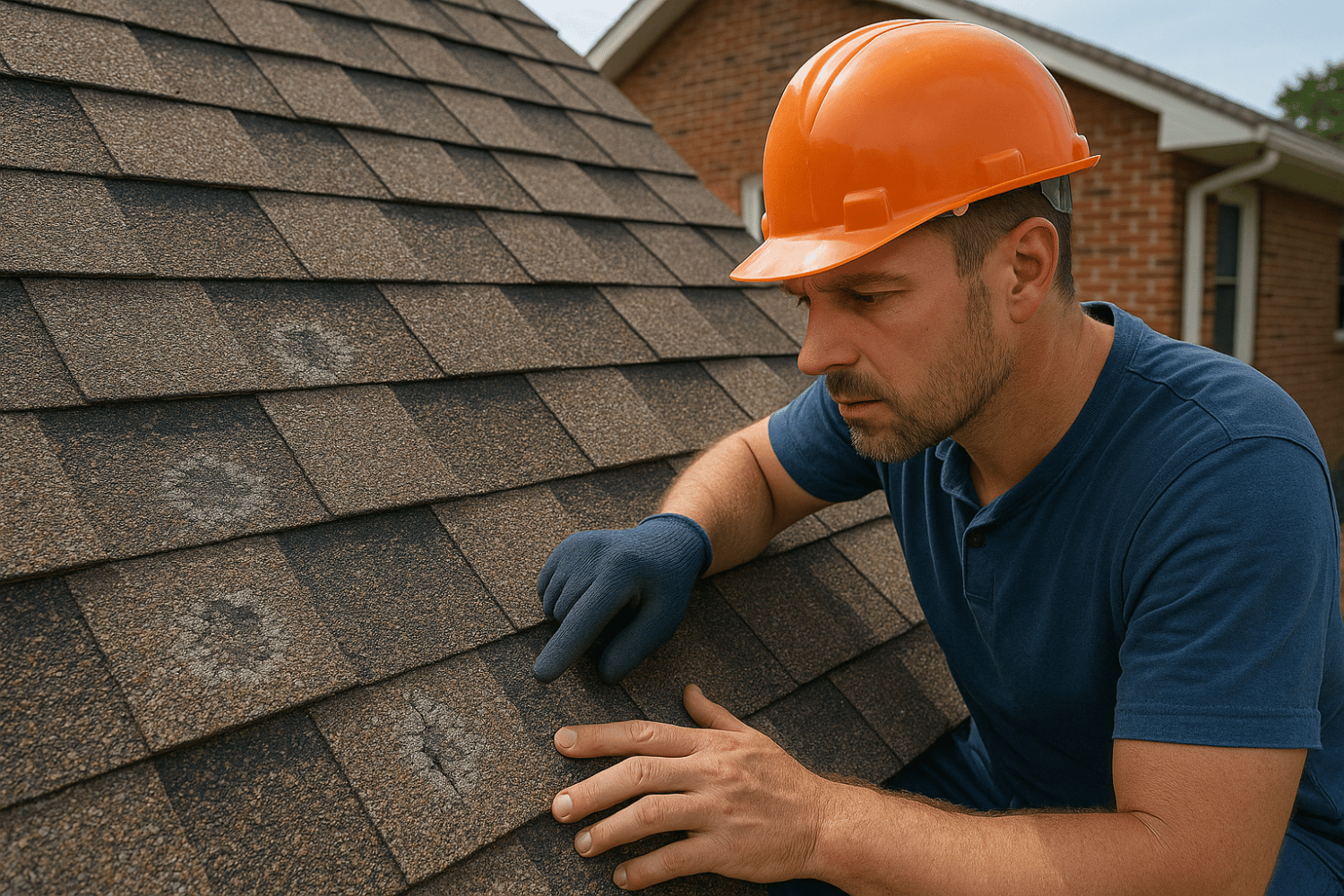
The insurance claim process following storm damage presents an ideal opportunity to upgrade to impact resistant materials. Insurance settlements often provide sufficient funding for premium roofing materials, and the upgrade investment pays dividends through reduced future premiums and enhanced protection against subsequent storms.
Home sellers should consider upgrading to impact resistant shingles to increase property value and attract buyers in Missouri’s competitive real estate market. New roofs with Class 4 ratings provide marketing advantages and may qualify for insurance discounts that transfer to new owners, making properties more attractive to potential buyers.
Signs Your Missouri Roof Needs Immediate Attention
Granule loss visible in gutters or around the house perimeter indicates shingle deterioration that compromises weather resistance. Missouri’s severe storms accelerate granule loss, and homeowners should monitor for excessive accumulation following each storm season to assess roof condition.
Cracked or missing shingles, especially after recent storms, signal immediate replacement needs. Even minor cracks allow moisture penetration that leads to progressively worsening damage throughout the roof system, making prompt attention essential for preventing costly interior repairs.
Water stains on ceilings or walls provide clear evidence of roof failure requiring immediate professional evaluation. These stains often indicate advanced damage that threatens structural integrity and necessitates emergency repairs to prevent further deterioration.
Shingle edges curling or lifting create vulnerability to wind damage and moisture penetration. Missouri’s high winds exploit these weaknesses, leading to progressive shingle loss and exposed roof deck that requires comprehensive replacement rather than patch repairs.
Financial Benefits of Upgrading to Impact Resistant Shingles
Insurance premium reductions of 15-35% are available to Missouri homeowners who install Class 4 impact resistant shingles. These discounts, combined with reduced claim frequency, often offset the higher material costs within 3-5 years while providing superior protection throughout the roof’s lifespan.
Extended manufacturer warranties up to 50 years provide significant value compared to 20-25 year warranties on standard asphalt shingles. These extended warranties reflect manufacturer confidence in product durability and provide homeowners with long term protection against defects and premature failure.
Reduced frequency of roof replacements saves Missouri homeowners $15,000-$25,000 over a 30-year period compared to multiple replacements of standard materials. Impact resistant shingles withstand Missouri’s severe weather without requiring premature replacement, providing substantial long term cost savings.
Increased home value and marketability result from impact resistant roofing installations. Real estate professionals report that homes with Class 4 roofing materials command higher prices and sell more quickly in Missouri’s competitive market, particularly among buyers concerned about weather-related risks.
Insurance Considerations for Missouri Homeowners
Major insurers including State Farm and Shelter offer specific discounts for Class 4 impact resistant installations. These programs recognize the reduced claim risk associated with superior roofing materials and provide immediate premium reductions upon verification of proper installation.
Documentation requirements for discount eligibility include manufacturer certificates, contractor installation verification, and sometimes inspector confirmation of proper installation techniques. Missouri homeowners should maintain these records to ensure continued discount eligibility and warranty coverage.
Claims frequency reduction leads to improved insurance rates and coverage options over time. Homeowners with impact resistant roofing experience fewer weather-related claims, resulting in preferred customer status and access to additional coverage options at competitive rates.
Professional installation certificates may be required for warranty validity and insurance discounts. Certified contractors provide documentation proving proper installation techniques and materials compliance, protecting homeowners’ investment and ensuring benefit eligibility.
Choosing the Right Impact Resistant Shingles for Central Missouri
Class 4 impact rating represents the mandatory minimum for maximum protection and insurance benefits in Missouri. Lower ratings provide insufficient protection against the state’s severe hailstorms and may not qualify for significant insurance discounts, making Class 4 materials the only practical choice for mid Missouri homeowners.
Wind resistance ratings of 130+ mph are essential for Missouri’s severe storm conditions. Impact resistant shingles should meet or exceed ASTM D6381 Class F wind resistance standards to provide comprehensive protection against the combined threats of hail and high winds common during Missouri storms.
Energy-efficient options featuring cool roof technology help reduce cooling costs during Missouri’s hot, humid summers. Reflective coatings and specialized granule systems reduce heat absorption, lowering attic temperatures and reducing air conditioning demands throughout the summer months.
Color and style selection should complement neighborhood aesthetics while providing optimal performance for Missouri homes. Darker colors may absorb more heat but often provide better curb appeal, while lighter colors offer energy efficiency advantages during hot summer weather.
Professional Installation Requirements
Certified contractors ensure proper installation techniques essential for warranty compliance and optimal performance. Impact resistant shingles require specific installation procedures, including proper nail placement, sealing techniques, and underlayment selection that affect long term performance and weather resistance.
Quality underlayment and flashing represent critical components of complete weather protection systems. Synthetic underlayment provides superior protection compared to traditional felt, while properly installed flashing prevents water intrusion around roof penetrations, valleys, and edges.
Proper ventilation design prevents ice dams and extends shingle lifespan in Missouri’s variable climate. Adequate intake and exhaust ventilation maintains consistent attic temperatures, reducing thermal stress on roofing materials and preventing moisture-related problems.
Post-installation documentation is required for insurance discounts and warranty claims. Contractors should provide certificates of installation, material specifications, and warranty registration to protect homeowners’ investment and ensure benefit eligibility.
Local knowledge of Missouri building codes and weather patterns is essential for optimal results. Experienced contractors understand regional requirements and best practices developed through years of working in Missouri’s challenging climate conditions.
Frequently Asked Questions
How much do impact resistant shingles cost compared to standard shingles in Missouri?
Impact resistant shingles typically cost 10-20% more upfront than standard asphalt shingles, but insurance discounts and longer lifespan often offset the initial investment within 3-5 years through reduced premiums and maintenance costs. When factoring in the reduced frequency of roof replacements and repair costs, impact resistant materials provide superior long term value for Missouri homeowners.
Will impact resistant shingles survive Missouri’s largest hailstorms?
Class 4 impact resistant shingles are tested to withstand 2-inch diameter hail at terminal velocity, which covers approximately 85-90% of Missouri hailstorms. While extremely large hail above 2.5 inches can still cause damage to any roofing material, impact resistant shingles provide the highest available protection and significantly reduce the risk of roof failure during severe weather events.
How long does it take to install impact resistant shingles on a typical Columbia home?
Most residential roof replacements in the Columbia area take 2-4 days depending on size and complexity, with weather delays possible during Missouri’s unpredictable spring and summer storm seasons. Reliable roofing contractors schedule installations during favorable weather windows and maintain flexibility to accommodate Missouri’s changing conditions while ensuring quality work.
Do I need to upgrade my entire roof or can I repair sections with impact resistant materials?
While partial repairs are possible, mixing different shingle types can create aesthetic mismatches and potential warranty issues. Full roof replacement is recommended when transitioning to impact resistant materials for optimal protection and insurance benefits. This approach ensures uniform appearance, consistent performance, and maximum insurance discount eligibility.
What maintenance is required for impact resistant shingles in Missouri’s climate?
Impact resistant shingles require minimal maintenance beyond annual inspections, gutter cleaning, and prompt removal of debris after storms. Professional inspections every 3-5 years help maintain warranty coverage and identify any issues before they become costly problems. The durable construction of impact resistant materials significantly reduces maintenance requirements compared to traditional shingles.
