
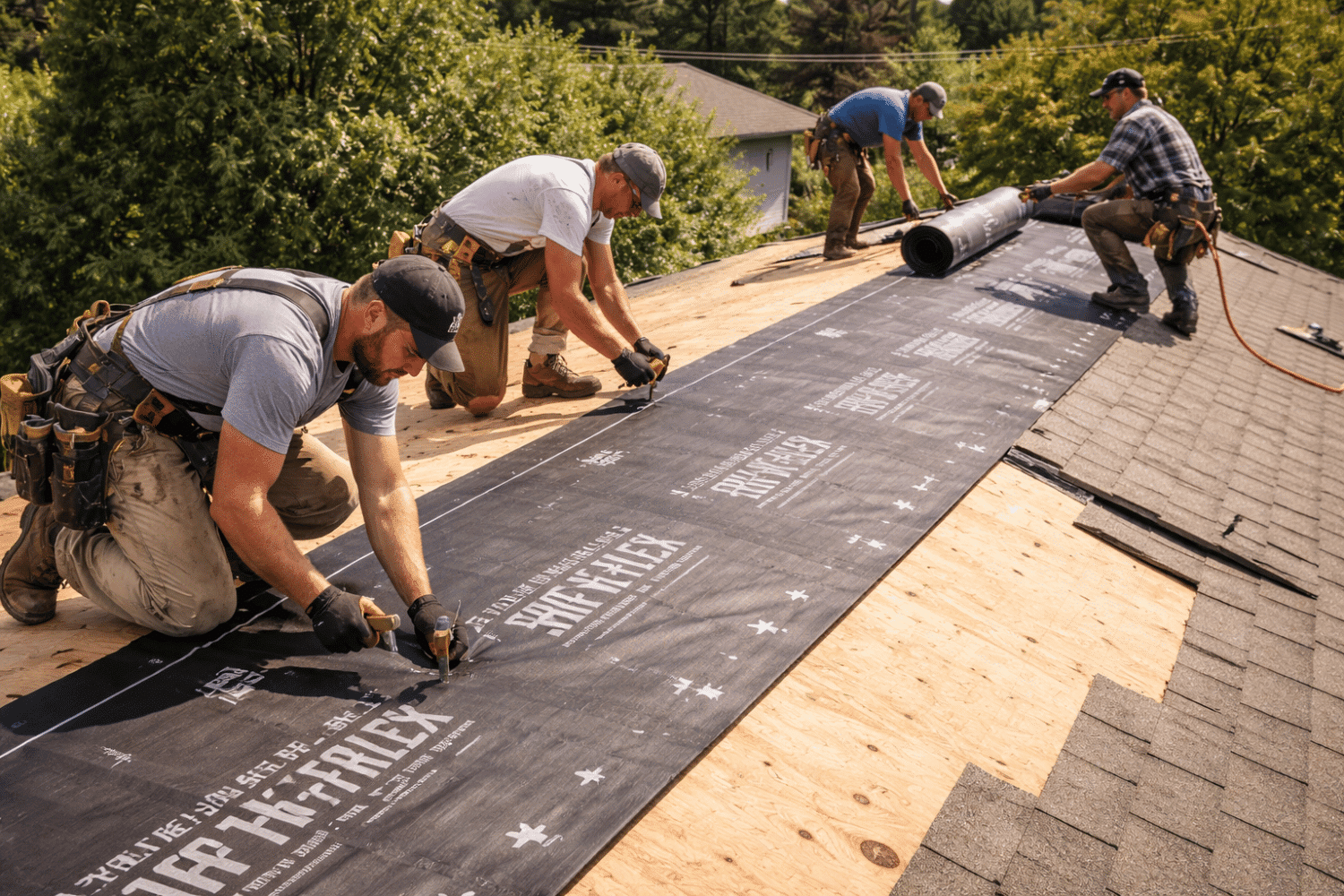
Underlayment 101: The Hidden Layer That Protects Your Roof from Missouri Weather
When Missouri homeowners think about roof protection, they typically focus on the visible elements: asphalt shingles, metal roofing, or other roofing materials that face the weather directly. But there’s a hidden hero working behind the scenes—a protective layer that most people never see but that can mean the difference between a dry home and thousands of dollars in water damage during Missouri’s next severe storm.
This hidden defender is roof underlayment, and understanding its role in protecting your home from Missouri’s extreme weather conditions could be one of the most important roofing decisions you’ll ever make. From the ice storms that regularly hit northern Missouri to the torrential spring rains and severe thunderstorms that sweep across the entire state, your underlayment serves as the last line of defense when your primary roofing material fails.
Key Takeaways
- Roof underlayment serves as your roof system’s critical secondary barrier, protecting against Missouri’s heavy rains, ice dams, severe storms, and temperature extremes that can reach from -10°F to 110°F
- Synthetic underlayment combined with ice and water shield provides superior protection compared to traditional felt, offering up to 12 times more tear resistance against Missouri’s high winds and severe weather
- Quality underlayment installation can prevent costly water damage and extend your roof’s lifespan by 5-25 years in Missouri’s challenging climate conditions
- Missouri building codes require specific underlayment standards, but exceeding minimum requirements with premium materials significantly improves protection against the state’s unpredictable weather patterns
- Professional installation and material selection are crucial investments that protect your home and can reduce insurance claims related to water damage
What Is Roof Underlayment and Why Missouri Homes Need It
Roof underlayment is a waterproof membrane installed directly over your roof deck, beneath your final roofing material. Think of it as your roof system’s backup layer—a secondary barrier designed to protect your roof sheathing and home interior when water penetrates past your shingles or other roofing materials.
In Missouri’s challenging climate, this protective layer isn’t just recommended—it’s essential. Our state experiences some of the most diverse and extreme weather conditions in the country, creating unique challenges for roof systems:
- Annual precipitation exceeding 40 inches across most of the state, with some areas receiving over 50 inches
- Temperature swings from -10°F to 110°F that create expansion and contraction stress on roofing materials
- Ice storms and freeze-thaw cycles that can force water under shingles and create ice dams
- Severe thunderstorms with winds exceeding 70 mph that drive rain horizontally under normal roof defenses
- Frequent hail events that can compromise shingle integrity and expose the roof deck
Missouri homeowners face water damage claims at rates significantly higher than many other states, with poor or inadequate underlayment being a contributing factor in over 75% of cases where roof penetration leads to interior damage. When properly installed, quality roof underlayment creates a moisture barrier that can prevent these costly repairs and protect your family’s safety and comfort.
The right underlayment selection becomes even more critical when you consider that many roofing materials can fail temporarily or permanently during severe weather. Shingles can lift in high winds, metal roofing can experience thermal expansion, and even the best roofing system can develop minor penetrations from hail or debris. Your underlayment provides peace of mind by ensuring that these inevitable vulnerabilities don’t translate into water damage inside your home.
How Missouri Weather Attacks Your Roof System
Understanding how Missouri’s weather patterns challenge your roof helps explain why quality underlayment is so crucial for long term protection. Each season brings specific threats that test different aspects of your roof system.
Spring: Heavy Rains and Severe Storms
Missouri’s spring weather pattern brings intense rainfall events and severe thunderstorms that can dump several inches of rain in a short period. During these storms, water doesn’t fall straight down—strong winds drive rain horizontally, forcing it under shingles and around roof penetrations that would normally shed water effectively.
Traditional roofing materials are designed to handle water that flows down the roof surface, but wind-driven rain can find its way into areas where shingles overlap or around other roof penetrations like vents, chimneys, and ridge vents. Without a proper moisture barrier underneath, this water reaches your roof deck and begins causing damage immediately.
Summer: Heat and Thermal Stress
Missouri’s hot, humid summers create thermal expansion and contraction that can stress roofing materials and create gaps where water can penetrate. As roofing materials heat up during the day and cool at night, they expand and contract at different rates, potentially creating temporary openings in your roof’s primary defense.
High humidity levels also create conditions where any moisture that does penetrate the roof system has difficulty drying out, increasing the risk of mold growth and deck rot. Quality synthetic underlayment with proper moisture resistance helps protect against these humidity-related issues.
Fall: Wind and Debris
Missouri’s fall weather often includes high winds that can lift or displace shingles, creating immediate vulnerabilities in your roof system. These winds also carry debris that can impact your roof and create penetrations or damage to roofing materials.
Winter: Ice Dams and Freeze-Thaw Cycles
Northern Missouri regularly experiences ice dam formation, while the entire state faces freeze-thaw cycles that can drive water under roofing materials. Ice dams form when snow melts on the warm upper sections of your roof and refreezes along the colder eaves, creating a barrier that forces water to back up under shingles.

This backed-up water can remain on your roof for days or weeks, giving it time to find any small gaps in your roofing material and penetrate to the deck below. Ice and water shield becomes crucial in these areas, providing a self-sealing membrane that prevents this water infiltration.
Types of Roof Underlayment: Finding the Right Protection for Missouri
Choosing the right underlayment for your Missouri home means understanding how different materials perform under our state’s specific weather conditions. The three main categories each offer different levels of protection, with significant performance differences that become critical during severe weather events.
Traditional Felt Underlayment
Felt underlayment, also called tar paper, has been the standard choice for decades and remains the most affordable option. Made from organic or fiberglass mat saturated with asphalt for water resistance, felt comes in two main weights: No. 15 (standard weight) and No. 30 (heavier duty).
Benefits for Missouri applications:
- Low initial cost makes it accessible for budget-conscious projects
- Time-tested performance provides basic moisture protection
- Readily available from all building supply sources
Limitations in Missouri’s climate:
- Absorbs water when exposed to moisture, becoming heavy and prone to tearing
- Susceptible to mold growth in Missouri’s humid conditions
- Limited lifespan, often deteriorating within 8-15 years
- Wrinkles and degrades when exposed to moisture during installation delays
- Poor performance in freeze-thaw cycles common across Missouri
While felt remains an acceptable choice for basic applications, it represents minimum protection rather than optimal performance for Missouri’s challenging weather conditions.
Synthetic Underlayment
Synthetic roofing underlayment represents a significant advancement in roof protection technology. Made from woven or spun polymers like polypropylene or polyethylene, synthetic underlayment offers superior performance characteristics that make it ideal for Missouri homes.
Superior Missouri weather performance:
- Tear resistance: Up to 12 times more tear-resistant than traditional felt, providing better protection against Missouri’s high winds
- Water repelling: Doesn’t absorb water like felt, maintaining integrity even during extended exposure to moisture
- UV resistance: Can remain exposed for weeks during roofing projects without degrading, crucial for installations delayed by weather
- Weight advantages: Often four times lighter than felt while covering more surface area, making installation safer and faster
Installation advantages for Missouri conditions:
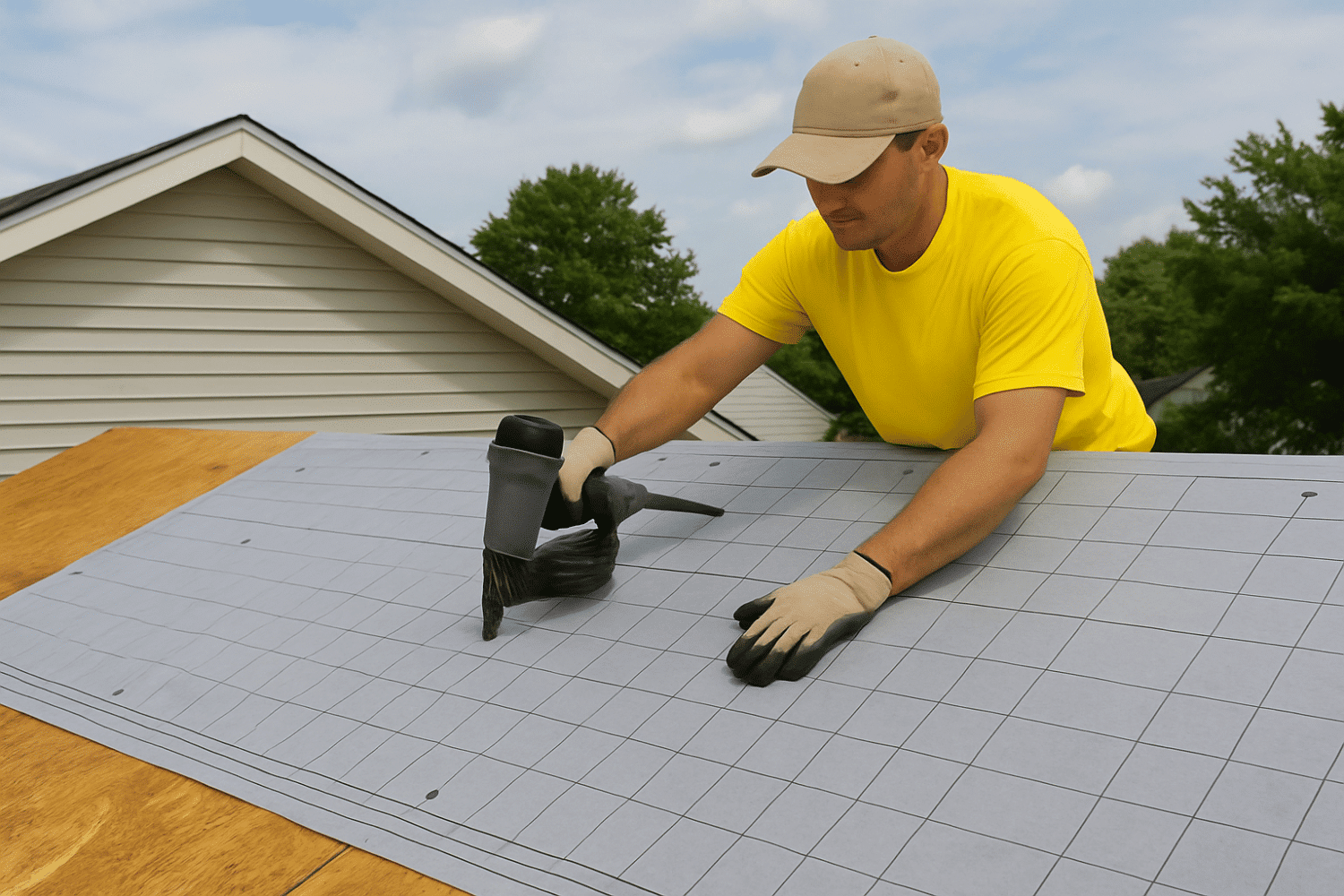
- Many synthetic underlayments include printed guidelines showing proper overlap and fastener placement
- Maintains performance in heat and humidity better than felt options
- Non-slip surfaces improve safety during installation in Missouri’s variable weather
- Extended exposure rating allows flexibility when weather delays roofing projects
Long-term value: Synthetic underlayment typically offers 25-50 year lifespans, often matching or exceeding the life of quality roofing materials. This extended lifespan, combined with superior performance, makes synthetic options cost effective over the life of your roof despite higher initial costs.
Ice and Water Shield (Self-Adhering Membrane)
Ice and water shield, also known as rubberized asphalt underlayment, provides the highest level of waterproof protection available. This self-adhering membrane combines asphalt with rubber polymers and features a sticky backing that creates a completely watertight seal.
Critical protection for Missouri homes:
- Self-sealing capability: Forms waterproof seals around nails and other roof penetrations
- Ice dam protection: Essential for preventing water backup damage in northern Missouri
- Flexibility: Stretches and contracts without cracking during Missouri’s temperature extremes
- Ultimate waterproofing: Provides complete moisture barrier in high-risk areas
Strategic installation areas:
- Eaves: First three feet of roof edge where ice dams typically form
- Valleys: Where two roof planes meet and water concentrates
- Penetrations: Around chimneys, roof vents, and other roof penetrations
- Low slopes: Areas where water may pond or drain slowly
While ice and water shield represents the premium option with higher material costs, its installation in critical areas provides protection that can prevent thousands of dollars in water damage during severe Missouri weather events.
Missouri Building Codes and Underlayment Requirements
Missouri building codes establish minimum underlayment requirements, but understanding these standards helps homeowners make informed decisions about exceeding these minimums for better protection.
Current Missouri requirements:
- One layer of underlayment required on all sloped roofs
- Two layers required on roofs with slopes less than 4:12
- Ice and water shield required in areas prone to ice damming
- Specific fastening and overlap requirements for different materials
Climate zone considerations: Northern Missouri falls into climate zones that require additional ice and water protection, while southern Missouri has different requirements focused on wind and rain protection. Local building officials can provide specific requirements for your area.
Exceeding minimum requirements: Smart Missouri homeowners often choose to exceed these minimums by:
- Installing ice and water shield beyond the required minimum areas
- Using synthetic underlayment instead of basic felt across the entire roof
- Adding extra protection around all roof penetrations
- Installing additional protection in valleys and other high-risk areas
Working with experienced contractors like those at CoMo Premium Exteriors ensures your installation meets or exceeds all local requirements while providing optimal protection for Missouri’s specific weather challenges.
Proper Installation: Getting Maximum Protection from Your Underlayment
Even the best underlayment materials won’t provide proper protection without correct installation. Missouri’s weather conditions demand attention to specific installation details that ensure your moisture barrier performs as designed.
Critical Installation Steps
Roof deck preparation: Clean, dry roof sheathing provides the foundation for proper underlayment performance. Any moisture, debris, or damage must be addressed before installation to ensure proper adhesion and waterproof performance.
Proper overlap techniques:
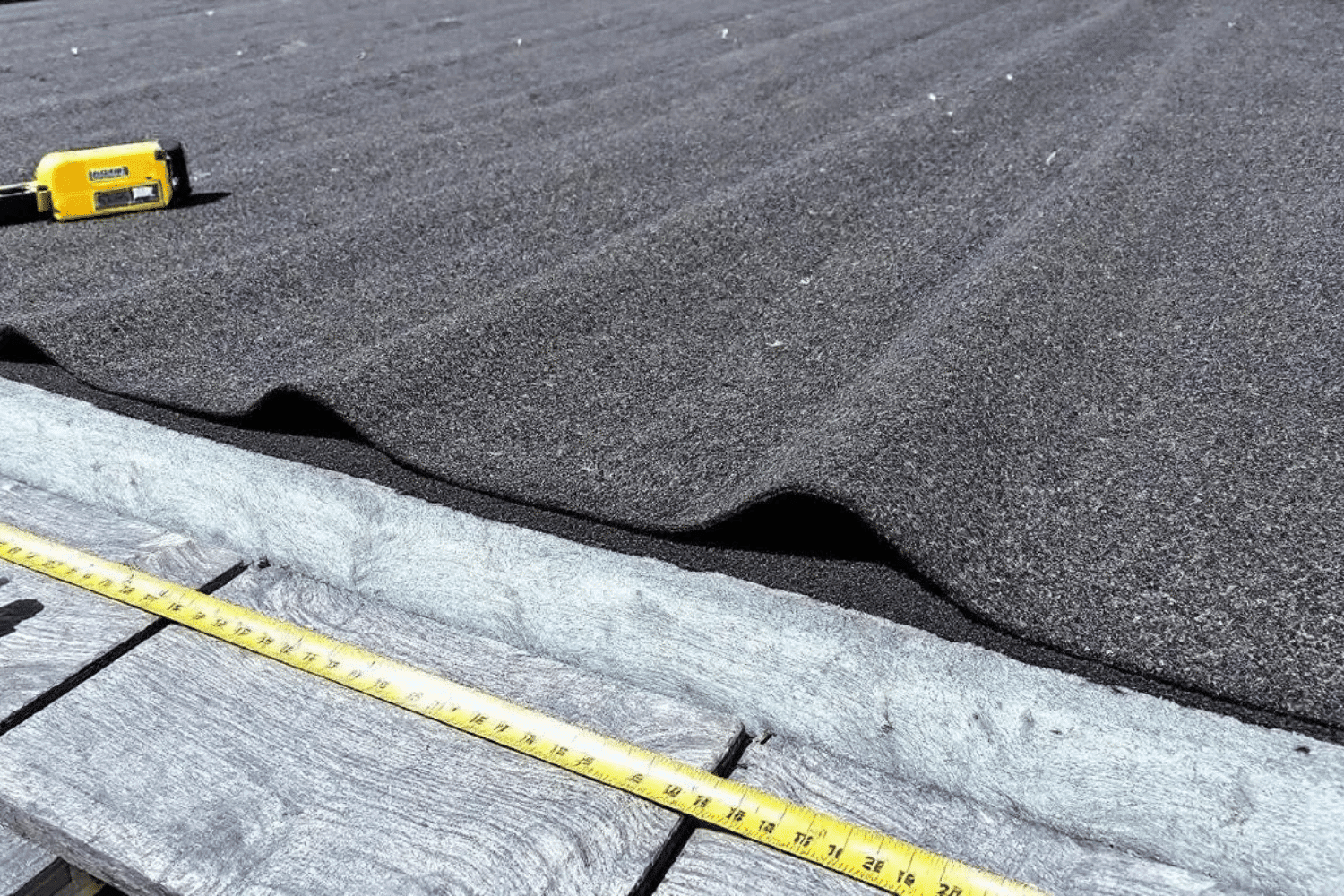
- Side overlaps: Minimum 6 inches for synthetic materials, 4 inches for felt
- End overlaps: Minimum 6 inches with additional sealing in high-wind areas
- Valley areas: Special installation techniques ensure water doesn’t penetrate overlap seams
Fastener selection and placement: Different underlayment types require specific fasteners. Synthetic materials often need cap nails or specialized fasteners that won’t tear the material. Proper fastener spacing ensures the underlayment remains secure during high winds while maintaining water resistance.
Critical Installation Areas for Missouri Homes
Eave protection: The first three feet of roof edge require special attention in Missouri due to ice dam potential. Installing ice and water shield in this area provides crucial protection against water backup during winter weather.
Valley installation: Valleys concentrate water flow and represent high-risk areas for leaks. Proper valley installation requires specific techniques to ensure water flows over the underlayment rather than penetrating seams.
Roof penetrations: Every roof vent, chimney, skylight, and other roof penetrations requires careful sealing to maintain the moisture barrier. Ice and water shield around these areas provides extra protection against leaks.
Integration with ventilation: Proper attic ventilation works with your underlayment to prevent moisture buildup. Intake vents at the eaves and ridge vents or box vents at the peak create airflow that helps dry any moisture that does penetrate the system.
Signs Your Underlayment Is Failing in Missouri Weather
Recognizing underlayment failure early can prevent major water damage and costly repairs. Missouri homeowners should watch for specific signs that indicate their hidden protection layer needs attention.
Interior warning signs:
- Water stains on ceilings or walls, especially after heavy rains or snow melt
- Musty odors in upper floors or attics that indicate moisture penetration
- Visible mold growth in attic spaces
- Ice dam formation despite good attic ventilation
Exterior indicators:
- Granules accumulating in gutters (indicating shingle damage that exposes underlayment)
- Curled or missing shingles that expose the underlayment to weather
- Visible underlayment deterioration during roof inspections
- Staining on siding below roof edges
Performance indicators:
- Increased energy bills that suggest compromised roof system integrity
- Ice dam problems that worsen over time
- Recurring minor leaks in the same areas
When you notice these signs, professional assessment becomes crucial. The experienced team at CoMo Premium Exteriors can evaluate your roof system and determine whether underlayment replacement or repair will restore proper protection.
Cost Considerations: Investing in Quality Underlayment for Missouri Homes
Understanding underlayment costs helps Missouri homeowners make informed decisions about protecting their investment. While premium materials cost more initially, the total cost of ownership often favors higher-quality options.
Material cost ranges:
- Traditional felt: $0.50-$1.50 per square foot
- Synthetic underlayment: $1.00-$2.50 per square foot
- Ice and water shield: $2.00-$4.00 per square foot
Installation considerations: Synthetic materials often reduce labor costs due to lighter weight and faster installation, partially offsetting higher material costs. Professional installation ensures proper performance regardless of material choice.
Value comparison: Consider these cost factors when evaluating underlayment options:
|
Factor |
Felt |
Synthetic |
Ice & Water |
|---|---|---|---|
|
Material Cost |
Low |
Medium |
High |
|
Installation Time |
Standard |
Faster |
Standard |
|
Lifespan |
8-15 years |
25-50 years |
50+ years |
|
Weather Protection |
Basic |
Excellent |
Superior |
|
Insurance Benefits |
Standard |
Good |
Excellent |
Return on investment: Quality underlayment provides returns through:
- Reduced risk of water damage (average water damage claim: $7,000-$15,000)
- Extended roof life reducing replacement frequency
- Potential insurance premium reductions for superior protection
- Enhanced home value and buyer confidence
Many insurance companies recognize the value of premium underlayment and may offer discounts for homes with superior weather protection systems.
Maintenance and Longevity: Protecting Your Investment
Proper maintenance extends underlayment life and ensures continued protection for your Missouri home. Regular inspections and preventive care help identify potential issues before they become major problems.
Annual inspection schedule:
- Spring: Check for winter damage, ice dam effects, and storm impact
- Summer: Inspect during dry conditions for any deterioration or damage
- Fall: Prepare for winter by addressing any minor issues
- After severe weather: Immediate inspection following hail, high winds, or ice storms
What to look for:
- Exposed underlayment through missing or damaged shingles
- Proper ventilation system function (intake vents and ridge vents working correctly)
- Gutter and downspout performance that protects roof edges
- Signs of moisture penetration in attic spaces
Preventive maintenance: Good attic ventilation significantly extends underlayment life by preventing moisture buildup and temperature extremes. Proper ventilation includes:
- Clear intake vents at eaves (soffit vents)
- Adequate exhaust ventilation (ridge vents or box vents)
- Proper air flow paths that prevent blocked ventilation
Regular professional inspections help identify maintenance needs before they become emergency repairs. CoMo Premium Exteriors recommends annual roof system inspections for Missouri homes, with additional checks after severe weather events.
When to schedule professional assessment:
- Any signs of water penetration or damage
- After major storms, especially hail or high winds
- Before roof replacement to assess deck condition
- When planning home improvements that might affect the roof system
Why Choose CoMo Premium Exteriors for Your Missouri Roof Protection
Protecting your Missouri home from weather damage requires more than just quality materials—it demands local expertise, professional installation, and comprehensive understanding of our state’s unique challenges.
Local Missouri expertise: Our team understands Missouri’s specific weather patterns and how they affect roofing systems. From the ice storms that regularly impact northern Missouri to the severe thunderstorms and hail that affect the entire state, we’ve helped thousands of Missouri homeowners protect their investments with properly designed roof systems.
Premium material partnerships: We work with leading manufacturers to provide the latest synthetic underlayment and ice and water shield technologies. Our material selection focuses on products proven to perform in Missouri’s challenging climate conditions.
Comprehensive roofing services: Beyond underlayment installation, we provide complete roofing services including:
- Roof replacement and roof replacements for aging systems
- Storm damage repair and insurance claim assistance
- Siding services that integrate with your roofing system
- Ventilation system design and installation for proper attic ventilation
- Energy efficiency improvements that work with your roof system
Professional installation standards: Our certified installers follow manufacturer specifications and exceed local building codes to ensure your roof system provides maximum protection. We understand the critical installation details that make the difference between adequate and exceptional weather protection.
Warranty and support: We back our work with comprehensive warranties and ongoing support. When severe weather threatens Mid Missouri, you can count on our experience and commitment to keeping your family safe and dry.
FAQ
How long does roof underlayment typically last in Missouri’s climate, and what factors affect its lifespan?
Felt underlayment typically lasts 8-15 years in Missouri’s climate, while synthetic underlayment can last 25-50 years, and ice and water shield may exceed 50 years. Missouri’s specific challenges include freeze-thaw cycles, high humidity, severe storms, and UV exposure. Factors that affect lifespan include material quality, installation precision, attic ventilation quality, and exposure to severe weather events. Homes with good attic ventilation and properly maintained roof systems see significantly longer underlayment life.
Can I upgrade just the underlayment without replacing my entire roof if it’s still in good condition?
In most cases, upgrading underlayment requires removing existing roofing materials since underlayment is installed beneath shingles or other roofing materials. However, if you’re planning a roof replacement in the near future or have isolated damage areas, strategic upgrades might be possible. The most cost effective approach is upgrading underlayment during planned roof replacements or major roof repairs. Our team can assess your specific situation and recommend the most practical upgrade path. If you need professional help, contact our team for storm damage repair services.
What’s the difference between vapor-permeable and non-permeable underlayment, and which is better for Missouri’s humidity?
Vapor-permeable underlayment allows moisture vapor to pass through while blocking liquid water, helping prevent condensation buildup in attic spaces. Non-permeable options create complete vapor barriers. For Missouri’s humid climate, vapor-permeable synthetic underlayment often performs better because it allows interior moisture to escape while blocking external water penetration. However, the best choice depends on your specific home design, attic ventilation system, and climate control setup. Professional assessment helps determine the optimal choice for your situation.
How much does it cost to add ice and water shield to my existing roof system during a repair?
Adding ice and water shield during roof repair typically costs $2.00-$4.00 per square foot for materials plus installation labor. For a typical Missouri home, protecting critical areas like eaves, valleys, and penetrations might cost $800-$2,500 depending on roof complexity and size. This investment often prevents thousands in potential water damage costs. Many homeowners find the peace of mind and insurance benefits make this upgrade worthwhile, especially in northern Missouri where ice dams are common.
Will better underlayment help with ice dam problems I’ve experienced in past Missouri winters?
Yes, proper ice and water shield installation significantly reduces ice dam damage even when ice formation still occurs. While ice dams form due to heat loss and attic ventilation issues, quality underlayment prevents the water backup from penetrating into your home. The self-sealing properties of ice and water shield create watertight barriers around nail penetrations and provide complete waterproofing in vulnerable areas. Combining proper underlayment with good attic ventilation and adequate insulation provides the most comprehensive ice dam protection for Missouri homes.
