
What to Expect From a Roof Inspection and Insurance Claim in Mid-Missouri
If you think your roof may have storm damage, do not start by guessing from the driveway. Start with a clear inspection from someone who knows what Mid-Missouri weather does to shingles, flashing, vents, and roof valleys. Hail, wind, fallen limbs, and repeated freeze-thaw cycles can all leave damage behind that is easy to miss until water gets in.
At CoMo Premium Exteriors, we show you what we found, explain what needs attention, and help you understand the next step. Sometimes that means a repair. Sometimes it means a full replacement. Sometimes it means documenting the damage, keeping an eye on the roof, and waiting to file until the facts are clearer. You should get honest answers before you make a bigger decision.
If you want a no-pressure starting point, schedule a free roof inspection. From Columbia to Jefferson City and the surrounding Mid-Missouri communities, we see the same weather patterns every year, and we know where that damage usually shows up first.

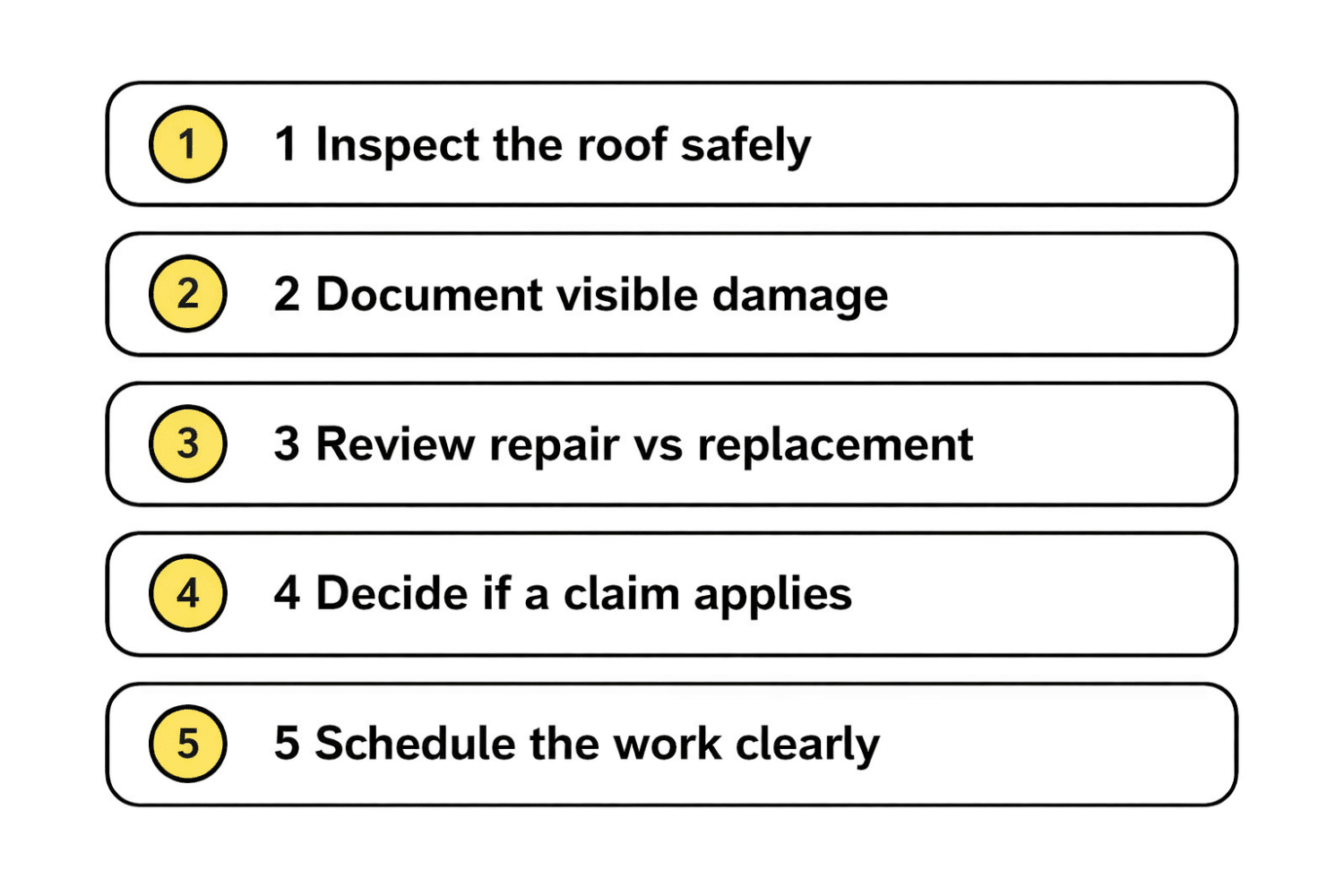
Why the inspection comes first
A lot of homeowners ask the same question: should you file the claim first, or call a roofing company first? In most cases, starting with the inspection makes the process cleaner. It helps you understand whether you are dealing with cosmetic wear, minor repair issues, or storm-related damage that may justify a claim.
That inspection also gives you a baseline. We document what we see, explain the likely cause of the damage, and point out the areas that matter most. On a Mid-Missouri roof, that often includes ridge caps, exposed slopes, flashing transitions, pipe boots, and shingle tabs that have been creased or lifted by wind. If hail is involved, we look for consistent impact patterns, granule loss, and damage to related components around the roofline.
For homeowners who want more background first, our roof inspection page explains what a professional inspection is designed to catch and why it matters before the leak gets worse.
What happens during a roof inspection
A good inspection should feel organized, not vague. We start by asking what you have noticed. Maybe you saw shingles in the yard. Maybe you found a new ceiling stain after a storm. Maybe your neighbors are getting roofs approved and you want to know whether your home has the same kind of damage. That context matters.
From there, the inspection itself usually includes:
- a review of the roof surface for hail hits, lifted tabs, exposed matting, missing shingles, flashing issues, and obvious impact zones
- inspection of areas where leaks often begin, including penetrations, valleys, wall transitions, and ventilation points
- photo documentation of relevant damage so you can see what we are seeing
- a plain-language explanation of whether the roof looks repairable, borderline, or replacement-level damaged
That is where local experience matters. Mid-Missouri storms do not damage every roof the same way. Roof age, slope direction, tree cover, attic ventilation, and past repairs all affect what we find. Our job is not to force every inspection into the same outcome. It is to tell you what is actually there.
When storm damage may justify an insurance claim
Not every roof issue belongs in an insurance claim. Age, normal wear, installation mistakes, and old patchwork repairs are different from sudden storm-related damage. If hail or wind created fresh, documentable damage, a claim may make sense. If the roof is simply worn out, a claim may not be the right path.
This is where homeowners get frustrated, because the line is not always obvious from the ground. That is why we focus on documentation. We can show you the visible signs, explain what they usually mean, and help you understand whether the facts support moving forward.
We also keep the language honest. We are not your adjuster, and we do not promise claim outcomes. What we can do is inspect the roof, document what we find, share our professional opinion, and be available when the insurance company inspects the property so the damage we found is easy to review.
If the storm was recent, our storm damage roofing page and our Mid-Missouri guides on hail damage and wind and tree damage can help you understand what to look for between now and the inspection.
What to expect if you file the claim
Once you decide to file, the process usually moves in stages. First, your carrier creates the claim and schedules its own inspection. Then an adjuster reviews the roof and related exterior damage. After that, you receive paperwork showing what was approved, what was excluded, and how the payment structure works.
This is also where many homeowners run into avoidable confusion. Terms like deductible, depreciation, ACV, and RCV can make the paperwork feel heavier than it needs to be. A roofing contractor should not pretend to be your insurance company, but we can help you read the estimate in practical terms. In other words, we can show you whether the scope lines up with the roof conditions we documented and whether there are items worth asking the carrier to review again.
When appropriate, we can attend the adjuster meeting, point out the documented damage, and provide photos or measurements tied to the roofing work itself. That keeps the conversation grounded in the actual condition of the roof, not guesswork.
How the inspection helps you decide between repair and replacement
Sometimes the inspection confirms a localized issue. A few shingles may have been lifted. Flashing around one transition may have failed. In cases like that, a targeted repair can be the right move. In other cases, the inspection shows repeated damage across multiple slopes, brittle shingles, widespread granule loss, or enough storm impact that another patch job would only delay the bigger cost.
That is where you need straight talk. You do not need a contractor who turns every inspection into a sales pitch. You need one who can explain whether a repair will truly buy you useful time or whether replacement is the more durable decision. Our roof repair vs. replacement guide breaks that down in more detail if you want to compare the two paths before making a call.
Because CoMo Premium Exteriors is triple-certified with GAF Master Elite, Owens Corning Platinum Preferred, and James Hardie Elite Preferred status, we bring a higher installation standard to the work after the inspection too. That matters when you are not just trying to patch a problem, but solve it for the long haul.
Questions to ask after your inspection
Before you move ahead, ask a few direct questions:
- What specific damage did you find, and can you show me photos?
- Does this look repairable, or is replacement the more durable option?
- What part of this appears storm-related versus normal wear?
- If I file a claim, what roofing documentation should I keep?
- If I do not file a claim, what risk am I taking by waiting?
A contractor should be able to answer those without hiding behind jargon. If the answer is not clear, the inspection did not do its job.
A better next step for Mid-Missouri homeowners
If you suspect roof damage after a storm, start with facts. A real inspection gives you those facts. It tells you whether you are dealing with repair-level damage, claim-level storm damage, or a roof that has simply reached the point where replacement is the better investment.
We have helped Mid-Missouri homeowners through this process for years by staying practical, documenting clearly, and keeping the conversation honest. If your roof has taken hail, wind, or storm-related damage, schedule your free inspection or contact our team. We will walk you through what we see and what your real options are.
Frequently asked questions about roof inspections and insurance claims
Should I call a roofer or the insurance company first?
In most cases, start with the roof inspection. That gives you a clearer picture of whether there is likely storm-related damage worth claiming, or whether the issue is better handled as a repair or maintenance item.
What does a roof inspection usually include?
A professional inspection typically includes a review of shingles, flashing, penetrations, roof slopes, visible storm impact, and photo documentation of the conditions found. You should also get a plain-language explanation of what the findings mean.
Can a roofing contractor negotiate my insurance claim?
No. A roofing contractor should not present themselves as your adjuster or legal representative. What we can do is document roof damage, explain the roofing scope, and share our professional findings during the inspection process.
What kind of roof damage is often associated with hail or wind?
Common examples include creased shingles, lifted tabs, missing shingles, exposed fiberglass matting, damaged ridge components, granule loss, and impact marks that appear across affected slopes after a storm event.
How do I know if I need repair or replacement after the inspection?
That depends on the extent of the damage, the age of the roof, how many slopes are affected, and whether the roof still has enough life left to justify another repair. A good inspection should explain that tradeoff clearly.
Do you offer free roof inspections in Mid-Missouri?
Yes. CoMo Premium Exteriors offers free roof inspections for homeowners across Columbia, Jefferson City, and surrounding Mid-Missouri communities who want a clear read on storm damage, repair needs, or replacement planning.
