
Asphalt Roof: A Comprehensive Guide to Materials and Costs
If you’re considering a new roof for your Jefferson City home, asphalt shingles deserve a spot on your roofing shortlist. They’re the most popular roofing choice in Mid-Missouri for good reason: they balance cost, durability, and curb appeal in a way that makes sense for our climate and housing stock.
This guide covers the practical details that matter when you’re weighing an asphalt roof — the shingle types, what installation actually involves, what you’ll pay, and how long you can expect it to last.
Three Types of Asphalt Shingles
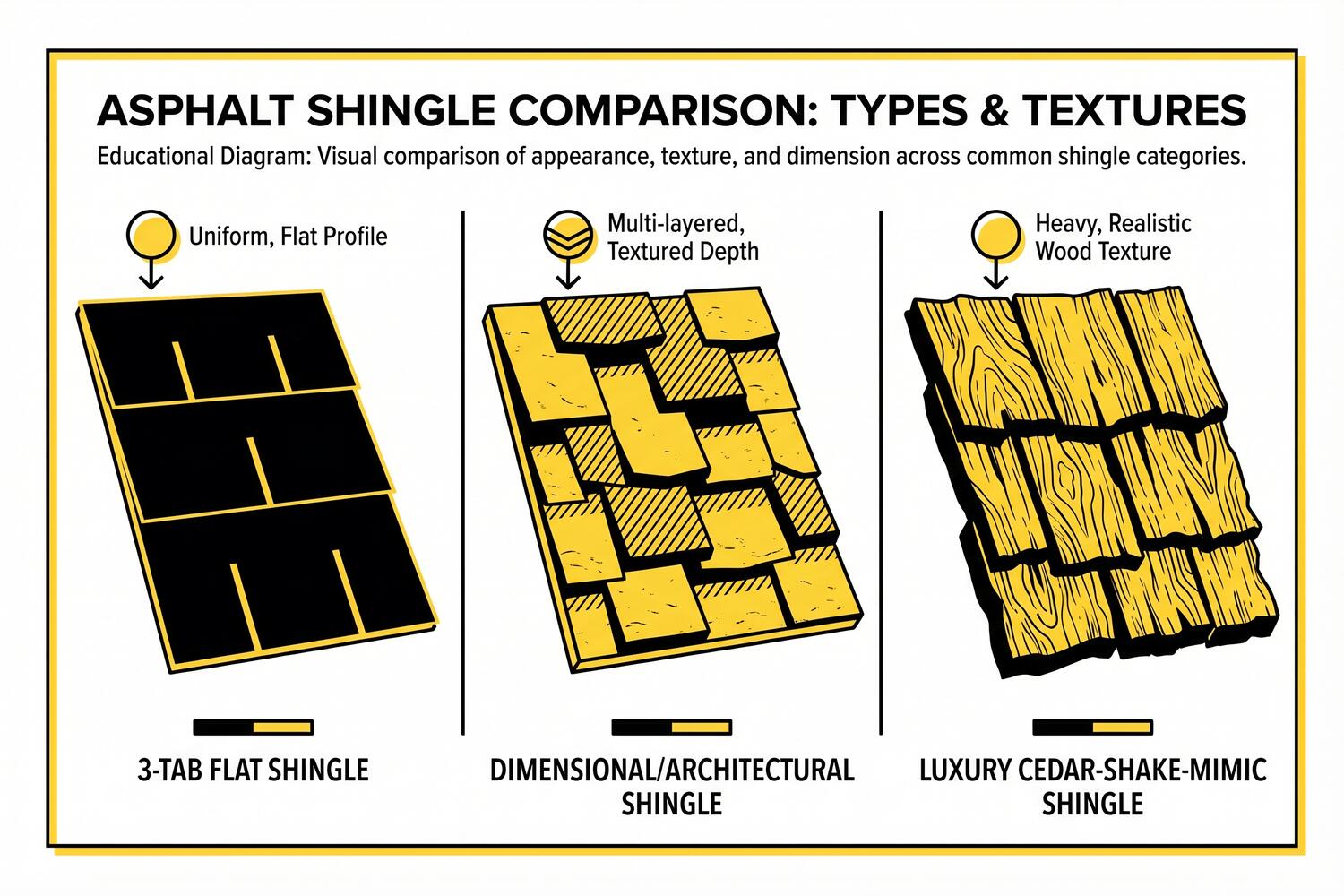
Not all asphalt shingles are the same. The type you choose affects both your upfront cost and how the roof performs over time.
Strip (3-Tab) Shingles
These are the most basic option — a single layer of asphalt with a flat, uniform look. They’re the most affordable upfront but have the shortest realistic lifespan. You’ll typically see 15 to 20 years out of them in Missouri conditions. They work fine for budget-conscious projects or homes where longevity isn’t the top priority.
Dimensional (Architectural) Shingles
This is what most Jefferson City homeowners end up choosing. These shingles have two or more fused layers, which gives them a thicker, more textured appearance and better durability. Realistically expect 22 to 25 years. They hit a sweet spot between cost and performance that makes sense for most homes.
Luxury Shingles
The premium tier. These mimic the look of slate or cedar shakes but with the easier maintenance of asphalt. They’re heavier, more durable, and more expensive. If you’re planning to stay in your home for decades and want the roof to match, they’re worth a look.
What Installation Actually Involves
A proper asphalt roof installation isn’t just about nailing shingles to plywood. The sequence matters.
Deck preparation. The roof deck needs to be solid, dry, and properly fastened. If there’s rot or movement, it gets fixed before anything else goes down.
Underlayment and leak barriers. A secondary water-shedding layer goes beneath the shingles. Ice and water shield goes at the eaves and valleys — critical in Missouri where ice dams can form.
Starter course and field shingles. Starter shingles go along the eaves first, creating a seal point. Then the field shingles go up in courses, with proper nail placement being essential for wind resistance.
Ridge caps. Hip and ridge cap shingles finish the edges and shed water down both slopes.
If you’re looking at roofing contractors in Jefferson City, ask about their installation process. A contractor who cuts corners on underlayment or nail placement isn’t doing you any favors, even if the quote looks attractive.
What Asphalt Roofing Costs in Jefferson City
The price varies based on shingle type, roof size, and complexity. Here are realistic 2026 installed cost ranges for Mid-Missouri.
3-Tab Shingles: $4.50–$7.50 per square foot installed
The most budget-friendly option. For a typical 2,000-square-foot Jefferson City ranch home, expect $9,000–$15,000 total. These shingles work well for homeowners planning to sell within 10–15 years or for rental properties where upfront cost matters most.
Dimensional (Architectural) Shingles: $6.00–$10.00 per square foot installed
Most Jefferson City homeowners choose this tier. Same 2,000-square-foot home runs approximately $12,000–$20,000 total. The extra cost buys you better wind resistance, a more textured appearance, and 5–7 more years of service life compared to 3-tab.
Luxury Shingles: $9.00–$14.00+ per square foot installed
Premium shingles that mimic slate or cedar. For that 2,000-square-foot home, budget $18,000–$28,000+. These make sense when you’re planning to stay in your home for decades and want the roof to match your timeline, or when you’re renovating a historic Jefferson City property where appearance matters as much as performance.
What Drives Your Specific Price
Beyond shingle type, several factors push your number up or down:
- Roof size and pitch: Bigger roofs cost more. Steeper pitches take more time and require more safety equipment.
- Tear-off and disposal: Removing existing shingles adds labor and dumpster costs, typically $1,000–$2,500 depending on roof size.
- Deck repairs: Once the old roof comes off, you might find soft spots or water damage. Good contractors include a small allowance for this in their quote, but extensive repairs can add $500–$3,000+.
- Access difficulty: Roof sections over porches, behind mature landscaping, or on three-story homes require more labor and equipment.
- Material brand: Premium brands like GAF Timberline HDZ or CertainTeed Landmark cost more than economy options but often come with better warranties and impact resistance.
Jefferson City labor rates run slightly below major metro areas like St. Louis or Kansas City, which keeps total project costs competitive. Scheduling during off-peak months (March–April or October–November) can sometimes save 5–10% on labor when crews have more availability.
The only way to get an accurate number for your specific roof is an on-site inspection. Online calculators can’t see your roof’s condition, measure its true square footage, or spot potential complications.
Warranties: What’s Actually Covered
There are two types of warranties, and they cover different things.
Manufacturer warranties cover defects in the shingles themselves. If the material fails due to a manufacturing problem, this kicks in. It doesn’t cover installation errors.
Workmanship warranties cover the installation. If the roof leaks because someone didn’t nail or flash it correctly, this is what you need. These typically run 2 to 5 years from the contractor, though some manufacturers offer extended coverage when certified installers do the work.
Read both. A 30-year shingle warranty doesn’t help you if the roofer botched the installation and the workmanship warranty expired after two years.
How Long an Asphalt Roof Lasts
Manufacturer claims tend to be optimistic. In real Missouri conditions:
- 3-tab shingles: 15 to 20 years
- Dimensional shingles: 22 to 25 years
- Luxury shingles: 25 to 30+ years
Your actual mileage depends on installation quality, attic ventilation, sun exposure, and whether storms decide to test your roof’s impact resistance.
Signs It’s Time to Replace
- Shingles that are curling, buckling, or losing granules
- Persistent leaks or water stains in the attic
- Shingles blowing off in normal wind
- A roof age approaching or exceeding its expected lifespan
- Visible damage after a hail storm
If you’re seeing multiple signs, it’s usually more cost-effective to plan a replacement than to keep patching.
Making an Asphalt Roof Last Longer
Attic ventilation. A properly ventilated attic runs cooler in summer and drier in winter. Heat buildup cooks shingles from below; moisture buildup causes deck problems. Both shorten roof life.
Keep it clean. Leaves and debris trap moisture against the shingles. Clear them off periodically, especially in valleys.
Gutters. Clogged gutters back water up under the edge of the roof. Clean them twice a year.
Tree trimming. Branches that scrape against the roof in wind will damage shingles over time.
Inspections. Have a professional look at the roof annually. Small problems caught early are cheaper than big problems ignored.
Frequently Asked Questions
How do I know if I need a full replacement or just a repair?
If the damage is isolated — a few missing shingles, a single leak source, localized storm damage — a repair might make sense. If the roof is near the end of its expected lifespan, has widespread issues, or leaks in multiple places, replacement usually becomes the better investment.
Are dimensional shingles worth the extra cost over 3-tab?
For most Jefferson City homeowners, yes. The dimensional shingles last longer, look better, and perform better in wind. The upfront cost difference gets partially offset by not needing to replace the roof as soon.
Can I put new shingles over my existing roof?
You can, but it’s usually not the best approach. A tear-off lets you inspect and repair the deck, ensures proper underlayment installation, and avoids the weight of two roofing systems. Some jurisdictions also limit the number of layers allowed.
How long does installation take?
Most residential roofs in the Jefferson City area take one to three days depending on size, pitch, and complexity. Weather can extend that timeline.
What happens if bad weather is forecast during my installation?
A good contractor will have a plan. They’ll stage the work so the roof is never left vulnerable overnight, and they’ll have tarps ready if an unexpected storm rolls in. Ask about their weather protocol before the project starts.
Should I be home during the installation?
Not required, but it helps if you want to see progress or ask questions. The crew will need access to power and a clear driveway for the dump trailer and material delivery.
Next Steps
If you’re weighing an asphalt roof for your Jefferson City home, the right next step is an on-site inspection. That’s the only way to get an accurate quote based on your actual roof, not a generic average.
CoMo Premium Exteriors works with Jefferson City homeowners on asphalt roofing projects regularly. We can walk you through your options, give you a real quote based on your roof, and answer questions specific to your situation without turning it into a sales pitch.
