
Dutch Lap vs Traditional Siding: Which Profile Is Right for Your Home?
Key Takeaways:
- Dutch lap siding has a beveled notch at the top of each board that creates a deeper shadow line and more dimensional look than traditional flat clapboard.
- Cost difference is small — Dutch lap runs about $0.50-$1.50 more per square foot than traditional lap in the same material.
- Dutch lap sheds water better than flat clapboard because the angled profile prevents moisture from pooling at the overlap point.
- Traditional clapboard is easier to install and more DIY-friendly, while Dutch lap’s notched profile requires more precision.
- Both styles are available in vinyl, fiber cement, and wood — James Hardie calls their Dutch lap profile “Custom Colonial.”
What’s the Actual Difference Between Dutch Lap and Traditional Siding?
If you’re looking at siding samples for your Columbia or Jefferson City home, you’ve probably noticed that “lap siding” comes in more than one shape. The two most common profiles — traditional clapboard (also called straight lap) and Dutch lap — use the same overlapping installation method but create very different visual effects on your exterior.
The difference comes down to a single design detail at the top of each board. Traditional clapboard is flat. Dutch lap has a concave notch — a beveled channel that creates a pronounced shadow line where each course meets the one above it. That shadow gives Dutch lap its distinctive dimensional appearance, tracing back to siding styles brought to the American colonies by Dutch settlers in the 1600s.
The visual difference is easy to spot once you know what to look for. Whether that difference is worth the slightly higher cost depends on your home’s architecture, your curb appeal goals, and how the siding handles Mid-Missouri weather.
Visual Profile: Shadow Lines vs Clean Lines
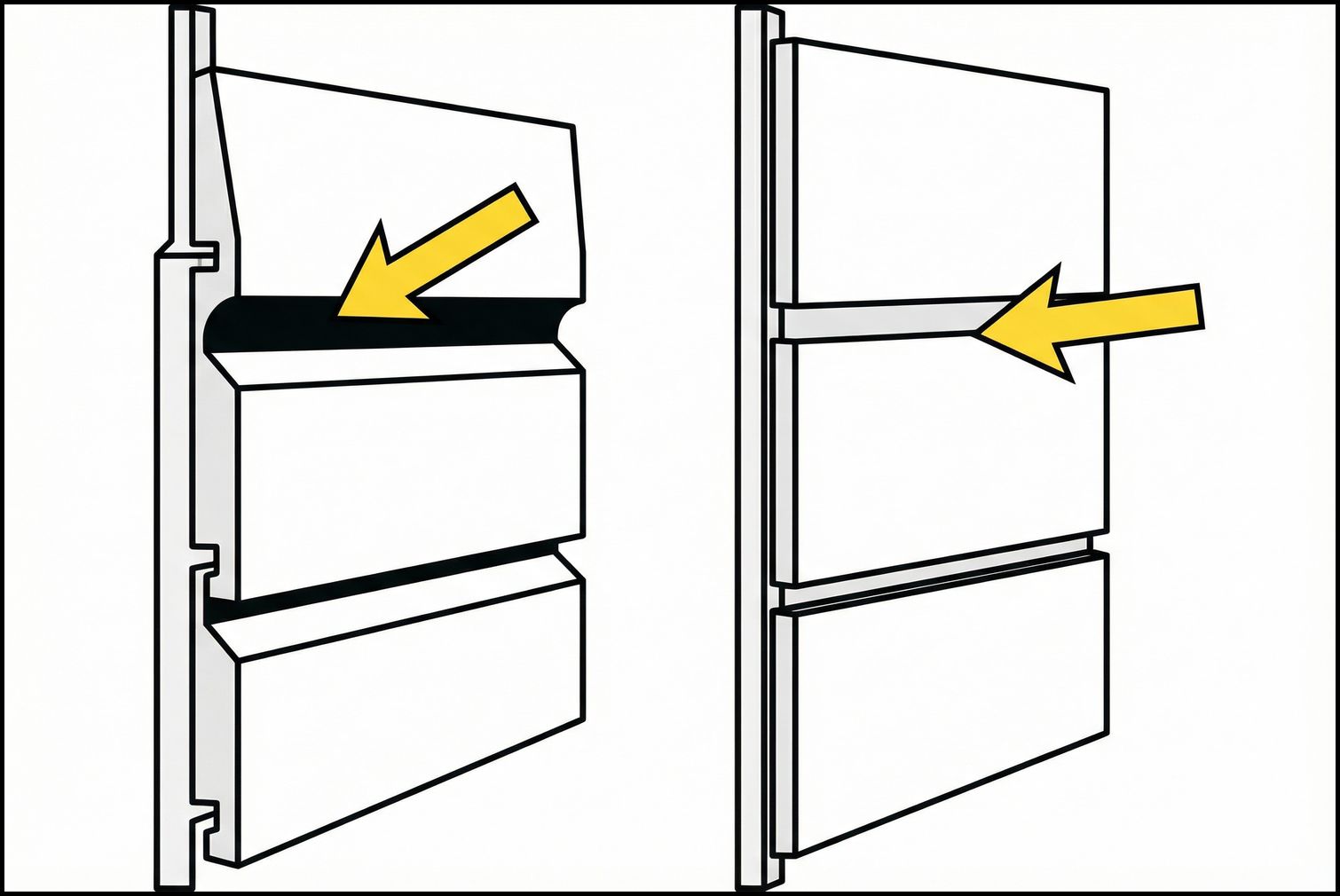
Traditional clapboard creates a smooth, streamlined appearance. Each flat board overlaps the one below with minimal depth. The transitions between courses are subtle — you see horizontal lines but not much shadow play. This profile works well on colonial, Cape Cod, and ranch-style homes where a clean, understated exterior is the goal.
Dutch lap adds visible depth. The concave notch at the top of each board catches light differently throughout the day, creating shadow lines that shift as the sun moves. The effect makes your home’s exterior feel more textured and substantial. Dutch lap suits craftsman, farmhouse, and transitional-style homes where architectural detail adds character.
From the street, the difference is noticeable but not dramatic. Walk up to the siding and the profile difference is obvious. In real estate photography — which matters for resale — Dutch lap tends to photograph with more visual interest because the shadows add dimension to flat images.
How Each Profile Handles Mid-Missouri Weather
The profile difference isn’t just cosmetic. That beveled notch on Dutch lap siding changes how water interacts with your exterior.
Traditional clapboard’s flat overlap can pool small amounts of water at the seam where boards meet. In most conditions this drains quickly, but during sustained rain — common in Mid-Missouri spring storms — that pooling creates extended moisture contact at the overlap point. Over years, this can accelerate paint failure, mold growth, and material deterioration at the seams.
Dutch lap’s angled profile moves water off the overlap point faster. The concave channel acts as a small ramp that directs rain downward rather than letting it sit at the seam. This means less moisture contact time, which translates to less mold growth and less paint peeling — meaningful advantages in Central Missouri’s humid summers.
Neither profile is waterproof on its own — both depend on proper housewrap, flashing, and installation behind the siding. But Dutch lap’s geometry gives it a practical edge in wet climates.
Cost Comparison by Material
| Material | Traditional Lap (installed) | Dutch Lap (installed) | Premium |
|---|---|---|---|
| Vinyl | $2-$6/sq ft | $4-$7/sq ft | ~$1-2/sq ft |
| Fiber cement (James Hardie) | $12-$20/sq ft | $12-$22/sq ft | ~$0-2/sq ft |
| Wood (cedar/pine) | $6-$12/sq ft | $7-$14/sq ft | ~$1-2/sq ft |
The material cost difference between profiles is minimal — especially in fiber cement, where James Hardie offers both traditional HardiePlank lap and Custom Colonial (their Dutch lap equivalent) at similar price points. The labor premium for Dutch lap is where the difference shows up. The notched profile requires more precision during installation — each board must align accurately for the shadow lines to look consistent. That adds 10-15% to labor costs compared to flat clapboard.
On a typical Mid-Missouri home with 1,500-2,000 square feet of siding, the total project cost difference between Dutch lap and traditional might run $750-$3,000 depending on material and contractor.
Installation Differences
Traditional clapboard is the more forgiving installation. Flat boards align easily, minor spacing variations are hard to spot, and the profile is standard enough that most siding crews install it quickly. If you’re considering DIY vinyl siding, clapboard is the safer choice — alignment mistakes are less visible.
Dutch lap demands more precision. The beveled notch creates a visual reference point that makes misalignment obvious. If one board sits slightly higher or lower than its neighbors, the shadow line breaks and the eye catches it immediately. Professional installation is strongly recommended for Dutch lap — the precision requirement adds time but produces a much better result than DIY attempts typically achieve.
For fiber cement Dutch lap (James Hardie Custom Colonial), professional installation isn’t just recommended — it’s required for warranty coverage. James Hardie Preferred contractors like us have specific training on profile alignment and fastener placement for each siding installation in Columbia.
Which Style Fits Your Home?
Choose traditional clapboard if:
- Your home is colonial, Cape Cod, or classic ranch style
- You prefer a clean, understated exterior
- Budget is the primary concern
- You’re matching existing siding on an addition or partial replacement
- You plan to DIY the installation (vinyl only)
Choose Dutch lap if:
- Your home is craftsman, farmhouse, or transitional style
- You want more visual depth and shadow play on your exterior
- Curb appeal and resale presentation are priorities
- You’re investing in fiber cement or wood siding (the premium is proportionally smaller on higher-end materials)
- Water management matters — Dutch lap’s angled profile performs better in wet climates
What a Siding Profile Selection Estimate Should Actually Cover
Choosing between Dutch lap and traditional clapboard is a visual and budget decision, but it should sit on top of a real inspection of your walls — not a sample board and a price quote alone. When a siding contractor comes out, the estimate should cover more than square footage and material price.
Here is what a proper siding estimate and inspection should address before anyone talks profile or color:
- Existing siding condition wall by wall. Are the current boards sound underneath, or is there soft spots, rot, or impact damage from hail or yard equipment? One damaged elevation changes the scope and cost even if the rest of the house looks fine.
- Sheathing and housewrap behind the siding. Siding profile does not fix water damage that is already behind it. If the sheathing is soft or the weather barrier is missing or torn, that repair work has to happen before new siding goes on.
- Trim, corner boards, and transitions. Window wraps, door surrounds, inside and outside corners, and where the siding meets soffit or fascia all need to be scoped. Dutch lap’s shadow line only looks right when the trim around it is also replaced or refreshed to match.
- Flashing and water-management details. Kick-out flashing at roof-wall intersections, drip cap above windows and doors, and proper integration with the gutter system. These matter more for long-term performance than the profile choice itself.
- Photos of every elevation. A written estimate should come with wall-by-wall photos showing current condition, problem areas, and any trim or accessory work included. This protects you and gives you something to compare against the finished job.
- Profile samples in context. A good contractor brings actual Dutch lap and traditional clapboard samples — in the material you are considering — and holds them against your home. Shadow lines look different on a south-facing wall in afternoon sun than they do in a showroom.
If an estimate skips these steps and jumps straight to a price per square foot, that is a sign the installer is treating your siding as a commodity swap rather than a wall-system replacement. The profile you pick will look good for a few years either way, but the inspection and installation quality behind it determines whether it lasts 20 years or 40. Orientation choices like lap versus vertical follow the same rule — the estimate should prove the walls are ready for whatever goes on them.
What About Resale Value?
Both profiles add comparable value at resale. New siding of any style typically recoups 65-75% of project cost when selling. The choice between Dutch lap and traditional rarely makes or breaks a sale — buyers respond to the overall condition and quality of the siding, not the specific profile.
That said, Dutch lap’s dimensional appearance photographs better in real estate listings. In a market where buyers browse photos before scheduling showings, the visual interest from shadow lines can help your listing stand out. It’s not a dramatic advantage, but it’s a real one.
Frequently Asked Questions
Is Dutch lap siding more expensive than traditional clapboard?
Slightly. Material costs are similar, but Dutch lap’s precision requirements add 10-15% to labor costs. On a full-house siding project, the total difference is typically $750-$3,000 depending on material and home size.
What is the difference between Dutch lap and clapboard siding?
Traditional clapboard is flat — each board simply overlaps the one below it. Dutch lap has a concave notch (bevel) at the top of each board that creates a deeper shadow line. The structural installation method is the same; the visual profile is different.
Does Dutch lap siding last longer than traditional?
Both profiles have the same lifespan when made from the same material — 20-40 years for vinyl, 30-50 years for fiber cement, 15-30 years for wood. Dutch lap’s angled profile may reduce moisture damage at seams over time, but the material itself determines durability.
Can I mix Dutch lap and clapboard on the same house?
It’s uncommon and generally not recommended. Mixing profiles creates visual inconsistency that looks unintentional rather than designed. If you want variety, pair lap siding (either profile) with a different treatment like board-and-batten or shakes on gable ends.
What does James Hardie call their Dutch lap siding?
James Hardie’s Dutch lap profile is called “Custom Colonial.” It’s available in Colonial Roughsawn (textured) and Colonial Smooth finishes. Both offer the same dimensional shadow line characteristic of Dutch lap. Call us at (573) 424-9008 to see samples and discuss which profile suits your home.
Ready to Get Started?
We’ve been serving Mid-Missouri homeowners since 2010 with premium siding installation. As James Hardie Preferred contractors, we install both traditional HardiePlank and Custom Colonial (Dutch lap) profiles with the precision these materials deserve.
Get Your Free Siding Consultation:
- Call: (573) 424-9008
- Visit: 3504 Interstate 70 Drive SE, Columbia, MO 65201
Service Areas: Columbia, Jefferson City, Lake Ozark, Fulton, and throughout Mid-Missouri.
