
Key Takeaways
- In Mid-Missouri (Columbia, Jefferson City, Lake of the Ozarks), labor typically makes up about 50%–70% of your total roof installation cost.
- You’re paying for skilled crews, safety measures, project management, and warranty support, not just “hours on a roof.”
- Roof size, pitch, height, and material selection (asphalt shingle vs. metal, etc.) are the biggest drivers of roofing labor costs.
- Hidden work like deck inspection, flashing installation, and proper ventilation require specialized skills that prevent leaks and protect your investment.
- CoMo Exteriors offers free, detailed, line-item estimates so homeowners can see exactly how labor is calculated on their own roof.
When you look at roof replacement estimates, the labor line can seem surprisingly large. For many homeowners in Columbia, Jefferson City, and surrounding Mid-Missouri communities, that number raises an obvious question: what exactly am I paying for?
The short answer is that roofing labor covers far more than someone nailing shingles to your roof. It includes tear-off of your old roof, safety equipment, skilled craftsmanship at critical areas, project supervision, and the warranty support that stands behind the work for years to come. Let’s walk through what goes into that labor cost so you can evaluate your quotes with confidence.
What Does Roofing Labor Actually Include?
The word “labor” on an estimate covers far more than nail guns and shingles. It represents every hour of skilled and general work required to safely remove your existing roof and install a new one that will protect your home through Mid-Missouri’s hail, wind, and freeze-thaw cycles.
Visible labor on your roof includes:
- Tear off and removal of old shingles, underlayment, and damaged flashing
- Deck inspection to identify soft or rotted sheathing that needs structural repairs
- Installation of new underlayment and ice & water barrier in valleys and around penetrations
- Flashing work at walls, chimneys, skylights, and step areas
- Shingle or panel installation, including starter strips, field courses, and ridge caps
- Ventilation components like ridge vents or box vents
- Final clean-up with magnetic sweepers to catch every stray nail
Behind-the-scenes labor you don’t always see:
- Loading and unloading materials from delivery trucks
- Staging the job site and positioning materials on the roof
- Daily setup and teardown of ladders, scaffolding, and safety equipment
- Supervising quality control and crew safety throughout the project
Skilled tasks like flashing installation, valley work, and chimney detailing cost more per hour than basic shingle laying because they’re where roofs fail when done poorly. These areas require precision to prevent leaks and future damage, exactly the kind of extra labor that separates quality craftsmanship from a rushed job.
When you hire CoMo Exteriors, part of your labor cost funds trained, certified installers and foremen who follow manufacturer specifications. That attention to installation methods keeps your warranties valid and your roof performing as designed.
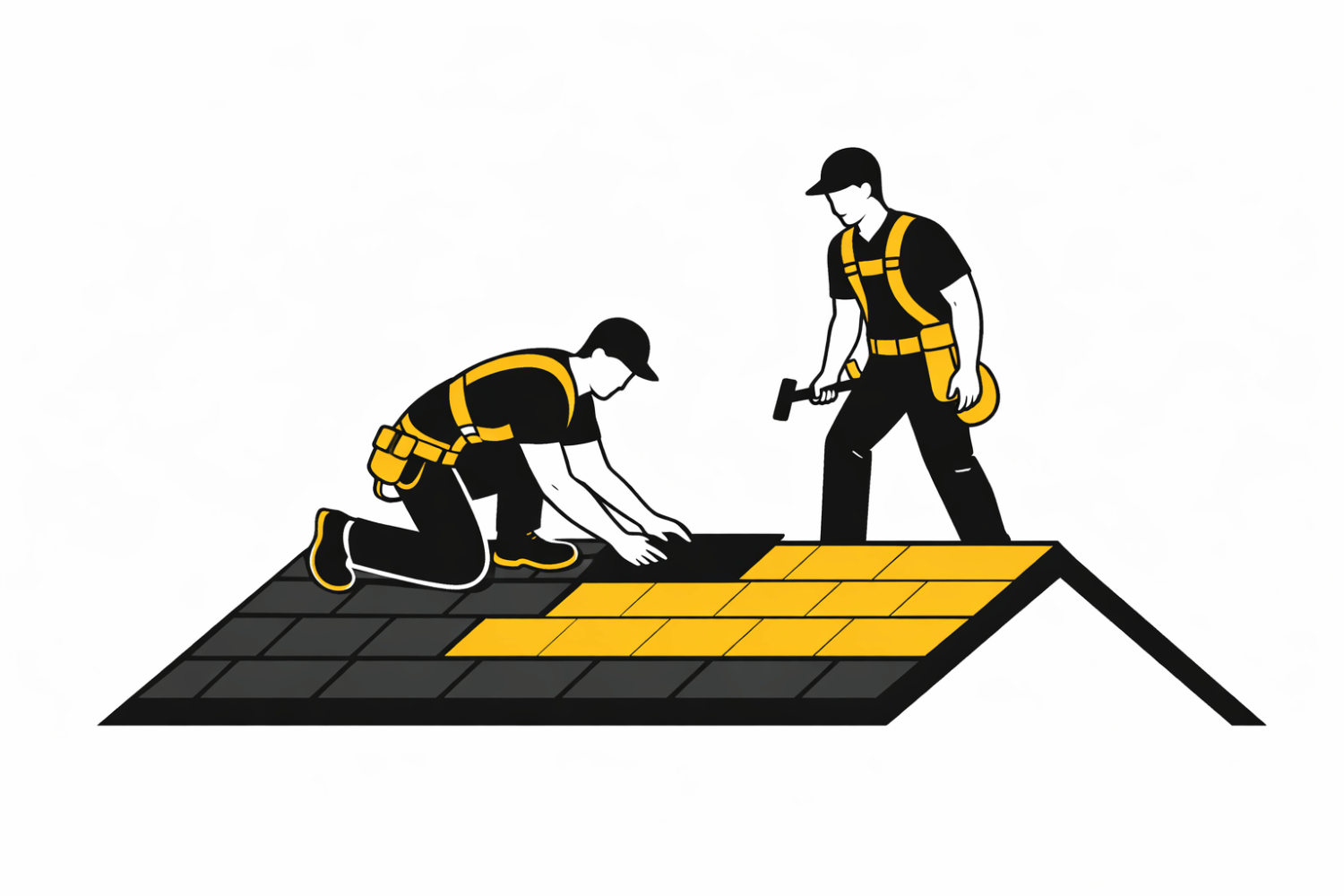
How Much of Your Roof Cost Is Labor vs. Materials?
For a typical asphalt shingle roof replacement in Mid-Missouri during 2025–2026, you can expect roughly 50%–70% of your total cost to go toward labor, with 30%–50% covering materials. That ratio varies based on roof complexity, pitch, and the roofing material you choose.
Here’s a concrete example:
- A 1,700 square foot Columbia, MO home with an asphalt shingle roof might total around $8,000–$12,000
- Of that amount, roughly $4,000–$8,000 represents labor costs
- The remaining $3,000–$5,000 covers shingles, underlayment, flashing, vents, and other materials
Why does labor take such a large portion?
- Higher-skill systems like standing seam metal roofing or a tile roof push the labor percentage up because installation takes longer and requires specialized crews
- Complex roofs with multiple valleys, dormers, or skylights demand more cutting, fitting, and detailed work
- Old roof removal adds significant labor time, especially when multiple layers of existing roofing material need to come off
CoMo Exteriors provides line-item estimates that separate labor, materials, and other project costs. You’ll see exactly how much of your quote covers roofing labor versus the shingles and components going onto your roof.
Roofing Labor Cost Ranges by Material Type
Different materials require different skill levels and installation time. Here’s how labor costs typically break down by material type, measured in cost per square (one roofing square equals 100 square feet):
Asphalt shingle roof:
- Labor cost per square foot installed runs lower than other materials
- Mid-Missouri rates typically fall in the $250–$350 per square range for straightforward installations
- Simple gable roofs on single-story homes sit at the lower end; steeper pitches and multi-story homes push costs higher
Metal roofing:
- Labor rates run higher because panels must be measured, cut, and fastened precisely
- Standing seam systems are slower and more technical than corrugated metal
- Expect to pay a premium for the craftsmanship required to handle expansion, contraction, and proper sealing
Tile and specialty products:
- These premium materials require careful handling due to weight and fragility
- May need extra structural considerations, adding labor time
- Crews are often larger or timelines longer, increasing overall cost per square foot
Commercial flat roofs (TPO, EPDM, modified bitumen):
- Labor varies widely based on roof size, number of penetrations, and condition of existing layers
- New construction labor is typically lower since there’s no tear-off involved
- Replacement projects with old materials to remove add significant crew hours
Factors That Drive Roofing Labor Costs Up or Down
Mid-Missouri features everything from simple single-story ranches to two-story homes with dormers and multiple roof sections. These key factors determine where your project lands on the labor cost spectrum:
Roof size: Larger roofs mean more squares to tear off and install. An extra 500–1,000 square footage can add a full day or more of crew time, directly increasing your labor line item.
Roof pitch and height: Steeper or multi-story roofs require extra safety equipment, harnesses, and slower movement. The same number of squares on a steep roof takes longer than on a low-slope patio roof.
Complexity and features: Valleys, hips, dormers, chimneys, and skylights require more cutting, flashing, and detailed work. A straightforward gable roof costs less in labor than one with several elements demanding precision.
Existing condition: Multiple layers of old shingles, rotten decking, or damaged flashing increase tear-off and repair labor. CoMo Exteriors checks for these during our initial inspection so they aren’t surprise costs on install day.
Accessibility: Tight driveways, limited parking, or long carries for materials (common in older Columbia neighborhoods) can slow the crew and add to labor time.
Seasonal demand: Busy storm seasons in Mid-Missouri, spring hail and summer wind events, may affect crew availability. Higher demand can extend project timelines, and some roofing contractors adjust rates during peak periods.
What You’re Paying For Beyond Hourly Wages
Your labor line item covers more than the wages paid to workers on your roof. It also includes the overhead that allows a reputable local roofing company to do the job safely and stand behind it for years.
Direct wages: Installers, foremen, and general laborers including their training, certifications, and local experience navigating Missouri’s challenging weather patterns.
Burden and benefits: Payroll taxes, workers’ compensation insurance, liability coverage, and ongoing safety training. These protect you if an accident occurs on your property.
Equipment and safety: Ladders, scaffolding, fall protection systems, compressors, dump trailers, and tool maintenance. These costs are built into labor rates rather than billed as separate hidden fees.
Project management: Scheduling crews, coordinating material deliveries, communicating with homeowners, handling permit fees and inspections, and managing punch lists. Someone has to keep your project running smoothly.
Warranty support: CoMo Exteriors includes a limited lifetime workmanship warranty. The long-term ability to service that warranty, coming back years later if an issue arises, is built into what you pay for labor today.
Labor for Tear-Off, Repairs, and Installation: Where the Time Goes
Here’s how labor hours are actually spent on a typical roof replacement in Mid-Missouri:
Day 1 – Setup and tear-off: Crew arrives, protects landscaping and driveways with tarps, sets up safety gear, then begins removing old shingles, felt, nails, and flashings. Old roof removal on a 2,000 square foot home typically takes most of a full day.
Deck inspection and repairs: Once old materials are off, the crew checks for soft or rotted sheathing. Replacing bad sheets of OSB or plywood adds carpentry labor, usually priced at $75–$125 per sheet depending on accessibility.
Underlayment and flashings: Installing synthetic underlayment across the deck, applying ice & water barrier in valleys and around penetrations, and fitting new metal flashing at walls, chimneys, and step areas. This work prevents leaks at vulnerable points.
Shingle or panel installation: Laying out starter strips, installing field shingles or metal panels course by course, adding ridge caps, and integrating ventilation components. This is the bulk of hands-on install time.
Clean-up and walkthrough: Magnet sweeping for nails, loading debris into dump trailers, and conducting a final inspection with the homeowner or foreman to verify every workmanship detail meets standards.

How Local Labor Rates in Mid-Missouri Affect Your Roof Cost
National roofing labor averages provide a starting point, but what homeowners actually pay in Columbia, Jefferson City, Boonville, Moberly, and Lake of the Ozarks reflects local factors.
Mid-Missouri labor rates are influenced by local cost of living, availability of skilled roofers, and seasonal storm demand rather than big-city pricing. You’ll generally find rates slightly below what homeowners pay in major metro areas, but geographic location still matters.
After major hail or wind events, labor demand spikes as roofs across Columbia and surrounding towns need replacement at the same time. This can tighten schedules and extend project timelines as every local roofing contractors in the area works through a surge of claims.
Established companies like CoMo Exteriors maintain consistent crews year-round instead of relying on short-term storm chasers who may disappear after collecting payment. That stability affects how we price labor. We’re investing in people who’ll be here to service your roof for decades.
While rates shift over time (material and labor costs both rose across the industry between 2024 and 2026), transparent pricing through written estimates keeps you in control of your budget effectively.
How CoMo Exteriors Estimates and Explains Labor on Your Roof Quote
We believe you should understand every dollar on your estimate. Here’s how we build labor costs into your proposal:
- Free on-site inspection: We start by taking detailed roof measurements, photographing any damage, and noting pitch, stories, and number of penetrations so labor is estimated accurately based on your home’s location and specific conditions.
- Square-by-square calculation: We determine the number of “squares” (100 square foot sections) and apply different labor assumptions for steep vs. low-slope areas, valleys, and specialty details like skylights or chimneys.
- Itemized breakdown: Our estimates separate labor, materials, and any expected deck repairs or code upgrades. You see what each piece costs instead of a single lump-sum number that hides the actual cost breakdown.
- Insurance claim support: When the roof is a homeowners insurance claim (common after Mid-Missouri hailstorms), we explain how the insurance scope breaks out labor vs. materials and advocate for fair allowances that cover real-world crew time, not theoretical minimums.
Contact us for a no-obligation written estimate and see a real example of how labor is itemized for your specific home. We’re happy to walk through the detailed breakdown line by line.
Tips to Make Sure You’re Getting Fair Roofing Labor Pricing
Getting multiple quotes is smart. Here’s how to evaluate them:
- Get at least three estimates that show labor separately from materials. Be cautious of quotes far below the local average. They may indicate corners being cut or hidden fees appearing later.
- Ask who will be on your roof. In-house crews vs. subcontractors? How many workers? How long will the project take? These simple questions help you verify whether the labor line item makes sense.
- Confirm insurance coverage. Proper liability and workers’ compensation insurance protects you. Underinsured crews may offer lower labor pricing at higher risk to you as the homeowner.
- Clarify how surprises are handled. Ask how the company addresses unexpected deck repairs or extra labor discovered after tear-off. The estimate should explain these potential surprise costs clearly.
- Verify warranty terms in writing. A strong workmanship warranty has real value built into the labor cost. Know what you’re getting and how long it lasts.
- Don’t assume lowest price means best value. The cheapest bid may reflect rushed work, inexperienced crews, or skipped steps that cost you more in roof repairs down the road.

When Higher Labor Cost Can Actually Save You Money
The cheapest labor isn’t always the best value, particularly with Mid-Missouri’s wind, hail, and freeze-thaw cycles testing every roof.
Proper installation prevents bigger problems: Roofs installed correctly are less likely to leak or fail in storms. Avoiding interior damage to drywall, insulation, and flooring can save thousands compared to the cost difference between a budget crew and a quality one.
Manufacturer warranties require proper installation: Roofs installed to manufacturer specifications may qualify for enhanced warranties. If a covered issue occurs years later, that warranty can save you the full cost of repairs that would otherwise come out of pocket.
Experienced crews work efficiently: What looks like higher labor rates may still be competitive once you factor in fewer days on-site, less risk of callbacks, and no corner-cutting that leads to early failure of your new roof.
Long-term value over lowest bid: At CoMo Exteriors, we focus on 30-year solutions, not 15-year patches. Many of our roof replacement projects in Columbia and surrounding towns involve fixing problems caused by rushed, low-cost labor from prior installations. Paying for quality craftsmanship the first time often costs less overall.
FAQs
Is it normal for labor to cost more than the roofing materials?
For many asphalt shingle roofs in 2025–2026, labor is often equal to or greater than the shingle cost, especially on steep or complex roofs. This reflects the skilled work involved: tear-off, proper installation, flashing, safety measures, and supervision. Materials alone don’t keep your roof watertight; the labor that installs them correctly does.
Can I save money by doing some of the roofing work myself?
While some homeowners consider DIY tear-off or cleanup, most manufacturers require licensed installation to keep warranties valid. Roofing involves significant fall risk and specialized equipment. CoMo Exteriors recommends leaving both old shingles removal and new shingles installation to trained crews for safety and insurance reasons.
Why do labor estimates sometimes change after you start the job?
Once old roofing is removed, hidden issues occasionally appear, such as rotten decking, improper prior repairs, or structural damage that wasn’t visible during inspection. CoMo Exteriors documents these findings with photos, explains extra labor and material needs clearly, and gets homeowner approval before proceeding with additional work.
Does the time of year affect how much I’ll pay for roofing labor?
Peak roofing seasons in Mid-Missouri are typically spring and summer, especially after major storms when demand surges. Labor rates may be more flexible during slower periods, but weather windows and manufacturer temperature requirements still guide when certain products like drip edges and underlayment can be properly installed.
How can I see exactly how much of my quote is labor?
Request a written, itemized estimate that clearly separates labor, materials, and any expected repairs. Avoid accepting a single lump-sum number without knowing what’s included. CoMo Exteriors provides this level of detail on every proposal and is happy to walk line-by-line through the labor assumptions for any roof in Columbia, Jefferson City, Boonville, Moberly, Lake of the Ozarks, or Sedalia. Contact us for a free estimate to see exactly how roofing costs break down for your home.
