
What Happens After You File a Roof Insurance Claim? A Missouri Timeline
Key Takeaways
- Most Missouri roof claims run 2–8 weeks from first phone call to final payment, with weather conditions and claim volume affecting speed
- Contact your insurer and a reputable local roofing contractor like CoMo Premium Exteriors within 24–72 hours of suspected storm or hail damage
- Missouri policies commonly have 1–2 year claim filing windows for hail and high winds, but proper documentation (photos, videos, invoices) should be gathered immediately after the storm date
- Insurance adjuster inspections in Mid-Missouri usually occur 7–21 days after filing a roof insurance claim, depending on storm severity and carrier backlog
- Working with an experienced contractor who understands the claims process (scope of loss, ACV vs. RCV, code upgrades) can shorten your timeline and protect against underpaid claim settlements
How Roof Insurance Claims Work in Missouri (Big Picture Overview)
If you’ve just filed a roof claim or are thinking about it, you’re probably wondering what happens next—and how long this whole thing is going to take. We get it. After helping hundreds of Mid-Missouri homeowners navigate insurance claims since 2010, we’ve seen the process from every angle. This article walks you through what typically happens after you file a roof insurance claim in Missouri, using real-world timeframes we see across Columbia, Jefferson City, Boonville, Moberly, and Lake of the Ozarks.
The roof insurance claim process generally moves through six phases:
- Phase 1: Storm event and initial inspection
- Phase 2: Filing the claim with your insurance company
- Phase 3: Insurance adjuster inspection
- Phase 4: Estimate, settlement, and first check
- Phase 5: Construction and final invoice
- Phase 6: Depreciation release and closing the claim
Actual timing varies based on storm size, your insurance carrier, and documentation quality, but we’ll give you typical week-by-week expectations for most homeowners in our region. At CoMo Premium Exteriors, we routinely help homeowners navigate each step—including meeting adjusters on-site and explaining insurance paperwork in plain language.
Day 0–3: Storm Hits & You Discover Roof Damage
A hailstorm rolls through Columbia on April 15th, dropping quarter-size hail for 15 minutes. The next morning, you notice granules collecting in your gutters and a few dents on your car. Sound familiar? This scenario plays out across Mid-Missouri every spring and summer.
Common events that trigger claims in our region include:
- Hailstorms (most frequent March–June)
- High winds and straight-line wind events
- Tornadic cells and severe thunderstorms
- Heavy snow and ice accumulation
- Falling tree limbs during storms
Immediate steps you should take:
- Safely check for visible signs of damage from the ground—look for missing shingles, dents on gutters and downspouts, hail marks on soft metals like vents and flashing, and new water spots on ceilings
- Do not climb onto your roof; hail damage can be subtle and dangerous to inspect without proper equipment
- Take timestamped photos and videos of any visible damage, including loose shingles in the yard and interior leaks
- Document everything the same day you notice the damage
Call a trusted local roofer within 24–72 hours. Having an independent assessment before or alongside talking to your insurer gives you clear evidence of what happened and positions you well for the claims process. At CoMo Premium Exteriors, we offer free storm inspections so you know exactly what you’re dealing with before making any decisions.
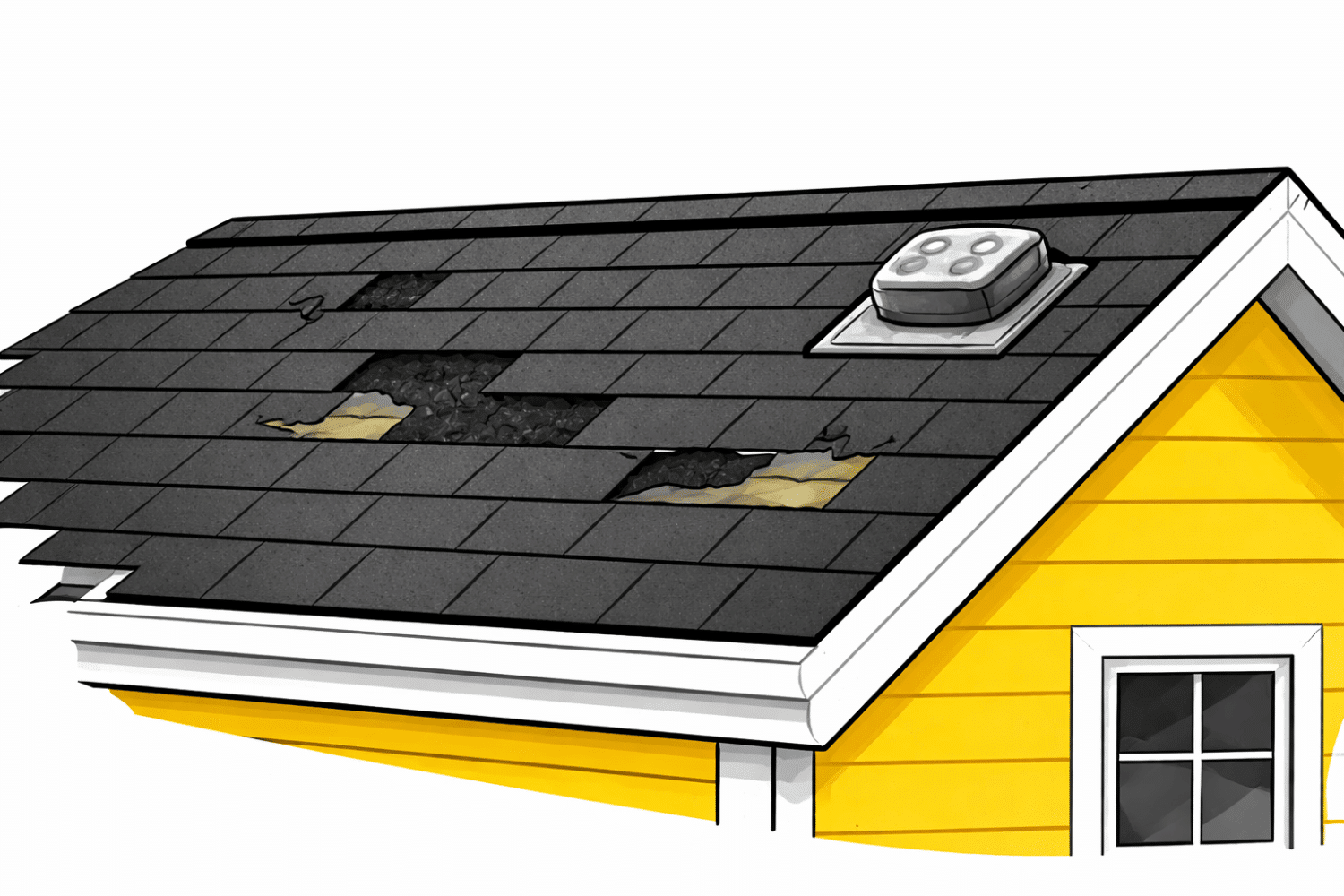
Day 1–7: Contacting Your Insurer & Filing the Roof Claim
Once you’ve documented damage and had it confirmed by a professional, the next step is usually calling your homeowners insurance carrier or insurance agent. Most insurers want notice of a potential claim “promptly”—often within a few days of discovering damage.
What to know about filing windows:
- Many Missouri policies specify windows of 30, 60, or 90 days from when damage is discovered
- Some policies extend to 12 months or even up to two years from the storm event itself
- Check your homeowners insurance policy for terms like “notice of loss” or specific reporting deadlines
- Filing within 48 hours of discovery demonstrates fresh, storm-attributable damage and minimizes denial risks
Information to have ready when you call:
|
What You Need |
Example |
|---|---|
|
Policy number |
Found on your declarations page |
|
Storm date |
“June 4, 2025 hailstorm in Columbia” |
|
Basic damage description |
“Hail damage to roof, gutters dented, possible roof leak in master bedroom” |
|
Emergency repairs completed |
“Tarped damaged section over garage” |
The insurance company typically creates a claim number within 24–48 hours and provides next steps: online forms, proof-of-loss guidance, and an estimated timeframe for sending an adjuster. In Mid-Missouri, after large storm events, adjuster scheduling commonly runs 7–21 days out.
How we can help at this stage: CoMo Premium Exteriors can confirm whether damage looks consistent with a covered storm event, supply detailed photos, and prepare to meet the adjuster—giving you an advocate who speaks the insurance provider’s language.
Week 1–3: Temporary Repairs & Protecting Your Home
Your insurance policy requires you to “mitigate damages”—meaning you must reasonably protect your property from further damage while the claim is in progress. This isn’t optional, and ignoring it can hurt your claim.
Specific temporary repairs common in Mid-Missouri:
- Tarping damaged roof areas to prevent water intrusion
- Temporarily sealing around roof penetrations (vents, pipes, skylights)
- Placing buckets or plastic under active leaks inside
- Securing loose or missing shingles after high winds to prevent wind-driven rain damage
Important documentation steps:
- Keep all receipts and invoices for temporary repairs done between Day 1–21
- Insurers often reimburse reasonable mitigation costs as part of your claim
- Take photos before, during, and after any temporary work
CoMo Premium Exteriors can perform emergency dry-ins and provide documentation (photos, written descriptions of temporary work, materials used) that helps insurance carriers see both the damage and the steps taken to prevent escalation.
The bottom line: Making temporary repairs generally does not hurt your claim as long as damage is well-documented before and during mitigation. In fact, failing to make necessary repairs could give your insurer grounds to deny coverage for further damage.
Week 2–4: Insurance Adjuster Inspection in Mid-Missouri
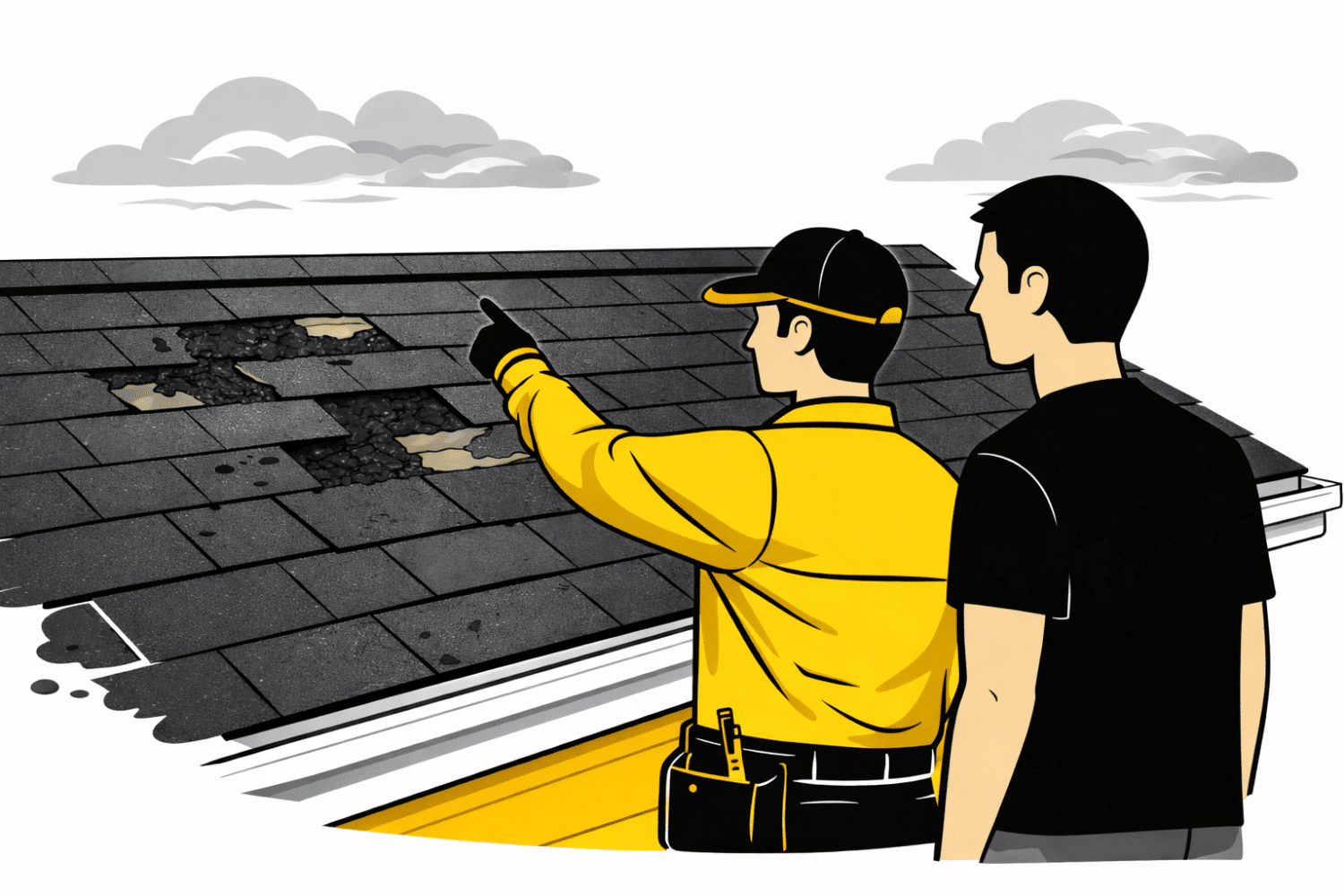
Insurers typically schedule a field adjuster visit 7–21 days after you file a claim. After widespread hailstorms hitting Columbia, Jefferson City, or Lake of the Ozarks, expect waits on the longer end as adjusters work through backlogs.
What happens on inspection day:
- Adjuster arrives and checks in with the homeowner
- Exterior inspection of roof, siding, gutters, windows, and soft metals
- Roof inspection for hail hits, wind damage, cracked shingles, and compromised underlayment
- Attic and ceiling checks for leaks or water stains
- Adjuster takes their own photos and measurements
We strongly recommend having a qualified roofing contractor present at the adjustment. Why? Adjusters are generalists who inspect many types of properties. A certified contractor can point out:
- Hail hits that are easy to miss from certain angles
- Wind creases under shingle tabs
- Damaged flashing and valley metal
- Collateral damage to gutters, siding, and soft metals
Inspections typically last 30–120 minutes depending on roof size and complexity. Multi-family homes, commercial buildings, and steep or cut-up roofs often fall at the longer end.
At the end of the visit, the adjuster typically explains next steps and provides a timeframe for a decision—often 3–10 business days after inspection in Missouri. Missouri insurance regulations require insurers to complete their investigation within 30 days of notification unless reasonably impossible, so you should see movement relatively quickly.
Week 3–6: Claim Decision, Scope of Loss, and First Check
In many Missouri roof claims, homeowners receive the carrier’s written estimate and decision 2–6 weeks after initial filing, depending on complexity and claim volume during storm surge seasons.
What the “scope of loss” document includes:
- Line-item measurements of damaged areas
- Materials specified for repair or replacement
- Labor costs
- Code-related items (ice & water shield, drip edge, ventilation)
- Whether the roof is claim approved for full roof replacement or only localized roof repair
Key insurance terms you’ll see at this stage:
|
Term |
What It Means |
|---|---|
|
Actual Cash Value (ACV) |
What your roof is worth today, accounting for age and normal wear |
|
Replacement Cost Value (RCV) |
Full cost to install a new roof with similar roofing materials |
|
Depreciation |
The difference between RCV and ACV (often recoverable after work is complete) |
|
Deductible |
Your out-of-pocket amount before insurance coverage kicks in |
Simple numeric example:
|
Line Item |
Amount |
|---|---|
|
Replacement Cost Value (RCV) |
$15,000 |
|
Minus Depreciation |
-$3,000 |
|
Minus Deductible |
-$1,500 |
|
Initial ACV Check |
$10,500 |
The remaining $3,000 depreciation is typically released after work is completed and documented (for RCV policies).
Where we add value: CoMo Premium Exteriors often compares the insurance scope to our own detailed estimate to look for missed items—ice & water shield requirements, code upgrades, flashing, ventilation, gutters, satellite dish reattachment. When justified, we can request supplements to ensure your claim accurately reflects the repair cost.
Week 4–10: Selecting Your Contractor & Scheduling Roof Replacement
Once your insurer approves the claim and issues the first ACV check, you choose a contractor and get on the schedule. In big Mid-Missouri hail years, lead times can stretch 2–6 weeks as reputable contractors work through backlogs.
How to evaluate contractors:
- Local presence: Look for an office address in Mid-Missouri, not a P.O. box
- Licensing and insurance: Verify they carry proper coverage
- Manufacturer certifications: These indicate training and quality standards
- Written warranties: Get workmanship guarantees in writing
- Insurance experience: Choose someone who understands insurance paperwork and can handle insurance disputes if they arise
CoMo Premium Exteriors holds triple certifications—GAF Master Elite, Owens Corning Platinum, and James Hardie Elite Preferred—making us the only contractor in the region with all three. This means consistent installation quality and access to enhanced manufacturer warranties that protect your investment for decades.
During this phase, discuss material and upgrade choices:
- Impact-resistant shingles (may reduce future premiums with some insurance carriers)
- Ventilation improvements
- Gutter replacement
- Ordinance and law coverage for code-related upgrades
Typical Missouri roof project lengths:
|
Project Type |
Duration |
|---|---|
|
Standard single-family home |
1–2 days |
|
Large or complex roofs |
2–3 days |
|
Weather delays |
Add 1–7 days |
Prepare for installation day: Move vehicles away from the house, protect landscaping near the work area, and secure pets indoors.
Construction Week: Roof Installation and On-Site Adjustments
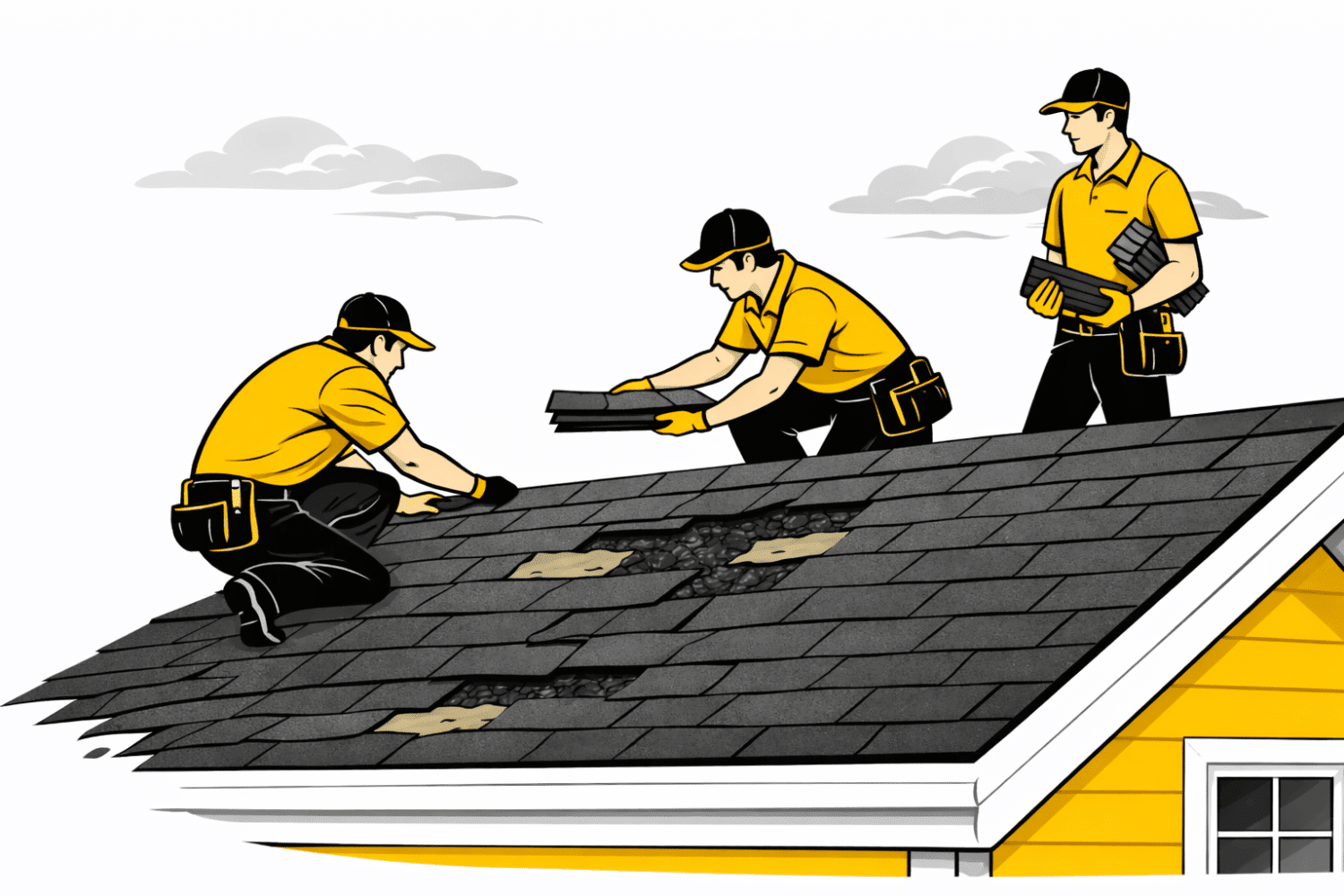
Once a clear weather window opens, crews arrive early, tear-off begins, and the actual replacement or repair generally happens over 1–3 working days. Here’s what you can expect.
Major on-site steps:
- Tear-off of old roofing materials
- Inspection of decking for rot or water damage
- Replacement of damaged wood (if needed)
- Installation of underlayment and ice & water shield
- New shingles or roofing system installation
- Flashing, vents, and pipe boot installation
- Final cleanup and debris removal
Sometimes additional hidden damage—rotted decking, bad fascia, chimney flashing issues—is discovered once the old roof is removed. This is called “supplemental damage” and may require additional documentation and approval from your insurer.
How we handle supplements: CoMo Premium Exteriors documents these findings with photos and clear descriptions, then works with your carrier on a supplement so necessary repairs are properly covered rather than ignored or patched with shortcuts.
Post-job walkthrough includes:
- Checking for nail debris with magnetic sweepers
- Verifying all vents and pipe boots are installed correctly
- Reviewing the new roof system with the homeowner
- Providing warranty paperwork and maintenance guidance
After Construction: Final Invoice, Recoverable Depreciation & Closing the Claim
Once your roof is completed, the contractor sends a final invoice matching the agreed scope to both you and, when appropriate, to the insurance company.
For RCV policies, here’s what happens next:
- Insurers release the “recoverable depreciation” after receiving proof that work is done and paid
- Required documentation typically includes: final invoice, completion photos, and sometimes a completion certificate
- This final payment can take another 1–3 weeks to arrive
Realistic timeline to full financial closure:
Most homeowners in Missouri see complete financial closure on their roof damage claim 6–10 weeks after initial filing. After major hail outbreaks affecting multiple towns, this can extend further due to carrier processing backlogs.
Your financial responsibilities:
- Deductible payment (out-of-pocket)
- Upgrades not covered by insurance coverage
- CoMo Premium Exteriors can discuss financing options if needed for out-of-pocket portions
Keep everything together for future reference:
|
Document |
Why It Matters |
|---|---|
|
Insurance estimate/scope |
Proof of covered damage |
|
Checks received |
Payment records |
|
Contractor invoices |
Proof of work completed |
|
Warranty paperwork |
Future protection |
|
Before/after photos |
Resale documentation, future claims |
How Long Do Missouri Roof Claims Really Take? Typical Timelines
Here’s a summary of realistic timeframes based on what we see across Mid-Missouri:
|
Scenario |
Timeline |
|---|---|
|
Best case (small storm, quick adjuster, straightforward damage) |
2–4 weeks |
|
Typical (moderate hail event, standard single-family home) |
4–8 weeks |
|
Storm surge (major regional hailstorm, adjuster backlogs) |
8–12+ weeks |
Typical Mid-Missouri owner-occupied single-family timeline:
|
Phase |
Timeframe |
|---|---|
|
Claim filed |
Day 1–7 |
|
Adjuster inspection |
Weeks 1–3 |
|
Decision and first check |
Weeks 3–6 |
|
Contractor selection and scheduling |
Weeks 4–8 |
|
Construction |
Weeks 5–10 |
|
Final payment received |
Weeks 6–10 |
Factors that make claims longer:
- Very large hail events affecting Columbia and multiple nearby towns at once
- Complex roofs (steep pitch, many penetrations, multiple levels)
- Supplemental damage discovered during construction
- Insurance disputes over cause of loss (sudden and accidental damage vs. normal wear)
- Involvement of public adjusters or attorneys
Faster, simpler claims typically involve small, localized wind damage where repairs (not full replacement) are approved quickly without extensive damage documentation.
The bottom line: While your insurance carrier controls much of the pace, homeowners can speed things up with good documentation, prompt responses, and by working with an experienced contractor like CoMo Premium Exteriors who knows how to keep the process moving.
Missouri-Specific Considerations: Filing Windows, Codes, and Weather Patterns
While home insurance policies vary, there are patterns in Missouri that homeowners should understand when it comes to hail and wind claims.
Filing windows in Missouri:
- Many policies allow 1–2 years from the date of loss to file storm claims
- However, statistics show prompt claims (under 30 days) approve at 80–90% rates vs. 50% for delayed ones
- Don’t wait to start the process if you suspect damage from a known storm date—clear evidence becomes harder to establish over time
Building code considerations in Mid-Missouri:
- Ice & water shield requirements in certain areas
- Ventilation requirements for proper attic airflow
- Drip edge and valley metal specifications
- “Ordinance and law” coverage may determine whether code upgrades are paid by insurance
Missouri’s storm seasonality:
|
Season |
Common Threats |
|---|---|
|
Spring (March–June) |
Hail, high winds, tornadic activity |
|
Summer |
Severe thunderstorms, wind damage |
|
Fall |
Occasional hailstorms, wind events |
|
Winter |
Ice accumulation, heavy snow, freeze-thaw cycles |
Routine inspections after major events are smart even if a roof leak isn’t yet visible. Many homeowners don’t realize they have extensive damage until it shows up as water stains months later—by which point the specific period for filing may have passed or causation becomes difficult to prove.
As a local expert who has worked with most major insurance carriers in Missouri, CoMo Premium Exteriors understands how local codes and typical policy language interact in real claims. This knowledge can make all the difference when advocating for fair compensation.
How CoMo Premium Exteriors Helps You Through Each Step
We believe in educating first, selling second. Here’s how we typically support Mid-Missouri homeowners once a roof insurance claim is in motion:
Our claims support services include:
- Free storm inspections to assess damage before you file
- Detailed photo reports documenting every area of concern
- Meeting adjusters on your roof to ensure nothing gets missed
- Comparing the insurance scope to actual damage and identifying gaps
- Requesting supplements when the initial estimate doesn’t cover necessary repairs
- Explaining ACV, RCV, and depreciation in plain language so you understand your numbers
- Multiple estimates compared against what your insurance policy covers
We’re a locally owned contractor serving Columbia, Jefferson City, Boonville, Moberly, and Lake of the Ozarks since 2010. As the only triple-certified contractor in the region (GAF Master Elite, Owens Corning Platinum, James Hardie Elite Preferred), we stand behind our work with strong workmanship and manufacturer warranties—the kind of 30-year solutions that keep your home in good shape for decades.
Think you might have storm or hail damage from a recent Missouri storm? Give us a call at (573) 424-9008 or request an inspection online before filing. We’ll help you make an informed decision about whether a claim makes sense for your situation—no obligation, just honest advice from neighbors who’ve done this hundreds of times.
FAQs
How long after a hailstorm in Missouri do I have to file a roof claim?
Many Missouri policies give 1–2 years from the date of loss to file hail and wind claims, but you should check your individual policy declarations and conditions for exact time limits. That said, waiting months or years makes it significantly harder to connect damage to a specific storm—insurers may argue the damage resulted from normal wear rather than accidental damage from a specific event. CoMo Premium Exteriors recommends inspections soon after any major hail or wind event so you have fresh documentation if you decide to file a claim.
Will filing a roof claim automatically raise my insurance rates?
Filing one storm claim rarely causes significant rate increases—often under 10% according to industry data. Storm and hail claims are typically treated differently by insurance carriers than claims caused by neglect or repeated losses. However, insurers can consider your claim history when setting premiums, and multiple claims over 3–5 years may lead to non-renewal. We suggest talking with your insurance agent about how a potential claim might affect your policy. A pre-claim inspection by CoMo Premium Exteriors can help you decide if the damage is significant enough to warrant filing versus paying out of pocket for minor roof repair.
What if the adjuster says there’s not enough damage for a new roof, but my roofer disagrees?
This happens more often than you’d think, especially in rare cases where damage is subtle or the adjuster is unfamiliar with local weather conditions. Homeowners can request a reinspection, provide additional documentation from their contractor, or escalate concerns through the carrier’s internal review process. CoMo Premium Exteriors can walk the roof with the adjuster, point out missed damage (like functional damage hidden under cosmetic hail marks), and supply detailed repair estimates to support a fair reassessment. In some cases, this supplemental documentation makes a significant difference in getting a successful roof insurance claim.
Can I upgrade my roofing materials during an insurance claim?
Absolutely—though your insurance provider usually pays based on restoring the roof to its pre-loss material type and quality (coverage limits apply to “like kind and quality” replacement). If you want impact-resistant shingles, a premium architectural system, or other upgrades, you’re free to pay the difference out of pocket. CoMo Premium Exteriors can price out upgrade options and explain which portions would be covered by insurance versus what you’d pay yourself. Some upgrades, like impact-resistant shingles, may even qualify for premium discounts with certain carriers—ask your agent about available credits.
Do I have to use the contractor my insurance company suggests?
In Missouri, homeowners typically have the right to choose their own licensed roofing contractor. You are not obligated to use a “preferred” or “network” contractor suggested by your carrier. We encourage you to select a contractor based on local reputation, certifications, and your comfort level with their process. CoMo Premium Exteriors is happy to provide references and examples of completed insurance restoration projects in your area. The right contractor should protect your home safety and advocate for fair treatment throughout the claims process—not just get the job done quickly for the insurance company’s convenience.
