
When and How to Remove Roof Shingles in Columbia, MO
Shingle removal is one of those jobs that looks straightforward from the driveway but gets complicated fast once you are up on the roof. Whether you are stripping damaged shingles after a Mid-Missouri hailstorm or clearing old layers before a full replacement, knowing how to do it safely matters more than speed.
If you are a Columbia homeowner weighing whether to tackle this yourself or bring in a professional, this guide walks through the process, the tools, the risks, and the decision points. For larger jobs or storm-related damage, our Columbia roofing team can handle the tear-off and replacement together so you do not end up with an exposed deck and bad weather on the way.
When shingle removal makes sense in Mid-Missouri
Not every roof issue calls for tearing off shingles. But several situations make removal the right move:
- visible hail damage across multiple shingle tabs after a spring or summer storm
- missing, curling, or cracked shingles that simple patching will not fix
- granule buildup in gutters, especially after freeze-thaw cycles through a Columbia winter
- water stains on attic decking or ceilings that point to failed shingle zones
- two or more existing layers of shingles that need to come off before a new roof can go on
- wind-lifted sections along ridges or eaves from storms rolling through Boone County
In Central Missouri, roofs take a beating from hail, ice, summer heat, and wind-driven rain year after year. Damage often looks minor from the ground but reveals itself once you start pulling shingles. If your roof has already taken a few Missouri storm seasons, it is worth getting a clear read on the condition before assuming a quick repair will hold.
Tools and materials you will need
If you are going the DIY route, having the right setup before you climb up saves time and keeps you safer. Here is what a proper shingle tear-off requires:
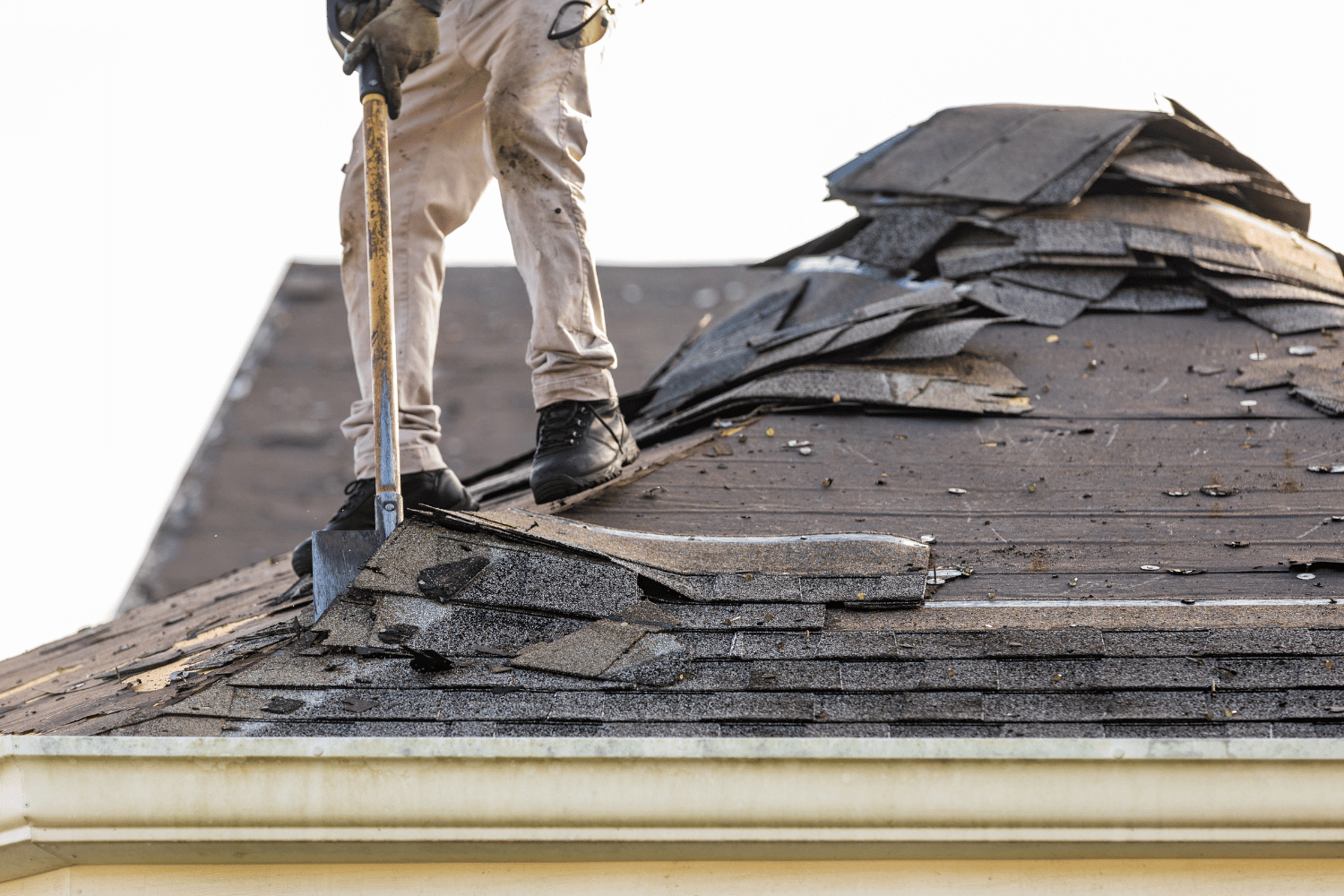
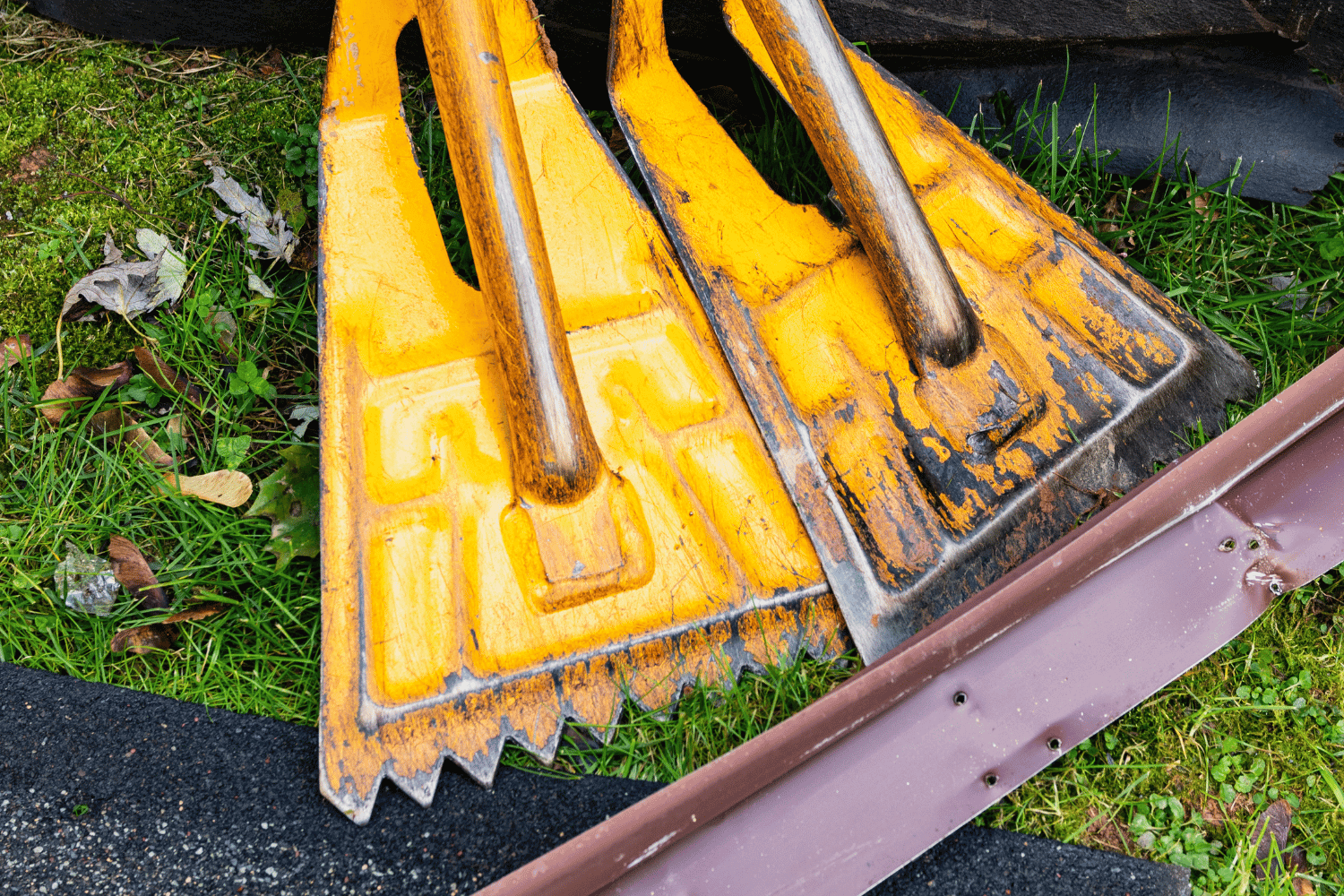
- Roofing tear-off shovel or flat pry bar — designed to get under shingle tabs and lift them without gouging the deck
- Safety harness and roof anchors — non-negotiable on any pitched roof
- Work gloves, safety goggles, and sturdy shoes — shingle edges, exposed nails, and granule dust are constant hazards
- Adjustable roof jacks — provide footing and a staging area for debris
- Tarps and plywood sheets — protect landscaping, windows, and the ground below
- Magnetic nail sweep — essential for cleanup (roofing nails in a Columbia driveway or yard are no joke)
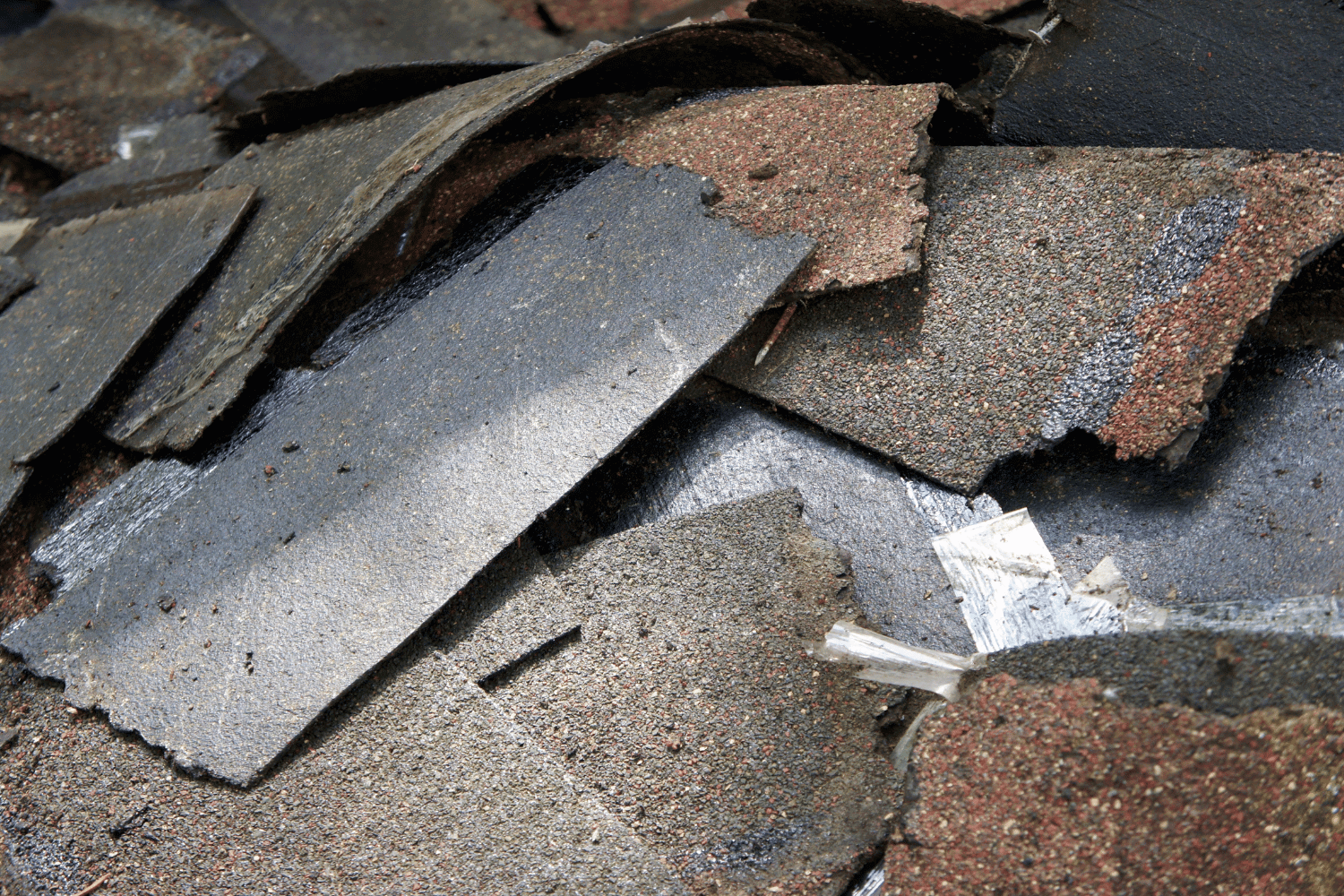
- Rented dumpster or large debris container — a full tear-off generates more waste than most homeowners expect
Step-by-step shingle removal process
Start at the ridge
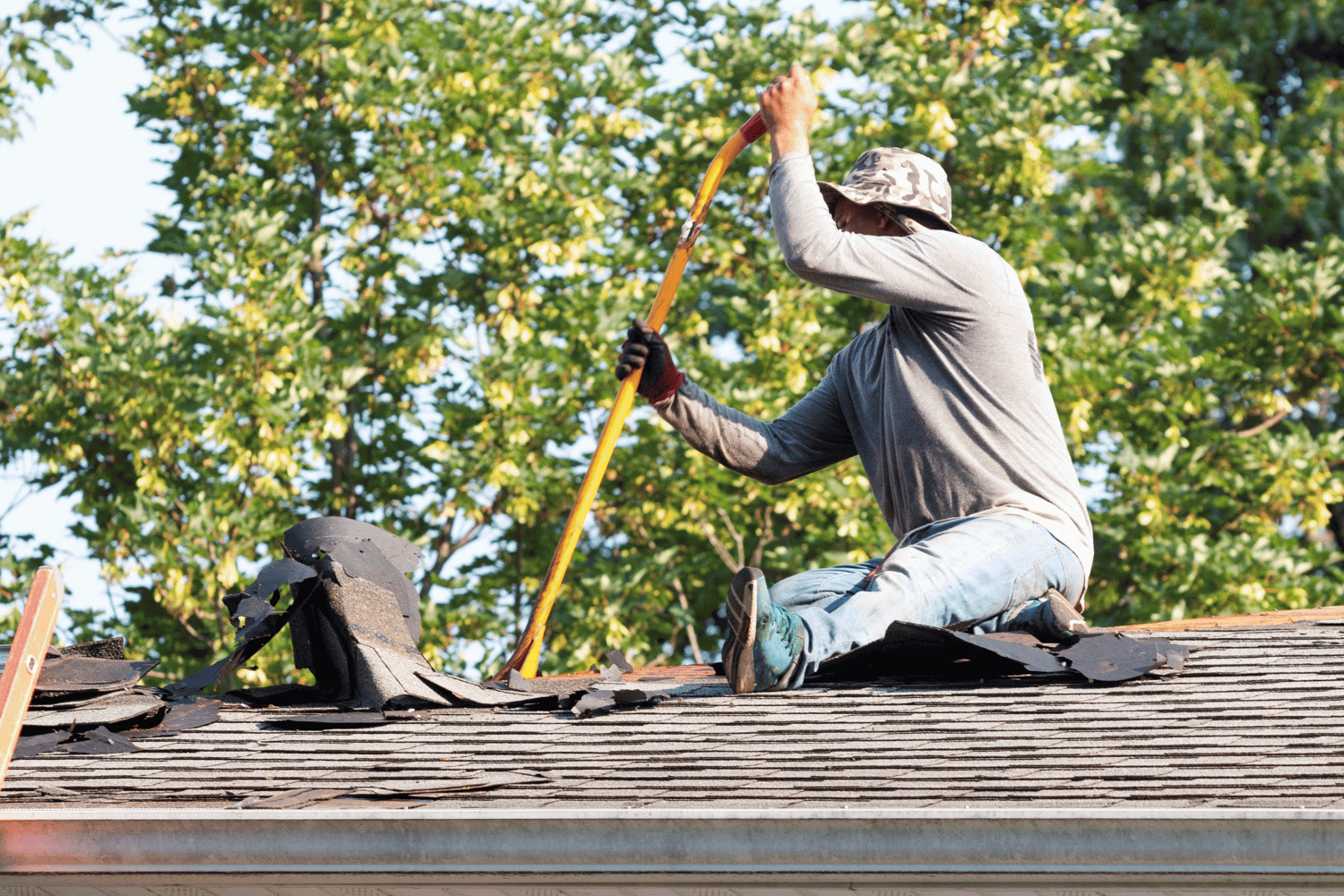
Begin at the peak by prying up the ridge cap shingles. Use a roofing shovel to get under the edges and lift in sections. Ridge caps are typically nailed with longer fasteners, so expect some resistance. Once the caps are off, you have a clear starting line for the field shingles below.
Work downward in sections
Tear off shingles in two- to three-foot-wide strips, working from the ridge toward the eaves. Let debris slide down toward roof jacks or tarps. As you go, watch for soft spots in the decking — they usually mean moisture has been sitting underneath, which is common after Missouri ice storms or prolonged summer rain.
Remove and inspect flashing
Once the shingles are off, address the flashing around chimneys, walls, vents, and pipe boots. Pry it up carefully with a smaller bar. If the flashing shows rust, bending, or gaps, replace it during the tear-off rather than reusing it under new shingles. In Columbia, flashing failures are one of the top sources of hidden leaks, especially around older chimney penetrations in neighborhoods like Old Southwest, East Campus, and Shepard Hills.
Cleaning up and inspecting the deck
After the shingles are down, sweep the deck clean and run a magnetic nail sweep across the roof surface, yard, and driveway. Stray roofing nails are one of the most common post-project hazards.
Then inspect the roof deck itself. Look for:
- soft or spongy sections that indicate moisture damage or rot
- water staining on the underside of the decking
- mold or mildew, especially in areas with poor ventilation
- warped or separated deck boards
- exposed or pulled-through fasteners
Any deck issues need to be repaired before new roofing material goes on. Skipping this step is how small problems turn into expensive ones two or three years down the road.
Safety considerations for Columbia homeowners
Roof work is one of the leading causes of fall injuries for homeowners tackling projects themselves. A few rules that matter:
- never work on a wet, icy, or frost-covered roof — wait for dry conditions
- always use a safety harness anchored to the roof structure, not just the ladder
- avoid working alone — someone on the ground should know you are up there
- check weather forecasts before starting — Mid-Missouri afternoon storms can roll in fast, especially between April and September
- keep your work area organized so you are not stepping over loose debris or tools
DIY tear-off vs. hiring a professional
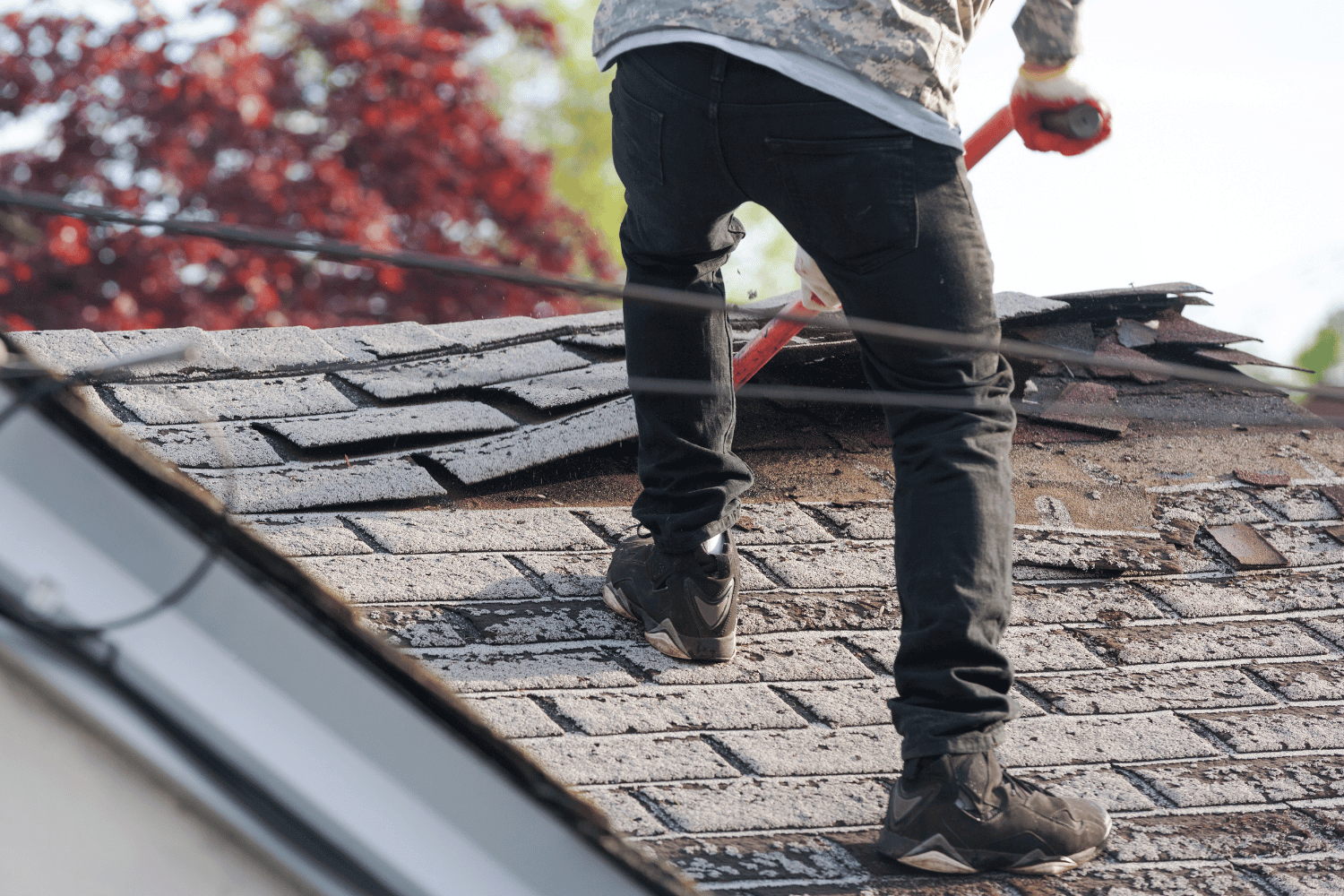
A small patch tear-off on a single-story roof with easy access is a reasonable DIY project if you have the tools and experience. But a full roof tear-off is a different scale of work. For most Columbia homeowners, the math favors hiring a professional when:
- the roof has multiple layers that all need to come off
- there is known or suspected storm damage that may involve insurance
- the pitch is steep or access is limited
- decking repairs are likely underneath
- you need the job done within a weather window
Professional crews can strip and replace a standard residential roof in a day or two. DIY tear-offs often stretch across weekends, leaving your home exposed to weather in between. CoMo Premium Exteriors handles full tear-off and replacement as a single project, including disposal, deck repair, and warranty coverage. As Columbia’s only triple-certified exterior contractor, the team handles everything from small repairs to full roofing replacement in Columbia. If you want a professional assessment before deciding, request a free inspection and get a clear picture of what the roof actually needs.
Frequently Asked Questions
How do I know if my shingles need to be removed or just repaired?
If the damage is limited to a small area — a few missing or cracked shingles from a single impact or wind event — a targeted repair may be enough. But if you are seeing widespread granule loss, multiple lifted tabs, or water stains in the attic, the shingles likely need to come off so the full system can be evaluated. A professional inspection gives you a clearer answer than guessing from the ground.
Can I remove just one layer of shingles and leave the one underneath?
Technically yes, but it is usually not the best move. Leaving an old layer underneath hides the condition of the deck and adds weight to the roof structure. Most building codes in Boone County allow a maximum of two layers, but a clean tear-off down to the deck gives you the best foundation for a new roof.
What time of year is best for shingle removal in Columbia, MO?
Late spring through early fall gives you the most reliable weather windows. Avoid tearing off shingles during freeze-thaw periods in winter or when afternoon storms are likely. The goal is a dry stretch long enough to complete the tear-off and get new material on before the next rain.
How long does a full shingle tear-off take?
A professional crew can usually strip a standard Columbia home in one day. DIY tear-offs on the same roof might take two to three weekends, depending on the number of layers, roof pitch, and how much deck repair is needed underneath.
Should I remove shingles myself after hail damage, or wait for an inspection?
Wait for an inspection first. Hail damage documentation matters if you plan to file an insurance claim, and pulling shingles before a professional assessment can complicate the process. Get the damage evaluated, then decide whether DIY or professional removal makes more sense for your situation.
What happens to my roof if it rains during a tear-off?
An exposed roof deck is vulnerable to water damage within hours. Professional crews plan around weather forecasts and can tarp exposed sections quickly if conditions change. For DIY projects, never start a tear-off without confirming at least two to three days of dry weather ahead. Mid-Missouri pop-up storms between April and September are especially unpredictable.
