
Choosing a roof style for your Jefferson City home involves more than curb appeal. The gable design you pick affects storm performance, attic ventilation, and your total project cost. These seven gable roof options all work well for homes across Mid-Missouri — and each has specific tradeoffs worth understanding before you commit.
1. Standard Gable Roof
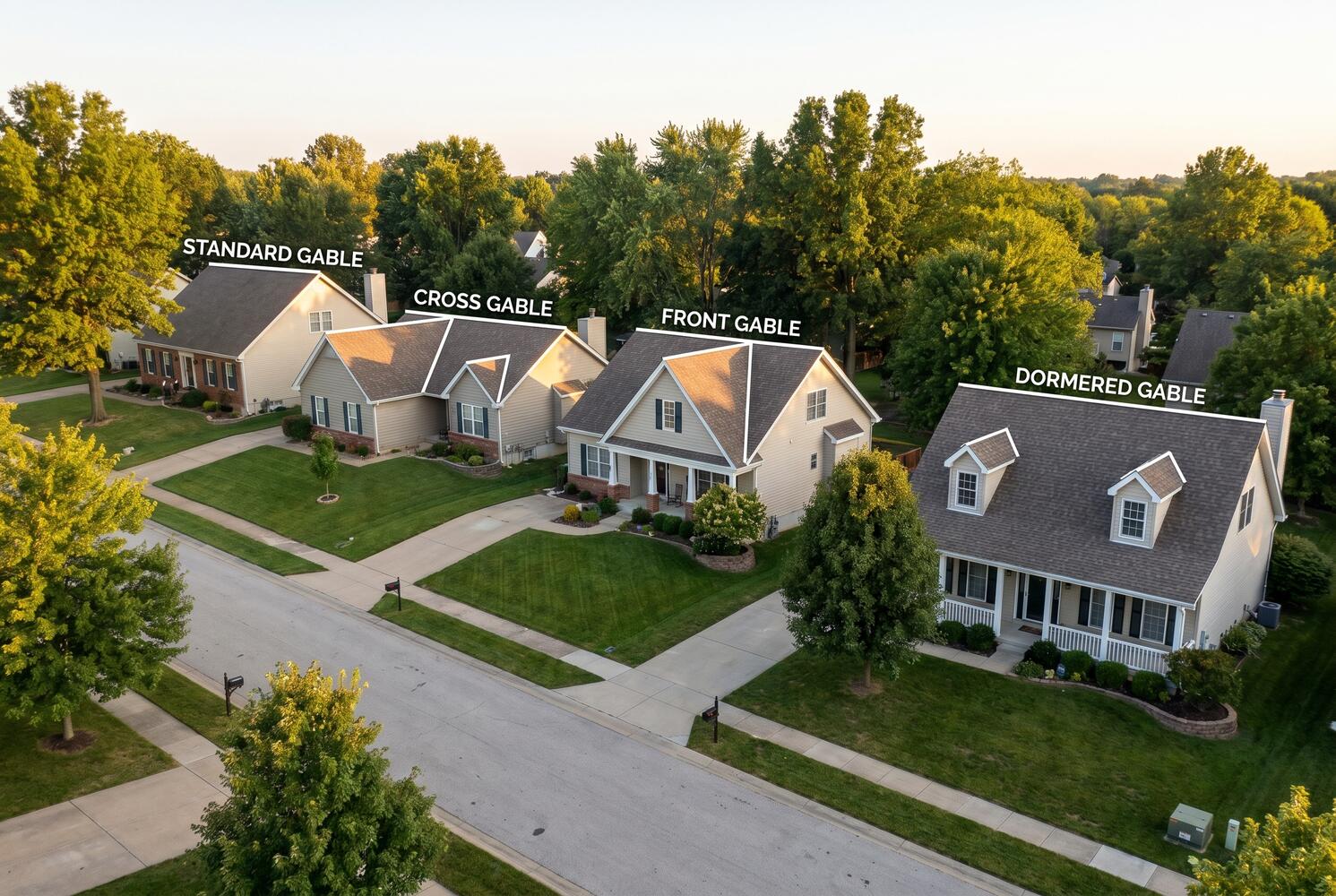
The standard gable is the simplest design: two equal roof planes meeting at a central ridge. That classic triangular profile is what most people picture when they think of a house.
Standard gables work especially well on ranch-style homes, which dominate Jefferson City neighborhoods built from the 1950s through the 1980s. The pitch (slope angle) can be adjusted to balance looks and function. Steeper pitches shed snow faster during Missouri winters. Shallower pitches keep material and labor costs down.
2. Cross Gable Roof
A cross gable roof features two or more gable sections intersecting at right angles, forming an L-shape, T-shape, or more complex footprint. You will see this design on homes with attached garages, bump-outs, or separate wings.
Many two-story homes near the Jefferson City Capitol use cross gable designs. The intersections create valleys where roof planes meet — and these valleys need careful flashing and waterproofing to prevent leaks. Make sure your contractor uses quality valley flashing and ice and water shield in these transition areas.
3. Box Gable Roof
A box gable extends the roof past the exterior wall and encloses the triangular gable end. The result is a more pronounced, finished look with added depth and shadow lines.
This style is common on Colonial and Victorian-era homes and pairs well with Mid-Missouri’s traditional architectural character. Some of the historic homes along Jefferson City’s Capitol Avenue and in Columbia’s East Campus neighborhood feature box gable elements. If your home has box gable ends, pay attention to the fascia and soffit condition during any roof replacement — enclosed areas can trap moisture if not properly ventilated.
4. Dutch Gable Roof (Gable-Over-Hip)
A Dutch gable combines elements of both gable and hip roofs. The lower portion slopes on all four sides (like a hip roof), while the upper portion transitions to a triangular gable end. You get the wind resistance of a hip roof with the ventilation and attic space of a gable.
Dutch gable roofs appear on some Craftsman and custom-built homes in the Columbia and Jefferson City area. The design allows for a gable vent or window in the upper triangle, bringing natural light into attic space. The tradeoff is slightly higher construction complexity and cost compared to a standard gable.
5. Front Gable Roof
A front gable orients the gable end toward the street rather than the side. This design is prominent in Colonial Revival, Greek Revival, and many early 20th-century homes. The front-facing gable creates a strong visual focal point and often frames the main entrance.
In Jefferson City, front gable designs appear frequently on homes in the historic East End neighborhood and along older residential streets near the Missouri State Penitentiary site. Combined with decorative trim, brackets, or a gable-end window, this orientation adds real curb appeal.
6. Gambrel Roof
A gambrel roof uses two different slopes on each side — a steeper lower slope and shallower upper slope — creating a barn-like silhouette. The gambrel maximizes usable space under the roof, making it practical for bonus rooms, loft conversions, and storage.
In rural areas surrounding Jefferson City and across Central Missouri, gambrel roofs appear on both residential homes and agricultural buildings. The steeper lower slopes shed Missouri’s heavy spring rains effectively, but they require proper bracing to handle wind loads during severe thunderstorms.
7. Gable Roof with Dormers
Adding dormers to a gable roof creates vertical window openings that project from the sloping roof plane. Dormers bring natural light and ventilation into upper-floor rooms while adding architectural character to the exterior.
Cape Cod-style homes throughout Mid-Missouri commonly feature dormer windows on gable roofs. Dormer additions are a popular renovation for homeowners converting attic space into usable bedrooms or home offices. If you are considering adding dormers, a roof replacement is the ideal time — the structure is already exposed and accessible.
Choosing the Right Materials for Your Gable Roof
The material you choose affects appearance, durability, and maintenance requirements. Here are the most common options for Mid-Missouri homes.
Asphalt Shingles
Asphalt shingles are the most popular choice in Jefferson City and across Central Missouri. They are cost-effective, available in dozens of colors and profiles, and perform well in our climate. GAF’s Timberline HDZ line offers impact-resistant options that are valuable in our hail-prone region. Most asphalt shingle roofs last 20 to 30 years with proper ventilation and maintenance.
Metal Roofing
Standing seam metal roofing is growing in popularity for gable roofs throughout Mid-Missouri. Metal roofs last 40 to 70 years, reflect solar heat to lower cooling costs, and handle high winds better than most shingle products. The clean lines of standing seam panels complement the simple geometry of a gable roof. According to the U.S. Department of Energy, metal roofs can reduce cooling costs by 10 to 25 percent.
Cedar Shakes
Cedar shakes provide a natural, rustic look that works well on Craftsman and cabin-style homes in the Mid-Missouri countryside. They offer natural insulation and resist decay and insects, but they require more maintenance than asphalt or metal and are not recommended for areas with high fire risk. Properly maintained cedar shake roofs can last 30 to 40 years.
Wind, Ventilation, and Cost Considerations
Wind Resistance
Gable roofs can be more susceptible to wind uplift than hip roofs, particularly at the gable end walls. In Central Missouri, where severe thunderstorms and occasional tornadoes are a reality, proper bracing of the gable end is critical. Contractors familiar with local conditions know how to reinforce gable ends to meet wind load requirements.
Ventilation
Gable roofs naturally accommodate ventilation through gable-end vents, ridge vents, and soffit vents. Proper attic ventilation is essential in Mid-Missouri to prevent ice dams in winter and reduce heat buildup in summer. A balanced ventilation system extends the life of your roofing materials and improves your home’s energy efficiency.
Cost
Gable roofs are generally the most cost-effective roof style to build and maintain because of their simple geometry. A standard gable roof replacement in the Jefferson City area typically ranges from $8,000 to $18,000 depending on size, pitch, and material choice. More complex designs like cross gables or dormer additions increase both material and labor costs.
Working with a Local Roofing Contractor
Whether you are replacing an aging gable roof or choosing a design for new construction, working with a contractor who understands Mid-Missouri’s climate and building practices makes a real difference. At CoMo Premium Exteriors, we have installed and replaced gable roofs across Jefferson City, Columbia, Fulton, and surrounding communities. We will walk you through your options, explain tradeoffs, and help you choose a design and materials that fit your home and budget.
Schedule a free roof inspection or call (573) 424-9008 for a consultation.
Frequently Asked Questions
What is the best gable roof design for homes in Jefferson City, MO?
For most Jefferson City homes, a standard or cross gable roof offers the best balance of cost, performance, and aesthetics. Standard gable roofs are simple and affordable, while cross gable designs accommodate L-shaped or multi-wing floor plans common in the area. The right choice depends on your home’s footprint, existing architecture, and budget.
How long does a gable roof last in Mid-Missouri?
With quality materials and proper installation, an asphalt shingle gable roof in Mid-Missouri typically lasts 20 to 30 years. Metal gable roofs can last 40 to 70 years. Missouri weather — including hail, UV exposure, and freeze-thaw cycles — can shorten the lifespan compared to milder climates, making material quality and proper ventilation especially important.
Are gable roofs good for Missouri weather?
Gable roofs handle Missouri’s rain and snow well thanks to their sloped design, which promotes efficient water drainage and snow shedding. The main concern is wind resistance at gable ends during severe thunderstorms. Proper bracing and construction techniques, including hurricane clips and adequate sheathing attachment, address this vulnerability effectively.
What is the difference between a gable roof and a hip roof?
A gable roof has two sloping sides that meet at a ridge, while a hip roof slopes on all four sides. Gable roofs provide more attic space and better ventilation, while hip roofs offer superior wind resistance. Many Mid-Missouri homes use a combination of both styles, particularly on complex floor plans.
Can I add dormers to my existing gable roof?
Yes. Dormers can be added to an existing gable roof, and a roof replacement is often the ideal time to do it since the structure is already exposed. Dormers add natural light, ventilation, and usable space to upper floors. The cost and feasibility depend on your existing roof framing and the dormer style you choose.
How much does a gable roof replacement cost in Jefferson City?
A standard gable roof replacement in the Jefferson City area typically ranges from $8,000 to $18,000 depending on the roof size, pitch, and material choice. Cross gable or dormer additions increase the cost. Getting a site-specific estimate is the best way to understand your project’s scope.
Which roofing material works best on a gable roof in Mid-Missouri?
Asphalt shingles are the most common and cost-effective choice for gable roofs in the Jefferson City area. Metal roofing is gaining popularity for its longevity and energy efficiency. Cedar shakes offer a natural look but require more upkeep. The best choice depends on your budget, aesthetic goals, and how long you plan to stay in the home.
