
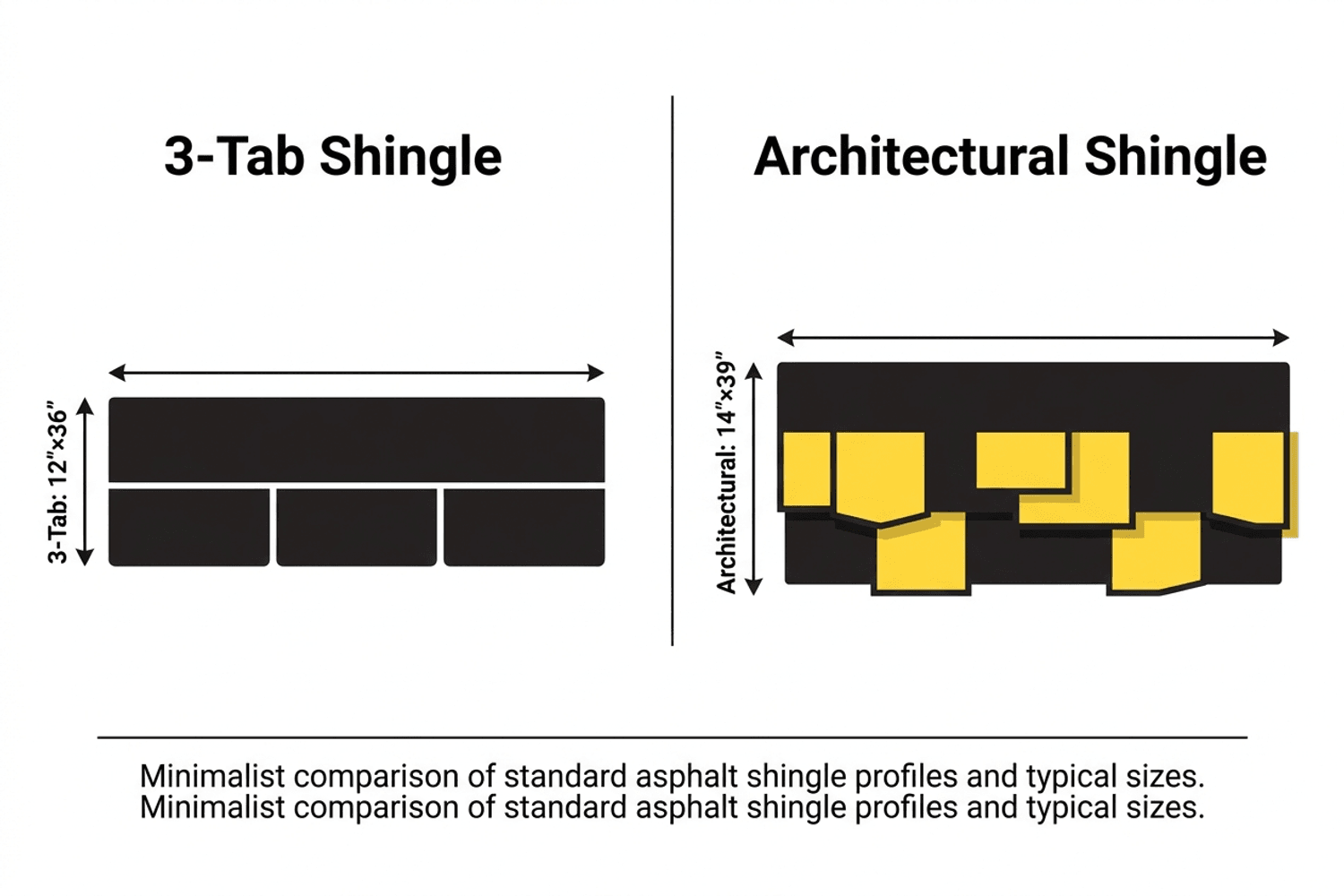
If you are planning a roof replacement in Central Missouri, understanding shingle size helps you make sense of contractor quotes and material orders. Shingle dimensions affect coverage calculations, installation timelines, and how your finished roof handles Boone County storm seasons. We walk homeowners through these details every day at CoMo Premium Exteriors, so here is a straightforward breakdown.
Standard Asphalt Shingle Dimensions
Asphalt shingles sold in the U.S. follow two main size categories. Your choice between them drives cost, durability, and appearance.
Three-Tab Shingles
Three-tab shingles measure 12 inches tall by 36 inches wide. Each strip has three evenly spaced cutouts, creating a flat, uniform look across the roof. They sit roughly 0.19 inches thick and weigh 60 to 80 pounds per bundle. Three bundles cover one roofing square (100 square feet).
You still see three-tab shingles on budget-conscious projects around Columbia, Jefferson City, and Lake of the Ozarks. Warranties range from 20 to 30 years, though Missouri freeze-thaw cycles and hail seasons tend to shorten that effective lifespan on exposed roofs.
Architectural Shingles
Architectural (dimensional) shingles run larger, typically 13 to 14 inches tall by 36 to 39 inches wide. Multiple asphalt layers laminated together create a textured profile that mimics slate or wood shake. According to Owens Corning, architectural shingles weigh roughly 50 percent more per square than three-tab, which contributes directly to better wind resistance.
Most roofs we install across Mid-Missouri today use architectural shingles. The added thickness holds up against severe weather, and manufacturers like GAF and CertainTeed back them with 30- to 50-year warranties.
Why Shingle Size Matters for Your Central Missouri Roof
Shingle dimensions have practical consequences for your project, beyond what appears on a spec sheet.
- Material coverage: A standard three-tab bundle covers about 33.3 square feet. Architectural bundles cover slightly less due to their overlap pattern. Accurate sizing means your contractor orders the right quantity without costly overage or mid-job shortages.
- Installation speed: Larger shingles lay more area per course, which can shave hours off a residential install. For a typical 2,000-square-foot Columbia home, that can mean finishing in one day instead of two.
- Wind resistance: Wider shingles with more nailing surface resist uplift better. Central Missouri sees straight-line winds from spring and summer storms that regularly top 60 mph. The National Weather Service St. Louis office covers our region and issues severe thunderstorm warnings throughout the season.
- Aesthetic scale: Shingle size changes how the roof reads against your home’s proportions. Larger homes in neighborhoods like Thornbrook or Old Southwest in Columbia benefit from the depth and shadow of architectural profiles.
Single-Layer vs. Multi-Layer Shingles
The core structural difference between shingle types comes down to layers.
Single-layer (three-tab): One layer of asphalt-coated fiberglass. Lighter, less expensive, and adequate for straightforward roofing jobs. The flat profile produces minimal shadow line and a traditional appearance.
Multi-layer (architectural): Two or more layers laminated together. The added material bumps weight, which pushes wind resistance ratings up to 130 mph on many products. Varied tab sizes create depth and shadow that boost curb appeal noticeably. GAF’s Timberline series, one of the best-selling architectural lines in the country, is a common choice we install throughout the Columbia and Jefferson City markets.
Factors That Influence Shingle Choice in Mid-Missouri
Picking the right shingle is not one-size-fits-all. Several factors specific to our region come into play.
Roof Pitch
Steeper roofs shed water and snow faster, which changes how shingles overlap and perform. Many homes in Boonville, Fulton, and the Lake area have varied pitches that require careful shingle selection. A steeper pitch generally allows standard exposure, while low-slope sections may need modified installation techniques.
Climate and Weather Exposure
Central Missouri averages 40 to 45 inches of rain per year, regular ice storms in winter, and hail-producing thunderstorms in spring and summer. These conditions favor thicker, impact-resistant shingles. Many of our customers choose Class 4 impact-rated architectural shingles because they can qualify for homeowner’s insurance discounts through Missouri carriers.
Local Building Codes
The City of Columbia and Boone County follow the International Residential Code with local amendments. These codes set minimum requirements for roofing materials, including wind resistance ratings. The City of Columbia Building Division provides permit guidance for roofing projects.
Existing Roof Layers
Missouri codes generally allow up to two layers of asphalt shingles. If your home already has two layers, a full tear-off is required before new shingles go on. Heavier architectural shingles add more structural load, which matters especially on older homes with two existing layers still in place.
Cost Comparison by Shingle Type (2026 Central Missouri)
Understanding shingle cost ranges helps you budget realistically.
- Three-tab shingles: $3.50 to $5.50 per square foot installed in the Columbia market. A 2,000-square-foot roof runs approximately $7,000 to $11,000.
- Architectural shingles: $5.00 to $7.50 per square foot installed. The same roof costs approximately $10,000 to $15,000.
- Premium/designer shingles: $7.50 to $12.00+ per square foot. These products mimic slate or cedar shake and appear most often on higher-end homes around the Lake of the Ozarks and southern Columbia neighborhoods.
These are Central Missouri market prices as of spring 2026. Costs vary based on roof complexity, accessibility, and seasonal demand. Storm season (April through August) is our busiest period, which can affect scheduling and pricing.
How to Choose the Right Shingle for Your Home
Here is a practical approach to the decision.
- Start with budget: Three-tab shingles are a cost-effective choice when budget drives the decision. Architectural shingles deliver better long-term value through longer warranties and stronger durability.
- Match your home’s style: Ranch homes, Cape Cods, and Craftsman-style houses common in Columbia and Jeff City each pair differently with various shingle profiles.
- Check your insurance: Several Missouri insurers offer premium discounts for impact-resistant shingles. Call your agent before deciding.
- Get a professional assessment: A free roof inspection from our team identifies the best shingle size and type for your specific roof geometry and local conditions.
Frequently Asked Questions
What is the standard size of a three-tab asphalt shingle?
Three-tab shingles measure 12 inches tall by 36 inches wide, with three evenly spaced 12-inch tabs. This has been the industry standard for decades and remains common on budget-friendly roofing projects in Central Missouri.
How big are architectural shingles compared to three-tab?
Architectural shingles are slightly larger, typically 13 to 14 inches tall by 36 to 39 inches wide. Their multi-layer construction makes them thicker and heavier, contributing to better wind resistance and a more dimensional appearance.
How many bundles of shingles do I need for my roof?
Three bundles of standard shingles cover approximately 100 square feet (one roofing square). A typical 1,500- to 2,500-square-foot home in Columbia or Jefferson City needs 45 to 75 bundles, depending on roof pitch, complexity, and waste factor. Your contractor calculates this precisely during the estimate.
Can I install new shingles over old ones in Missouri?
Missouri building codes generally allow up to two layers of asphalt shingles. If your roof already has two layers, a complete tear-off is required. Even when a second layer is permitted, we usually recommend a full tear-off so the deck can be inspected and any hidden damage repaired.
Which shingle type is best for Central Missouri weather?
We recommend architectural shingles with a Class 4 impact rating for most Central Missouri homes. Our region sees regular hail, high winds, and ice storms that can damage thinner shingles. Impact-rated products also qualify for insurance discounts with many Missouri carriers, which offsets the higher upfront cost over time.
How long do asphalt shingles last in Mid-Missouri?
Three-tab shingles typically last 15 to 25 years in our climate, while architectural shingles can last 25 to 40 years with proper installation and ventilation. Severe hail events can shorten these timelines, which is why post-storm inspections matter.
Does shingle color affect performance in Missouri summers?
Yes, to a degree. Darker shingles absorb more heat, raising attic temperatures during Missouri summers when temperatures regularly exceed 90°F. Lighter colors reflect more solar energy. That said, proper attic ventilation and insulation matter more than shingle color for keeping your home comfortable and your energy bills manageable.
What is the difference between exposure and shingle size?
Exposure refers to the portion of each shingle that remains visible after installation, not the total shingle dimensions. For standard three-tab shingles, the typical exposure is 5 inches. For architectural shingles, exposure ranges from 5 to 5-5/8 inches depending on the product. Your contractor sets exposure based on manufacturer specs and local wind requirements.
Ready to find the right shingles for your Central Missouri home? Give us a call at (573) 424-9008 or schedule a free roof inspection. We serve Columbia, Jefferson City, Lake of the Ozarks, Boonville, Fulton, and surrounding communities across Mid-Missouri.
