
Best Ways to Insulate Under Your Deck: A Complete Guide for Central Missouri Homeowners
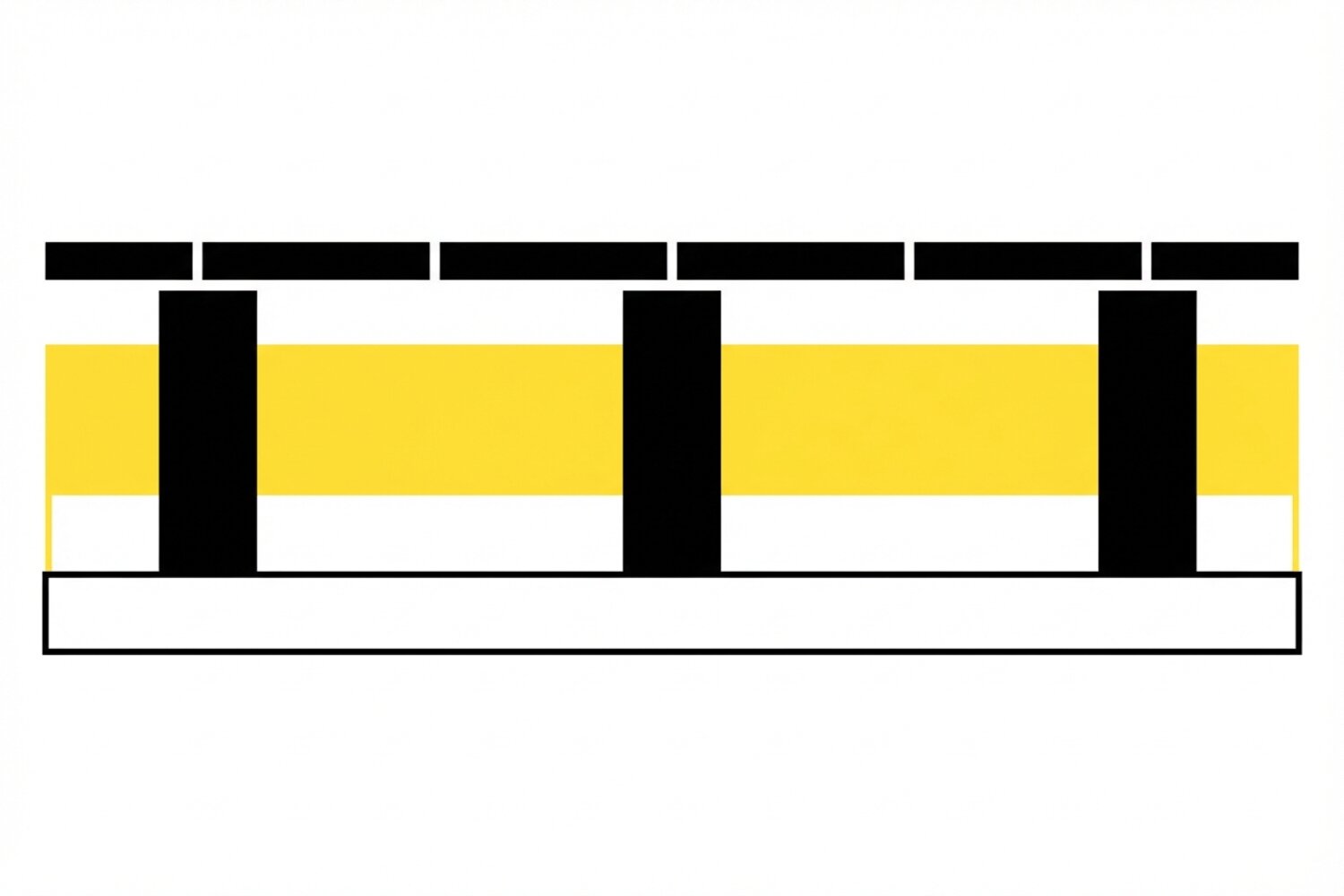
If you have a deck above a living space, porch, or storage area in Columbia, Jefferson City, or anywhere in Mid-Missouri, insulating underneath it is one of the smartest upgrades you can make. Without insulation, that floor becomes a direct pathway for cold air in winter and heat in summer, driving up your energy bills and making the space below uncomfortable.
At CoMo Premium Exteriors, we build and maintain decks across Boone, Cole, and Callaway counties. We see the difference proper under-deck insulation makes, especially given Central Missouri’s wide temperature swings from single digits in January to the upper 90s in July. Here is everything you need to know about doing it right.
Why Under-Deck Insulation Matters in Mid-Missouri
Central Missouri’s climate creates specific challenges for uninsulated deck underside areas:
- Extreme temperature range. According to NOAA climate data, our region sees average lows around 20 degrees F in January and average highs near 90 degrees F in July. That 70-degree swing puts constant thermal stress on uninsulated surfaces.
- Moisture and humidity. Mid-Missouri’s humid summers (often 80 percent relative humidity or higher) create condensation risk on uninsulated surfaces, leading to mold, mildew, and wood rot.
- Energy costs. An uninsulated floor above a deck or porch can account for 10 to 15 percent of a home’s total heat loss during winter, according to the U.S. Department of Energy.
- Freeze-thaw cycling. With 50-plus days below freezing annually, moisture that gets into unprotected framing goes through repeated freeze-thaw cycles that accelerate structural damage.
Best Insulation Materials for Under-Deck Applications
Not all insulation works equally well in the exposed, semi-outdoor environment under a deck. Here are the materials we recommend and install in the Columbia area, along with their strengths and limitations:
Closed-Cell Spray Foam
This is the gold standard for under-deck insulation in our climate. Closed-cell spray foam delivers R-6 to R-7 per inch, creates its own vapor barrier, and adheres directly to the underside of the deck framing without gaps. It handles moisture exposure better than any other option.
| Property | Closed-Cell Spray Foam |
|---|---|
| R-Value per inch | R-6 to R-7 |
| Moisture resistance | Excellent (built-in vapor barrier) |
| Installation | Professional recommended |
| Cost per square foot | $2.50 – $4.50 |
| Best for | Living spaces below deck, enclosed porches |
The main downside is cost. Professional spray foam installation typically runs $2.50 to $4.50 per square foot in the Columbia market, depending on thickness and accessibility. For a 300 square foot under-deck area, expect $750 to $1,350.
Rigid Foam Board (XPS or Polyiso)
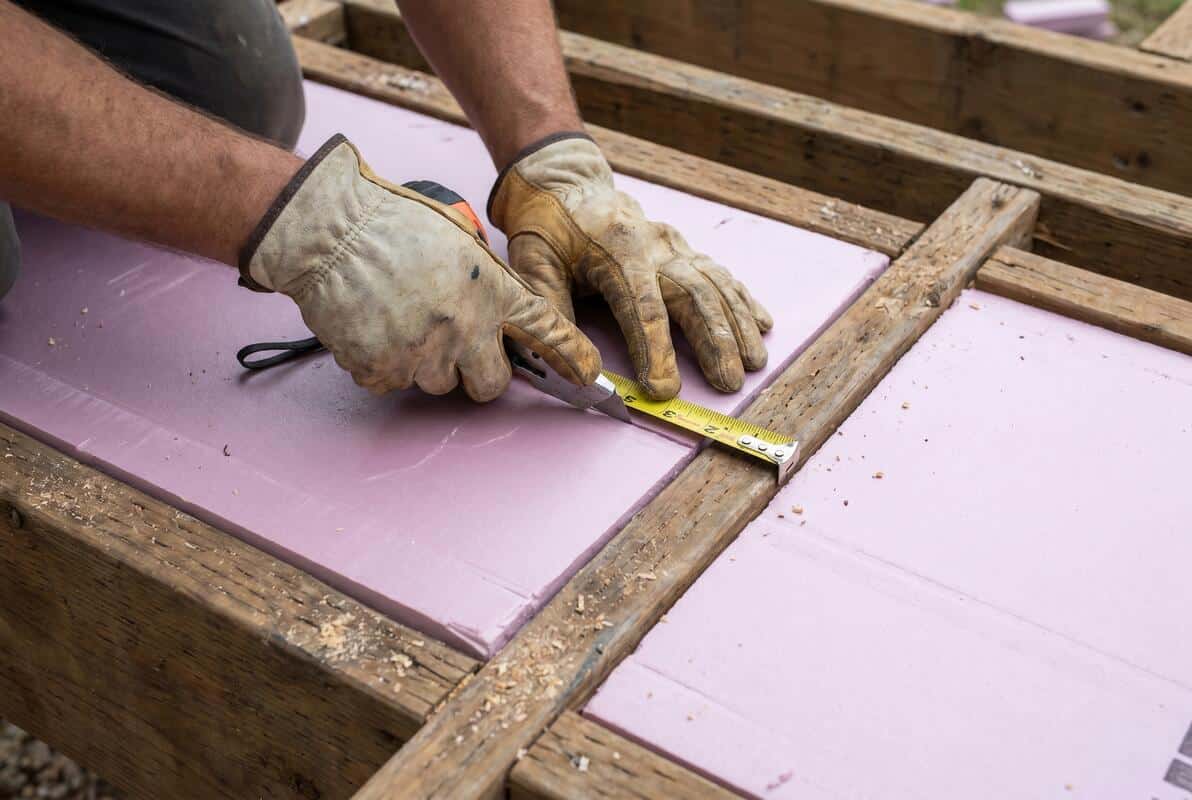
Extruded polystyrene (XPS) and polyisocyanurate (polyiso) boards are excellent DIY-friendly options. XPS delivers R-5 per inch and handles moisture well. Polyiso offers R-6 to R-6.5 per inch but loses some effectiveness in very cold temperatures, which matters during our January cold snaps.
| Property | XPS Foam Board | Polyiso Board |
|---|---|---|
| R-Value per inch | R-5 | R-6 to R-6.5 |
| Moisture resistance | Good | Moderate (foil-faced is better) |
| Cold weather performance | Consistent | Drops below 50 degrees F |
| Installation | DIY-friendly | DIY-friendly |
| Cost per square foot | $0.75 – $1.50 | $0.80 – $1.75 |
For Mid-Missouri, we generally prefer XPS for its consistent cold-weather performance. Cut the boards to fit snugly between joists and seal all seams with spray foam or foil tape to prevent air gaps.
Mineral Wool Batts
Mineral wool (Rockwool/Roxul) offers R-4.2 per inch, is naturally fire-resistant, and does not absorb water like fiberglass. It fits between joists as a friction fit and is a good choice when combined with a separate vapor barrier. It is more moisture-tolerant than fiberglass but should still be protected from direct water exposure.
Fiberglass Batts
Traditional fiberglass batts are the most affordable option at $0.50 to $1.00 per square foot, but they are the least suitable for under-deck applications. Fiberglass absorbs moisture, sags when wet, and loses R-value quickly in humid conditions. If you use fiberglass, it must have a proper vapor barrier and be protected from any water contact. In Mid-Missouri’s humid climate, we generally steer clients toward other options.
Step-by-Step: Preparing Your Deck for Insulation
Proper preparation is the difference between insulation that lasts 20 years and insulation that fails in 3. Here is what needs to happen before any material goes up:
- Inspect the framing. Check all joists, beams, and ledger board connections for signs of rot, insect damage, or structural compromise. Any damaged wood must be repaired or replaced before insulating, as insulation will hide these problems and make them worse.
- Clean the underside. Remove cobwebs, dirt, old nests, and any debris. A pressure washer works well for open decks, but allow everything to dry completely before insulating.
- Address drainage. Water must drain away from the area, not pool against the insulation. If your grading directs water toward the deck, correct it first. In Columbia’s clay-heavy soils, drainage is a persistent issue.
- Check for code requirements. The City of Columbia building codes require specific fire ratings for insulation in occupied spaces. If the area below the deck is or will be a living space, you may need a building permit.
- Plan ventilation. Even insulated under-deck spaces need airflow to prevent moisture buildup. Leave ventilation gaps or install soffit vents at the perimeter.
Installation Methods by Material Type
Installing Spray Foam Under Your Deck
For professional spray foam installation (recommended for closed-cell):
- The installer will mask off any areas that should not receive foam
- Foam is sprayed in lifts (layers) of 1 to 2 inches, building up to the target thickness
- Typical target: 2 to 3 inches for R-12 to R-21
- The foam expands and cures within minutes
- Excess is trimmed flush with the joists
- No additional vapor barrier is needed with closed-cell foam
DIY spray foam kits (like Touch ‘n Foam or Froth-Pak) work for small areas under 200 square feet but become cost-prohibitive for larger spaces where professional equipment is more efficient.
Installing Rigid Foam Board
- Measure each joist bay and cut boards to fit snugly (1/4 inch tight on each side)
- Push boards up between joists until they sit flush with the bottom edges
- Secure with construction adhesive and/or mechanical fasteners (cap nails or furring strips)
- Seal all seams and edges with spray foam or foil tape
- Install a vapor barrier on the warm side (interior side) if using in a heated space application
Installing Batt Insulation
- Cut batts to fit joist bays with a slight compression for friction fit
- Do not compress more than 10 percent, as this reduces R-value
- Install a vapor barrier (6-mil polyethylene sheeting) on the warm side
- Secure with wire supports, netting, or furring strips to prevent sagging
- For mineral wool, no additional vapor barrier is needed in most applications
Adding a Vapor Barrier
In Mid-Missouri’s humid climate, a vapor barrier is essential for any insulation type except closed-cell spray foam (which is its own barrier). Here is how to do it right:
- Use 6-mil polyethylene sheeting for the barrier
- Install on the warm side of the insulation (facing the heated interior)
- Overlap all seams by at least 6 inches and seal with vapor barrier tape
- Extend the barrier up wall surfaces at the perimeter by at least 6 inches
- Do not puncture the barrier with fasteners — use adhesive where possible
For ground-level applications where moisture comes up from the soil, also lay a ground vapor barrier (10-mil or heavier polyethylene) over the exposed earth.
Protecting Against Pests
Under-deck spaces in Central Missouri attract mice, squirrels, raccoons, and insects. Insulation provides nesting material if not properly protected:
- Install hardware cloth (1/4-inch galvanized mesh) over any openings larger than 1/4 inch
- Use pest-resistant insulation materials (closed-cell spray foam and mineral wool are naturally deterrent; fiberglass is not)
- Seal all penetrations where pipes, wires, or ducts pass through the insulation
- Inspect seasonally, especially in early spring when animals seek nesting sites and in fall when they look for winter shelter
Maintenance and Inspection
Under-deck insulation is not a set-it-and-forget-it improvement. Schedule these checks to protect your investment:
- Spring (after frost season): Inspect for moisture damage, condensation stains, or frost heaving that may have displaced rigid boards
- Summer: Check for signs of pest intrusion and ensure ventilation paths are clear
- Fall: Clean drainage paths, remove leaf buildup, and verify that water flows away from the insulated area
- After major storms: Check for water intrusion, especially if the area experienced flooding or heavy rain pooling
Cost Estimates for Under-Deck Insulation in Columbia, MO
Here is what homeowners in the Columbia and Jefferson City area can expect to budget for a 300 square foot under-deck insulation project:
| Material | DIY Cost | Professional Install |
|---|---|---|
| Closed-cell spray foam (3 inches) | $600 – $900 (kit) | $750 – $1,350 |
| XPS rigid foam (2 inches) | $225 – $450 | $500 – $900 |
| Mineral wool batts | $200 – $400 | $450 – $800 |
| Fiberglass batts | $150 – $300 | $350 – $650 |
Professional installation adds labor cost but also ensures proper sealing, vapor barrier placement, and code compliance. For living spaces below the deck, professional installation is strongly recommended.
Frequently Asked Questions
What is the best insulation for under a deck in Missouri?
Closed-cell spray foam is the best overall choice for Mid-Missouri because it provides high R-value (R-6 to R-7 per inch), acts as its own vapor barrier, and handles our region’s moisture and temperature extremes without degrading. XPS rigid foam board is the best DIY option for its consistent cold-weather performance.
Do I need a permit to insulate under my deck in Columbia?
If the space below the deck is or will be used as a living space (a finished porch, sunroom, or bonus room), you likely need a building permit from the City of Columbia Community Development department. Insulating a storage-only or unoccupied area typically does not require a permit, but check with the city to be sure.
How much does it cost to insulate under a deck in Mid-Missouri?
For a typical 300 square foot area, expect $225 to $450 for DIY rigid foam, $600 to $900 for DIY spray foam kits, or $500 to $1,350 for professional installation depending on the material. Costs vary with accessibility, thickness requirements, and existing conditions.
Can I insulate under my deck in winter?
Spray foam requires temperatures above 40 to 60 degrees F for proper application and curing. Rigid foam board and mineral wool batts can be installed in cold weather without issue. If you plan to use spray foam, schedule the work for a mild day or during the warmer months.
Will insulating under my deck cause moisture problems?
Not if done correctly. The key is installing a vapor barrier on the correct side (warm side), maintaining adequate ventilation, and using moisture-resistant materials. Improper installation, particularly trapping moisture between impermeable layers, is the primary cause of insulation-related moisture problems.
How much energy will I save by insulating under my deck?
The Department of Energy estimates that insulating floors over unconditioned spaces can reduce heating costs by 10 to 15 percent. For a Mid-Missouri home spending $1,500 to $2,500 per year on heating, that translates to $150 to $375 in annual savings. Most insulation projects pay for themselves within 2 to 5 years.
Should I insulate under my deck myself or hire a professional?
Rigid foam board and mineral wool batts are well-suited for DIY installation if you are comfortable working in confined spaces and have basic tools. Spray foam, especially closed-cell, is best left to professionals who have the equipment for even application and proper safety gear. For any living space application, we recommend professional installation to ensure code compliance.
Get Expert Help With Your Under-Deck Project
Whether you are finishing a space under your deck, converting a porch to a three-season room, or just want to stop the cold floor above your walkout basement, proper insulation is the foundation of the project. At CoMo Premium Exteriors, we help homeowners across Columbia, Jefferson City, Fulton, and Boonville plan and execute under-deck improvements that hold up to Mid-Missouri’s demanding climate.
Call us at (573) 424-9008 or request a free consultation online. We will assess your space, recommend the right insulation approach, and give you a clear, detailed estimate.
