
Shingles vs Metal Roofing
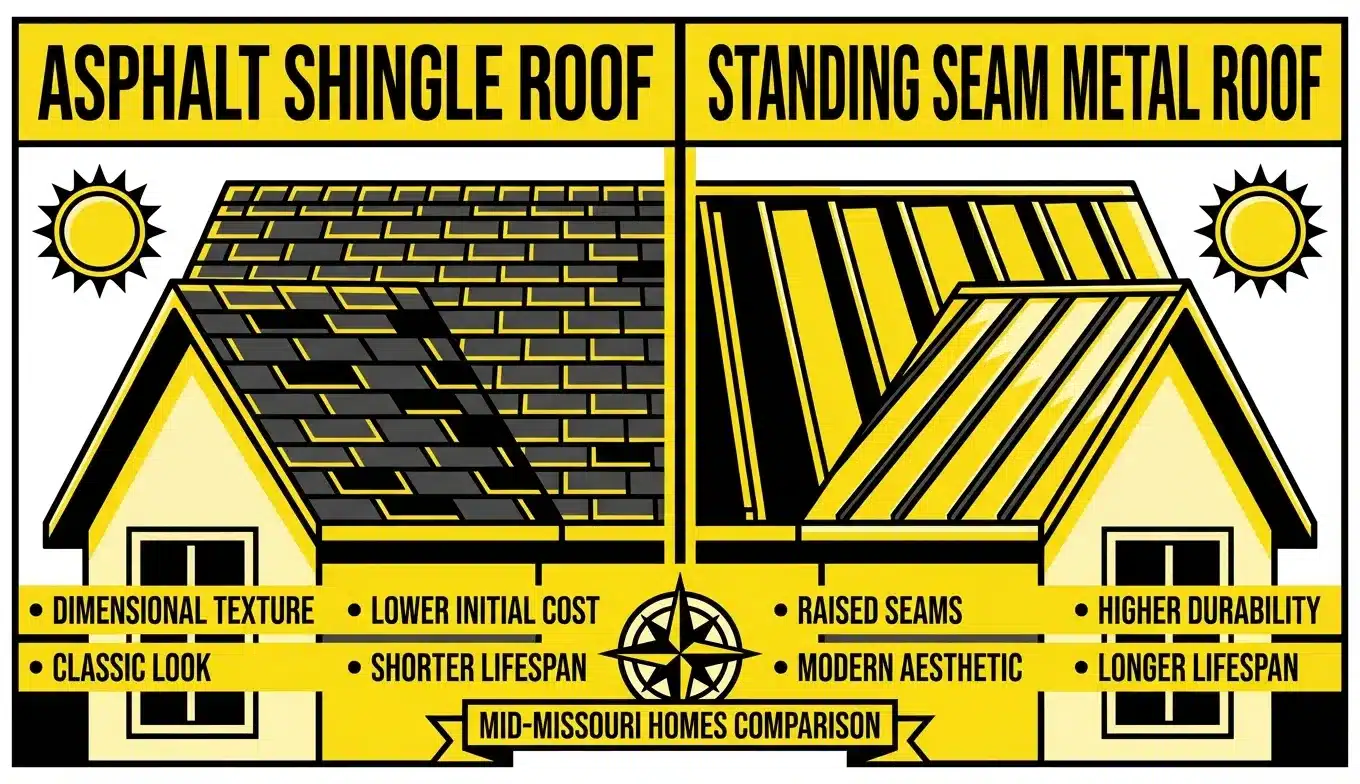
Choosing between asphalt shingles and metal roofing is one of the biggest decisions Mid-Missouri homeowners face. Both roofing options can protect your home for decades, but they differ significantly in cost, lifespan, and performance. This guide breaks down everything you need to know to make the right choice for your home.
Key Takeaways
- Asphalt shingles cost $12,000-$17,000 for a typical Mid-Missouri home, while metal roofing runs $35,000-$50,000 upfront.
- Metal roofs last 50-70 years with minimal maintenance; asphalt shingle roofs typically need replacement every 20-30 years.
- Both standing seam metal roofs and Class 4 impact-resistant shingles can reduce your insurance premiums by 5-35%.
- Metal roofing reflects solar heat and can reduce cooling costs by 10-25% in warmer months.
- Three tab shingles are most affordable but last only 15-20 years; architectural shingles offer better wind resistance and 25-30 year lifespans.
- Standing seam metal roofs work best with solar panels since mounting requires no roof penetration.
- Over 50 years, metal roofing often delivers better total value despite higher upfront cost.
Quick Comparison: Shingles vs Metal
| Factor | Asphalt Shingles | Metal Roofing |
|---|---|---|
| Upfront Cost | $12,000-$17,000 | $35,000-$50,000 |
| Lifespan | 20-30 years | 50-70 years |
| Maintenance | Moderate | Minimal |
| Wind Resistance | Up to 130 mph | Up to 140 mph |
| Energy Efficiency | Standard | 10-25% cooling savings |
| Best For | Budget-conscious, traditional look | Long-term value, modern style |
Understanding Asphalt Shingles
Not all asphalt shingles are created equal. The right choice for your shingle roof depends on your budget, weather exposure, and how long you’re planning to stay in your home.
Types of Asphalt Shingles
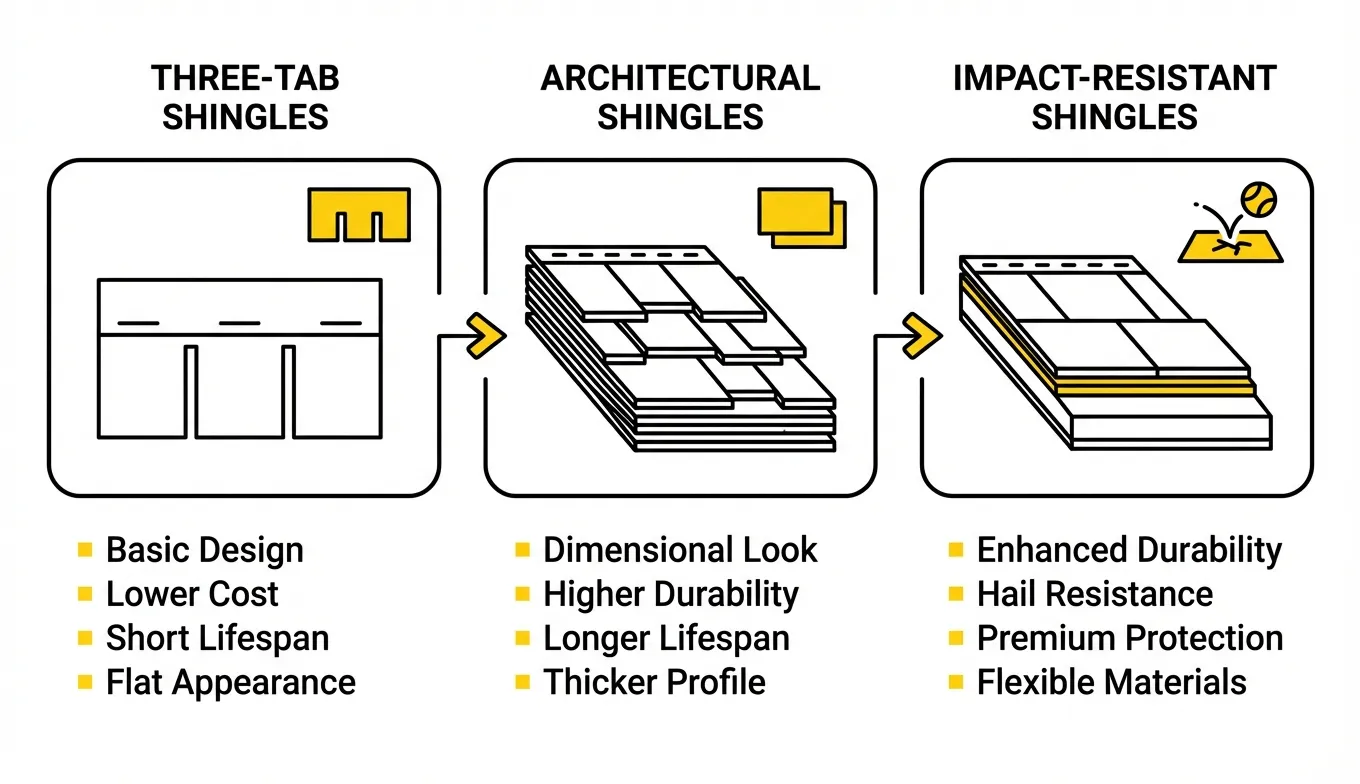
Three Tab Shingles: The most affordable roofing material option. These traditional asphalt shingles create a flat, uniform look and typically last 15-20 years. Mid-Missouri’s harsh weather often shortens this lifespan.
Architectural Shingles: The most popular choice for a new roof. Their layered construction provides better wind resistance and a more dimensional appearance. With proper installation, they protect your home for 25-30 years.
Impact-Resistant Shingles: For Mid-Missouri homes facing frequent hail, impact-resistant shingles offer Class 4 protection against 2-inch hailstones. According to the Insurance Institute for Business and Home Safety, these can reduce your insurance premiums by 5-35% annually.
Asphalt Shingle Pros
- Affordable: Lowest upfront cost of any roofing material
- Easy installation: Faster installation means lower labor costs
- Wide variety: Available in dozens of colors and styles
- Simple repairs: Individual shingles can be replaced easily
- Proven performance: Trusted by homeowners for over a century
Asphalt Shingle Cons
- Shorter lifespan: Requires roof replacement every 20-30 years
- Weather vulnerability: High winds and extreme heat cause faster deterioration
- More maintenance: Periodic inspections and repairs needed
- Less energy efficient: Absorbs heat rather than reflecting it
Read more about asphalt shingles and what makes them work.
Understanding Metal Roofing
Just like shingle roofs, metal roofing comes in several varieties. Your options depend on your home’s style and your budget.
Types of Metal Roofing
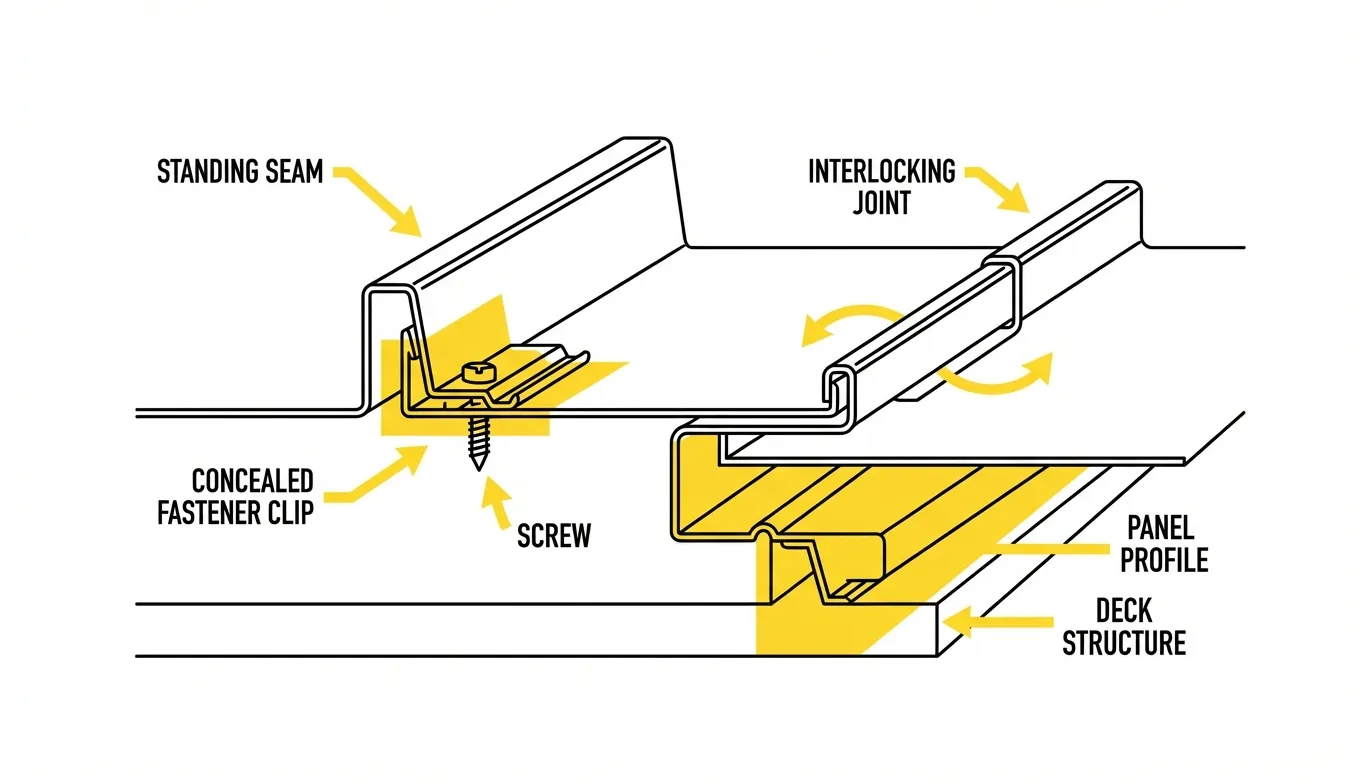
Standing Seam Metal Roofs: The premium choice for metal roof installation. Raised seams lock panels together, creating a virtually leak-proof barrier. The concealed fastener design eliminates exposed screws that can work loose. Standing seam systems typically last 50-70 years with minimal maintenance.
Metal Shingles and Panels: Want metal’s durability with a more traditional appearance? Metal shingles mimic the look of asphalt shingles, slate, or wood shingles. They cost less than standing seam roofs while still providing 40-50 year lifespans.
Metal Roofing Pros
- Exceptional lifespan: 50-70 years with minimal maintenance
- Superior durability: Resistant to corrosion, cracking, and impact damage
- Energy efficient: Reflects solar heat, reducing cooling costs 10-25%
- Eco-friendly: Made from recyclable materials
- Increases home value: Attractive to buyers for its longevity
- Sheds snow: Smooth surface prevents ice dam formation
Metal Roofing Cons
- Higher upfront cost: 2-3x more expensive than asphalt initially
- Noise: Can be louder during rain without proper insulation
- Denting: Large hail or falling branches can cause dents
- Specialized installation: Requires experienced roofing contractors
Read more about the benefits of metal roofing and pros and cons in detail.
Cost Comparison: What You’ll Actually Pay
Understanding the true cost comparison between shingle roofs and metal means looking beyond the initial price tag.
Upfront Costs
For a typical 2,500 square foot Mid-Missouri home:
- Asphalt shingle roof: $12,000-$17,000 including materials and labor
- Standing seam metal roof: $35,000-$50,000 including materials and labor
Installation costs for metal roofing run higher because the material requires specialized training and more precise workmanship. Quality roofing contractors with documented metal experience are essential.
For detailed pricing, see our guides on current shingle prices and metal roof budgeting.
50-Year Total Cost
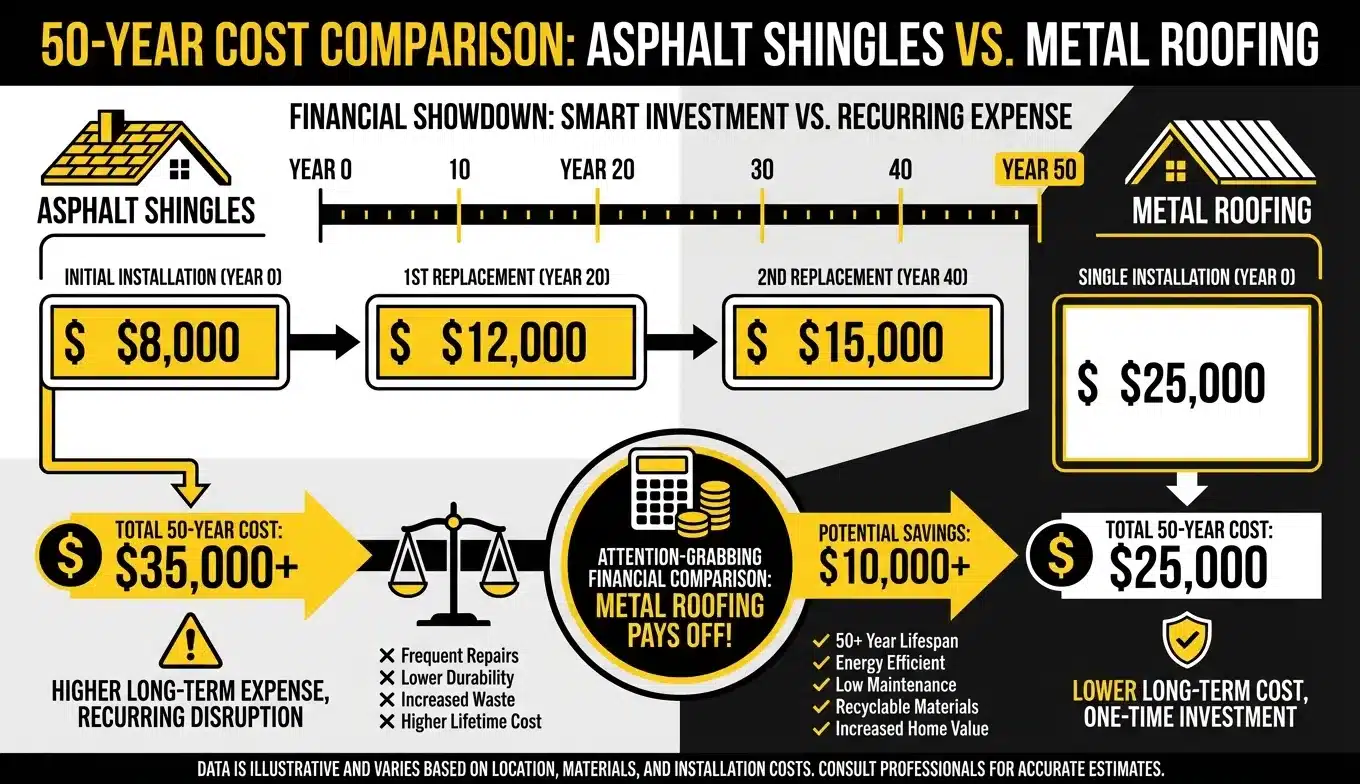
Over a 50-year period, the numbers tell a different story:
- Asphalt shingles: 2-3 roof replacements at ~$15,000 each = $30,000-$45,000
- Metal roofing: One installation at $40,000 + minimal maintenance
When you factor in reduced insurance premiums and energy savings, metal often delivers better lifetime value. The NRCA recommends considering total cost of ownership rather than initial price alone.
Weather Performance in Mid-Missouri
Central Missouri’s climate tests roofing systems hard: temperature swings from below zero to over 100 degrees, spring hailstorms, and significant precipitation. Both materials can handle our weather, but differently.
Heavy Snow and Ice
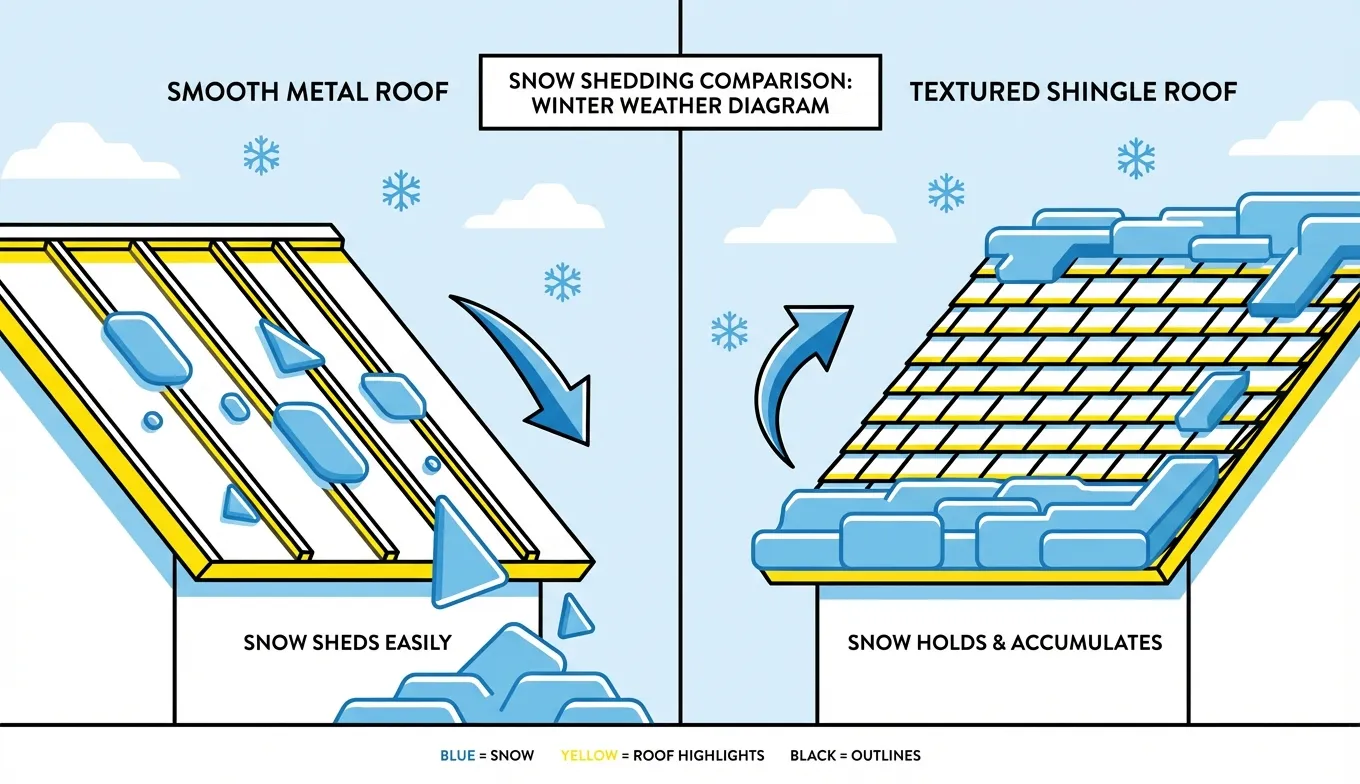
During heavy snow events, standing seam metal roofs shed snow naturally due to their smooth surface, reducing ice dam formation. Asphalt shingle roofs hold snow longer, which can help insulation but increases ice dam risk without proper attic ventilation.
Learn more in our guide on Missouri’s freeze-thaw cycles.
Wind Resistance
Quality asphalt shingles offer wind resistance ratings up to 130 mph when properly installed. Owens Corning’s warranty details wind coverage for various shingle lines. Standing seam metal systems perform equally well since panels interlock mechanically.
Hail Protection
This is where roofing material choice matters most for Mid-Missouri homeowners. Class 4 impact-resistant asphalt shingles can withstand 2-inch hailstones, matching most metal roofing systems. GAF’s Class 4 shingles offer this protection with a traditional look.
Insurance and Energy Benefits
Your new roof choice affects more than curb appeal. Both options can qualify for savings that offset their cost over time.
Insurance Discounts
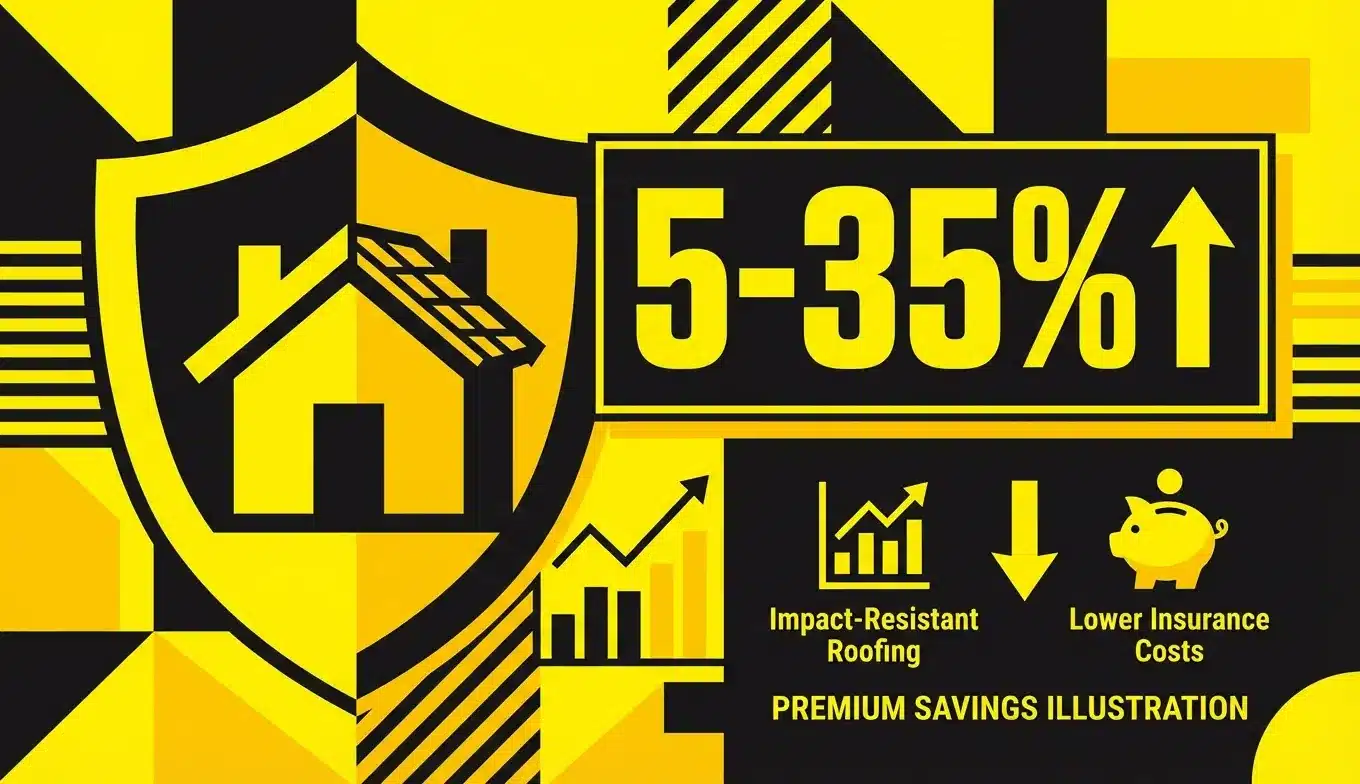
According to State Farm’s discount program, impact-resistant roofing material can reduce premiums by 5-35% depending on your location and policy. Both Class 4 shingle roofs and metal roofing systems typically qualify.
In areas with frequent hail like central Missouri, these reduced insurance premiums can offset higher installation costs over 10-15 years.
Energy Efficiency
Metal roofing reflects solar heat rather than absorbing it. According to the Department of Energy, reflective metal roofs can stay over 50 degrees cooler than conventional roofs, potentially reducing cooling costs by 10-25% in warmer months.
Solar Panel Compatibility
Thinking about solar panels for your Mid-Missouri home? Your roofing material choice matters.
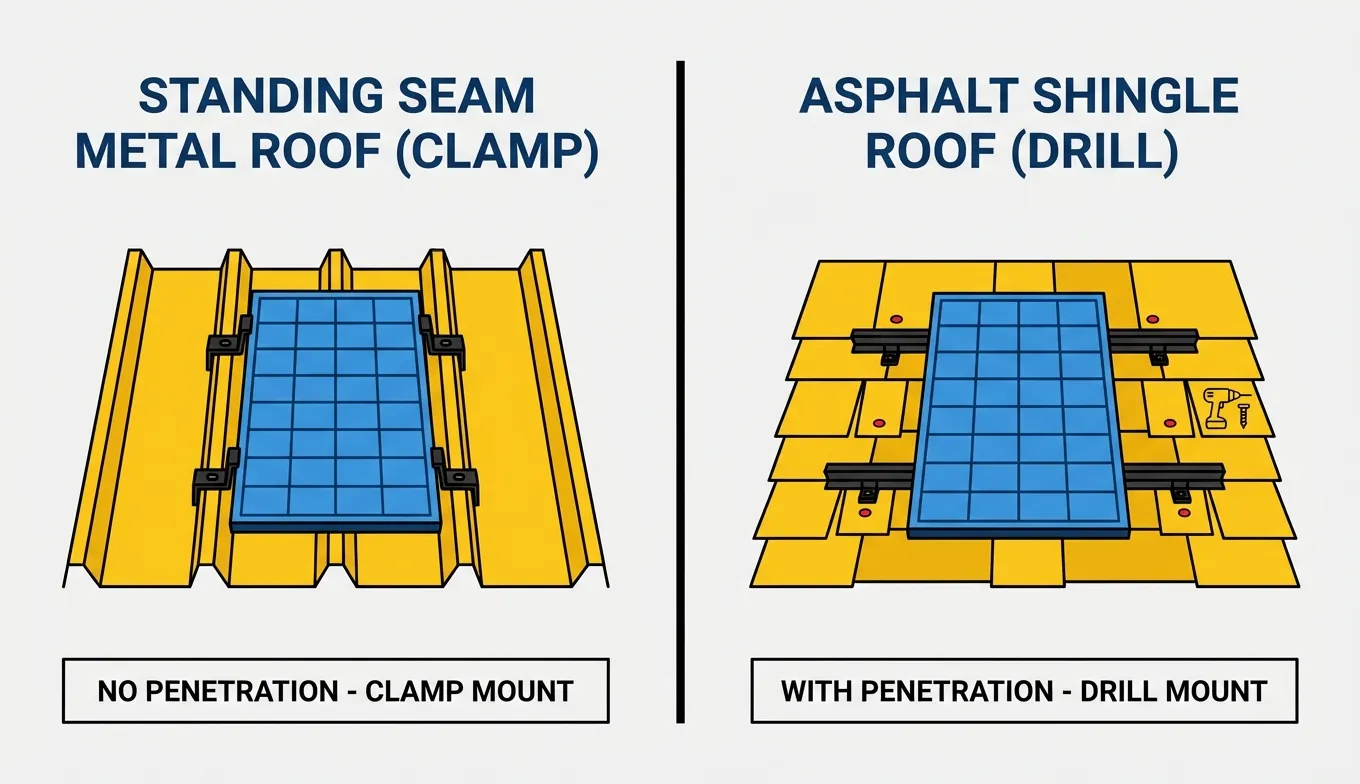
Standing seam metal roofs work exceptionally well with solar panels. Installers can clamp mounting brackets directly to the seams without penetrating the roof surface – no holes, no potential leak points.
Asphalt shingle roofs can also support solar panels, but installation requires drilling through the shingles and roof deck. That’s not necessarily a problem with quality installation, but it does create more potential leak points.
If solar panels are in your future, factor this into your roof replacement decision. Most solar panels last 25-30 years – matching the lifespan of quality asphalt shingles.
Choosing the Right Roofing Contractor
Regardless of which roofing material you choose, working with experienced roofing contractors ensures proper installation that protects your investment.
Look for:
- Manufacturer certifications: GAF Master Elite, Owens Corning Platinum Preferred, and similar designations
- Local experience: Contractors familiar with Mid-Missouri weather patterns
- Proper licensing: Missouri requires contractor registration for projects over $3,000
For metal roof installation specifically, verify your contractor has documented experience with standing seam systems – they require different skills than asphalt shingle work.
Learn more in our guide on choosing a roofing contractor.
Frequently Asked Questions
Which is better: metal roof or shingles?
It depends on your priorities. Metal roofs offer superior durability and longevity (50-70 years) but cost 2-3x more upfront. Asphalt shingles are budget-friendly with a traditional look but need replacement every 20-30 years. For long-term value in Mid-Missouri’s climate, metal often wins – but shingles remain a solid choice for homeowners watching upfront costs.
What are the main disadvantages of a metal roof?
Metal roofs cost more initially – that’s the biggest hurdle. They can also be noisier during rain without proper insulation, and large hail or debris can cause denting. However, many homeowners find these drawbacks minor compared to the 50+ year lifespan.
Does a metal roof increase or decrease home value?
Metal roofs typically increase home value. Buyers appreciate the longevity, durability, and energy efficiency. The ROI is particularly strong if you plan to stay in your home long enough to benefit from the extended lifespan.
How much more does metal roofing cost than shingles?
On average, metal roofing costs 2-3x more than asphalt shingles upfront. For a 2,500 square foot home: shingles cost $12,000-$17,000 while metal runs $35,000-$50,000. However, when you factor in that shingles need replacement every 20-30 years, the 50-year cost often favors metal.
Are metal roofs worth the extra cost?
For many Mid-Missouri homeowners, yes. Metal roofs last 50+ years with minimal maintenance, reduce energy costs by 10-25%, and can lower insurance premiums. If you’re planning to stay in your home long-term or want a “buy it once” solution, metal delivers strong value.
Can I install solar panels on either roof type?
Yes, but standing seam metal roofs work better with solar panels. The mounting brackets clamp directly to seams without penetrating the roof. Shingles require drilling through the roof deck, creating potential leak points. If solar is in your plans, factor this into your roofing decision.
