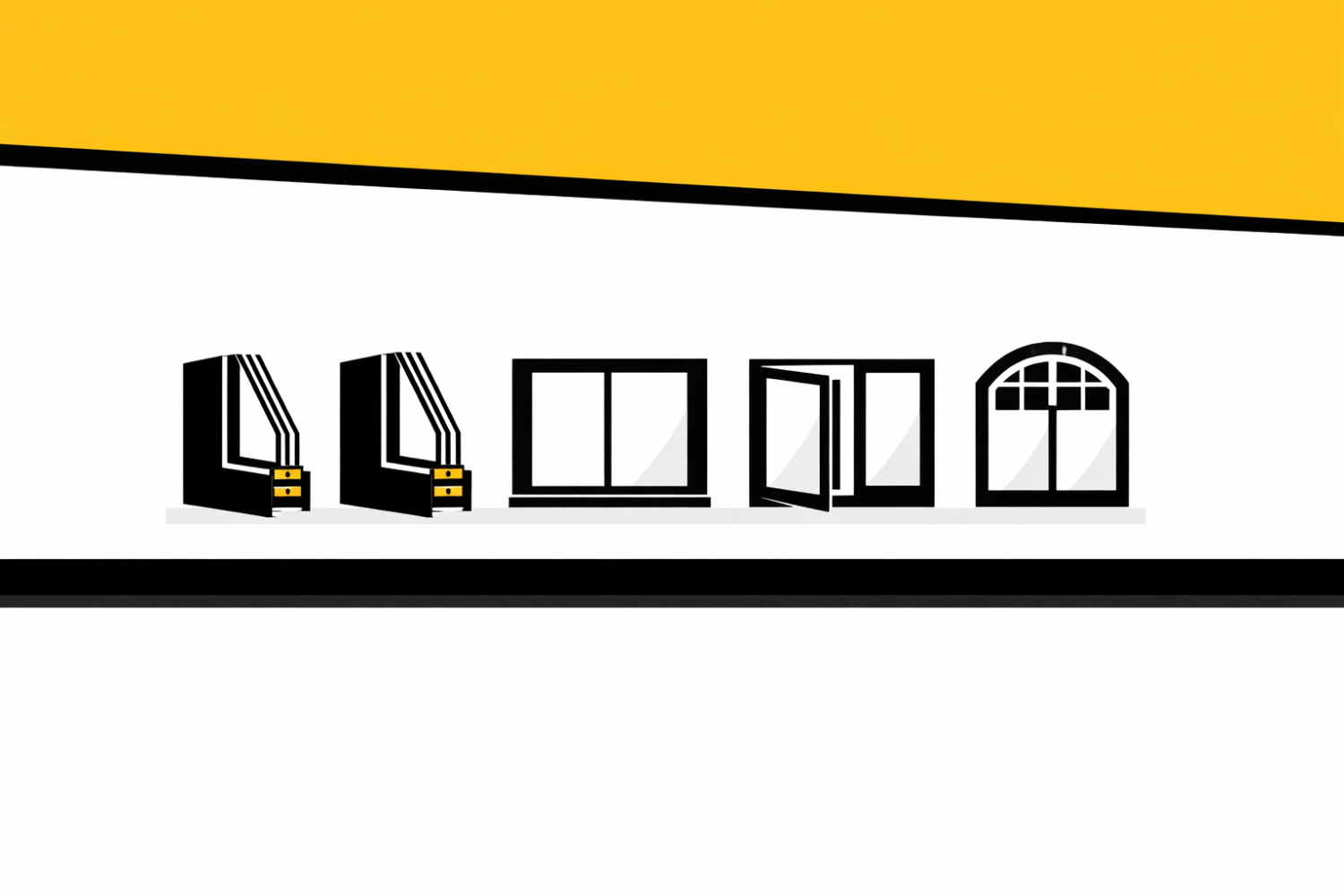
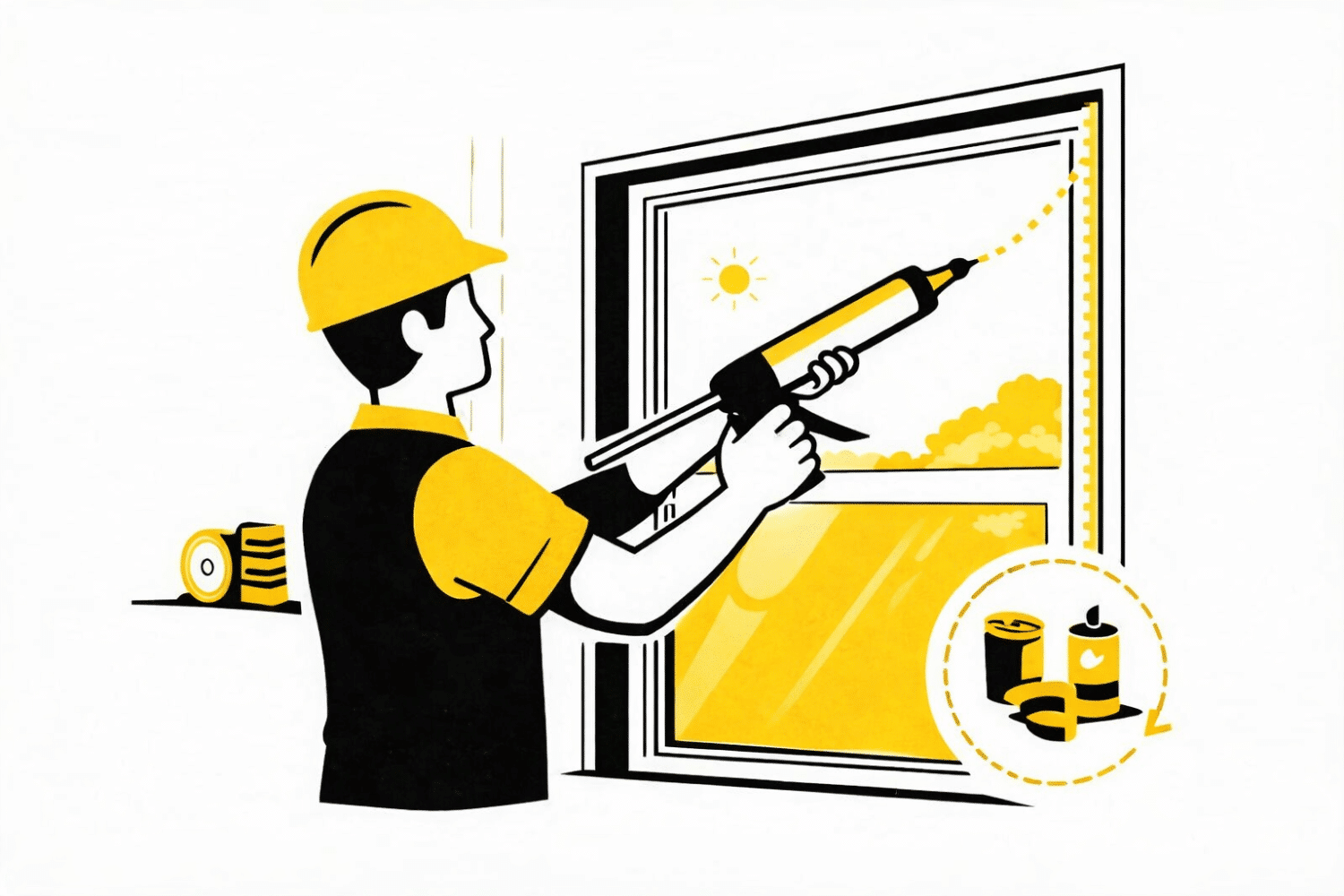
Do Window Installers Need to Come Inside Your Home?
Key Takeaways:
Yes, window installers need interior access — most of the removal, sealing, and trim work happens from inside your home.
The exterior is where the old window comes out; the interior is where the new window gets secured, sealed, insulated, and trimmed.
Clear 5 feet of space around each window and remove all blinds, curtains, and wall decor before the crew arrives.
Each window takes 4-6 hours for a full-frame replacement. Pocket (insert) replacements are faster with less interior disruption.
No window opening will be left exposed overnight — installers complete or weatherproof every window they start each day.
The Short Answer: Yes, They Need to Come Inside
This is one of the most common questions we hear from homeowners in Columbia and Jefferson City before scheduling a window replacement. The concern makes sense — you’re inviting a work crew into your living space, and you want to know what that actually looks like.
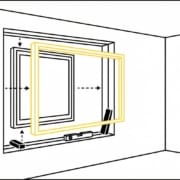
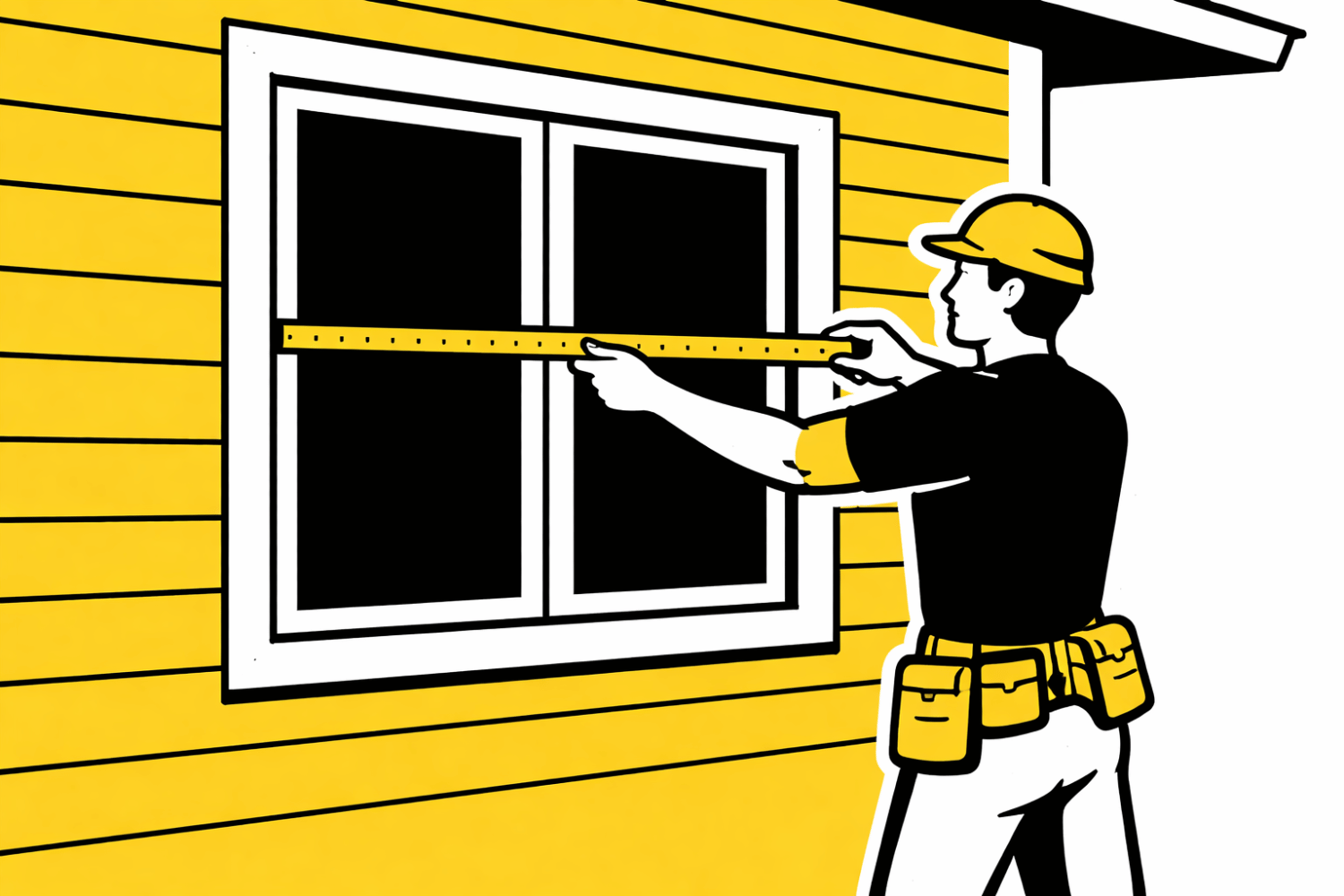
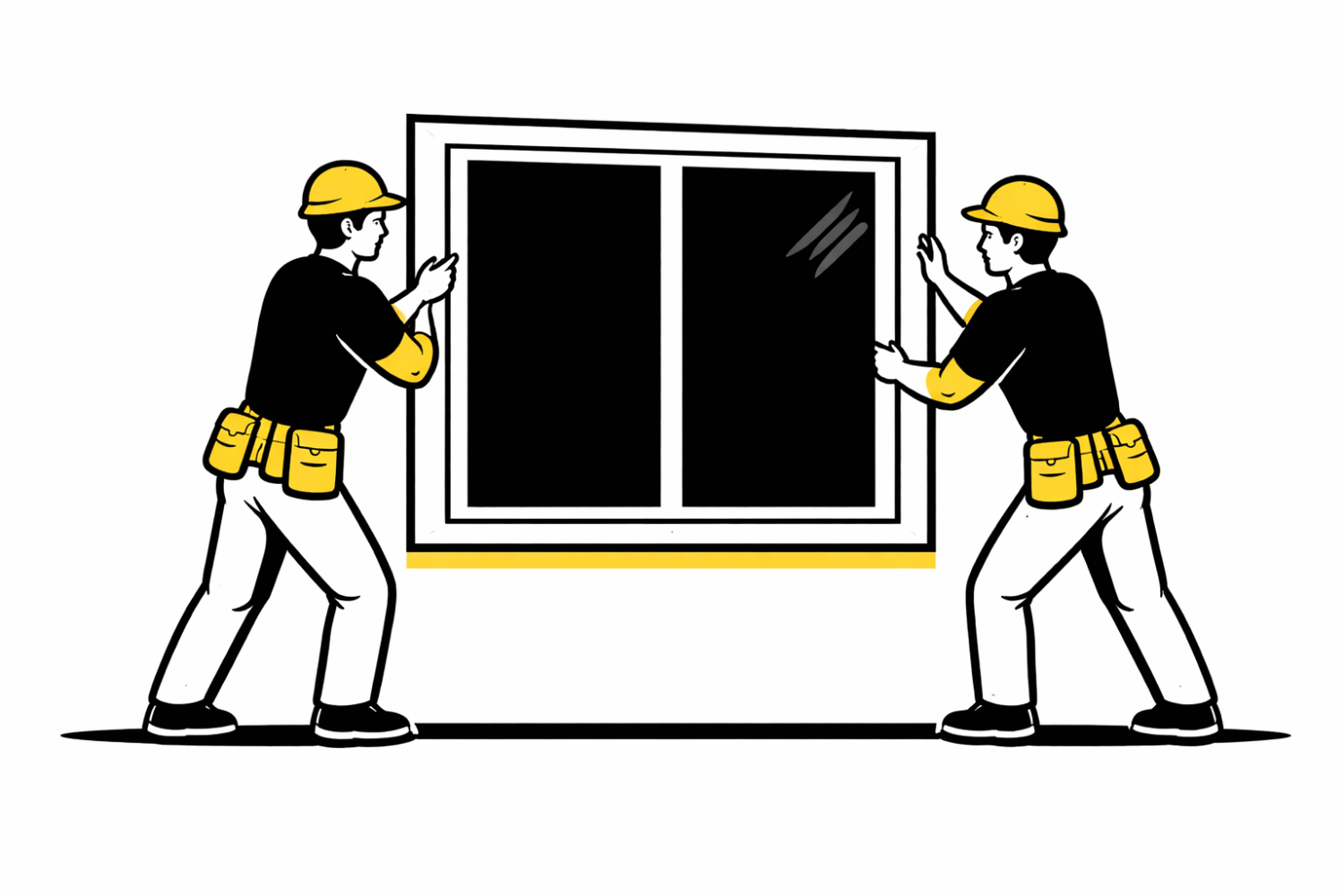
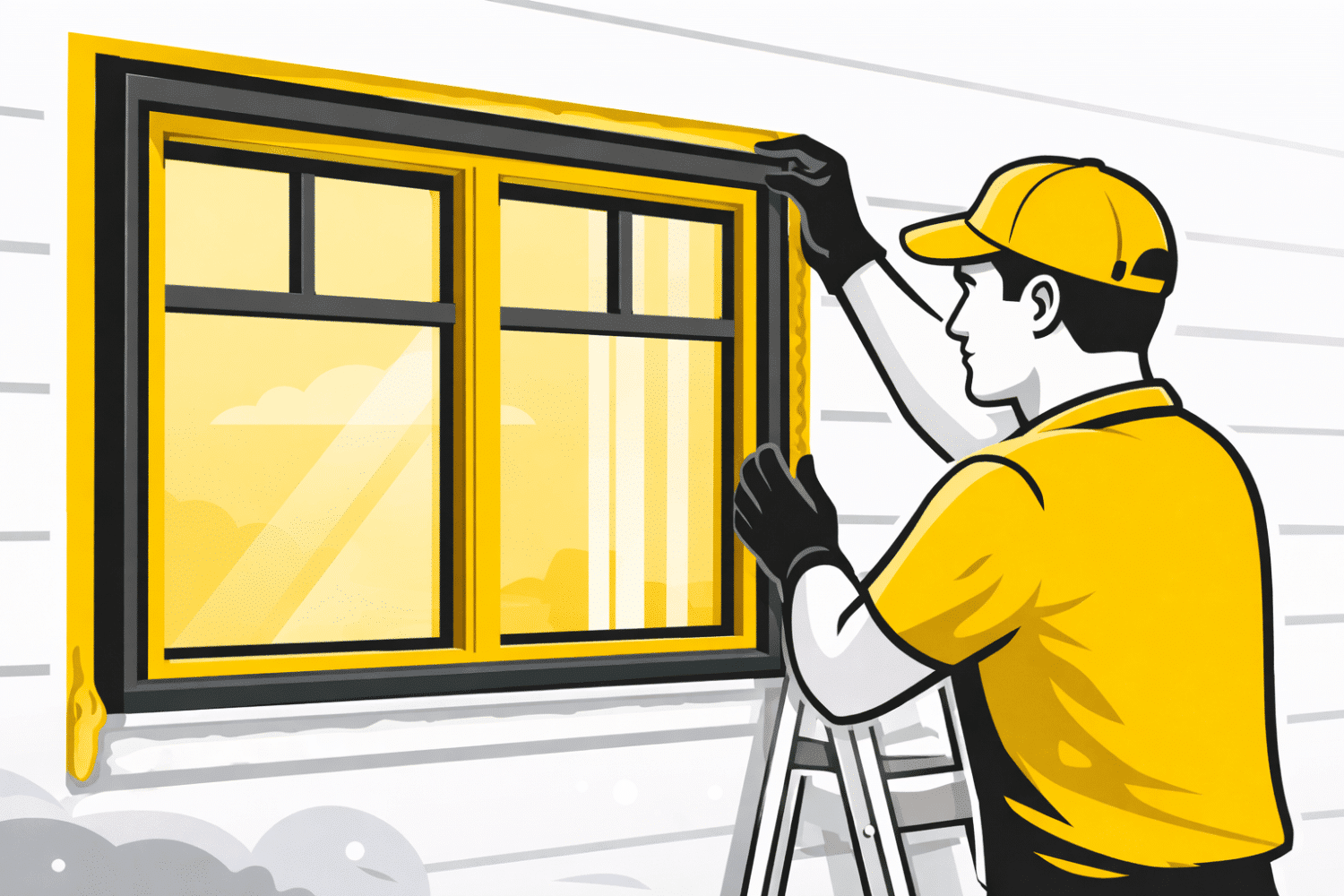
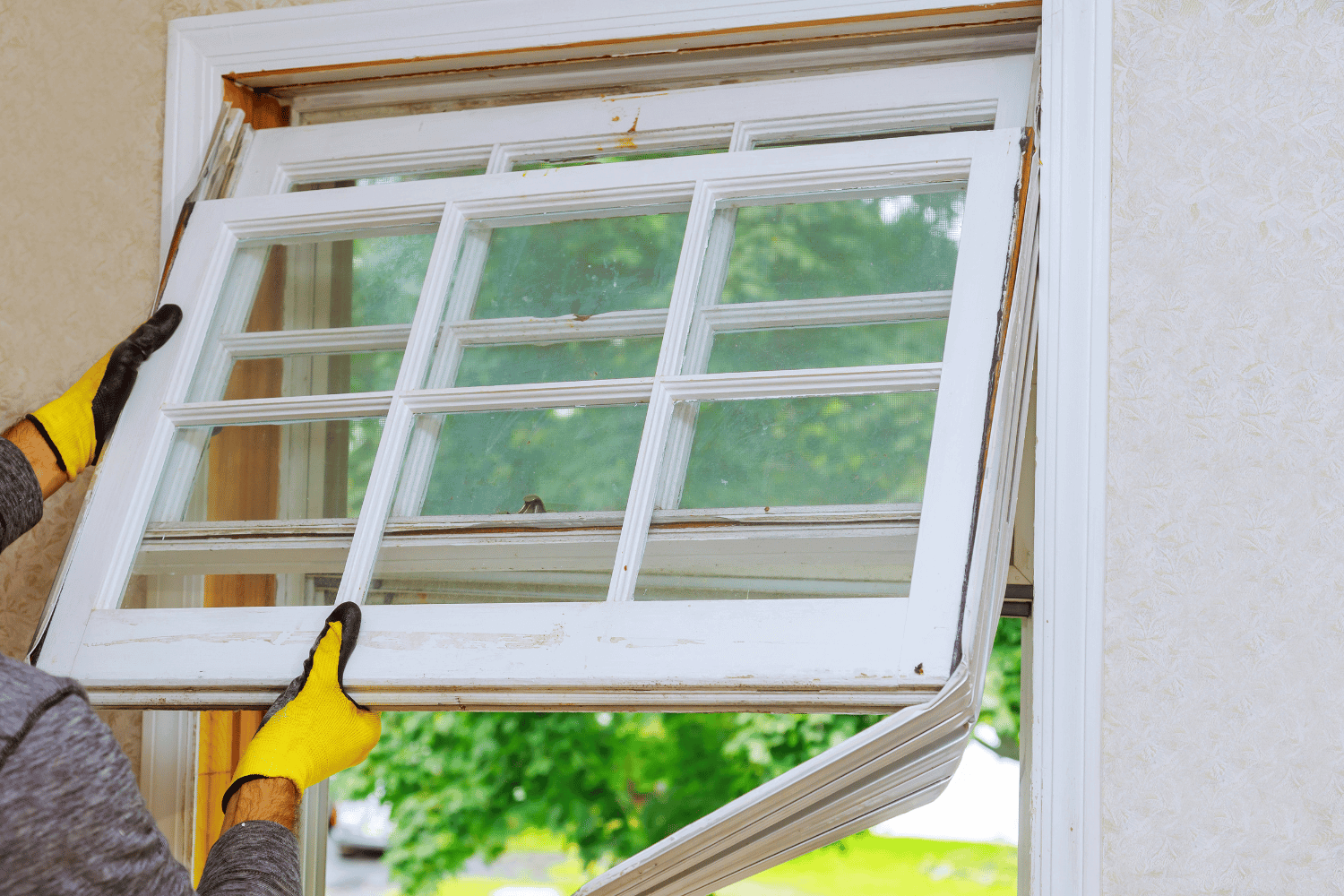
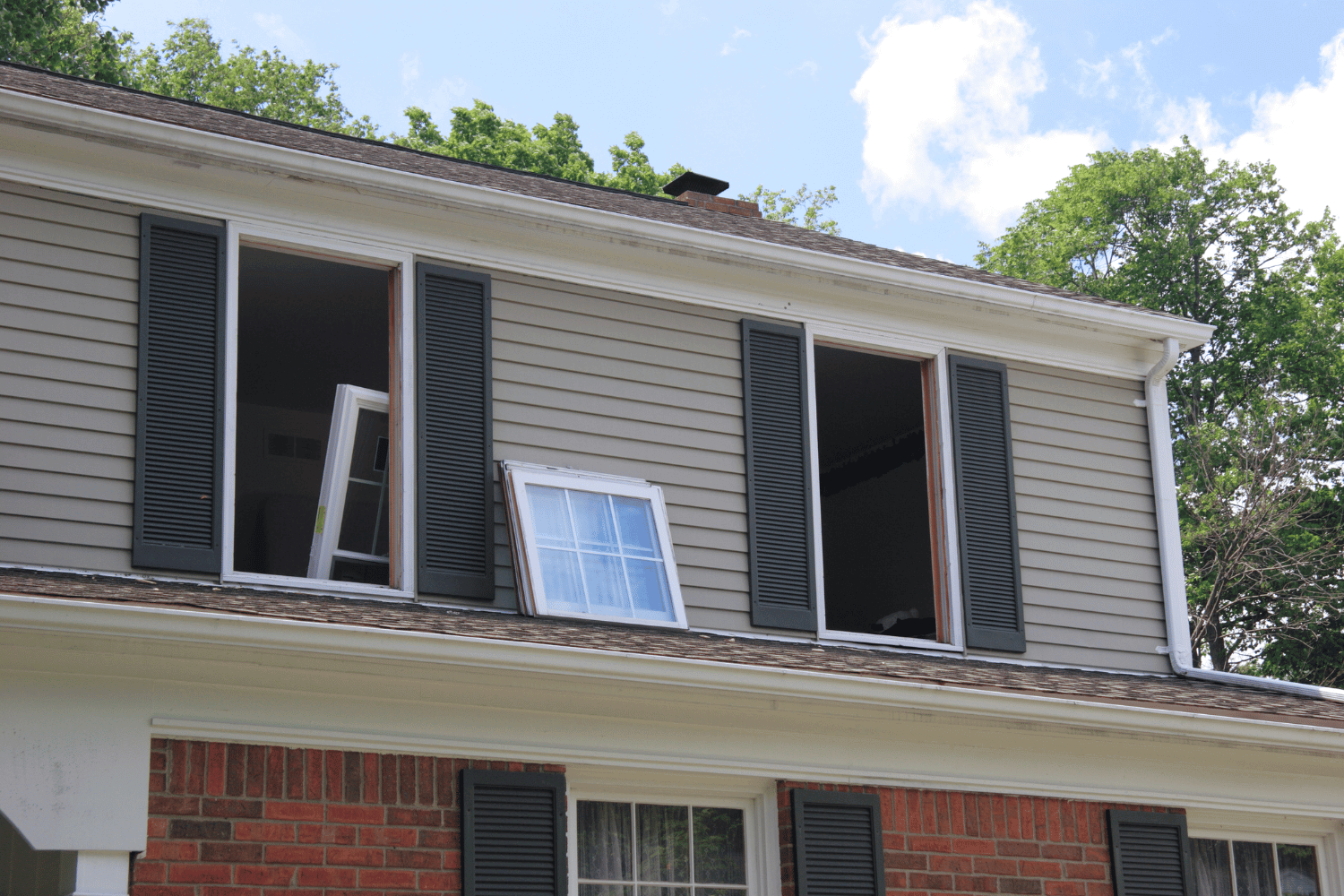
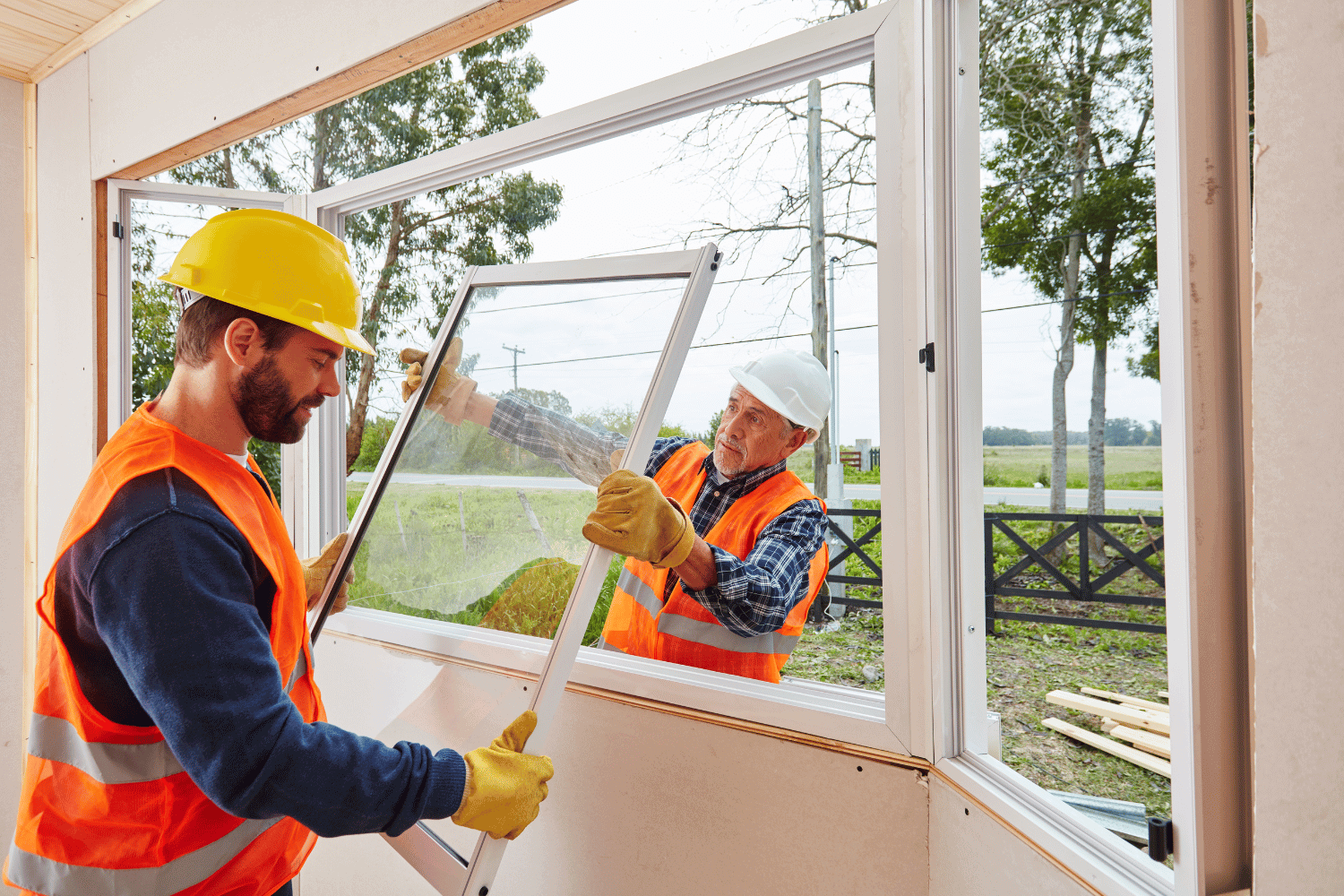
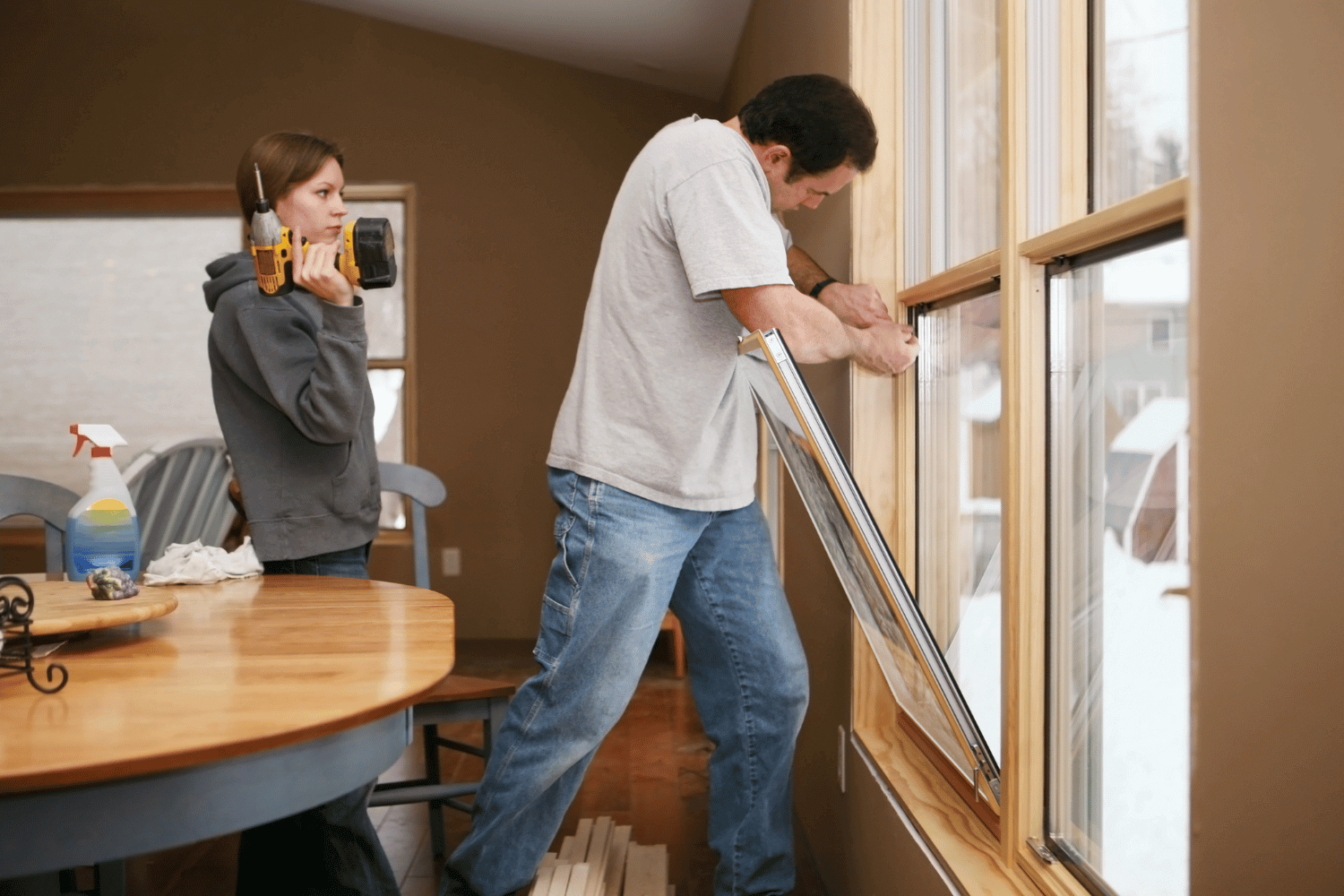
The reality is that window replacement is both an exterior and interior job. The old window is typically removed from the outside, but the new window gets secured, insulated, sealed, and trimmed from inside your home. Your installer will spend roughly equal time on each side of the wall, and some steps — like verifying the sash operates smoothly and checking for air gaps — can only be done from inside.
The good news: professional crews know they’re working in someone’s home, not a construction site. The disruption is manageable if you prepare each room ahead of time.
What Happens Outside vs Inside
Exterior work includes:
Removing exterior trim and stops to access the old window
Lifting out the old sash and frame (full-frame replacement) or just the sash (pocket replacement)
Inspecting the rough opening for rot, water damage, or insect damage
Applying flashing tape to the sill for waterproofing
Installing exterior trim and caulking after the new window is set
Interior work includes:
Removing interior window trim, stops, and any hardware
Leveling and shimming the new window in the opening
Driving mounting screws through the window frame into the rough framing
Applying spray foam insulation around the gap between window and framing
Installing interior trim and caulking
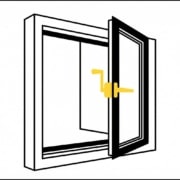
Testing sash operation — making sure the window opens, closes, locks, and tilts correctly
Cleaning up dust, debris, and protective film
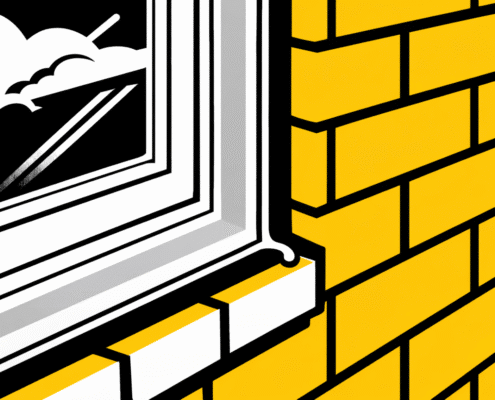
On brick homes, the installation often happens primarily from the exterior because the outer wall opening is wider than the interior one. But even on brick homes, the installer needs inside access for shimming, sealing, and trim work.
How to Prepare Each Room
Andersen Windows recommends treating installation day like a mini move — it’s temporary, but the preparation makes a real difference in how smoothly the day goes.
Before the crew arrives:
Remove window treatments first. Blinds, curtains, shades, and shutters need to come down before installation day. This is the single biggest time-saver — removing blinds from 15 windows can take an installer hours if the homeowner hasn’t done it in advance. That’s time spent on hardware removal instead of window installation.
Clear 5 feet of space around each window. Move furniture, lamps, plants, electronics, and anything fragile away from the work area. The crew needs room to maneuver the old window out and the new window in, plus space for tools, shims, and caulking supplies.
Take pictures off the walls. The vibration from removing old windows can knock frames loose. Removing wall decor within 5-6 feet of each window prevents damage and dust accumulation on glass and frames.
Cover remaining furniture. Drop cloths or old sheets over beds, couches, and desks near the windows. There will be dust from removing old trim and debris from the rough opening. Professional crews bring their own drop cloths, but covering items yourself gives extra protection.
Secure pets.Window World’s installation guide notes that technicians can’t always close doors and gates behind them as they move through the house. Keep dogs and cats in a closed room away from the work area, or arrange for them to be off-site for the day.
Notify your alarm company. Opening and removing windows will trigger sensors. Let your security provider know you’re having work done and disable window sensors for the day.
Full-Frame vs Pocket Replacement: Different Levels of Disruption
How much interior work happens depends on which type of window replacement you’re getting:
Pocket (insert) replacement is less disruptive. The existing window frame stays in place — only the sash and operating hardware are replaced. Interior trim usually isn’t disturbed. This is faster (2-3 hours per window) and generates less mess, but it only works when the existing frame is in good condition and square.
Full-frame replacement removes everything — sash, frame, trim, and sometimes the sill. This is more disruptive (4-6 hours per window) but allows inspection and repair of the rough opening, fresh insulation, new flashing, and a complete weathertight installation. For older Mid-Missouri homes where the original frames may have moisture damage or settling issues, full-frame is the more thorough approach.
What to Expect During the Day
Morning start: Most crews arrive between 8:00 and 9:00 AM and work through the day until the scheduled windows are complete.
Open windows = brief exposure: Each window opening will be exposed for the time it takes to remove the old window and install the new one — typically a few hours per window. The crew works on one window at a time and moves sequentially through the house.
Noise and dust: Expect drilling, hammering, and the sound of spray foam cans. Dust from old trim removal and insulation work is normal. Quality crews lay drop cloths and vacuum as they go, but some cleanup will be needed after they leave.
No openings left overnight: This is a firm standard for reputable installers. Any window the crew starts will either be completed or temporarily weatherproofed by the end of the day. You won’t go to bed with an open hole in your wall.
Post-installation walkthrough: Before the crew leaves, walk each window with the installer. Test every sash for smooth operation. Check locks. Look at interior trim for gaps or rough caulk joints. Ask about removing the factory protective film — most windows ship with a plastic film on the glass that you’ll peel off after installation is confirmed correct.
Frequently Asked Questions
Do window installers need to come inside my house?
Yes. While the old window is often removed from the outside, securing the new window, insulating the gap, installing interior trim, and testing operation all require interior access. Plan for the crew to spend roughly equal time inside and outside for each window.
How long does window replacement take per window?
A pocket (insert) replacement takes 2-3 hours per window. A full-frame replacement takes 4-6 hours. For a full-house project with 10-15 windows, expect 2-4 days total depending on window type and house complexity.
Do I need to be home during window installation?
Someone should be home or available. The crew may need to ask about preferences (trim style, hardware placement), access locked rooms, or address unexpected findings like rot in the rough opening. You don’t need to supervise, but being reachable is important.
Will window installers damage my walls or paint?
Minor touch-up around window trim is normal, especially with full-frame replacement. Removing old trim can pull paint or leave small nail holes. Reputable installers will note any pre-existing damage and point out areas where you may want to touch up paint after the new trim cures.
What should I do with my curtains and blinds before installation?
Remove them completely before the crew arrives. This includes curtain rods, brackets, blinds, and any mounted valances. Window treatments are the most common cause of installation delays. Call us at (573) 424-9008 if you have questions about preparing for your installation day.
Ready to Get Started?
We’ve been replacing windows in Mid-Missouri homes for over 25 years. Our crews are experienced, respectful of your home, and thorough in their cleanup. As GAF Master Elite, OC Platinum Preferred, and James Hardie Elite Preferred contractors, we bring the same certified precision to window installations that we bring to every exterior project.
Are Casement Windows More Expensive Than Other Window Types?
Key Takeaways:
Casement windows cost 10-20% more than double-hung windows — typically $400-$1,150 installed versus $400-$1,000 for double-hung.
The price premium comes from the crank mechanism and more complex hinges, not from better glass or frame materials.
Casement windows seal 60% tighter than double-hung against air leakage, which can reduce heating and cooling costs over time.
The best value depends on where the window goes — casement makes sense in kitchens, bathrooms, and hard-to-reach spots. Double-hung works fine for most bedrooms and living rooms.
Federal tax credits cover 30% of qualifying window costs up to $1,200 per year, helping offset the casement premium.
The Short Answer: Yes, But Not by as Much as You’d Think
If you’re replacing windows in your Columbia or Jefferson City home and comparing quotes, you’ve probably noticed that casement windows come in higher than double-hung or sliding windows. The difference is real — but it’s not dramatic. Most homeowners see a 10-20% premium for casement over comparable double-hung windows in the same material and glass package.
On a single window, that might be $50-150 more. Across a full house with 15-20 windows, the total difference could run $750-$3,000. Whether that premium is worth paying depends on where each window goes, how important energy efficiency is to you, and how long you plan to stay in the home.
Let’s break down the real costs, compare window types head-to-head, and help you figure out where to spend and where to save.
What Each Window Type Actually Costs
Installed prices vary based on material (vinyl, wood, fiberglass, composite), glass package (double or triple pane), and your home’s framing. Here’s where the main window types fall in Mid-Missouri pricing:
Window Type
Installed Cost Range
Typical Average
How It Opens
Sliding
$300-$600
~$425
Slides horizontally on a track
Single-hung
$300-$700
~$450
Bottom sash slides up
Double-hung
$400-$1,000
~$500
Both sashes slide up and down
Awning
$300-$700
~$475
Hinged at top, opens outward
Casement
$400-$1,150
~$560
Hinged at side, cranks outward
Picture/Fixed
$150-$800
~$350
Doesn’t open
The casement premium comes almost entirely from the operating hardware. The crank mechanism, folding arm operator, and multi-point locking system add manufacturing cost. The glass, frame material, and weatherstripping are often identical between casement and double-hung windows from the same manufacturer.
Why Casement Costs More (and What You Get for It)
Paying more for casement isn’t just paying for a fancier crank handle. The mechanical difference creates real performance advantages:
Tighter seal against air leakage. When you close a casement window and turn the lock, the sash compresses against weatherstripping around the entire perimeter — similar to how a refrigerator door seals. Marvin’s testing shows that casement windows achieve air leakage rates below 0.01 cfm per square foot — roughly 60% lower than double-hung windows. Double-hung windows have more seams and linear feet of weatherstripping where air can work through, and that leakage tends to increase as weatherstripping compresses over years of use.
Full ventilation opening. A casement window opens its entire sash area to airflow. A double-hung window opens only half — the bottom sash slides up to reveal the opening. For the same size window, casement provides nearly twice the ventilation capacity. In Mid-Missouri’s humid summers, that extra airflow can make a noticeable difference in rooms without strong HVAC circulation.
Easier operation in hard-to-reach spots. The crank mechanism means you don’t need to push or pull the sash — just turn a handle. That matters above kitchen sinks, behind bathtubs, or in any spot where reaching through a window opening to lift a sash would be awkward or uncomfortable.
Where Each Type Makes the Most Sense
You don’t have to pick one type for your entire house. Most homeowners get the best value by mixing window types based on location:
Best rooms for casement:
Kitchen — reach-over-the-counter operation with a crank instead of pushing up a heavy sash
Bathrooms — full ventilation helps with humidity; crank operation works when reaching past a tub
Living room flanking a picture window — casements paired with a fixed center panel create a modern look with functional ventilation on the sides
Basement egress — casement windows that crank fully open meet egress code requirements more easily than double-hung
Best rooms for double-hung:
Bedrooms — easy to operate, easy to clean (tilt-in sashes), fits window AC units
Street-facing windows — traditional aesthetic matches most Mid-Missouri home styles
Upper floors — no sash protruding outward where it could be hit by wind or interfere with screens
Best rooms for sliding:
Wide openings — sliding windows handle wider-than-tall openings that casement can’t cover without mulling multiple units
Tight exterior spaces — sliders don’t protrude outward, so they work next to walkways, patios, or decks
The Energy Savings Angle
Casement’s tighter seal does translate to energy savings — but how much? ENERGY STAR estimates that replacing single-pane windows with certified windows reduces heating and cooling costs by an average of 13%, saving homeowners $126 to $465 per year. Missouri sits in ENERGY STAR’s North-Central climate zone, where both heating and cooling efficiency matter.
The casement advantage within that savings is modest in absolute dollars. The 60% lower air leakage rate sounds dramatic, but air leakage is just one factor in window energy performance alongside U-factor (insulation value) and SHGC (solar heat gain). Since casement and double-hung windows from the same manufacturer typically share the same glass package and frame insulation, the practical energy difference between them comes down to that air seal — which might save an additional $20-50 per year depending on your home’s overall envelope tightness.
Where the energy math tilts more clearly toward casement is in older homes with drafty walls. If you’re replacing windows in a 1960s Columbia ranch or a turn-of-the-century Jefferson City Victorian, the tighter casement seal compounds with other improvements you’re likely making.
The Department of Energy recommends comparing windows using their NFRC ratings — U-factor, SHGC, air leakage, and visible transmittance — rather than relying on window type alone. Two casement windows from different manufacturers can have very different energy performance.
Tax Credits That Offset the Premium
Here’s where the casement cost equation gets more favorable. The federal energy efficiency tax credit covers 30% of the cost of qualifying ENERGY STAR windows, up to $1,200 per year. That applies to both casement and double-hung — but since casement costs more per unit, the credit returns more per window.
On a $560 casement window, a 30% credit is $168 back. On a $500 double-hung, it’s $150. The net difference between the two drops from $60 to $42. Across a full house replacement, tax credits can erase most of the casement premium.
Check with your tax advisor on current eligibility — the credit has product certification requirements and filing specifics that change periodically.
Frequently Asked Questions
Are casement windows more expensive than double-hung?
Yes, typically 10-20% more. For the same size window in the same material, expect to pay $50-150 more per casement window than a comparable double-hung. The premium comes from the crank mechanism and multi-point locking hardware, not from better glass or framing.
Do casement windows add more home value than double-hung?
Window replacement generally recoups 60-75% of cost at resale regardless of type. Casement windows may have a slight edge in modern-style homes where they complement the architecture, but the resale value difference between window types is minimal compared to the overall upgrade from old to new.
How long do casement windows last compared to other types?
Both casement and double-hung windows last 20-30 years with proper maintenance. The casement crank mechanism can wear out before the window frame or glass, but replacement cranks are available for most manufacturers. Double-hung springs and balances also wear over time and are similarly replaceable.
Can I mix casement and double-hung windows in the same house?
Absolutely. Most homeowners get the best value by using casement where the crank operation and tighter seal justify the premium (kitchens, bathrooms, hard-to-reach spots) and double-hung everywhere else. As long as the frame color and exterior profile match, the mix looks cohesive from the outside.
Are casement windows harder to maintain?
Slightly. The crank mechanism needs occasional lubrication, and the hinges should be checked yearly. But casement windows don’t have the spring-balance or tilt-in mechanisms that can fail on double-hung windows. Overall maintenance is comparable. Call us at (573) 424-9008 to discuss the right window mix for your home.
Ready to Get Started?
We’ve been serving Mid-Missouri homeowners for over 25 years with premium window replacement and exterior solutions. As GAF Master Elite, OC Platinum Preferred, and James Hardie Elite Preferred contractors, we bring certified expertise to every project — including helping you decide which window type belongs in which room.
How Much Do Replacement Windows Cost in Mid-Missouri?
If you’re a Mid-Missouri homeowner wondering what replacement windows will actually cost in 2026, you’re in the right place. We’ve helped hundreds of homeowners across Columbia, Jefferson City, Lake of the Ozarks, Sedalia, and surrounding communities navigate this exact question and we know that national price charts rarely tell the whole story.
In this guide, we’ll walk you through realistic local pricing, explain what drives those costs, and help you understand which options make the most sense for our unique climate. Whether you’re dealing with drafty old windows or planning a full-home upgrade, you’ll leave with the information you need to budget confidently.
Key Takeaways
Most Mid-Missouri homeowners in Columbia, Jefferson City, and Lake of the Ozarks can expect to pay roughly $450–$1,200 per window installed in 2026, with typical whole-home projects ranging from about $7,000–$18,000 depending on size, materials, and options chosen.
Local factors, including Mid-Missouri labor rates, home age, and our challenging freeze-thaw climate, influence pricing differently than national averages, but they also make energy efficient windows more valuable here due to our temperature extremes.
The three biggest cost drivers are frame material (vinyl, fiberglass, composite, or wood), window style (double hung windows, casement, bay windows, etc.), and installation type (insert vs. full-frame replacement).
CoMo Premium Exteriors provides free, no-pressure estimates across Mid-Missouri and can give you exact pricing for your specific home, including financing options when the investment needs to fit a tighter monthly budget.
This article walks you through realistic local price ranges, how to budget smartly, and how to choose new windows that make sense for Mid-Missouri weather and your monthly energy bills.
Average Replacement Window Cost in Mid-Missouri (Answer First)
Let’s start with the numbers most homeowners are looking for. In 2026, most Mid-Missouri homeowners typically pay about $450–$1,200 per window installed, with basic vinyl inserts starting closer to $375–$450 and high-end custom windows exceeding $1,500.
Here’s what that looks like for common home sizes in our area:
A 10–12 window ranch in Columbia might run roughly $6,000–$11,000
A 2-story Jefferson City home with 18–22 windows might be closer to $9,000–$18,000 depending on materials and options
A lakefront property with larger windows and specialty shapes could trend higher
These numbers assume professional installation by a licensed, insured local contractor and already include typical Mid-Missouri labor costs, disposal of your old windows, and standard exterior and interior trim work.
One thing worth noting: Mid-Missouri window replacement costs tend to be slightly higher than small-town Missouri averages (by roughly 5–15%) due to labor demand in hubs like Columbia MO and the Lake area. However, we’re still usually lower than big metro markets like St. Louis or Kansas City, where you might pay 15–25% more for the same project.
Think of these as realistic planning ranges. Every home is different. Window sizes vary, some frames need repair, and glass packages affect pricing. That’s why we recommend getting a free estimate from CoMo Premium Exteriors to nail down exact numbers for your specific situation.
Window Replacement Cost by Frame Material
Frame material is one of the largest price drivers in any window replacement project. Here in Mid-Missouri, homeowners most commonly choose between vinyl, fiberglass or composite, and wood based on their budget, aesthetic preferences, and how long they plan to stay in the home.
Here’s a quick overview of typical installed price ranges in our region:
Vinyl: $400–$900 per window — Best for budget-conscious homeowners seeking low maintenance
Fiberglass/Composite: $650–$1,300 per window — Ideal for long-term homeowners wanting high performance
Wood: $800–$1,600+ per window — Suited for historic homes and architectural detail lovers
Aluminum: $350–$700 per window — Commonly used for commercial projects and picture windows
At CoMo Premium Exteriors, we regularly install premium vinyl and composite windows because they balance up-front cost, energy performance for our hot summers and cold winters, and minimal maintenance requirements.
It’s worth remembering that material choice affects more than just the initial invoice. You’re also looking at long-term repainting costs (or lack thereof), maintenance time, and energy bills over the next 20–30 years.
Vinyl Windows
Vinyl windows are the most popular replacement window material in Columbia, Jefferson City, Moberly, and surrounding Mid-Missouri communities, and for good reason. They deliver solid value without demanding much upkeep.
For local projects, expect realistic installed ranges of roughly $400–$900 per window for quality vinyl units in standard sizes. Basic inserts in common sizes land on the low end, while larger windows or specialty shapes push toward the higher end.
Key benefits of vinyl include:
Strong overall value for the investment
Good energy efficiency when paired with double pane windows or triple pane windows
Virtually no painting or staining required
Excellent resilience against Mid-Missouri’s humidity and temperature swings
One important distinction we emphasize with homeowners: there’s a real difference between “builder-grade” vinyl and higher-quality vinyl systems. Paying a bit more for premium vinyl often eliminates problems like warping, seal failures, and hardware breakdowns that cheaper units develop within 10–15 years. We’ve seen too many homeowners replace their windows twice because they went with the cheapest option first.
Care is simple. Occasional cleaning with mild soap and water is typically all that’s required for decades of performance.
Fiberglass and Composite Windows
Fiberglass and composite windows represent a step up from vinyl in both price and performance. They’re ideal for homeowners planning to stay in their Mid-Missouri home long term and wanting maximum energy efficiency without wood’s maintenance demands.
Realistic local installed cost ranges generally fall around $650–$1,300 per window, with larger or architecturally complex units costing more.
Why consider fiberglass or composite?
Excellent structural strength
Minimal expansion and contraction during Mid-Missouri’s freeze-thaw cycles
Very good insulation values
Option for refined profiles that mimic wood aesthetics
Many can be painted to match your home’s exterior
We frequently recommend composite frames for higher-end remodels or when updating historic homes around downtown Columbia or older Jefferson City neighborhoods. The long-term value proposition is compelling: higher up-front investment but lower risk of warping, air leakage, and premature replacement.
Wood Windows
Wood windows provide a classic, high-end look that fits well in older character homes around central Columbia, historic districts, and lake properties where architectural detail matters.
Realistic local installed pricing runs roughly $800–$1,600+ per window, with custom stain-grade interiors and complex shapes trending toward the higher end.
While wood insulates well, it demands ongoing maintenance in Mid-Missouri. Our freeze-thaw cycles, humid summers, and occasional severe weather mean regular painting or staining is necessary to resist moisture, rot, and insect damage.
For homeowners who love the wood look but want less upkeep, we typically suggest either:
Clad-wood windows (wood interior with a protected aluminum or vinyl exterior)
High-quality composite that delivers similar aesthetics with fraction of the maintenance
When comparing wood to other window materials, factor in lifetime repainting costs. That $800 window might need $200 in maintenance every 5–7 years, which adds up over a 30-year ownership period.
Window Replacement Cost by Style and Size
Window style and size affect both material cost and labor requirements. Many Mid-Missouri homes mix several window types—most commonly double hung windows with a few sliders, picture windows, or a bay window at the front.
Here are typical installed price ranges for common styles in our region:
Single hung windows: $350–$750 — Budget-friendly, with one operable sash
Double hung windows: $450–$1,000 — Most popular, easy to clean
Sliders: $450–$900 — Great for wide openings
Casement: $600–$1,100 — Excellent air sealing
Picture windows: $550–$1,300 — Fixed windows maximizing natural light
Bay/Bow windows: $1,800–$4,500+ — Complex installation with dramatic impact
Larger openings, custom shapes, and mulled units (multiple windows combined in one frame) add to both material and installation costs because they often require extra framing and finishing work.
To give you a practical example: replacing a standard 3’x5’ double hung in a typical Columbia ranch might cost $500–$750, while a large 8’ wide living room picture window in the same home could run $1,000–$1,500. The total cost varies significantly based on what’s being replaced.
CoMo Premium Exteriors can often suggest window style changes, like converting two small singles into one larger unit, that improve natural light and curb appeal while staying within a realistic budget.
Double-Hung and Single-Hung Windows
Double hung and single hung windows are by far the most common replacement choice in Mid-Missouri. They match existing openings in many 1980s–2020s homes built in Columbia, Ashland, and Boone County subdivisions.
Local installed ranges:
Single hung: $350–$750
Double hung: $450–$1,000
The functional difference is straightforward: double hung windows have two operable sashes (top and bottom move), while single hung windows only have the bottom sash that opens. This matters for homeowners with upper floors. Double hung windows are much easier to clean from inside since both sashes tilt inward.
We typically recommend double hung for most replacement window installations, especially where homeowners want easy cleaning access and better airflow control during spring and fall when Mid-Missouri weather cooperates.
Casement, Slider, and Picture Windows
Casement, slider, and picture windows each serve specific purposes in a home:
Casement windows crank open outward, providing maximum airflow and excellent air sealing when closed
Sliders work well for wide openings where swing-out operation isn’t practical
Picture windows are fixed (don’t open), maximizing views and natural light
Realistic Mid-Missouri installed cost ranges:
Casement: $600–$1,100
Sliders: $450–$900
Picture windows: $550–$1,300
Picture windows’ fixed design actually improves energy performance and keeps costs reasonable for large window glass areas. They’re popular in living rooms, over kitchen sinks, and anywhere a homeowner wants an unobstructed view.
Casement windows offer better air sealing when closed, an advantage during windy Mid-Missouri winters though their hardware and size can push pricing slightly above comparable double hung units.
Consider a Lake of the Ozarks home replacing an old failed picture window facing the water: a new, energy efficient unit with proper low E coatings can significantly cut glare and heat gain while improving the view.
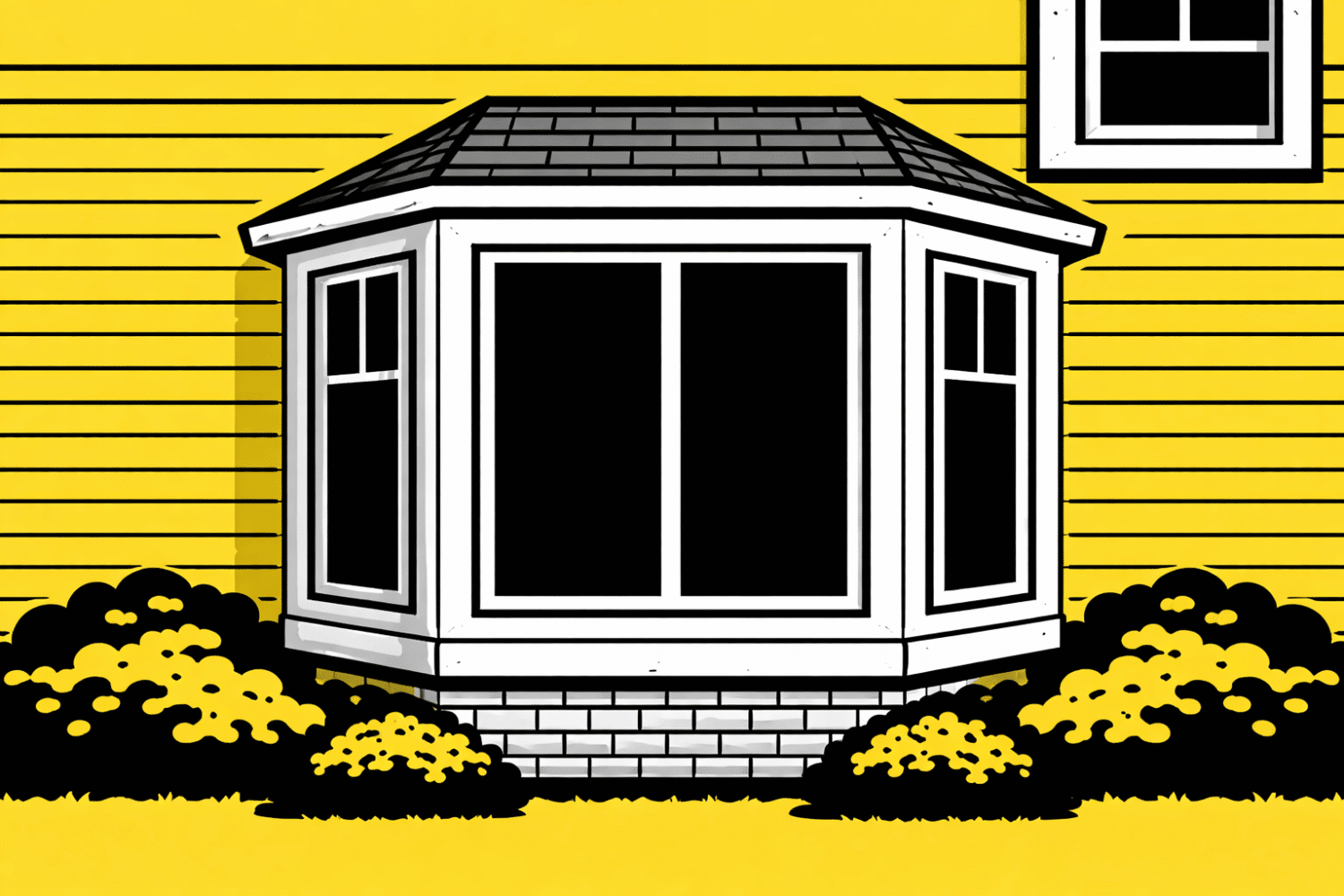
Bay and Specialty Windows
Bay windows, bow windows, and specialty shapes (arches, circles, trapezoids) are the most expensive per opening because they’re essentially multiple windows combined and often require carpentry modifications to the existing frame and surrounding wall structure.
Realistic local installed price ranges:
Bay and bow windows: $1,800–$4,500+ per opening
The wide range depends on size, frame material, whether structural changes are needed, and the complexity of interior and exterior finishing.
These windows dramatically impact curb appeal and interior space. They often adding a seating area, plant shelf, or reading nook. However, they require careful installation to prevent leaks and framing issues. We’ve seen plenty of bay windows installed incorrectly by inexperienced contractors, leading to water damage and premature failure.
Sometimes replacing an old, leaky bay with a simpler high-performance picture window saves thousands while still brightening the room. It’s worth discussing options before assuming a like-for-like replacement is the only path.
Installation Type: Insert vs. Full-Frame (And How It Impacts Cost)
Understanding the two main window installation approaches helps you make sense of quotes and recommendations. Here in Mid-Missouri, contractors use either insert (also called pocket) replacement or full frame installation.
Insert replacement keeps your existing frame in place. The new window slides into the old frame opening, and interior trim typically stays untouched. This approach:
Costs less, often saving $150–$300 per opening
Works well for homes built after about 1990 with solid framing
Minimizes disruption and installation process time
Full frame installation removes the entire old window, frame, and trim, then rebuilds the opening. This adds labor and materials but also lets the installer:
Correct rot, poor insulation, and flashing issues
Install proper weatherproofing from scratch
Address problems common in homes built before the 1980s
Typical price ranges in Mid-Missouri:
Insert installations: $400–$900 per window
Full-frame replacements: $650–$1,400+ per opening
At CoMo Premium Exteriors, we inspect each opening during a free estimate and explain which method makes the most sense for your specific home. We don’t default to the most expensive option. We recommend what will actually solve your problems and last.
Local Factors That Influence Window Costs in Mid-Missouri
National price charts rarely capture regional realities. Here’s what specifically affects window replacement pricing in our area:
Geographic and access factors:
Multi-story homes require ladders and scaffolding
Steep grades (common around Lake of the Ozarks) add safety equipment and labor time
Hard-to-reach windows on the back of hillside homes increase installation complexity
Home characteristics:
Older homes in central Columbia or historic districts may need custom-sized windows
Pre-1978 homes require lead-safe practices for paint removal, adding to labor costs
Extra carpentry for rotted frames or non-standard openings affects pricing
Climate considerations:
Mid-Missouri’s temperature swings, from winter lows in the teens to summer highs in the 90s, make energy efficient options more important
Many homeowners choose upgraded glass packages that add modestly to up-front cost but significantly reduce cooling costs and heating expenses
Because we’re based right here in Mid-Missouri, CoMo Premium Exteriors prices projects with these local realities in mind. We understand local building codes, know which window manufacturer products perform well in our climate, and can navigate permitting requirements efficiently.
Home Age and Condition
Homes built before about 1980 in Mid-Missouri often have irregular rough openings, aging wood frames, and sometimes hidden rot that’s only discovered once the old windows come out.
What does this mean for your budget?
Repairing or rebuilding damaged frames can add roughly $100–$600 per window in additional carpentry
Severely rotted sills may require structural work
Interior finishes (drywall, trim) may need replacement if damage extends beyond the frame
Many 1990s–2010s homes in Columbia and Jefferson City used lower-cost original windows that now have failed seals or warped frames. These are usually good candidates for insert replacements, keeping overall cost lower while greatly improving performance.
Here’s an example from our experience: During a free inspection at a 1970s ranch near Jefferson City, we discovered significant rotten sills hidden behind intact-looking trim. We showed the homeowner photos so they understood why full-frame replacement was the safe, long-term choice rather than just inserting new windows into compromised framing.
Transparency matters. You should know up front what condition issues might change the final cost. That is why we provide detailed written estimates that account for potential complications.
Energy-Efficient Glass and Upgrades
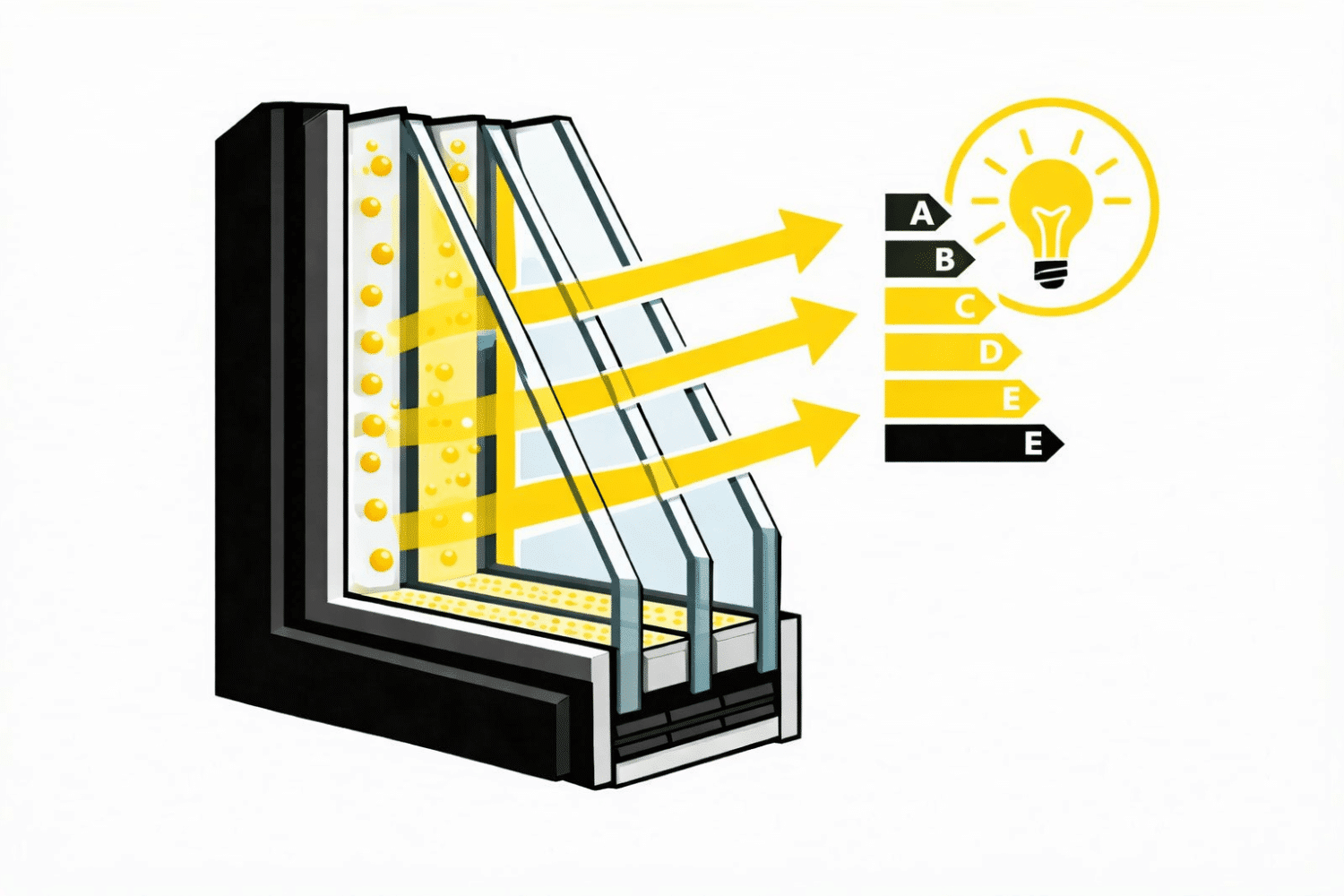
In Mid-Missouri, upgrading from basic clear double pane windows to energy efficient glass packages typically adds around $40–$150 per window but can save meaningful money on your energy bills year after year.
Common upgrades include:
Low E coatings that reflect heat while allowing visible light through
Argon gas fill between panes for better insulation
Warm-edge spacers that reduce condensation and heat transfer at the glass edge
ENERGY STAR certified windows appropriate for Missouri’s climate zone can reduce energy use for heating and cooling by roughly 10–20% compared to older single pane windows or failing double-pane units. For a home spending $200/month on utilities, that’s potentially $240–$480 in annual energy savings.
Triple pane windows cost more and aren’t necessary everywhere. We typically recommend them selectively:
North-facing rooms that get cold in winter
Large picture windows with significant heat gain or loss
Homes near busy roads where sound control is important
Beyond energy savings, these upgrades improve comfort by cutting drafts, reducing condensation, and limiting hot and cold spots near windows in both January freezes and August heat.
During an estimate, we walk homeowners through glass options using real-world examples rather than just technical jargon. Understanding the difference between installing energy efficient windows and standard units helps you make a confident decision.
DIY vs. Professional Window Replacement in Mid-Missouri
While it’s possible for experienced DIYers to install a window, most Mid-Missouri homeowners choose professional installation because windows are critical to energy efficiency, weather resistance, and long-term home value.
Here’s the honest breakdown:
DIY material-only costs might be as low as $250–$700 per vinyl window purchased from a big-box store. However, that price doesn’t include:
Proper flashing and weatherproofing materials
Spray foam insulation for gaps
Disposal of old windows
Warranty-backed labor
Corrections if something goes wrong
Professional installation in our region typically adds $150–$400 per opening compared to DIY material-only costs. But you get trained crews, correct local building codes compliance, and protection from issues like leaks or air infiltration.
The risk with improper installation is real. Incorrect flashing and sealing can quickly erase any DIY savings by causing water damage, mold growth, and premature window failure. We see these problems regularly after big storms in Mid-Missouri. Windows that weren’t installed correctly fail first.
CoMo Premium Exteriors provides factory-trained crews and backs window installations with a limited lifetime workmanship warranty. That peace of mind is hard to replicate with a DIY project.
When DIY Might Make Sense
DIY window replacement only really makes sense for homeowners with solid carpentry skills who are comfortable handling:
Framing adjustments and shimming
Sheetrock and drywall repair
Exterior trim and flashing work
Caulking and weathersealing
DIY might be reasonable for:
A detached garage or shed window
A single non-critical window where a small cosmetic mistake is acceptable
Situations where warranty coverage isn’t a priority
Even skilled DIYers often hire professional installation for second-story windows or large units that require two or three people to handle safely. A successful installation requires proper technique at every step.
If you’re considering DIY, at least consult with a professional for guidance on correct flashing and insulation, or get a quote from CoMo Premium Exteriors to weigh the true cost difference. You might find professional work is closer to your budget than expected.
Benefits of Hiring a Local Professional
Working with a local Mid-Missouri contractor like CoMo Premium Exteriors offers advantages that go beyond just having someone else do the work:
Code and climate expertise: We understand regional building codes, inspection processes, and weather-related best practices. This reduces risk and ensures your windows perform correctly.
Warranty protection: Professional installation helps keep window manufacturer warranties fully valid. Many brands require certified or trained installers for coverage on glass seals and hardware. Skip this step, and you might void warranty coverage before you even use the windows.
Complete project management: We handle all stages, accurate measurement, ordering custom sizes, removal and disposal of old windows, the installation process itself, interior and exterior trim, and final cleanup. You don’t coordinate multiple trades.
Single point of responsibility: Having one company responsible for both the product and installation makes service simple if there’s ever an issue. You’re not trying to figure out whether a problem is with the window or the installation. We handle it.
Ready to explore your options? Schedule a free consultation anywhere in Mid-Missouri. There’s no obligation, and our goal is always to educate first, then help when you’re ready.
How to Budget and Save on Replacement Windows in Mid-Missouri
Replacing windows is a major investment, and thoughtful planning helps keep the window replacement project manageable. Here’s a practical approach:
Step-by-step budgeting:
Inventory your windows – Count all your windows and note sizes, styles, and current condition
Prioritize problem areas – Identify which windows have the worst drafts, fogging, or operation issues
Choose material and efficiency level – Decide on vinyl, composite, or wood; standard or upgraded glass
Decide on phasing – Replace all at once for efficiency, or phase by room/façade for budget flexibility
Grouping windows by façade (front of house first for curb appeal), floor, or room helps spread replacement costs while still improving comfort noticeably.
CoMo Premium Exteriors provides line-item pricing by window or by group so you can see exactly how different scopes of work affect your total investment. No surprises, no hidden fees.
Don’t forget to explore:
Financing options to spread payments over time
Utility rebates from local providers
Federal tax credits for qualifying ENERGY STAR upgrades (currently up to $600 per home for windows)
We can point you toward current programs and help you maximize available savings.
Practical Ways to Reduce Overall Project Cost
Here are concrete strategies to keep your window replacement pricing reasonable:
Choose quality vinyl or composite over premium wood if budget is tight but long-term performance matters. You’ll save money up front and avoid ongoing maintenance costs.
Stick with existing openings rather than enlarging or moving windows. Structural changes add significantly to labor and material costs. Replace your windows in the same size and location whenever possible.
Prioritize the most problematic windows first if a full-home project isn’t feasible. Target windows with rotted frames, broken seals, or severe drafts. These give you the biggest comfort and efficiency improvements per dollar.
Consider timing – Scheduling during slower installation periods (often late fall and winter in Mid-Missouri) can sometimes provide more scheduling flexibility and potential seasonal promotions.
Ask questions – Get a detailed written estimate and ask about any line items you don’t understand. We pride ourselves on walking homeowners through every part of the quote so you know exactly what you’re getting.
Why Work With CoMo Premium Exteriors for Windows in Mid-Missouri?
CoMo Premium Exteriors has been serving Mid-Missouri homeowners since 2010, with offices and teams working daily in Columbia, Jefferson City, Boonville, Moberly, and around the Lake of the Ozarks. We’re your neighbors, not a corporate chain or out-of-state company that disappears after the job.
We’re triple certified (GAF Master Elite, Owens Corning Platinum Preferred, James Hardie Elite Preferred) for exterior work—the only contractor in our region with all three certifications. This level of training and quality control applies to window installations just as much as roofing and siding.
What you get working with us:
Free, no-pressure estimates with honest recommendations
Clear written proposals with line-item pricing
Limited lifetime workmanship warranty coverage
Factory-trained crews who handle everything from standard replacements to complex projects involving rot repair or design changes
Because all your windows, siding, roofing, and gutters work together to protect your home, we can evaluate your entire exterior and help you prioritize projects for the best overall cost and value. Sometimes a window project reveals siding issues, or vice versa. We’ll give you the complete picture.
Ready for exact pricing on your home’s windows? Give us a call at (573) 424-9008 or request a free estimate online. We’ll answer your questions, walk through your options, and help you make the right choice for your Mid-Missouri home. No pressure, just honest advice from local experts.
FAQ: Replacement Window Costs in Mid-Missouri
This FAQ covers common questions we hear from homeowners in Columbia, Jefferson City, Sedalia, and surrounding communities about timing, phasing, and long-term value.
How long does a typical window replacement project take in Mid-Missouri?
Once custom windows arrive from the window manufacturer (often 3–6 weeks from order in 2026, depending on material and style), installation for a standard 10–15 window home usually takes 1–3 days for a professional crew. Disruption inside the house is minimal. We typically work room by room.
Weather can affect scheduling in Mid-Missouri, especially during winter storms or severe spring thunderstorms. However, we sequence work to keep openings covered and your home secure at all times. Larger or more complex projects, such as multiple bay windows or significant rotten framing repairs, may take slightly longer but are still typically completed within the same week they begin.
Will new windows really lower my energy bills in Mid-Missouri?
For Mid-Missouri homes with older single pane windows or failing double-pane units, many homeowners see meaningful savings on heating and cooling, often in the range of 10–20% annually after upgrading to modern, ENERGY STAR-rated windows. The affect pricing you pay for utilities now versus later is significant.
Savings depend on your home’s insulation, HVAC system, and how many windows are replaced. But improved comfort, fewer drafts and temperature swings, is almost always noticeable immediately. We recommend energy efficient options optimized for Mid-Missouri’s climate zone, including low-E glass tuned to limit summer heat gain while still letting in natural light.
Can insurance help pay for window replacement after a Mid-Missouri storm?
Standard window replacement for age or efficiency upgrades is usually not covered by insurance. However, sudden damage from hail, wind, or debris during storms may be eligible under your homeowner’s policy.
CoMo Premium Exteriors frequently helps Mid-Missouri homeowners document storm-related damage to windows, siding, and roofing as part of broader storm restoration projects. We understand how insurance claims work and can coordinate with adjusters on your behalf.
If you’ve experienced storm damage, call your insurer and a trusted local contractor promptly. Documenting damage before temporary repairs or cleanup hide the evidence is important for getting fair compensation on replacement costs.
Is it better to replace all my windows at once or in phases?
From a cost-per-window standpoint, replacing all windows at once is usually more efficient because it reduces setup time and labor repetition. Window installation companies typically offer better per-window pricing on larger projects.
However, budget and timing often make phased projects more realistic. If phasing is necessary, prioritize the worst-performing windows, often west- and north-facing units that are drafty, fogged, or hard to open. Plan subsequent phases as budget allows.
We can design phased window plans with consistent products so completed sections match perfectly as you work through the house over time. There is no penalty for doing it in stages, just a plan that fits your situation.
Do new windows add resale value for homes in Mid-Missouri?
Nationally, mid-range window replacement projects often recoup roughly 65–75% of their cost at resale. In active markets like Columbia and the Lake area, buyers value newer, energy efficient windows as a sign of a well-maintained home.
Beyond direct recoupment numbers, new replacement windows can help homes appraise better and stand out in listings. “Updated windows, roof, and siding” is exactly what buyers want to see when they’re worried about upcoming maintenance costs on their own windows after purchase.
If you’re planning to sell within the next 3–5 years, discussing window options with us can help you choose products that balance overall cost, curb appeal, and buyer expectations in your specific neighborhood. A free estimate can help you understand your options and make smart decisions about your home’s windows.
Can Storms Damage Windows? What Missouri Homeowners Should Watch For
Key Takeaways
Living in Mid-Missouri means dealing with some of the most unpredictable weather in the country. Here’s what you need to know about storm damage and your home’s windows:
Mid-Missouri storms—including hail, straight-line winds exceeding 60 mph, and tornadoes—can crack glass, loosen seals, and damage frames in ways that aren’t always immediately visible
Even minor window damage can lead to water leaks, persistent drafts, higher energy bills, and long-term problems like rot or mold inside your walls
Homeowners in Columbia, Jefferson City, Boonville, Moberly, and Lake of the Ozarks should visually inspect windows after every major storm and call a professional if anything looks off
CoMo Premium Exteriors offers free post-storm window and exterior inspections across Mid-Missouri and can help navigate the insurance claim process for storm damage
How Missouri Storms Actually Damage Your Windows
If you’ve lived in Central Missouri for any length of time, you know our weather doesn’t do anything halfway. Spring brings hailstorms that can drop golf ball-sized ice in minutes. Straight-line winds regularly exceed 60-70 mph during severe thunderstorms. And the May-June and late fall tornado seasons remind us we’re living on the edge of Tornado Alley—Missouri has recorded over 1,000 tornadoes since 1950.
When we talk about storm damage to windows, most people picture shattered glass scattered across the floor. But the reality is more complicated. Storm damage takes many forms:
Wind pressure and flexing: High winds create pressure differentials that can bow frames, stress seals, and force moisture into places it shouldn’t go
Hail impacts: Even smaller hail (under 1 inch) can create micro-cracks in glass that aren’t obvious at first but spread over time with temperature changes
Flying debris: Winds over 50 mph can turn tree limbs, roof granules, fence panels, and outdoor furniture into projectiles aimed at your windows
Wind-driven rain: Horizontal rain during severe weather can force water past compromised seals and into wall cavities
Here’s something many homeowners don’t realize: damage can be immediate—like broken glass from a direct hit—or delayed, with seals failing and water stains showing up weeks or months after the storm has passed.
Homes in open areas near fields or around the Lake of the Ozarks tend to be especially vulnerable to wind damage since there’s less natural windbreak. And if your Mid-Missouri home was built before the early 2000s, there’s a good chance you have builder-grade windows that are significantly less impact resistant than modern options. These older windows are more likely to fail under repeated storm exposure.
First Things To Do After a Storm Hits Your Missouri Home
Before you even think about checking your windows, make sure the storm has fully passed and conditions are safe. Watch for downed power lines, unstable tree limbs, and broken glass before stepping outside or walking through your home.
Once you’ve confirmed it’s safe, do a quick walk-through of your entire house—both inside and outside. Look for obvious problems: broken windows, visible cracks in glass panes, or water that blew in around window frames during the storm. Check every room, including upstairs and basement windows that are easy to forget.
If you spot any suspected window damage, grab your phone and start documenting immediately:
Take close-up photos of any cracks, chips, or dents
Capture wider context shots showing which window and which side of the house
Record short videos if water is actively leaking or damage is extensive
Note the date, time, and general storm conditions
This documentation is critical for both contractors and insurance adjusters. Don’t skip this step—even if you’re anxious to start cleanup.
For obvious damage like broken glass or gaps where wind is blowing through, take temporary measures to protect your home. Cover openings with heavy plastic, cardboard, or plywood (if you can do so safely) to prevent further damage from additional rain, pests, or debris. These aren’t permanent fixes, but they’ll buy you time until a professional can respond.
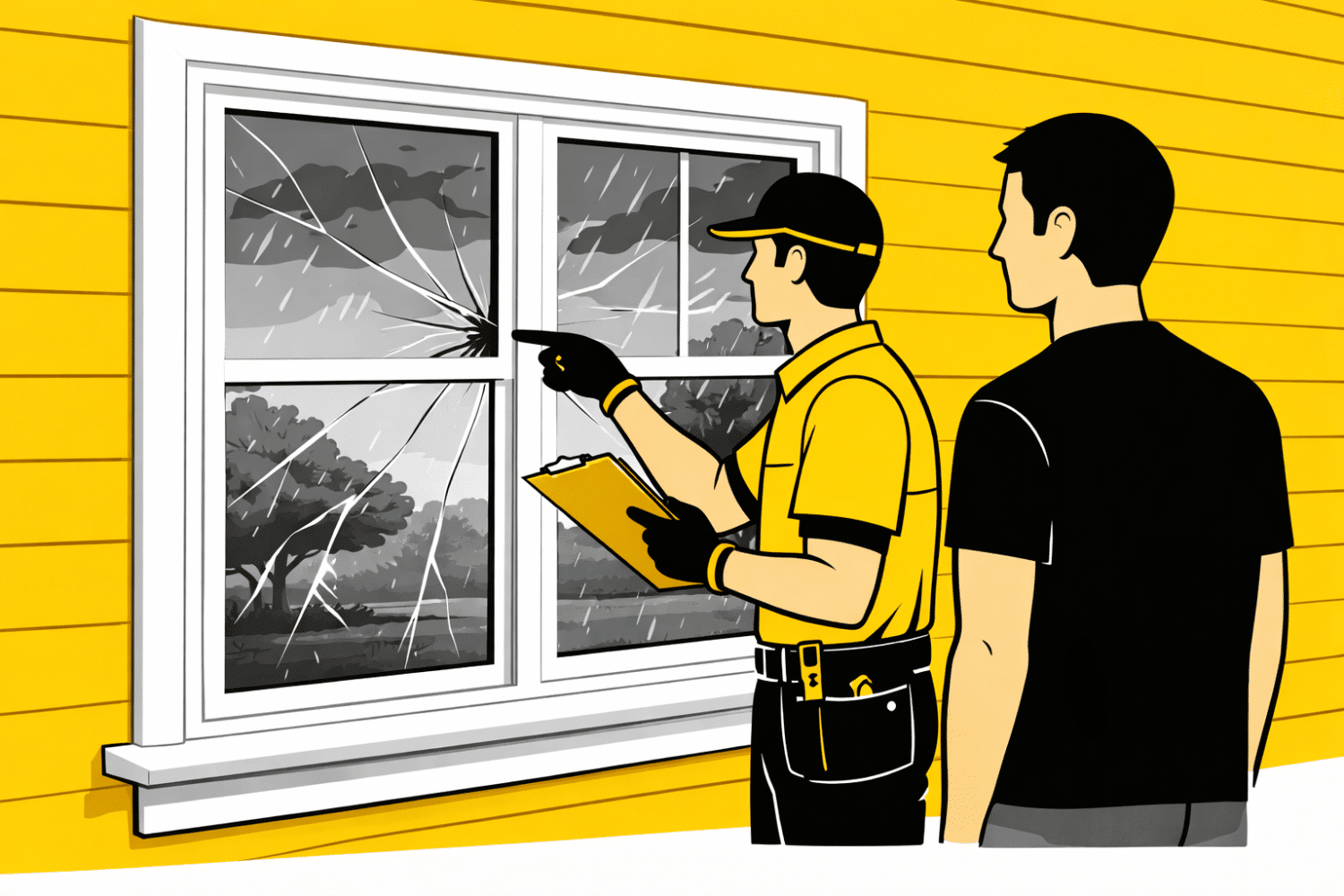
Once your property is secure, give us a call at CoMo Premium Exteriors. We can schedule a free, detailed inspection of your windows, siding, roofing, and gutters—typically within a few days of major storm events in the Mid-Missouri area.
Visible Window Damage Missouri Homeowners Should Watch For
Some storm damage is easy to spot if you know what you’re looking for. We recommend walking both the exterior and interior of your home, checking every window—especially those on the side of the house that faced the storm.
Here are the visible issues you should watch for:
What to Look For
Where to Check
What It Means
Cracked or shattered glass
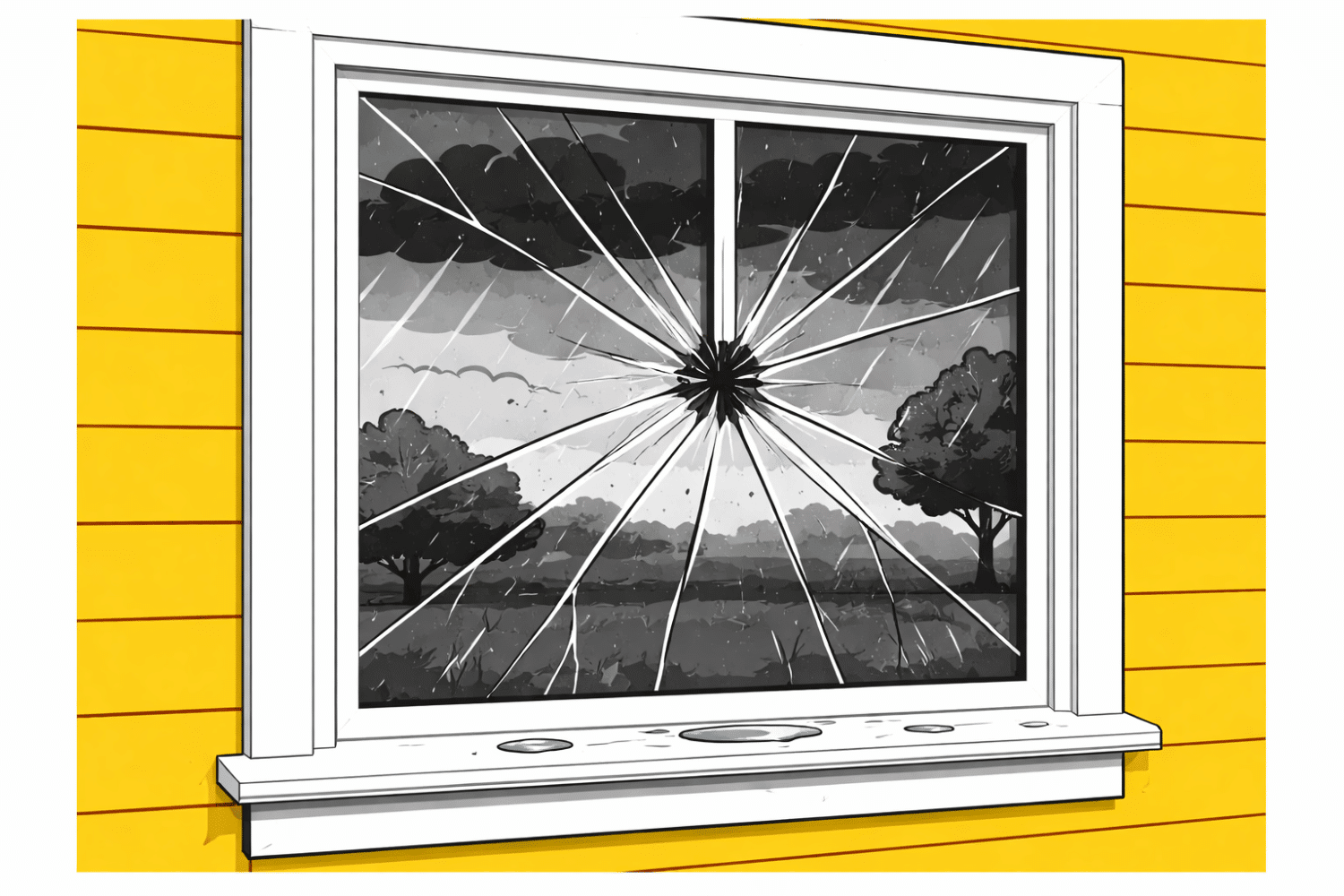
All panes, including small starburst patterns
Direct hail or debris impact; needs repair or replacement
Chipped, bent, or dented frames
Storm-facing exterior frames
Hail damage or flying debris strike
Torn or missing screens
All window screens
Debris impact—glass may also be affected
Water stains or bubbling paint
Interior walls near windows
Water infiltration during the storm
Soft drywall
Touch areas around window interior
Hidden water damage behind walls
Warped sashes or frames
Look at the window from an angle
Frame movement from wind pressure
If you find broken glass or a loose sash, don’t try to operate that window until it’s been inspected. A cracked pane under stress can shatter unexpectedly, and damaged frames may not support the weight of the glass properly.
Any significantly cracked glass or shattered pane typically requires repair or full replacement—this isn’t cosmetic damage you can ignore. A professional contractor can advise whether just the glass, the sash, or the entire window unit needs to be replaced based on the location and severity of damage.
Hidden Storm Damage: Drafts, Leaks, and Seal Failures
In Mid-Missouri, many storm-related window problems don’t show up right away. The visible glass might look fine, but subtle comfort or moisture issues can develop weeks after a big storm—especially after repeated hail or high wind events.
Watch for these hidden signs of damage:
New drafts or temperature swings: If you notice cold air near a window when the wind blows (or hot spots in summer), the weatherstripping or seals may be compromised
Foggy windows or condensation between panes: This cloudy appearance in double pane windows or multi pane windows signals that the seal has failed and the insulating gas has leaked out
Musty odors near windows: This often indicates water has gotten into the wall cavity and moisture is building up
Discolored or separating caulk: Check the caulk lines around window frames for pulling away, cracking, or color changes
Windows that stick or won’t close properly: If a window that worked fine before the storm is suddenly difficult to operate, the frame may have shifted
What causes these hidden problems? High winds and pressure changes during severe weather can flex window frames—sometimes just enough to break the seal between the frame and glass or between the frame and the wall. The glass might look perfect, but the window’s ability to keep air and water out has been compromised.
These hidden issues have real consequences. Failed window seals can reduce the R-value of insulated glass from 3-4 down to nearly zero, meaning your HVAC system works overtime to compensate. Over the course of a Missouri summer and winter, that can add up to significantly higher energy bills. Even worse, hidden moisture can lead to rot or mold behind your trim and inside your walls.
If any of these signs appear after a known storm event, schedule a professional inspection rather than just re-caulking the visible gaps yourself. The problem often runs deeper than surface fixes can address.
How Different Window Frame Materials React to Missouri Storms
Mid-Missouri homes feature a mix of window frame materials, and severe weather affects each type differently. Understanding your frame type helps you know what storm damage to look for.
Wood frames:
Prone to swelling and eventual rot when repeatedly exposed to wind-driven rain
Look for peeling paint, soft spots, or spongy wood after a storm
Check corners and bottom rails where water tends to collect
Older wooden frames in Mid-Missouri homes may already have hidden damage from years of exposure
Vinyl frames:
Can crack, warp, or pull away from the wall under strong wind loads
Hail impacts may leave hairline cracks, especially in corners
Look for discoloration or fading on the storm-facing side
Extreme temperature changes in Missouri (from -10°F winters to 100°F summers) stress vinyl over time
Aluminum or metal-clad frames:
Prone to dents, bends, and corrosion where the finish is chipped by hail
Check for dent marks along exterior faces
Look for rust forming at fasteners and joints
Soft metals like aluminum are particularly vulnerable to hail damage that insurance adjusters sometimes miss
Fiberglass and composite frames:
More stable under Missouri’s dramatic temperature swings
Seals and glass can still be damaged by flying debris or hail impacts
Generally hold up better than older vinyl in repeated storm exposure
Many Mid-Missouri neighborhoods built between the 1990s and 2010s still have their original builder-grade vinyl or aluminum windows. If your home falls into this category, those windows may already be approaching the end of their intended service life—and storm damage can accelerate that timeline significantly.
At CoMo Premium Exteriors, we can recommend modern replacement windows—including energy-efficient vinyl and composite options—that hold up far better to repeated wind and hail than many older windows we see across the region.
Storm-Damaged Windows: When Can You Repair and When Should You Replace?
Not every storm damaged window in Missouri needs full replacement. But some conditions make replacement the safer and more cost-effective long-term choice. Here’s how to think about the decision.
Repair may be appropriate when:
Damage is minor and cosmetic—small chips in the frame finish with no leaks or drafts
Only the caulk or weatherstripping has failed, and the frame and glass are structurally sound
Hardware issues (locks, latches, cranks) can be replaced without disturbing the entire window unit
The window is relatively new and otherwise in good condition
Replacement is the better choice when:
Glass is cracked, shattered, or visibly weakened—especially on double pane windows where the seal is broken
Damaged frames are warped, twisted, or pulled away from the wall after wind damage
You’re seeing ongoing water intrusion around or under the window, with water stains or soft spots in framing materials
The window has needed multiple prior repairs, indicating it’s at the end of its practical life
Cracked frames or severely damaged frames compromise the window’s structural integrity
A trusted professional contractor should evaluate both the window and the surrounding wall structure before making a recommendation. Sometimes what looks like simple window damage actually extends to the rough opening, flashing, or interior framing—and that changes the scope of needed repairs.
At CoMo Premium Exteriors, we focus on long-term value. We’ll walk you through whether a targeted repair makes sense or whether investing in new windows is the better 20-30 year solution. We’ve handled over 500 storm-related projects across Mid-Missouri, and about 70% involve damage to multiple exterior components—so we understand how window issues often connect to roof or siding problems.
How Storm-Damaged Windows Affect Energy Bills and Comfort in Mid-Missouri
Damaged windows can quietly drive up utility costs in ways many homeowners don’t connect to that big storm from last spring. In Columbia, Jefferson City, and surrounding towns—where summers are hot and humid and winters regularly drop below freezing—even minor window damage affects your comfort and your wallet.
Here’s how storm damage impacts window performance:
Lost insulating gas and failed seals: When the seal breaks on double pane windows, the argon gas that provides insulation escapes. This can reduce the R-value to nearly zero, making rooms noticeably hotter in July and colder in January
Drafts from warped frames or damaged weatherstripping: Even small gaps force your HVAC system to run longer, increasing your Ameren or local electric co-op bills
Hidden moisture leaks: Water intrusion can damage insulation inside your walls, decreasing thermal performance and adding to discomfort throughout your home
Temperature swings near windows: Rooms with damaged windows feel uncomfortable even when the rest of the house is fine
If you’ve noticed a sudden spike in energy efficiency problems—higher energy bills without an obvious explanation—after a major storm, consider scheduling a professional window and exterior inspection. The culprit may be storm damage you haven’t connected to your utility costs.
Replacing badly damaged or outdated windows with modern ENERGY STAR-rated units can significantly improve comfort and help stabilize long-term energy costs. Modern impact resistant options can boost efficiency by 15-20%, potentially saving Mid-Missouri homeowners $200-400 per year on heating and cooling.
CoMo Premium Exteriors can explain available glass packages and frame options that perform well in Central Missouri’s challenging climate—humid summers, freeze-thaw cycles, and everything in between.
Insurance, Documentation, and Working With a Local Missouri Contractor
Many wind and hail events in Mid-Missouri are covered by standard homeowners insurance. Severe storms that move through Boone, Cole, and Callaway Counties each spring often trigger legitimate claims—but the process can feel overwhelming when you’re also dealing with cleanup and repairs.
Here’s how to approach the insurance claim process:
Document everything immediately:
Photograph and video all window damage and exterior damage right after the storm
Include close-ups showing specific damage and wider shots for context
Note dates, times, and storm conditions
Keep a written log of what you observed and when
Review your policy:
Check your coverage for wind and hail damage
Understand your deductible and whether you have Actual Cash Value (ACV) or Replacement Cost Value (RCV) coverage
Note any filing deadlines—Missouri policies typically have a 1-2 year window
Contact your insurance company promptly:
After large regional events, adjusters get backed up quickly
Early contact helps establish your place in the queue
Industry data shows about 30% of claims are denied due to poor documentation—don’t let that be you
How a local contractor helps:
At CoMo Premium Exteriors, we can perform a thorough inspection of your entire exterior—windows, siding, roofing, gutters, and doors—and prepare a detailed report with photos. We’ve worked with insurance adjusters for over 25 years across Mid-Missouri, and we know what they look for and what they sometimes miss.
We can meet with your insurance adjuster on-site to point out damage that might be overlooked in a quick walkthrough—including issues like valley flashing interactions with window rough openings and secondary damage that’s not immediately visible. Our team can help you understand the full extent of work needed, local building codes that apply, and upgrade options that may be available within your claim.
One more piece of advice: after major hail events, “storm chaser” crews often knock on doors offering quick repairs. These out-of-state companies frequently disappear after the job, leaving homeowners without warranty support or anyone to call if problems arise. Instead, work with a vetted local company like CoMo Premium Exteriors—we’ve been here since 2010, and we’ll be here when you need us years from now.
Why Mid-Missouri Homeowners Trust CoMo Premium Exteriors After Storms
Since 2010, CoMo Premium Exteriors has served homeowners across Columbia, Jefferson City, Boonville, Moberly, and Lake of the Ozarks as a trusted exterior specialist. We’ve seen firsthand how Missouri’s severe weather—from spring hailstorms to summer derechos to fall tornado outbreaks—affects homes in our region.
What sets us apart:
We’ve completed hundreds of storm-related projects across Mid-Missouri, including window replacement, roofing, siding, and gutters
Our limited lifetime workmanship warranty means we plan for decades of performance, not quick fixes that fail in a few years
We coordinate window work with roofing and siding repairs so you don’t have to juggle multiple contractors after a big storm hits
As the only triple-certified contractor in the region (GAF Master Elite, OC Platinum, James Hardie Elite), we maintain strict quality standards that benefit every project
Our approach—education first:
We start every project with a free, detailed inspection and a clear explanation of what we see. You’ll receive photos you can keep, along with a straightforward assessment of your options. We explain repair vs. replacement considerations, estimated lifespans for different solutions, and how each choice affects your home’s safety, energy efficiency, and long-term maintenance needs.
If you’ve recently experienced hail, high winds, or tornado warnings and aren’t sure whether your windows were affected, give us a call. Catching minor damage in 2024-2025 can often prevent major structural repairs down the road—especially in older Mid-Missouri homes where builder-grade windows have already seen decades of weather exposure.
We’re happy to take a look—no obligation, no pressure, just honest advice from your neighbors who’ve been doing this for over 25 years.
FAQs
How soon should I check my windows after a storm in Mid-Missouri?
Do a basic safety check as soon as the storm has clearly passed and conditions allow—no active lightning, no high winds still blowing, no downed power lines nearby. Walk through your home the same day to look for broken glass, water entry, or obvious frame damage. If anything looks suspicious, schedule a professional inspection within a few days. Early photos and detailed notes help both contractors and your insurance agent understand exactly what happened and when.
Can small hairline cracks in window glass wait, or are they urgent?
Even tiny star-shaped cracks from hail impacts can spread over time. Missouri’s dramatic temperature changes—from freezing winters to scorching summers—put stress on cracked glass with every temperature swing. We recommend avoiding operating a window with cracked glass and having it evaluated promptly. Addressing small cracks early is typically less expensive than waiting until the pane fails completely or the damage extends to the frame.
What if my windows look fine, but the room feels draftier after a storm?
New drafts or cold/hot spots near a window often mean the seals, caulk, or weatherstripping were compromised—even if you can’t see visible damage. Wind pressure during future storms will make these problems worse. A thorough inspection can test for air leakage and check for frame movement or hidden damage before you spend time and money on DIY re-caulking that may not solve the underlying problem.
Do I have to replace all of my windows at once after a hailstorm?
Not necessarily. Storms don’t affect all windows equally—sometimes only the storm-facing side of your home or certain individual units sustain significant damage. A good professional contractor will assess each window individually and help you prioritize which ones need immediate attention versus which can reasonably wait. At CoMo Premium Exteriors, we can phase window replacement over time or coordinate it with other exterior work to fit your budget and schedule.
Can CoMo Premium Exteriors inspect more than just my windows after a storm?
Absolutely. Our team routinely checks roofing, siding, gutters, windows, and doors in a single visit for homeowners across Mid-Missouri. This whole-exterior approach helps catch related damage you might otherwise miss—for example, hail that cracked your windows often also bruises shingles and dents metal gutters. Contact us for a comprehensive exterior assessment and a straightforward explanation of any recommended next steps. Call us at (573) 424-9008 or request an inspection online—we’re here to help.
Top Trends in Replacement Windows for Energy-Efficient Style in 2026
Key Takeaways
2026 window trends blend high-efficiency glass technology, smart controls, and bold aesthetic choices like black frames and expansive glass walls—all designed to work together rather than force trade-offs.
Replacing older single pane windows or early double pane windows with modern energy efficient windows can cut heating and cooling costs by 10–20% for Mid-Missouri homeowners when paired with proper installation.
The smartest “trend” for your home is matching window technology (glazing type, low-E coatings, gas fills) to our local mixed climate zone rather than following national design fads.
CoMo Premium Exteriors helps homeowners in Columbia, Jefferson City, Boonville, Moberly, and Lake of the Ozarks balance energy savings, style preferences, and budget through free estimates and honest consultations.
Many 2026 trends—smart locks, noise-reduction glass, dark frames—can be added selectively to specific openings, so you don’t have to replace every window to see real benefits.
Why 2026 Is a Pivotal Year for Energy-Efficient Window Replacement
Rising utility costs across Mid-Missouri, combined with updated 2025–2026 energy standards and shifting design preferences, are reshaping how homeowners think about window replacement. What used to be a straightforward decision about glass and frames has become a more strategic choice affecting comfort, household energy bills, noise control, security, and resale value.
Windows are now a major energy system and design feature—not just holes in your walls with some glass in them. The right replacement windows can transform how your living spaces feel throughout the year, while the wrong ones leave you dealing with drafts, condensation, and higher energy use for decades.
This article focuses specifically on replacement windows (not new construction) and is written from our perspective as CoMo Premium Exteriors, a local exterior contractor serving Mid-Missouri since 2010. We’ll walk through the top 2026 trends and then show you how to decide which ones are actually worth the investment for your specific home.
Trend 1: Smarter, Climate-Tuned Energy Performance (Not One-Size-Fits-All)
The 2026 approach to energy efficiency moves well beyond slapping a generic energy star label on every product. Manufacturers and informed contractors now focus on climate-specific choices—understanding whether your region is cooling-dominant, heating-dominant, or a challenging mix of both.
What This Means for Mid-Missouri Homeowners
Here in Central Missouri, we deal with hot, humid summers pushing 90°F+ and winters that regularly drop below freezing. That mixed climate means your windows need to block summer heat while retaining warmth during the heating season. Generic “efficient windows” designed for Phoenix or Minneapolis won’t perform the same here.
For most Mid-Missouri homes, the sweet spot in 2026 is:
Window Type
Best Use Cases
Energy Impact
Double pane with low-E
Most rooms, balanced performance
10-15% energy savings vs. older units
Triple glazing
North-facing rooms, noisy streets, large glass areas
30-50% better heat loss prevention
Argon gas fill
Standard for most quality replacements
Reduces heat transmission significantly
Krypton gas fill
Premium applications, thinner profiles
Even better insulation in less space
Understanding the Technology in Plain Language
Low e coatings are transparent microscopic metallic layers applied to glass panes that reflect infrared heat while letting visible light through. In winter, they help keep your heat inside. In summer, they block solar radiation from cooking your rooms. Modern low-E coatings can reduce heat transmission by 30-50% compared to older single-pane units.
Argon gas fills the space between glass panes, insulating better than plain air. It’s the standard for quality new windows in 2026.
Warm edge spacers are the strips separating glass layers at the edges. Older aluminum spacers conducted heat right through the frame—warm edge spacers minimize that thermal bridging, especially important in our temperature swings.
Reading Energy Labels in 2026
The National Fenestration Rating Council provides standardized ratings you’ll see on every window:
U-factor: Measures how well a window prevents heat loss. Lower is better. Look for 0.25 or below for Mid-Missouri.
Solar heat gain coefficient (SHGC): Measures how much solar heat comes through. For our climate, 0.25-0.40 is typically ideal.
Visible Transmittance (VT): How much natural light comes through. Higher means more light—aim for 0.50 or above.
Energy Star “Most Efficient” tiers in 2025–2026 raise the bar on these metrics. When comparing products, these numbers tell you more than marketing claims.
We help homeowners interpret these ratings during free consultations at CoMo Premium Exteriors. You shouldn’t have to guess which glass package actually makes sense for your house.
The 2026 demand for more natural light and seamless indoor-outdoor connection continues growing. Homeowners want larger windows, expansive patio doors, and floor-to-ceiling glass walls that frame views and flood rooms with daylight.
Popular Formats We’re Seeing in Mid-Missouri
Multi-slide patio doors: These can open entire wall sections to patios, decks, or lake views—especially popular at Lake of the Ozarks properties.
Large fixed picture windows: Non-opening units that maximize glass area, often paired with smaller operable windows for ventilation.
Expanded egress windows: Basement window upgrades common in Columbia and Jefferson City ranches, bringing light to lower levels while meeting safety codes.
Floor-to-ceiling glass walls: Using insulated frames with low-E glass and optional automated shades for light control.
Why This Works Now
Modern insulated glass technology makes these bigger openings practical without turning your home into an energy drain. Triple glazing with warm edge spacers and low-E coatings can reduce peak afternoon glare by up to 70% in west-facing installations while maintaining energy performance.
The key is correct specification. A giant picture window facing west in Jefferson City needs different glass than a north-facing bedroom window in Moberly. That’s where working with experienced installers matters.
Practical Design Considerations
Before going big with glass, think through:
Where does the sun set relative to your yard?
How will large windows affect furniture placement and TV viewing?
What’s your privacy situation with neighbors or streets?
Do you need integrated shades or blinds for light control?
CoMo Premium Exteriors evaluates existing wall structures, decks, and patios to determine where larger openings or new doors make the most sense structurally and aesthetically.
Trend 3: Dark, Minimal Frames and Clean Lines for 2026 Curb Appeal
Black and deep bronze window frames remain the dominant aesthetic choice heading into 2026. Paired with narrow sightlines and simple (or no) grille patterns, this minimalist look works equally well on modern builds and updated farmhouse-style homes.
Where We’re Seeing This in Mid-Missouri
Brick colonials in Columbia getting black-framed window replacements for high-contrast curb appeal
Lake homes at Lake of the Ozarks using dark frames against natural wood or stone exteriors
Newer subdivisions around Jefferson City specifying black windows on fiber cement siding
Historic renovations in Fulton blending dark frames with period-appropriate proportions
Materials That Hold Dark Colors
Old painted wood frames would fade, peel, and require constant maintenance. Today’s options for dark-frame windows include:
Material
Pros
Considerations
Vinyl with color-through
Low maintenance, affordable, won’t peel
Limited to lighter dark shades on some lines
Fiberglass composite
Excellent stability, premium appearance
Higher cost, worth it for large units
Aluminum-clad wood
Interior warmth, exterior durability
Requires proper sealing in our humidity
Wood frames with exterior cladding
Traditional interior aesthetic
More upkeep unless using engineered treatments
UV-stable finishes designed for decades of sun exposure are standard on quality 2026 products. Wood fiber composites and engineered wood frames offer the organic warmth many homeowners want while cutting long-term maintenance compared to traditional wood.
Slimmer Doesn’t Mean Weaker
“Minimalist” frame profiles in 2026 don’t sacrifice structural strength. Modern engineering combines slimmer sightlines with improved rigidity—important for big glass areas that need to handle Mid-Missouri’s storm seasons without warping or seal failure.
When choosing frame colors, consider your roof, siding, and trim as a complete system. As a James Hardie Elite Preferred contractor, we can coordinate window colors with new or existing siding and roofing projects for a cohesive exterior design.
Trend 4: Quieter, More Comfortable Interiors With Noise and Draft Control
Homeowners near busy roads, schools, or commercial areas in Columbia, Moberly, and along Highway 63 increasingly ask about noise reduction as a primary goal in 2026—not just energy efficiency.
How Acoustic Glass Works
Laminated and acoustic glass options layer polyvinyl butyral (PVB) between glass panes to dampen sound transmission. These can cut traffic noise by 30-40 decibels—enough to make a busy street sound like a quiet side road.
Unlike full soundproof studio upgrades that cost tens of thousands, quality acoustic glass in standard replacement windows brings meaningful noise reduction at reasonable window replacement costs.
Draft Control and Comfort
Beyond noise, tighter weatherstripping, insulated frames, and professional installation reduce drafts and temperature swings throughout your house. This matters most in:
Rooms over garages (common problem spots in Mid-Missouri homes)
Areas near large glass walls that can create convection currents
Older additions with inadequate original installation
Bedrooms on the windward side of the house
Priority Rooms for Noise and Comfort Upgrades
We consistently see Mid-Missouri homeowners prioritize these spaces:
Home offices: Post-pandemic remote work makes quiet focus spaces essential
Primary bedrooms: Better sleep quality when road noise and drafts are eliminated
Nurseries and children’s rooms: Light sleepers benefit from quieter, more stable temperatures
Media rooms: Reduce outside noise and make rooms feel more comfortable for extended use
At CoMo Premium Exteriors, we focus on the entire building envelope—windows and doors, siding, and insulation details around openings—to deliver the full comfort benefit rather than just dropping in glass.
Trend 5: Integrated Security and Smart Features in Everyday Windows
2026 replacement windows increasingly include built-in security features and optional smart technology instead of relying on add-on bars, aftermarket sensors, or visible retrofit hardware.
Standard Security Upgrades
Modern windows and doors now commonly offer:
Multi-point locking systems: Multiple locks engage along the frame when you turn the handle, not just a single latch point
Reinforced frames: Structural improvements that resist prying and forced entry
Laminated glass: The same technology used for noise reduction also holds together when struck, preventing easy break-ins
Tempered safety glass: Standard in larger units and required by code in certain locations
Smart Integration Options
For homeowners using smart-home systems, 2026 windows can include:
Discrete contact sensors that report open/closed status to your security hub
Smart locks on patio doors compatible with major platforms
Motorized blinds syncing with home automation to optimize cooling energy and privacy
Electrochromic tinting that auto-darkens based on sunlight sensors (higher-end option)
These smart features can potentially save an additional 10-15% on cooling costs by blocking heat preemptively during peak afternoon hours.
Targeting Security Upgrades Strategically
You don’t need maximum security on every opening. Focus enhanced features on:
Basement windows (most vulnerable entry point in many homes)
Sliding patio doors facing alleys, wooded lots, or low-traffic sides of the house
Ground-floor windows hidden from street view
Garage-entry doors where forced entry could bypass the main house
When we plan window projects at CoMo Premium Exteriors, we discuss security priorities alongside energy performance—helping homeowners balance cost, peace of mind, and ease of daily use.
Trend 6: Localized, Whole-Home Planning Instead of Piece-by-Piece Swaps
2026 sees a clear shift away from replacing a single window here and there toward planning whole-home or whole-elevation projects from the start.
Benefits of Grouped Replacements
Approach
Advantages
Considerations
Whole-home replacement
Consistent style, predictable energy savings, best per-window pricing, one construction period
Higher upfront investment
Elevation-by-elevation
Focuses budget on worst-performing sides first, maintains consistency within phases
Slightly higher per-window cost
Single-window replacements
Lowest immediate cost, addresses urgent problems
Inconsistent appearance, less efficient overall
A Real-World Example
Consider a 1970s ranch in Columbia with original aluminum-frame windows on all four sides. These old windows likely have single pane glass or early double-pane units with failed seals, minimal weatherstripping, and significant drafts.
A whole-home approach upgrading all openings to modern vinyl or composite double pane windows with low-E coatings delivers:
Consistent appearance from every angle
Measurable energy savings across the entire building envelope
Reduced installation cost per window
Single disruption to daily life rather than multiple projects
Comprehensive warranty coverage starting from one date
Coordinating With Other Exterior Work
Sequencing windows with other projects—siding replacement, new decks, or roof work—lets contractors address flashing, trim details, and water management together. This matters for long term value and durability.
At CoMo Premium Exteriors, our triple certification (GAF Master Elite, OC Platinum, James Hardie Elite Preferred) means we can handle roofing, siding, and window projects as integrated systems rather than disconnected pieces.
Windows are a 20-30 year decision. We offer limited lifetime workmanship warranties because planning once and doing it right typically delivers better value than patching problems over time.
How to Choose the Right 2026 Window Trends for a Mid-Missouri Home
Not every trend belongs in every house. Good decisions match your climate zone, home age, budget, and how long you plan to stay. Here’s a practical framework for working through your options.
Step 1: Evaluate Existing Problems
Walk through your house and note specific issues:
Which rooms have noticeable drafts, even with windows closed?
Do you see condensation or fogging between glass panes?
Are any frames rotting, warping, or difficult to operate?
Which windows feel hottest in summer or coldest in winter?
Where does outside noise bother you most?
Step 2: Set Energy and Comfort Goals
Be specific about what you want to achieve:
Reduce energy bills by a target percentage
Eliminate drafts in specific problem rooms
Make home offices or bedrooms quieter
Improve year round comfort without constant thermostat adjustments
Step 3: Decide Your Style Direction
Consider how windows fit your overall exterior:
Modern minimalist with dark frames and clean lines?
Traditional with divided lites and classic proportions?
Mixed approach with updated performance but period-appropriate appearance?
Step 4: Align With Budget and Financing
Quality replacement windows are a significant home improvement investment. Options include:
Full replacement now with financing
Phased replacement prioritizing worst-performing areas first
Bundling with other exterior projects for better overall value
Common Mid-Missouri Scenarios
Older wood windows with rotted sills: These typically need full replacement rather than repair. Frame damage compromises weathersealing and structural integrity.
Fogged double-pane units from the 1990s: Failed seals mean the insulating gas is gone and moisture is trapped. Replacement usually makes more sense than reglazing.
Aluminum sliders on three-season rooms: These conduct heat and cold directly through the frame. Modern vinyl or fiberglass replacements transform comfort.
When Triple-Pane Makes Sense
Triple glazing isn’t necessary for every opening. Focus it where you’ll notice the difference:
North-facing rooms with persistent cold-weather comfort issues
Bedrooms or offices facing busy streets needing noise reduction
Large glass walls where energy performance matters most
Areas with extreme sun exposure and condensation problems
Quality double pane windows with appropriate low-E coatings handle most Mid-Missouri applications well. Save money by targeting triple-pane where it solves specific problems.
CoMo Premium Exteriors offers free, no-pressure inspections and written estimates. We walk homeowners through side-by-side options so you understand both cost and energy performance differences before making decisions.
Working With CoMo Premium Exteriors for Window Replacement in 2026
CoMo Premium Exteriors has served Mid-Missouri as a local exterior contractor since 2010, handling roofing, siding, windows, doors, decks, and gutters across the region. We’re not a franchise or out-of-state company—we’re neighbors who understand Central Missouri’s weather patterns and building styles.
Our Approach to Window Projects
We believe in educating first and selling second. That means:
Explaining energy ratings, glass packages, and style choices in plain language you can actually use
Walking through product lines and showing real differences between options
Encouraging you to compare rather than pressure you into quick decisions
Providing written estimates with itemized details so you know exactly what you’re getting
Bundling for Better Results
Window projects often work best coordinated with related exterior work:
Siding replacement: Ensures consistent appearance and proper flashing around new openings
Roof projects: Addresses water management from top to bottom
Deck building: Coordinates with patio door installations for seamless indoor-outdoor flow
Storm restoration: Handles insurance claims advocacy while upgrading to modern efficient windows
As the only contractor in the region with GAF Master Elite, OC Platinum Preferred, and James Hardie Elite Preferred certifications, we bring trained professionals who understand how these systems work together.
Our Service Area and Warranty
We serve Columbia, Jefferson City, Boonville, Moberly, Lake of the Ozarks, and surrounding Mid-Missouri communities. Every installation includes our limited lifetime workmanship warranty—we stand behind our work because we’ll still be here when you need us.
Ready to explore your options? Give us a call at (573) 424-9008 or contact us through our website to schedule an on-site evaluation of your existing windows. We’ll walk through current problems, discuss which 2026 trends make sense for your home, and provide honest recommendations without pressure.
FAQs
How much can I realistically save on energy bills by replacing my windows?
Savings depend on your current window condition, home size, and HVAC system efficiency. Many homeowners moving from single pane windows or early double-pane units to modern energy star certified windows see 10-20% reductions in residential heating and cooling energy costs.
For example, a Mid-Missouri home spending $2,400 per year on heating and cooling might save $240-$480 annually after a full window replacement. Over a 20-year window lifespan, that adds up to significant energy savings.
Keep in mind that windows are one piece of the efficiency puzzle alongside insulation, air sealing, and HVAC maintenance. But they also improve comfort, reduce energy use, and boost resale value beyond pure utility savings—benefits that are harder to quantify but very real in daily life.
Are triple-pane windows worth it in our Mid-Missouri climate?
Triple-pane can make sense for specific locations in your home—noisy streets, north-facing problem rooms, large glass walls, or areas with persistent condensation. The additional glass panes and gas chamber provide 30-50% better heat loss prevention compared to double-pane.
However, triple-pane adds cost (typically 20-40% more per window) and weight (potentially stressing older frames). For many Mid-Missouri homes, quality double pane low-E units are sufficient for most openings.
We can price both options and explain the tradeoffs room by room. The goal is helping you invest wisely—putting triple-pane where it matters and saving money where double-pane performs just fine.
How do I know if my current windows need to be replaced or just repaired?
Clear signs pointing toward replacement include:
Rotting or deteriorating wood frames around the window sill
Failed seals with visible fogging or moisture between glass panes
Difficulty opening, closing, or locking windows
Noticeable drafts even after adding weatherstripping
Visible water damage on interior walls or sills below windows
Minor issues like caulking gaps or worn weatherstripping may be fixable without full replacement. But systemic problems in old windows—especially units over 20 years old—often justify replacement rather than ongoing repairs.
During our free inspections, we explain whether repair, targeted replacement of specific windows, or complete replacement is the smartest long-term move for your situation.
Can I replace my windows in stages instead of all at once?
Staged replacement is common and works well when planned properly. A typical approach prioritizes the worst-performing or most weather-exposed sides of the house first—often north and west elevations in Mid-Missouri, where winter winds and afternoon sun create the biggest comfort problems.
The key is planning the full project upfront even if you’re executing in phases. This keeps future installations consistent in style, color, and performance ratings so your home looks unified when everything is complete.
We can create a phased plan with pricing for each step, helping you budget over time without sacrificing a cohesive final appearance or settling for mismatched product lines.
Are there rebates or tax credits for energy-efficient windows in 2026?
Federal incentives and local utility programs change year to year, so it’s important to check current 2026 programs and eligibility requirements before purchasing. The federal energy efficient home improvement credit has covered qualifying windows in recent years, typically for products meeting Energy Star “Most Efficient” criteria.
Some credits cap the total dollar amount per year or require specific documentation of window ratings and installation costs.
We can point you toward current resources and provide the product specifications and receipts needed for rebate or tax-credit applications. However, we always recommend confirming specific details with a tax professional since program rules can change and individual eligibility varies.
Triple Pane Windows in Missouri: Are They Worth It for Mid-Missouri Homes?
Key Takeaways
Missouri’s climate zone (hot, humid summers and cold winters with frequent storms) makes energy efficient windows a smart investment, though high-quality double pane windows meet most homeowners’ needs.
Triple pane windows typically cost 15–30% more than comparable double pane units in Mid-Missouri and make the most sense for north-facing rooms, noisy street locations, or long-term “forever homes.”
Well-built double pane Low-E, argon-filled windows already meet ENERGY STAR requirements for our region—triple pane exceeds those standards but isn’t required for certification.
Mixing triple pane in priority rooms with double pane elsewhere is a practical strategy that balances comfort, noise reduction, and budget.
CoMo Premium Exteriors installs both double and triple pane windows across Columbia, Jefferson City, Moberly, Boonville, and Lake of the Ozarks, with free estimates and financing options available.
Triple Pane Windows in Missouri: Quick Answer for Homeowners
If you’re wondering whether triple pane windows are worth it for your Mid-Missouri home, here’s the straight answer. For most homeowners in our area, the decision isn’t as clear-cut as some window companies make it sound.
In Mid-Missouri’s climate zone (U.S. Climate Zone 4, humid), well-built double pane Low-E, argon gas filled windows already meet ENERGY STAR guidelines for most homes.
Triple pane windows add 15–30% to window cost but can improve energy performance by roughly 20–30% over standard double pane glass, which becomes most noticeable on the coldest and hottest days of the year.
Triple pane glass is most worthwhile in Missouri for bedrooms on noisy streets (I-70, Route 63, downtown Columbia, near schools), north- and west-facing rooms that feel drafty in January and August, and new construction or full remodels where owners plan to stay 15+ years.
For rental properties or homes you may sell within 5–10 years, quality double glazed windows typically offer the better cost-performance balance.
CoMo Premium Exteriors can show actual energy ratings like U factor and SHGC and provide side-by-side comparisons of double vs triple pane options for your Columbia, Jefferson City, or Lake-area home during a free consultation. We want you to understand your options, not just trust us blindly.
Single, Double, and Triple Pane Windows: What They Are
Before we dig into whether triple glazed windows make sense for your home, let’s walk through what separates these window types in plain terms.
Single pane windows:
One sheet of glass, common in Missouri homes built before the mid-1980s
Very low insulation (around R-1), providing minimal noise reduction
Common sources of drafts and condensation in older Columbia and Jefferson City houses
Replacing single pane windows with any modern insulated glass units delivers dramatic improvements in comfort and energy bills
Double pane windows:
Two panes of glass with a sealed air or argon gas space between them, forming an insulated glass unit (IGU)
Typical R value around R-2 to R-3 depending on coatings—a significant improvement over one pane of glass
Now the standard choice for most Mid-Missouri window replacements
When equipped with low e coating and gas fill, these windows manufactured today perform far better than dual pane units from even 15 years ago
Triple pane windows:
Three panes of glass and two insulating gas spaces, often argon or a mix of argon and krypton
Can reach effective R values in the R-4 to R-6+ range with advanced low emissivity coatings
Heavier and more expensive, but offers better thermal comfort and noise control than double pane
The additional pane and extra layer of gas create multiple thermal barriers that slow heat transfer significantly
Beyond the number of panes, frame material (vinyl, fiberglass, wood-clad) and professional installation affect real-world performance in Missouri’s humid, storm-prone climate. The best triple glass windows won’t perform well if they’re installed in rotting frames or without proper flashing.
Double Pane vs. Triple Pane Windows in Missouri’s Climate
Let’s compare how double and triple pane windows actually perform in Mid-Missouri’s weather, where we see everything from single-digit January mornings to 95-degree August afternoons.
Thermal performance:
Double pane Low-E, argon-filled windows commonly used in Mid-Missouri typically have U factors in the 0.27–0.30 range
Comparable triple pane units may reach U factors around 0.17–0.22, meaning less heat loss in winter and less heat gain in summer
That difference in heat flow translates to more stable indoor temperatures without overworking your HVAC system
Comfort:
Double pane already eliminates the “cold glass” feeling most single-pane homeowners notice near windows in January
Triple pane keeps interior glass temperatures closer to room temperature on 10–20°F days, particularly helpful in drafty rooms or large picture windows
Many homeowners don’t realize that radiant heat loss from cold window surfaces makes you feel chilly even when your thermostat reads 70°F
Noise reduction:
Double pane cuts typical neighborhood noise noticeably compared to single pane
Triple pane plus varied glass thickness can significantly reduce sound transmission from traffic, trains, or school activity along corridors like Providence Road, Stadium Boulevard, or near Lake of the Ozarks summer traffic
For homes near busy roads, the additional layer of glass can mean the difference between hearing every truck and enjoying a peaceful bedroom
Condensation:
Double pane reduces indoor condensation compared to old aluminum or single-pane windows but can still sweat on extreme cold mornings
Triple pane tends to stay warmer on the inside surface, resulting in less condensation on typical Mid-Missouri winter days
If you’ve dealt with water pooling on windowsills or mold concerns, triple pane’s warmer interior surface helps address that issue
Storm resilience:
Both double and triple pane IGUs, when paired with quality frames and proper flashing, perform well in hail and wind events common in Central Missouri
Impact-rated triple pane glass is available but usually reserved for specific security or severe wind requirements—not standard for most residential window projects
Cost and Return on Investment for Missouri Homeowners
Let’s talk numbers, because triple pane windows cost more upfront and you deserve to know whether the investment makes sense for your situation.
In Mid-Missouri, a typical quality replacement window (installed) might range roughly $600–$1,200 per unit for double pane, with triple pane usually about 15–30% more depending on size and frame material
For a home replacing 15–20 windows, upgrading from double to triple pane can add several thousand dollars to the total project price
Energy savings from triple pane over good double pane are often in the low single digits percentage-wise on annual utility bills—for example, shaving 2–5% off a $2,000–$2,500 yearly energy spend, so payback is long-term
The cost difference becomes harder to justify purely on energy savings alone, especially if your current windows are in decent shape
Many Mid-Missouri homeowners choose a practical approach and mix window types:
Triple pane in priority rooms (nurseries, primary bedrooms, north-facing living rooms)
Double pane elsewhere to balance comfort, cost, and payoff
CoMo Premium Exteriors can provide written quotes showing the price difference line-by-line and offer financing to spread out the triple pane windows cost if you decide that upgrade makes sense for your home.
Pros and Cons of Triple Pane Windows for Mid-Missouri Homes
Here’s an honest look at the advantages and disadvantages from the perspective of Columbia, Jefferson City, and surrounding areas.
Pros:
Superior energy efficiency compared to standard double pane, especially noticeable during January cold snaps and August heat waves
Better noise reduction for homes along highways, near busy intersections, or close neighbors
More stable interior glass temperature, reducing cold drafts and hot spots next to large windows
Potential to reach very low U factors that exceed ENERGY STAR minimums for our region, helpful for high-performance or “forever home” projects
Reduced condensation on winter mornings compared with older or builder-grade glass
Added security and strength due to the additional layer of glass (harder to break than single or standard double pane)
Blocks more harmful UV rays when combined with multiple low e coatings, protecting furniture and flooring from fading
Cons:
Higher upfront cost (15–30% above double pane) that may not fully “pay for itself” quickly through energy savings alone in Missouri’s moderate climate zone
Heavier units that require strong frames, proper installation, and sometimes hardware upgrades for larger operable windows
Slightly reduced natural light transmission (5–10% less due to additional glass and coatings)
May be overkill for rooms that aren’t problem areas or for homeowners planning to move within a few years
The only reason to choose triple pane should be genuine need, not sales pressure
CoMo Premium Exteriors helps homeowners decide room-by-room whether the benefits of triple pane outweigh the added cost, instead of pushing one glass option for the whole house.
When Triple Pane Makes the Most Sense in Missouri
Here are concrete scenarios where we often recommend triple pane to clients in Mid-Missouri:
Homes along I-70 in Columbia, near the Missouri River bridge in Jefferson City, or near busy local roads where road noise is a constant concern
New custom homes in Boone, Callaway, Cole, and Camden counties aiming for very low energy use or preparing for future energy codes
Large north- or west-facing window walls in living rooms that feel chilly in late December and January, or overly hot on summer afternoons
Bedrooms where occupants are sensitive to noise or temperature fluctuations
Homes where many homeowners plan to age in place and want maximum comfort for the long haul
Homeowners planning to stay in the same Columbia or Lake-area home for 15–20+ years are more likely to see and appreciate the long-term benefits of triple pane comfort and energy performance. The extra insulation compounds over time, and you’ll appreciate it every cold January morning.
For rental properties or short-term ownership, we typically recommend high-quality double pane as the better cost-performance balance. There’s no point in saving money on cooling bills if you won’t be there long enough to recoup the investment.
How Triple Pane Windows Perform With Missouri’s Weather
Mid-Missouri’s weather throws everything at our homes—let’s connect triple pane performance directly with what we actually experience here.
Summer performance:
Missouri summers routinely hit the 90s with high humidity; Low-E triple pane glass can reduce solar heat gain in west- and south-facing rooms
Good solar heat gain coefficient (SHGC) selection is just as important as the number of panes for south-facing windows
Reducing cooling costs during July and August means your AC doesn’t run constantly to combat heat radiating through your windows
Winter performance:
Winter lows in Columbia and Jefferson City often dip into the teens and occasionally single digits
Triple pane helps reduce cold drafts and radiant heat loss so you can sit near a big window in January without feeling chilled
For homes with poor insulation in other areas, upgrading to triple pane can be part of a comprehensive approach to improve energy efficiency
Humidity and condensation:
High interior humidity in older Missouri homes can cause condensation on cold glass
Triple pane’s warmer interior surface can reduce condensation risk but does not replace the need for proper ventilation and humidity control
If you’re seeing ice on the inside of your windows, any new windows—double or triple—will be a massive improvement
Storms and hail:
Central Missouri sees hail and strong thunderstorms, especially in spring and early summer
Triple pane glass paired with robust frames and professional flashing can help protect against wind-driven rain leaks and glass breakage
Impact-rated glass is a separate upgrade for homeowners in extreme climates or those with specific security concerns
Frame Materials and Triple Pane in Mid-Missouri
The frame holding your triple pane glass matters just as much as the glass itself. Here’s how different materials hold up in our climate:
Vinyl frames:
Popular and cost-effective, handle the weight of triple pane well when properly engineered
Well-suited for most Mid-Missouri replacement projects when sourced from reputable window manufacturers
Low maintenance and resistant to moisture—important in our humid summers
Fiberglass frames:
Very stable and strong, excellent for supporting large or heavy triple pane units without warping
Perform well through temperature swings between January cold and August heat common in Central Missouri
Often the preferred choice for oversized windows and doors where frame strength is critical
Wood or wood-clad:
Attractive and insulating but require more maintenance in humid climates like ours
Often used in higher-end projects; triple pane glass is usually paired with exterior cladding (aluminum or fiberglass) to protect wood from Mid-Missouri moisture
Popular for historic homes in downtown Columbia or Jefferson City where aesthetics matter
CoMo Premium Exteriors matches frame material to each home’s style, budget, and maintenance preferences, always confirming with manufacturers that chosen frames are rated to support triple pane glass sizes on the project. We’ve seen too many window companies try to put heavy glass in frames that weren’t designed for it.
Triple Pane vs. Other Efficiency Upgrades
Before you invest thousands in triple pane windows, let’s talk about where that money might have the biggest impact on your home’s insulation and comfort.
For many 1970s–1990s Columbia and Jefferson City homes, the most cost-effective sequence often is:
Air sealing and attic insulation upgrades
Replacement of leaky, single-pane or aluminum windows with quality double pane
Strategic triple pane upgrades in key problem rooms if budget allows
Here’s something most window companies won’t tell you: for some homes, replacing badly installed or builder-grade double pane with high-performance double pane can save more energy than simply adding a third pane to mediocre glass. The quality of the entire window system matters more than counting panes.
Consider these factors before deciding on window types:
Age and condition of existing windows (rot, failed seals, fogging glass)
Attic insulation levels and ductwork location
Heating and cooling equipment efficiency and age
Whether your current windows are truly the weak link in your typical home’s envelope
CoMo Premium Exteriors frequently inspects entire building envelopes in Mid-Missouri, not just windows, to help homeowners prioritize which improvements will give the greatest comfort and energy impact for their budget. Sometimes new windows are the answer; sometimes they’re step two or three.
Mixing Double and Triple Pane in One Missouri Home
You don’t have to pick one or the other for your entire house. Here’s how many of our Mid-Missouri clients approach it:
Common strategies:
Use triple pane in bedrooms facing Stadium Boulevard, Business Loop 70, or other busier roads for noise control
Use triple pane in large picture windows or patio doors facing north or west that feel especially cold in winter
Use high-quality double pane everywhere else (bathrooms, closets, less-used spaces) to control costs
Consider triple pane for energy star certified windows in main living areas where you spend the most time
Mixing glass types in the same project is completely normal. Modern window collections keep exterior and interior finishes consistent across their lines, so you can’t tell visually which units are double vs triple pane from the street. Your neighbors will see matching windows; only your energy bills and comfort levels will know the difference.
We encourage homeowners to talk through a room-by-room plan with us during an on-site consultation. That’s where we can identify which windows are causing the most problems and where the investment in three layers of glass will actually pay off in comfort and cooling bills.
Window Replacement with CoMo Premium Exteriors in Mid-Missouri
Now that you understand the differences between window types, here’s how we approach window replacement projects across Central Missouri.
Service area:
Columbia (65201–65203), Jefferson City, Boonville, Moberly, Fulton, and Lake of the Ozarks communities
We’ve been handling window and door replacements across this region for over 25 years
Our process:
Free on-site evaluation of your current windows, including checking for drafts, seal failures, frame rot, and installation issues
Discussion of your goals: noise reduction, energy savings, thermal comfort, aesthetics, and long-term plans for the home
Side-by-side explanation of double vs triple pane options, including U factor, SHGC, visible light transmission, and pricing
Written quotes that break down costs clearly so you can make an informed decision
Workmanship and warranties:
CoMo Premium Exteriors offers a limited lifetime workmanship warranty on installation
We use manufacturer-approved installation practices to maintain glass and frame warranties
As the only triple-certified contractor in Mid-Missouri (GAF Master Elite, OC Platinum, James Hardie Elite), we maintain strict quality standards across all our exterior work
We handle both residential and light commercial window projects and can coordinate related exterior work—siding, gutters, doors, roofing—for whole-house upgrades. If you’re already replacing your roof after storm damage, that’s often the perfect time to evaluate your windows and consider whether energy star windows or even triple pane make sense for your situation.
Call us at (573) 424-9008 or submit a form online to schedule a no-obligation estimate for double or triple pane window replacement. We’re happy to walk you through your options without pressure.
Financing, Insurance, and Storm Damage Scenarios
Many homeowners in Mid-Missouri end up considering new windows after unexpected circumstances. Here’s how those projects often come together:
Storm damage triggers:
Many homeowners move to triple pane windows when replacing windows as part of hail or wind damage repairs after severe storms common in Boone and Cole counties
Bundling window replacement with storm-damaged siding or roofing projects often makes sense for a full exterior refresh
If your windows are already 15–20 years old and you’re doing major exterior work, upgrading to more energy efficient windows at the same time can be cost-effective
Insurance considerations:
CoMo Premium Exteriors regularly works with insurance companies on storm restoration projects
We can help document window damage correctly and advocate for fair claim settlements
We speak adjusters’ language so you don’t have to navigate the claims process alone
Financing options:
Financing is available to spread the cost of high-performance window packages over time
This makes triple pane upgrades more accessible for homeowners who want superior energy efficiency but need to manage cash flow
We can explain financing options during your free quote consultation
Whether you’re dealing with storm damage, planning a remodel, or simply tired of drafty rooms and high energy bills, we walk homeowners through each step—from inspection and product selection to paperwork and final walkthrough.
Whether you’re considering a complete window replacement or just exploring your options for a few problem rooms, understanding the real differences between double and triple pane windows helps you make a decision that fits your home, budget, and plans.
Triple pane windows worth the investment? For the right situations—noisy streets, north-facing rooms, forever homes—absolutely. For every window in a typical home? Often not necessary.
Ready to see what makes sense for your Mid-Missouri home? Give CoMo Premium Exteriors a call at (573) 424-9008 for a free quote and honest conversation about your windows and doors. We’ll walk through your options room by room and help you find the balance between comfort, performance, and value that works for you.
FAQs
Do I need triple pane windows to qualify for ENERGY STAR in Missouri?
No. In Mid-Missouri’s climate zone, many high-quality double pane windows with low emissivity coatings and argon gas meet or exceed ENERGY STAR criteria. Triple pane can exceed those minimums significantly but is not required for energy star certification. Select windows based on your actual needs, not just the label.
Will triple pane windows make my Columbia or Jefferson City home noticeably quieter?
If you currently have single pane or builder-grade double pane windows and live near a busy road, railway, or school, you are likely to notice a clear reduction in outside noise with well-designed triple pane units. The improvement in sound transmission reduction is especially noticeable when combined with varied glass thickness and good weatherstripping. For homes on quiet streets, the noise benefit may not be dramatic enough to justify the extra cost.
Can I replace just a few windows with triple pane and leave the rest as they are?
Yes. Many Mid-Missouri homeowners start with problem areas—like a noisy bedroom or drafty living room—and upgrade those windows first. CoMo Premium Exteriors can match new units to your existing window styles and help you plan additional phases later if desired. This is often the smartest approach to saving money while addressing your biggest comfort issues.
How long do triple pane windows typically last in Missouri’s climate?
With quality manufacturing and professional installation, modern insulated glass units—whether double or triple pane—are often expected to last 20–30 years or more. Proper flashing, sealing, and maintenance help protect against moisture-related issues in our humid, storm-prone region. The key is choosing window companies with solid warranties and installers who follow manufacturer specifications.
Is it harder to repair or replace triple pane glass if something breaks?
Triple pane units are more complex than single pane glass, so replacement involves ordering a new sealed glass unit sized for your frame. The process is similar to replacing failed double pane IGUs; most homeowners don’t attempt this themselves. CoMo Premium Exteriors can assess damage, work with the manufacturer, and install the new unit if needed. The good news is that the additional pane makes accidental breakage less likely in the first place.
Maximize Window Energy Efficiency: Essential Tips for Homeowners
Up to 30% of your home’s heating and cooling energy can escape through outdated or poorly performing windows. In Mid-Missouri’s four-season climate—where we swing from sub-zero January nights to 95-degree August afternoons—smart window choices directly impact your comfort and utility bills year-round.
Key Takeaways
ENERGY STAR® and NFRC labels are your fastest tools for comparing window efficiency. Look for these labels before getting lost in brand marketing.
Upgrading from old single pane windows to properly rated double pane windows with low e coating can reduce heating and cooling costs by roughly 10–20%, depending on your home’s size and current condition.
Federal tax credits through at least December 31, 2025, may cover up to 30% of qualifying window costs under the Energy Efficient Home Improvement Credit, with an annual cap of $1,200 for most improvements.
This guide will show you exactly what ratings to look for, what’s realistic to save in Mid-Missouri, and how CoMo Premium Exteriors approaches long-term, energy-smart window projects—no pressure, just honest information.
Why Window Energy Efficiency Matters in Mid-Missouri
If you live in Columbia, Jefferson City, Fulton, or anywhere across Central Missouri, you already know our weather doesn’t pick sides. We get freezing winters that test every seal in your home and humid summers that make your air conditioning run overtime. Your windows sit right at the intersection of these extremes—and now, you can explore financing options for home improvement projects to make upgrades easier and more affordable.
Around 25–30% of residential heating and cooling energy can escape through windows that are old, leaky, or still rocking original single pane windows from the 1980s. That’s not a small leak—it’s like leaving a window cracked open all year.
Energy efficient windows reduce drafts, eliminate those uncomfortable hot and cold spots near the glass, and cut down how hard your HVAC system has to work. The result? More consistent temperatures in January cold snaps and August heat waves, plus lower energy bills every month. Other exterior upgrades, such as gutter installation, can further protect your home from the elements.
Energy efficient home improvements like window upgrades can also enhance your home’s resale value and curb appeal while putting more money back in your pocket each month.
If you’re wondering how your current windows stack up against Mid-Missouri’s demands, CoMo Premium Exteriors is happy to provide a local assessment. No obligation—just honest answers from someone who’s been doing this for over 25 years in our specific climate.
What Makes a Window Energy Efficient?
A truly efficient window isn’t just fancy glass—it’s a system. The glass, frame, spacers, gas fills, and installation all work together to minimize heat transfer and air leakage. Skip any one of these components, and you’re leaving performance on the table.
Here are the main performance areas that determine whether a window earns its energy efficient label:
Component
What It Does
Insulating glass (double/triple-pane)
Creates dead air space to slow heat transfer
Low-E coatings
Reflects heat energy back toward its source
Quality frame construction
Prevents thermal bridging around the glass
Warm-edge spacers
Reduces heat loss at glass edges
Proper sealing and installation
Stops air infiltration around the frame
Every efficient window worth considering is tested and labeled by the National Fenestration Rating Council (NFRC) and often meets ENERGY STAR® guidelines for our climate zone.
Here’s the good news: efficient windows don’t have to be the most expensive option. They just need to be matched correctly to Mid-Missouri’s mixed heating and cooling needs. At CoMo Premium Exteriors, we focus on 20–30 year performance—not quick fixes that look great on paper but fail early.
Understanding Window Energy Labels and Ratings
Every modern efficient window should carry an NFRC label. Think of it as the nutrition label for windows—it tells you exactly what you’re getting in standardized terms that let you compare any brands fairly.
ENERGY STAR® certification builds on those NFRC ratings by setting minimum performance thresholds for each climate zone. Together, these two systems give you everything you need to make an informed decision.
One critical point: these ratings always apply to the whole window unit (glass + frame), not just the glass alone. A great pane of glass in a lousy frame won’t perform like the numbers suggest. For more insights on quality and customer satisfaction, read our customer reviews.
Once you know these numbers, you can compare any brands fairly—no guesswork, no marketing fluff.
ENERGY STAR® for Windows, Doors, and Skylights
ENERGY STAR® is a voluntary program run by the Environmental Protection Agency. The current criteria vary by climate zone, and Mid-Missouri falls into a mixed climate that demands both heating and cooling performance from your windows.
According to national data, ENERGY STAR certified windows can reduce heating and cooling costs by roughly 10–12% compared to old single pane windows. That translates to real energy savings on every utility bill.
You’ll find the blue ENERGY STAR® logo on window packaging, literature, and often right on the glass itself. It’s a quick pre-screen that tells you the window meets baseline efficiency standards for your region.
But ENERGY STAR® alone isn’t the full story. You should still compare NFRC numbers within the pool of qualified windows to find the best fit for your specific situation—your home’s orientation, your problem rooms, and your budget.
Many ENERGY STAR® windows may also qualify for federal tax credits through at least December 31, 2025, if other IRS requirements are met under the Energy Efficient Home Improvement Credit.
NFRC Ratings: U-Factor, SHGC, VT, and Air Leakage
The National Fenestration Rating Council is an independent body that tests windows to the same standards nationwide. Here’s what each number on that label actually means:
U-Factor (0.20–1.20 range) This measures how easily heat escapes through the window. Lower is better. For Mid-Missouri homes, look for U-Factor values in the 0.20–0.30 range for high-efficiency replacement units.
Here’s a concrete example: a standard window with a U-value of 1.6 loses approximately 48 Watts of energy when there’s a 60°F temperature difference between inside and outside. A window with a low u factor of 0.3? Only 9 Watts under identical conditions. That difference adds up across every window in your home.
Solar Heat Gain Coefficient (0.0–1.0 range) The solar heat gain coefficient measures the fraction of solar heat that passes through the window. In mixed climates like Columbia, moderate SHGC values often work best—you want some solar heat gain in winter but not so much that your cooling system works overtime in summer.
Visible Transmittance (0.0–1.0 range) This indicates how much natural light enters through the glass. Typical VT ranges fall between 0.40–0.70. Higher VT means more visible light and daylight, but potentially more glare. Balance this against your SHGC needs.
Air Leakage (measured in cfm/ft²) This tells you how much air sneaks around the window edges. ENERGY STAR requirements specify 0.3 cfm/ft² or lower. Professional installation is critical for hitting these numbers in real-world conditions.
Condensation Resistance and Durability
Condensation Resistance (CR) is rated on a 1–100 scale where higher numbers mean better resistance to interior condensation and frost. If you’ve ever seen water pooling at the bottom of your windows on cold Missouri mornings, you understand why this matters.
Better CR ratings help reduce:
Mold and mildew risk around window frames
Paint damage and wood rot on interior trim
Discomfort from cold, damp window sills in winter
Double and triple pane windows with warm-edge spacers and low e coating generally provide better condensation resistance than basic double-pane units.
At CoMo Premium Exteriors, we look at CR alongside U-Factor and SHGC when recommending windows for bathrooms, kitchens, and north facing windows that are especially prone to condensation.
CR isn’t always printed as prominently on labels, so asking a contractor who knows the ratings is helpful.
Energy-Efficient Glass Options
Glass type is usually the single biggest factor in window performance for both winter heat loss and summer heat gain. Get this right, and everything else falls into place.
Double-Pane Insulating Glass Replacing single pane windows with double pane windows featuring Low-E glass can realistically save several hundred dollars per year on energy costs in many older Mid-Missouri homes. This is the baseline for any modern efficient windows.
Triple-Pane Glass Triple pane windows offer better insulation and noise reduction but add cost and weight. They’re ideal for very drafty older homes, rooms facing busy streets, or areas with extreme temperature exposure.
Gas Fills Argon gas (and sometimes krypton) fills the space between panes to slow heat transfer without affecting clarity. These gas fills are standard in many modern efficient windows and work particularly well in our hot summers and cold winters.
Specialty Glass Options For specific needs, consider:
Laminated glass for safety and noise reduction
Tempered glass for impact resistance
Tinted glass for UV protection and solar heat control
Impact-resistant glass for severe weather protection
Low-E Coatings and Solar Control
Low-E (low-emissivity) coatings are very thin, invisible metallic layers applied to glass during manufacturing. They work by bouncing heat energy back toward where it came from—keeping winter heat inside and summer heat outside.
In Mid-Missouri, Low-E glass is selected to serve both purposes. Different formulas exist:
Low-E Type
Best For
Performance
High solar gain
South-facing windows, passive solar heating
Allows more winter solar heat through
Low solar gain
West-facing windows, hot climates
Blocks summer heat gain
Moderate/balanced
Mixed climate applications
Balances heating and cooling needs
Low-E glass also blocks a significant portion of UV rays, reducing fading of hardwood floors, furniture, and drapes over the years. Combining Low-E windows with smart use of blinds, shades, or exterior shading can further reduce cooling costs in July and August.
Window Frame Materials and Construction
Frames matter more than most homeowners realize. They make up a significant portion of the window’s surface area and can become major sources of heat loss or air leakage if poorly designed.
Efficient frames work with the insulated glass to maintain a tight, thermally stable barrier—especially critical during Central Missouri’s dramatic temperature swings from morning to afternoon, season to season.
Premium frames often use foam-filled or thermally-broken profiles to further improve insulation along the edges of the glass, where heat loss is most common.
Vinyl, Fiberglass, Wood, and Composite Frames
Vinyl Frames Widely used, cost-effective, and low-maintenance. Multi-chamber designs with proper reinforcement provide good insulation. Vinyl is recommended as energy efficient, long-lasting, and affordable for most Mid-Missouri applications.
Fiberglass Frames Very stable across extreme temperature swings with excellent structural integrity. Superior long-term energy performance, though typically at a higher initial cost. Great for homeowners planning to stay long-term.
Wood Frames Natural insulation and classic appearance, but require regular painting or sealing in Mid-Missouri’s humid summers and freeze-thaw cycles. Shorter lifespan and higher maintenance than vinyl or fiberglass.
Composite/Clad Frames Combine a durable exterior (fiberglass or aluminum cladding) with a wood interior for aesthetics and improved weather resistance. Best of both worlds, but at premium pricing.
What to avoid: Aluminum frames. Aluminum is a poor insulator and tends to sustain damage during storms. The research is clear—skip aluminum for energy-conscious window projects.
Match your frame choice to your priorities: maintenance tolerance, budget, style preferences, and how long you plan to stay in the home.
Installation Quality and Window Placement
Even the highest-rated window will underperform if it’s installed poorly or positioned without considering sun exposure and prevailing winds. Installation quality is where many window projects succeed or fail.
Professional installation with proper flashing, foam, and air sealing materials is critical for hitting the advertised NFRC performance numbers. Gaps as small as 1/16 inch can create noticeable drafts and energy loss.
At CoMo Premium Exteriors, we use installation techniques aligned with manufacturer specifications and local building codes to prevent air infiltration, water intrusion, and frame warping. Proper installation protects your investment for decades.
Orientation matters in Mid-Missouri:
Direction
Considerations
South-facing
Most direct sunlight; benefits from passive solar heating in winter; may need overhangs for summer shade
West-facing
Intense afternoon sun; often needs lower SHGC to prevent overheating; consider exterior shading
East-facing
Morning sun; less intense but difficult to shade with overhangs
North-facing
Minimal direct sunlight; prioritize insulation value over solar control
Casement windows and awning windows typically seal more tightly than sliding windows, which can help reduce air leakage in wind-exposed areas. A double sliding window or double hung window works fine in protected locations, but exposed walls may benefit from hinged windows with compression seals.
Signs of Poor Installation and Energy Loss
Watch for these symptoms that indicate your windows aren’t performing:
Drafts near the window frame, especially on windy days
Visible gaps between the frame and wall opening
Water stains on drywall or window sills
Condensation or fogging between glass panes (seal failure)
Sticking, hard-to-operate sashes—sashes slide vertically or sashes slide horizontally with difficulty
Cold spots on interior walls near windows in winter
Windows that no longer open, close, or latch properly—beyond being inconvenient, this is a safety concern that should be addressed promptly
Uneven or out-of-square installation can stress the frame and locks, reducing both security and efficiency over time. A window that doesn’t close properly is a window that’s costing you money.
One thing worth keeping in mind: if all the windows in your home were installed at the same time and use the same frame and glass type, one window failing often signals that the others are close behind. A single problem window may be worth fixing on its own, but multiple signs of wear across identical windows usually points toward a broader replacement project.
Thermal imaging or simple hand tests on cold or windy days can quickly reveal where air is infiltrating around older or poorly installed units.
CoMo Premium Exteriors often starts with a thorough inspection to determine whether problems stem from the glass, the frame, or the installation method itself. In many 15–25-year-old Mid-Missouri homes, upgrading installation and air sealing can noticeably improve comfort even before replacing every window.
Climate, Costs, and Realistic Savings in Mid-Missouri
Mid-Missouri’s mixed climate—cold winters, hot summers, high humidity, and frequent severe storms—demands balanced window performance. We’re not a heating-only or cooling-only market; your windows need to work hard in both directions.
Realistic savings expectations: Replacing single pane windows with ENERGY STAR certified windows typically reduces heating and cooling costs by 10–20%, depending on home size, current window condition, and your cooling system and heating setup.
What affects total project cost:
Window size and quantity
Frame material (vinyl, fiberglass, wood)
Glass package (double vs. triple pane, Low-E type)
Installation complexity (full-frame replacement vs. insert)
Necessary trim, siding, or flashing repairs
While energy savings matter, many homeowners choose window upgrades for comfort improvements, condensation control, noise reduction, and updated appearance—value that isn’t fully captured on your energy bills.
Local example: Consider a 1990s Columbia home with original aluminum or builder-grade vinyl windows. These homes commonly experience drafty bedrooms, condensation in bathrooms, and noticeably higher energy consumption in extreme months. After upgrading to quality double-pane Low-E windows with proper installation, homeowners typically report reduced energy costs, eliminated drafts, and significantly improved comfort—benefits that compound over the 20–30 year lifespan of quality windows.
How to measure your actual savings: The most reliable way to know what new windows save you is to run a basic energy audit before and after your project. Track your utility bills for a few months on each side of the installation, keeping an eye on weather differences between the two periods. Just be aware that windows aren’t the only factor—a leaking door, aging roof, or worn siding can all affect your energy consumption. If your bills don’t drop as much as expected after a window upgrade, those other exterior components may be worth investigating next.
Federal Tax Credits and Incentives Through 2025
Under current law, the federal Energy Efficient Home Improvement Credit offers up to 30% of qualifying costs for certain energy efficient products, with an annual cap. For most improvements including windows, the maximum annual credit is $1,200 per year through at least December 31, 2025.
Key requirements:
Windows must meet specific ENERGY STAR® or efficiency criteria (and other exterior upgrades, such as vinyl siding, may also impact energy efficiency)
The credit applies only to an existing principal residence in the U.S.—not new construction
Credits are non-refundable and cannot create excess credit to carry forward to future tax years
Certain qualified expenses may include installation costs depending on circumstances
Plan projects with your tax professional to maximize each year’s limit. Some homeowners spread larger projects across multiple tax years to capture more of the available energy tax credits.
CoMo Premium Exteriors doesn’t provide tax advice, but we can supply manufacturer documentation that homeowners may need for IRS Form 5695 when claiming the residential clean energy credit or efficient home improvement credit.
Local Mid-Missouri utilities or municipalities occasionally offer additional rebates for high-efficiency windows. These can sometimes stack with federal credits, further improving your return on investment.
Choosing Energy-Efficient Windows for Your Home
Here’s a simple step-by-step approach to narrowing your choices:
1. Assess your current windows Walk through your home and identify problem rooms. Are the issues drafts? Condensation? Noise from a busy street? Excessive heat gain from afternoon sun? Understanding the specific problems helps target solutions.
2. Set your priorities Rank what matters most: cost savings, comfort improvement, appearance, noise reduction, or maintenance reduction. Different windows excel in different areas.
3. Match ratings to your needs Ask contractors to show you NFRC labels and explain U-Factor, SHGC, VT, and air leakage in the context of Mid-Missouri’s climate zone. Don’t just accept “this is our best window”—understand why it’s best for your situation.
4. Consider all styles Window style still matters for your home’s appearance. Casement, double hung window, slider, awning windows, bay, and bow windows operate differently but can all be efficient if specified correctly. Don’t feel locked into one look just because someone told you casements are “more efficient.”
5. Think about scope If several windows in your home are the same age and showing similar wear, replacing them in one project often makes more financial sense than doing them one at a time. Contractors can offer better pricing on multi-window projects, and you avoid paying for repeated setup and cleanup visits.
Home energy audits can help identify which windows are the biggest energy drains and prioritize your replacement order for maximum impact.
When you’re ready to explore options, CoMo Premium Exteriors can walk you through side-by-side comparisons—good, better, best—and explain payback periods, comfort benefits, and maintenance needs. No pressure, just the information you need to decide.
Maintaining Energy-Efficient Windows for Long-Term Performance
Even premium windows lose performance over time if seals fail, drainage clogs, or frames are neglected. Basic maintenance protects both your comfort and your investment.
Seasonal maintenance tasks:
Clean tracks and weep holes to ensure proper drainage
Check caulk lines around exterior trim for cracks or gaps
Verify smooth operation—windows operate best when hardware is lubricated
Inspect weatherstripping for wear, compression, or damage
Look for any signs of wood rot or frame deterioration
Spotting seal failure early: Fogging or milky haze between glass panes indicates insulated glass seal failure. Catching this early allows for warranty claims on many modern units before the warranty period expires.
Recommended intervals:
Quick visual checks every spring and fall
Deeper inspections after major hail, wind, or ice storms (common in Mid-Missouri)
Professional evaluation every 5–10 years for homes approaching window replacement age
CoMo Premium Exteriors can evaluate existing windows—even if they weren’t originally installed by us—and advise whether repair, glass replacement, or full replacement makes the most sense for your situation and budget.
FAQs About Window Energy Efficiency
Q: How do I know if my current windows are wasting energy?
Look for these telltale signs: drafts or cold air near windows, noticeable temperature differences between rooms, higher-than-expected winter and summer bills, difficulty opening or closing windows, or visible condensation between panes. A professional evaluation during Mid-Missouri’s shoulder seasons (spring or fall) can reveal problems that aren’t obvious on mild days. Thermal imaging during cold weather is particularly effective at identifying hidden air leakage.
Q: Are triple-pane windows worth it in Mid-Missouri’s climate?
Triple-pane can be a smart choice for very exposed walls, large north facing windows, or noise-sensitive areas like bedrooms facing busy streets. However, many Mid-Missouri homes perform excellently with high-quality double-pane Low-E windows at a lower price point. The decision depends on your specific situation, how long you plan to stay in the home, and whether the added cost fits your budget. We often recommend triple-pane selectively—for problem areas—rather than whole-house.
Q: Can I improve my existing windows without replacing them?
Yes, several options can improve performance without full replacement:
Adding interior or exterior storm windows
Upgrading weatherstripping and caulk
Installing insulating cellular shades or curtains
Applying selective window films to reduce solar heat
That said, very old or deteriorated frames may still be better off with full replacement. If the frame is warped, rotted, or the glass seal has failed, patches won’t solve the underlying problem.
Q: Will new energy-efficient windows stop condensation on the inside of the glass?
Better windows with improved CR ratings definitely help, but indoor humidity and ventilation also play major roles. In Mid-Missouri’s humid seasons, even excellent windows can develop interior condensation if indoor humidity levels are too high. Use bath fans during showers, run kitchen exhaust while cooking, and consider a dehumidifier during muggy summer months. The combination of better windows and humidity control typically eliminates condensation problems.
Q: How long do quality energy-efficient windows typically last?
Well-made, installed properly windows often last 20–30 years or more, depending on material and maintenance. Many manufacturers offer limited lifetime warranties on vinyl or fiberglass frames and multi-decade warranties on insulated glass units. Review warranty terms carefully—some cover only the original property owner, while others transfer to new owners. Natural gas furnaces, oil furnaces, heat pumps, and other HVAC equipment typically need replacement well before quality windows do, making windows one of the better long-term investments in your home’s energy efficiency.
Whether you’re replacing a few problem windows or planning a whole-house upgrade, understanding these ratings and options puts you in control of the decision. Energy-efficient windows are a 20–30 year investment in your home’s comfort, value, and reduced energy bills—not a quick cosmetic fix.
When you’re ready to explore what makes sense for your Mid-Missouri home, give CoMo Premium Exteriors a call at (573) 424-9008. We’ll walk you through your options, explain the numbers, and help you make a decision you’ll be happy with for decades. No pressure—just honest advice from your neighbors who’ve been doing this across Columbia, Jefferson City, and Central Missouri for over 25 years.
Double Pane vs Triple Pane Windows: Which Is Right for Your Mid-Missouri Home?
When it’s time to upgrade your windows, choosing between double pane and triple pane can make a big difference in your home’s comfort, energy efficiency, and value. The choice between double and triple pane glass can significantly affect the comfort and efficiency of your house. Homeowners across Mid-Missouri—from Columbia to Jefferson City to Lake Ozark—are increasingly weighing these options to combat fluctuating temperatures and rising energy costs. But how do you know which is the better fit for your specific home and location?
In this guide, we’ll break down the differences, benefits, and considerations to help you make a confident, locally informed choice about the best pane glass option for your house.
What Are Double and Triple Pane Windows?
Double pane windows feature two layers of glass separated by a spacer filled with air or gas (typically argon). This design helps insulate your home by reducing heat transfer. Double pane windows are also known as double glazed windows or double paned windows, and they are a significant upgrade from single pane windows, which offer poor insulation. Compared to single pane windows, double glazed windows provide much better insulation and energy efficiency, making them a popular choice for homeowners seeking improved comfort and lower energy bills. Double pane glass is a type of glazing that forms part of glazed windows, offering decent energy efficiency and sound reduction through its multiple layers.
Triple pane windows go a step further with three layers of glass and two gas-filled chambers. These are also referred to as triple glazed windows, triple paned windows, or triple glass windows. The additional pane—making a total of three panes—provides even better insulation and noise reduction than double paned windows. Triple glazing refers to the use of three layers of glass (triple pane glass), and triple glass windows are especially beneficial in extreme climates due to their superior thermal performance. The multiple layers and advanced glazing in triple paned windows result in higher energy efficiency and better soundproofing compared to double paned or double glazed windows. While both double pane glass and triple pane glass are types of glazed windows, triple paned windows offer superior performance. Double paned and triple paned windows are both considered paned windows, but the triple paned option includes an additional pane for enhanced benefits in insulation, energy savings, and comfort.
Need help deciding which window option is right for your Mid-Missouri home? Request a free inspection today from our local teams in Columbia, Jefferson City, or Moberly.
Energy Efficiency: Which Performs Better?
Energy efficiency is a key factor when comparing double pane vs triple pane windows. Triple pane models typically:
Reduce heat loss more effectively
Improve indoor temperature stability
Lower heating and cooling costs over time
Triple pane windows can help lower your energy bill and save money over time, especially in colder climates. They do a better job of reducing noise and keeping your home cooler in summer and warmer in winter. Triple pane windows are also less likely to have condensation issues compared to double pane models. Choosing Energy Star rated windows and ensuring they are installed correctly maximizes energy efficiency and savings.
However, the difference may be marginal in milder climates. For homeowners in Columbia, Jefferson City, Moberly, or Boonville—where winters can get frigid and summers are humid—triple pane windows may offer worthwhile long-term savings.
Explore our window replacement services trusted by Mid-Missouri homeowners.
Cost Considerations
Double pane windows are more budget-friendly, making them a popular choice for standard upgrades or rental properties.
Triple pane windows come at a premium, often 10-15% more than double pane. While triple pane windows cost more upfront, many homeowners wonder if triple pane windows are worth the investment. The higher triple pane windows cost can be justified by the energy savings and increased comfort they provide, especially in colder climates. Over time, these windows can help you save on utility bills and may help meet stricter energy codes, making them a smart long-term choice if you plan to stay in your home for many years.
Want to finance your upgrade in Fulton, Centralia, or Lake Ozark? Learn about our flexible financing options.
Noise Reduction
Triple pane windows significantly outperform double pane in soundproofing. They are especially effective at blocking outside noise, making your home quieter and more comfortable. If your home is near a busy road, school, or industrial area—like parts of Columbia or Mexico, MO—triple pane can make a noticeable difference in interior comfort.
Not sure what level of sound insulation you need? Our experts in Mid-Missouri can help with an honest recommendation—contact us.
Climate and Location Factors
Missouri’s climate—with its cold winters and hot, humid summers—makes energy efficiency a top priority. Triple pane windows are ideal for extreme climates, providing superior insulation during both hot summers and cold winters. In colder zones, triple pane is especially beneficial. During winter, triple pane windows help keep indoor temperatures stable and reduce heating costs. For homes in places like Boonville, Fulton, Hallsville, or Lake Ozark, investing in triple pane may mean fewer drafts and more stable indoor temperatures year-round.
Window Frame and Installation Quality Matters
No matter which glass package you choose, high-quality framing and professional installation are critical. Double and triple pane windows must be installed correctly to achieve their full energy efficiency and noise reduction benefits. Poorly installed windows—regardless of pane count—won’t deliver the efficiency you’re paying for.
See how our team ensures flawless installations backed by a 5-Year Craftsmanship Warranty, trusted by homeowners throughout Mid-Missouri.
Installation and Maintenance: What to Expect
When upgrading to double pane or triple pane windows, the quality of installation is just as important as the window itself. Proper installation ensures your new windows deliver the energy efficiency, noise reduction, and comfort you expect—especially in the variable climate of Mid-Missouri.
The installation process begins with the careful removal of your old windows and a thorough inspection of the window opening. For both double pane and triple pane windows, the area is cleaned, repaired if needed, and insulated to prevent drafts and heat loss. Triple pane windows, with their extra layer of glass, are heavier and may require reinforced frames or additional support to ensure a secure fit. Professional installers will make sure each window is level, properly sealed, and installed to maximize performance.
Once your new double pane or triple pane windows are in place, maintenance is simple but important. Regularly clean the glass and frames with a mild detergent and water to keep them looking their best and to allow natural light to brighten your home. Periodically inspect the seals and weatherstripping for any signs of wear, as a tight seal is key to maintaining energy efficiency and reducing heating and cooling costs. If you notice condensation between the panes, it could signal a broken seal—addressing this promptly will help preserve the insulation benefits of your windows.
Triple pane windows offer significant benefits in terms of better insulation and noise reduction, but they require the same straightforward care as double pane windows. By keeping up with basic maintenance, you’ll enjoy a peaceful indoor environment, lower energy bills, and long-term energy savings—especially during Mid-Missouri’s cold winters and hot summers.
Whether you choose double pane or triple pane, investing in professional installation and regular upkeep ensures your windows perform at their best for years to come. This attention to detail not only protects your investment but also helps create a more comfortable, energy efficient home for you and your family.
The Verdict: Which Should You Choose?
Choose double pane windows if:
You’re on a tighter budget
You live in a milder climate
You’re upgrading for resale in the near term
You’re replacing old or single pane windows and want improved comfort and energy efficiency
Choose triple pane windows if:
You want maximum energy savings
You’re in a cold or noisy area
You’re investing in your forever home in Mid-Missouri
You’re replacing existing double pane units to further enhance insulation and noise reduction
Still unsure when to replace your windows? Let CoMo Premium Exteriors provide a tailored recommendation based on your goals and location. Schedule a free consultation today.
Final Thoughts
Your window upgrade is an investment in comfort, energy efficiency, and home value. At CoMo Premium Exteriors, we help Missouri homeowners make informed decisions with transparent advice, expert craftsmanship, and products that last.
For even greater comfort and efficiency, consider upgrading to energy-efficient doors alongside your new windows.
Let us guide you toward the right solution for your home—double or triple pane—with honesty and care.
Proudly serving Columbia, Jefferson City, Moberly, Boonville, Fulton, Lake Ozark, and all of Mid-Missouri.
Changing a Window: Expert Tips for a Smooth Replacement
Changing a window might seem daunting, but it can be manageable with the right steps and preparation. In this guide, we’ll walk you through the entire process, from measuring your existing windows to installing the new ones. You’ll learn the necessary tools, how to ensure safety, and the detailed steps for a successful window replacement.
Key Takeaways
Accurate measurement and thorough preparation are crucial for a successful window replacement, including gathering the necessary tools and prioritizing safety.
Proper removal of the old window involves several essential steps such as scoring paint, removing sash weights, and cleaning the opening before proceeding to installation.
Post-installation, regular cleaning and inspection of seals and hardware are essential for maintaining window performance and energy efficiency, along with weighing the benefits of DIY versus professional installation.
Preparing for Window Replacement
A person preparing for window replacement with tools and materials laid out.
Proper preparation ensures a smoother installation process and a more satisfying final result. Accurately measuring your existing windows is the first step to ensure a perfect fit for the new ones. Gathering all the necessary tools beforehand will save you time and frustration. Additionally, prioritizing safety is crucial.
Choosing the type of windows and the replacement method is essential. Whether you opt for vinyl replacement windows, insert windows, or new construction windows, each choice has its own set of requirements. After making these decisions, proceed to the specifics of how to install replacement windows, measuring, gathering tools, and maintaining safety.
Measuring Existing Windows
Accurate measurements are essential for a successful window replacement. Begin by measuring the existing window frame’s width, taking multiple measurements between the left and right jambs for accuracy.
Next, measure the height from the sill to the head jamb at the left, center, and right, using the smallest measurement. A measurement guide can assist in tracking dimensions and understanding window parts.
Cleaning the window opening ensures a proper fit for the new window. With these accurate measurements, you can purchase a new window that fits snugly, ensuring a seamless installation and optimal performance.
Gathering Necessary Tools
The right tools are essential for a smooth installation. Key tools for window installation include a tape measure, gloves, safety glasses, hammer, screwdriver, pry bar, utility knife, putty knife, plywood, caulk, shims, and screws.
A putty knife and chisel are needed for cleaning and repairing the window opening. Always wear safety glasses and other protective gear to prevent injuries while working.
Ensuring Safety
Prioritize safety during any home improvement project. Use safety gear like eye protection and gloves to avoid injuries during window removal. Handle broken glass carefully to prevent injuries and exercise caution with utility blades and sharp tools during window replacement projects.
Vacuum debris from the window opening before filling holes to keep the work area safe.
Removing the Old Window
A person removing an old window frame from a house.
The next step is removing the old window, which involves clearing space, removing storm windows, scoring and cutting paint, removing sash weights and stops, and cleaning the window opening. Proper preparation ensures a smooth installation of the new window.
Clear about 5 feet of space around the windows, trim shrubs, and remove outdoor decor to facilitate access. A safety plan for children and pets can also reduce disruptions.
Now, let’s dive into the specifics of each step in the removal process.
Remove Storm Windows
First, remove the storm windows, which are usually attached to the main frame with screws. Use a screwdriver to unscrew them.
This straightforward step is essential for accessing the existing window.
Score and Cut Paint
Break the paint seal around the frame using a utility knife to score the edges. This makes it easier to remove the old window without damaging the surrounding wall or trim.
Handle the knife carefully to avoid accidents.
Remove Sash Weights and Stops
Next, remove the sash weights and stops, which are materials (wood or metal) that hold the window securely. Use a thin pry bar or stiff putty knife to remove the vertical stops after scoring the paint, allowing access to the sash weights or springs.
Use a flathead screwdriver to pry out the sash weights or springs. Although tricky, this step is essential for freeing the window from its frame. Once removed, the window should come out easily.
Fill Holes and Clean Opening
Clean the window opening and fill any holes after removing the old window. Remove broken mortar joints and debris, and fill holes with wood putty to ensure a smooth, level surface.
This ensures the new window fits snugly and securely.
Installing the New Window
A new window being installed into a window opening.
With the old window removed and the opening prepared, it’s time to install the new window. This involves dry fitting, applying caulk, inserting the window, and insulating and sealing gaps, ensuring proper installation and optimal performance.
Ensure the replacement window is slightly smaller than the existing opening for a proper fit. New-construction windows often have a nailing flange to aid installation. Follow installation guidelines carefully to avoid voiding the warranty.
Dry Fit the New Window
Dry fit the new window to ensure it is level and plumb before securing it. Insert the replacement window and check for a snug fit, ensuring it is level and plumb.
This step ensures a proper fit and optimal performance.
Apply Caulk and Insert Window
After confirming the fit, apply caulk to the exterior stops, forming a generous bead around the perimeter, and insert the window into the opening.
Insert the new window into the opening and secure it with mounting screws.
Insulate and Seal Gaps
Insulate and seal any gaps around the frame after the new window is in place. Apply spray foam insulation evenly to close all gaps.
Apply a 3/8-inch bead of silicone caulk at critical points to prevent drafts and improve energy efficiency.
Finishing Touches
A freshly painted window frame after installation.
Finishing touches make the window installation aesthetically pleasing and operationally sound. This involves installing stop molding, trimming shims, finishing edges, and painting or touching up the window frame.
Cover furniture with drop cloths or old sheets to manage dust. Post-installation cleanup includes vacuuming and dusting to remove any remaining debris.
Let’s dive into the specifics of each step.
Install Stop Molding
Installing stop molding creates a watertight seal and secures the window. Apply a bead of caulk along the outside trim to ensure a tight seal.
Installing new window trim finishes the job and secures the window frame.
Trim Shims and Finish Edges
Trim excess shims to ensure a flush surface against the wall, and use sandpaper or a file to smooth the edges.
A neat finish enhances the window installation’s appearance and maintains functionality.
Paint and Touch Up
Match paint or stain with existing trim to enhance the installation’s appearance. Touch up areas by repainting or restaining for a seamless match.
This final step ensures your new window looks great and blends in perfectly with your home.
Post-Installation Tips
Maintaining your new windows keeps them in excellent condition. Regular cleaning, inspecting seals and hardware, and implementing energy efficiency tips help keep your windows looking and functioning their best.
Regular maintenance keeps your windows in excellent working condition over time. Let’s explore some specific post-installation tips to keep your windows in top shape.
Regular Cleaning
Clean windows once or twice annually, especially during spring and fall. Cleaning on overcast days prevents streaking from the sun’s heat. Use warm water and mild dish soap for an effective homemade cleaner.
Regular window cleaning maintains their appearance and function.
Inspect Seals and Hardware
Periodically check seals and hardware for proper functioning. Inspect for wear, such as cracking or gaps, and replace any damaged or worn seals or hardware to maintain window integrity and efficiency.
Energy Efficiency Tips
Weather stripping improves energy efficiency by sealing gaps and reducing drafts. Keeping windows locked ensures a tight seal against air leaks, enhancing efficiency.
Regular moisture checks around windows can prevent significant damage.
DIY vs. Professional Installation
A comparison between DIY and professional window installation.
Weigh the pros and cons of DIY versus professional installation. DIY offers cost savings and personal satisfaction but requires specific skills, tools, and consideration of potential safety risks.
Hiring professionals is advisable for complex installations, where experience and skills are crucial. Ultimately, choose based on expertise, risk, and desired outcome.
Let’s explore the benefits of DIY and when to hire professionals in more detail.
Benefits of DIY
DIY window installation can save significantly on labor costs, especially if you already have the necessary tools. Many homeowners find personal satisfaction and a sense of accomplishment in completing the installation themselves.
When to Hire Professionals
Hiring professionals is advisable for complex installations requiring significant experience and skill. Professionals ensure reliable installations that operate securely and efficiently. Warranties and guarantees from professional companies provide peace of mind regarding work quality.
Hiring professionals can ensure a worry-free installation process, especially for those lacking experience.
Summary
Replacing a window may seem like a daunting task, but with the right preparation, tools, and guidance, it becomes a manageable and rewarding project. Accurate measurements, proper tools, and safety precautions set the stage for success. Removing the old window and properly installing the new one ensures a snug fit and optimal performance. Finishing touches and regular maintenance keep your windows looking and functioning their best. Whether you choose to tackle the project yourself or hire professionals, the result is a beautiful, energy-efficient upgrade to your home. Ready to transform your space? Let’s get started!
Frequently Asked Questions
Why is accurate measurement important for window replacement?
Accurate measurement is crucial for window replacement as it guarantees a proper fit, which prevents drafts and enhances overall performance. This precision not only improves energy efficiency but also contributes to the longevity of the installation.
What tools do I need for a window replacement project?
For a successful window replacement project, you will need a tape measure, gloves, safety glasses, a hammer, screwdriver, pry bar, utility knife, putty knife, plywood, caulk, shims, and screws. Having these essential tools on hand will ensure the process is efficient and safe.
How do I ensure safety during window removal?
To ensure safety during window removal, it is essential to wear appropriate safety gear, including eye protection and gloves, and to handle broken glass and sharp tools with extreme caution. Always prioritize your safety by taking these precautions.
What are the benefits of hiring professionals for window installation?
Hiring professionals for window installation ensures reliable workmanship, comprehensive warranties, and the assurance of high quality, especially for intricate projects. This results in greater peace of mind for homeowners.
How can I improve the energy efficiency of my new windows?
Improving the energy efficiency of your new windows can be achieved by applying weather stripping, ensuring they remain locked, and regularly checking for moisture. These measures will help maintain a better seal and reduce energy loss.