















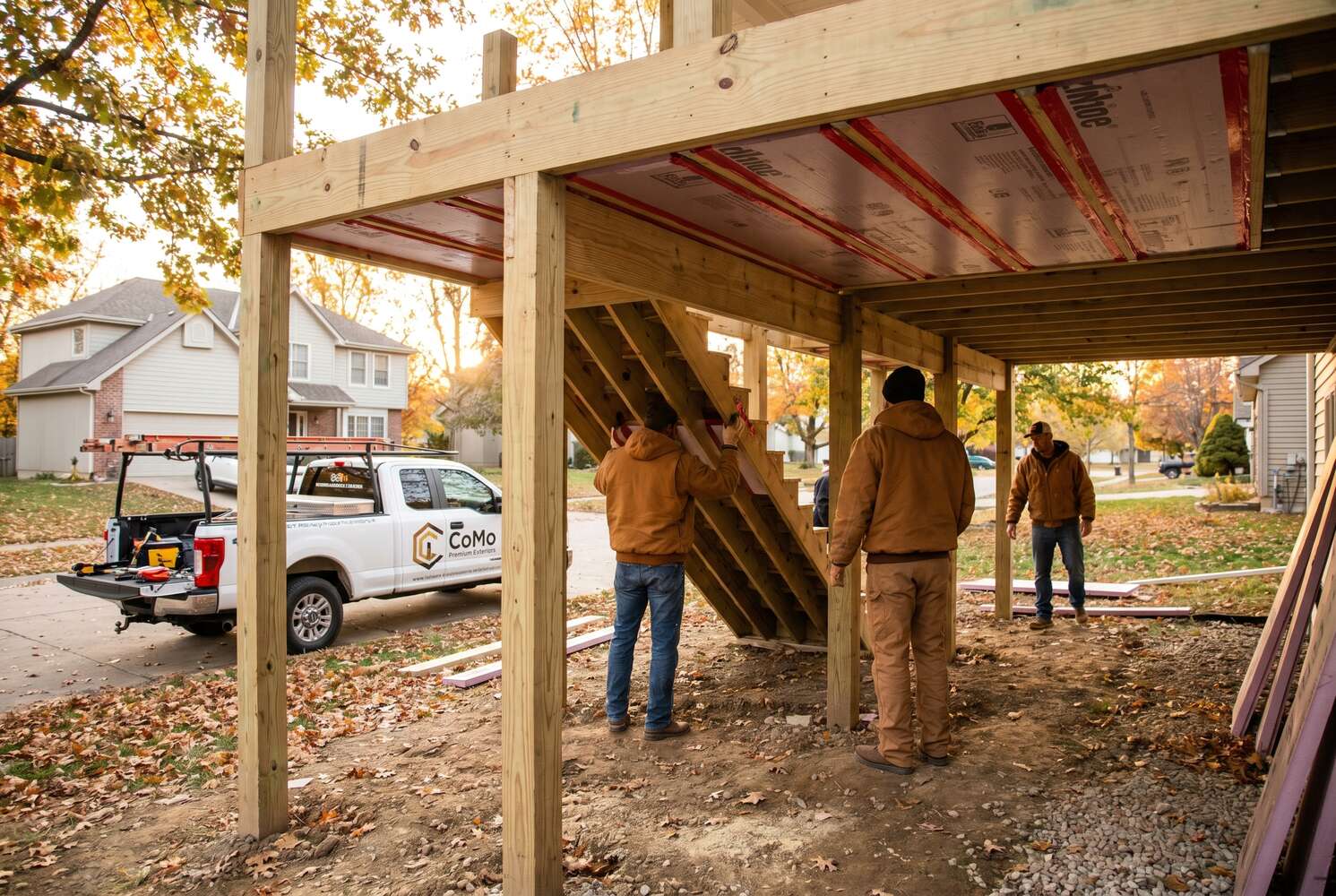
Best Ways to Insulate Under Deck: A Complete Guide
Best Ways to Insulate Under Your Deck: A Complete Guide for Central…
As the top deck builders in Columbia, MO, we excel in creating custom deck designs and enhancing outdoor living spaces. Our focus on quality and customer satisfaction has made us the preferred choice among local homeowners. Whether you prefer the sleek look of composite or the classic charm of wood, our skilled team delivers decks that enhance your home’s appeal and provide lasting durability. We take pride in our expertise and commitment to delivering exceptional experiences for every project, ensuring your outdoor space is both beautiful and functional.

New decks add home value, reduce future maintenance costs, making them an affordable deck solution.
Our weather-resistant decking materials withstand Columbia’s varied weather conditions.
Sustainable decking with quality materials and efficient methods matches our eco-friendly values.
Professional deck installation company offers cost efficient service with minimal disruption.

In Columbia, regular maintenance is crucial. Deck repairs fix damage and extend the lifespan. Keeping your deck clean and addressing minor issues promptly ensures long-term durability.
Signs You Need a New Deck:
Choosing a reliable contractor is crucial for the completion of your backyard or deck building project, repairs, and maintenance project.
Experience top durability, quality, and style with our high-quality patio and deck materials tailored for Columbia, MO’s designs and climate. We offer expert deck installation and repair for all your outdoor living needs. Hiring licensed and insured patio builders ensures superior quality and service for your project.

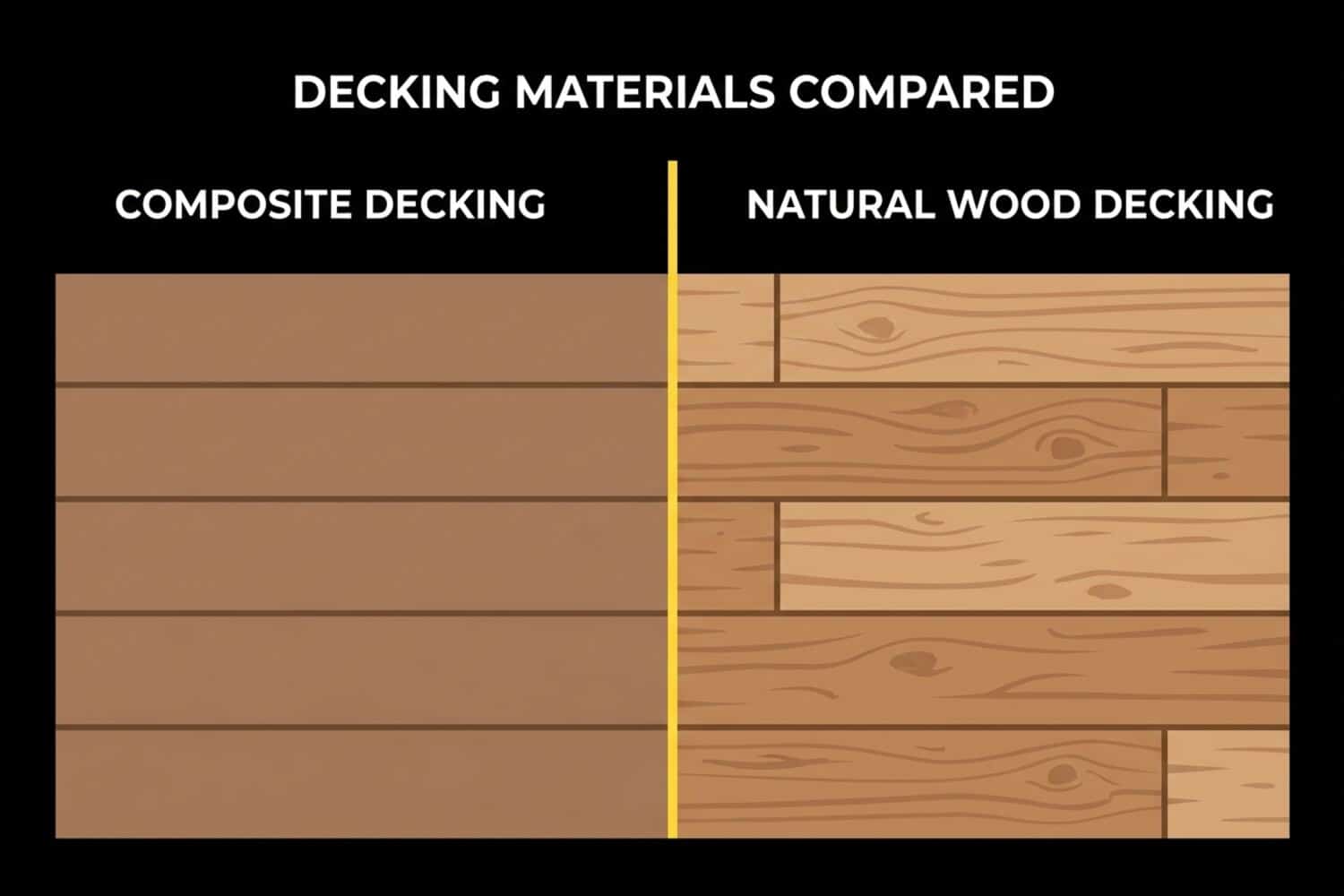
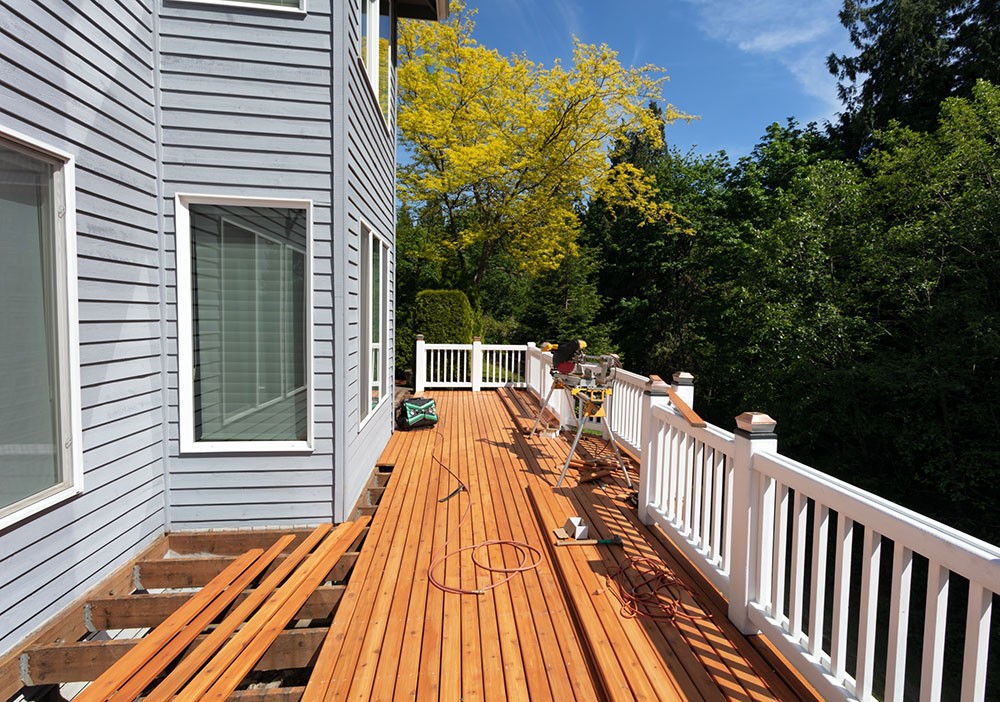
Offering homeowners a sleek, low-maintenance option, composite decks provide excellent durability to suit and protect any exterior.

Adding natural charm and customization, wood decks can be tailored to match your home’s unique character.
Experience the best in deck installation services, materials, and craftsmanship, designed to suit Columbia’s home styles and climate. Our comprehensive services include expert installation and repair. Enhance your outdoor living with our premium deck services. Contact us for a detailed estimate and add valuable per square foot of footage to your home with our professional team.
Showcasing Mid-Mo’s Finest Deck Work
For unmatched service and craftsmanship in Mid-Mo, CoMo Premium Exteriors stands out. With years of dedicated experience, we provide highly durable solutions designed for our local climate. Here’s how you can verify our commitment to excellence:
Our previous projects showcase our top-quality work.
Discover what our Mid Missouri community has to say about us.
Our standing with the Better Business Bureau confirms our reputation for service.
Benefit from our understanding of Mid-Mo’s weather and housing.
Rest easy knowing your project is in professional hands with us.

Don’t wait until your roofing or siding problems get worse. Call or email us today.

We provide free estimates for all of our work.

Get expert installation service from our professional team.

Get peace of mind knowing your family & home are safe.
CoMo Premium Exteriors FAQ