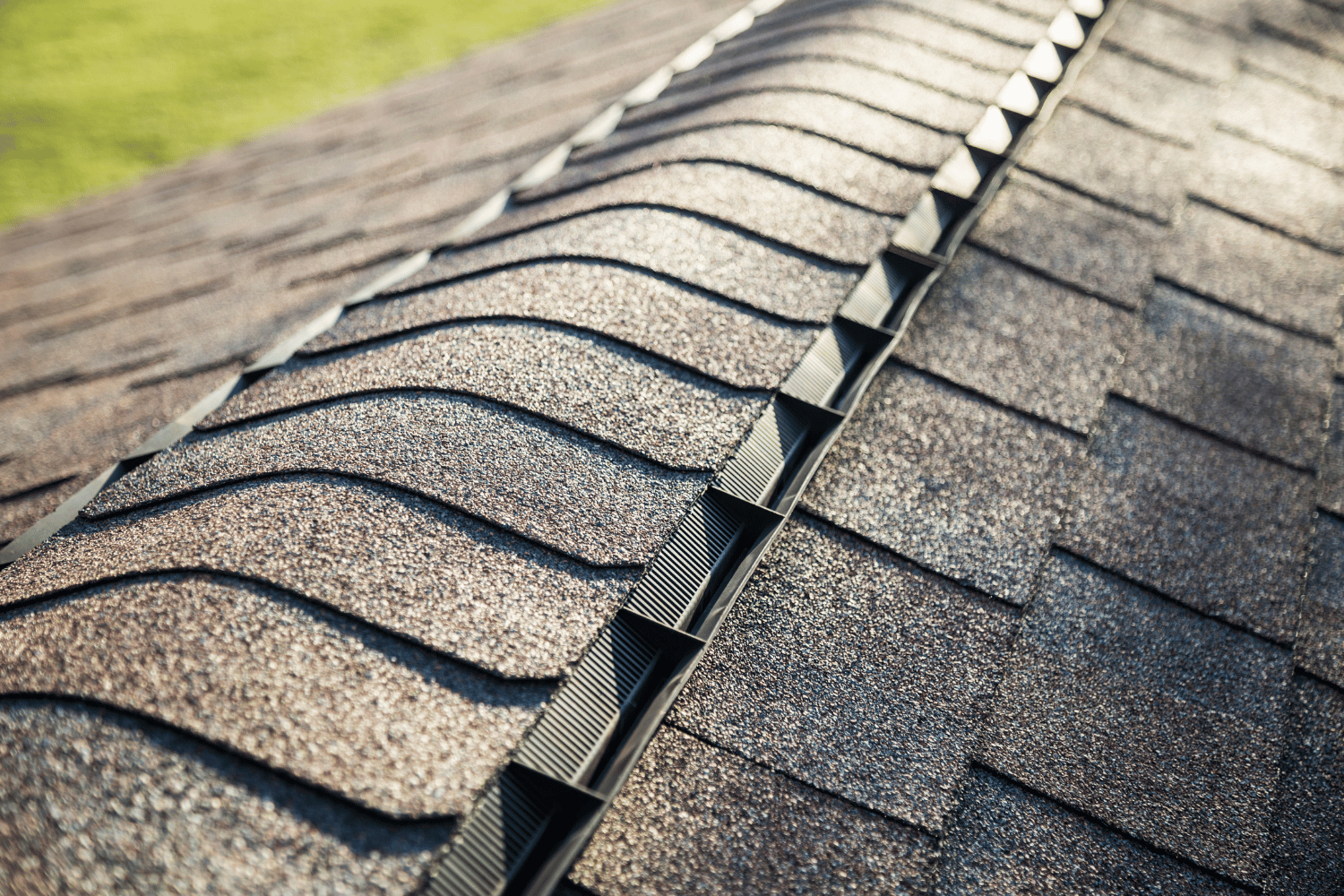
Most roofing professionals recommend against installing gutter guards under your shingles unless the product is specifically designed for it.
Fastening through shingles will void your roof warranty — GAF, Owens Corning, and CertainTeed all prohibit penetrating shingle material with screws or nails.
“Floating” installation methods exist that slide gently under the first row of shingles without fasteners, adhesive breaking, or shingle lifting.
The safest approach is gutter-mounted guards that clip or screw to the gutter lip and fascia board with zero roof contact.
Improper installation can cause water damage — lifted shingles redirect water behind the gutter and onto your fascia board and roof deck.
Why This Question Matters More Than You’d Think
When you’re getting quotes for gutter guard installation in Columbia or Jefferson City, one detail that doesn’t always come up in the sales conversation is how the guard attaches to your roof. Some products clip to the gutter lip. Others screw into the fascia board. And some slide underneath your bottom row of shingles.
That installation method isn’t just a technicality — it can affect your roof warranty, your shingle performance during high winds, and whether water actually reaches your gutter or ends up behind it on your fascia board. For Mid-Missouri homes that deal with spring hail, summer storms, and winter ice, getting this detail wrong creates problems you won’t notice until damage has already started.
What Happens When Guards Go Under Shingles
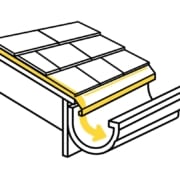
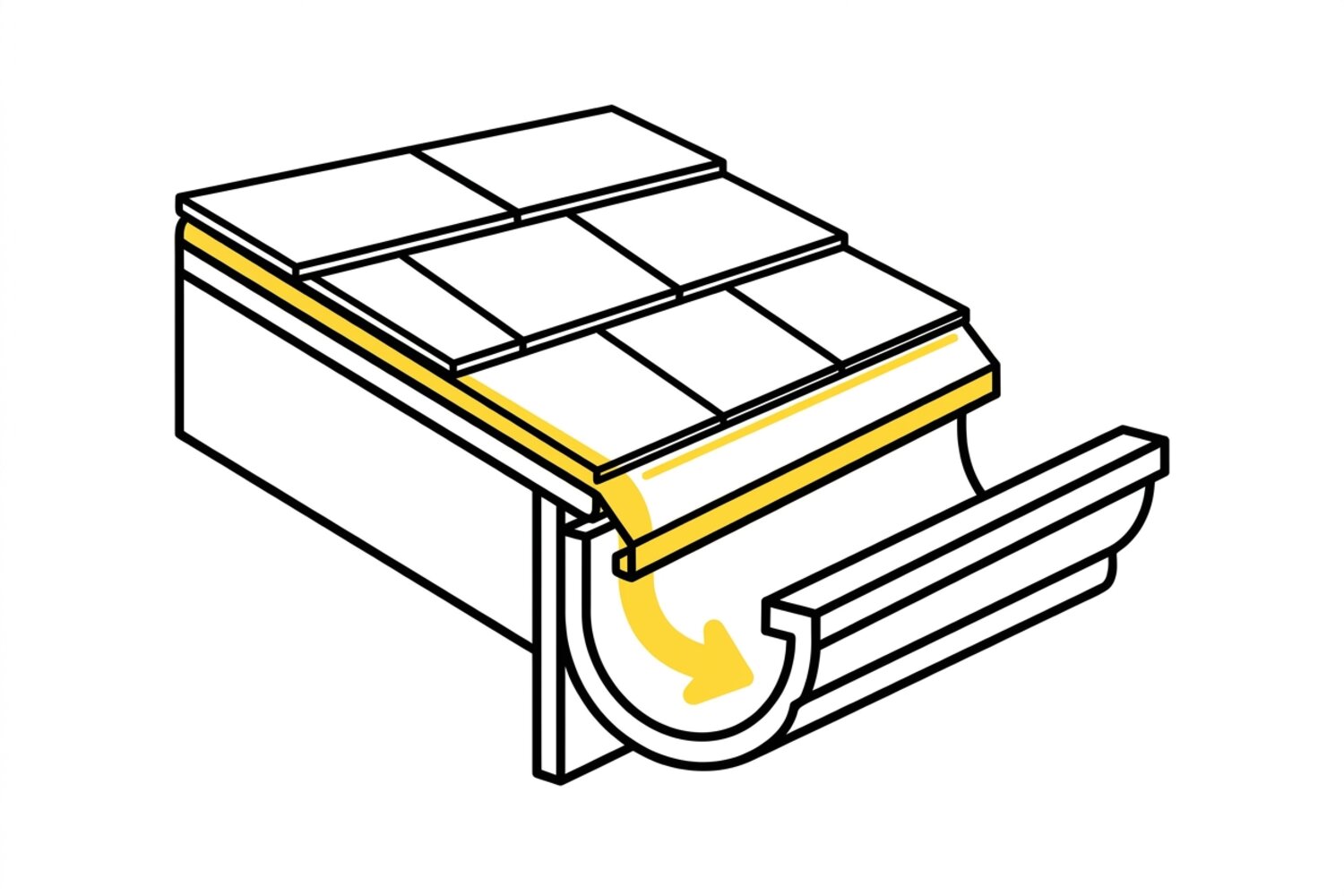
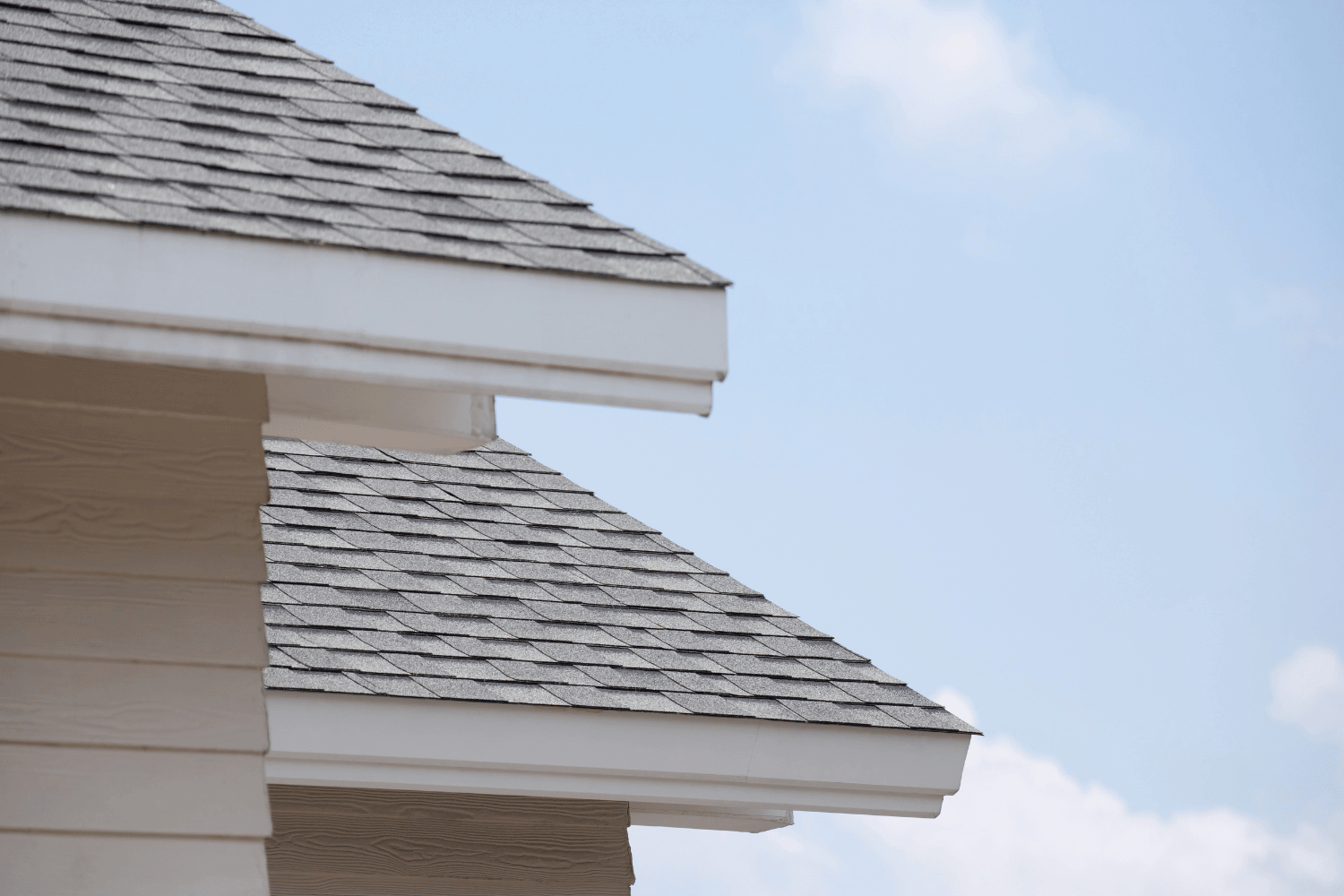
The idea behind under-shingle installation makes sense in theory. Sliding the back edge of the guard underneath the first row of shingles creates a seamless transition from roof surface to guard surface. Water flows off the shingles, across the guard, and into the gutter. Debris slides off the angled guard and falls to the ground.
The problem is what happens to the shingles during and after installation. Roofing engineers note that lifting shingles breaks the manufacturer’s adhesive seal — the tar strip that bonds each shingle to the one below it. That seal exists for wind resistance. Once broken, shingles are more vulnerable to lifting during storms, which exposes the underlayment and roof deck to water.
There’s also a backflow risk. If the guard doesn’t pitch at exactly the right angle, heavy rain can ride up the guard surface and flow backward under the shingles instead of dropping into the gutter. In a region like Mid-Missouri where 2-inch-per-hour rain rates aren’t uncommon during spring thunderstorms, that backflow can send significant water volume onto your fascia board and roof deck.
What Manufacturers Actually Say About Warranty
GAF has addressed this directly: their Limited Warranty covers manufacturing defects, and in most cases, properly installed gutter guards do not void it. But GAF draws clear lines. They prohibit:
Penetrating shingles with fasteners (screws, nails, or staples through shingle material)
Removing and replacing shingles to install guard brackets
Removing the drip edge
Installing guards under the underlayment or felt paper
Significantly bending or lifting shingles beyond their natural flex
Owens Corning and CertainTeed take similar positions. The common thread: any installation that damages, penetrates, or permanently deforms the shingle voids your warranty coverage for that section of roof.
This matters because a full roof replacement on a Mid-Missouri home runs $8,000-$15,000 or more. A $3,000 gutter guard installation that voids your roof warranty is a bad trade.
Three Installation Methods Compared
Method
How It Works
Warranty Safe?
Best For
Gutter-lip mount
Clips or screws to the front edge of the gutter only
Yes — zero roof contact
Screen guards, basic mesh
Floating under-shingle
Back edge slides under first shingle row with no fasteners; front attaches to gutter lip
Usually yes — if no adhesive seal is broken
Premium micro-mesh systems
Fastened under-shingle
Screws or brackets penetrate through shingles into roof deck
No — voids warranty
Reverse-curve and solid-cap guards
The floating method is the middle ground that some premium products have validated with roofing manufacturers. These guards pitch at the same angle as the roof, don’t use fasteners on the roof side, and don’t lift shingles enough to break the adhesive seal. Several manufacturers have obtained written approval letters from GAF, Owens Corning, and CertainTeed confirming their floating installation doesn’t affect warranty coverage.
What We Recommend for Mid-Missouri Homes
When we install roofing systems in Columbia and throughout Mid-Missouri, we pay attention to how every component interacts — including gutter guards. Our general guidance:
Preferred: Gutter-lip mounted guards. These attach entirely to the gutter and fascia with no roof contact. They’re the safest option for your roof warranty, the easiest to remove for maintenance, and they work well with the seamless aluminum gutters common on Mid-Missouri homes.
Acceptable: Floating under-shingle systems from manufacturers who have written approval from your shingle manufacturer. If you go this route, verify the approval letter covers your specific shingle product line — not just the brand in general.
Avoid: Any system that requires fasteners through your shingles or removal of your drip edge. The short-term convenience isn’t worth the warranty risk, especially in a hail-prone area where you may need to file a roof damage claim within the guard’s lifetime.
The Drip Edge Factor
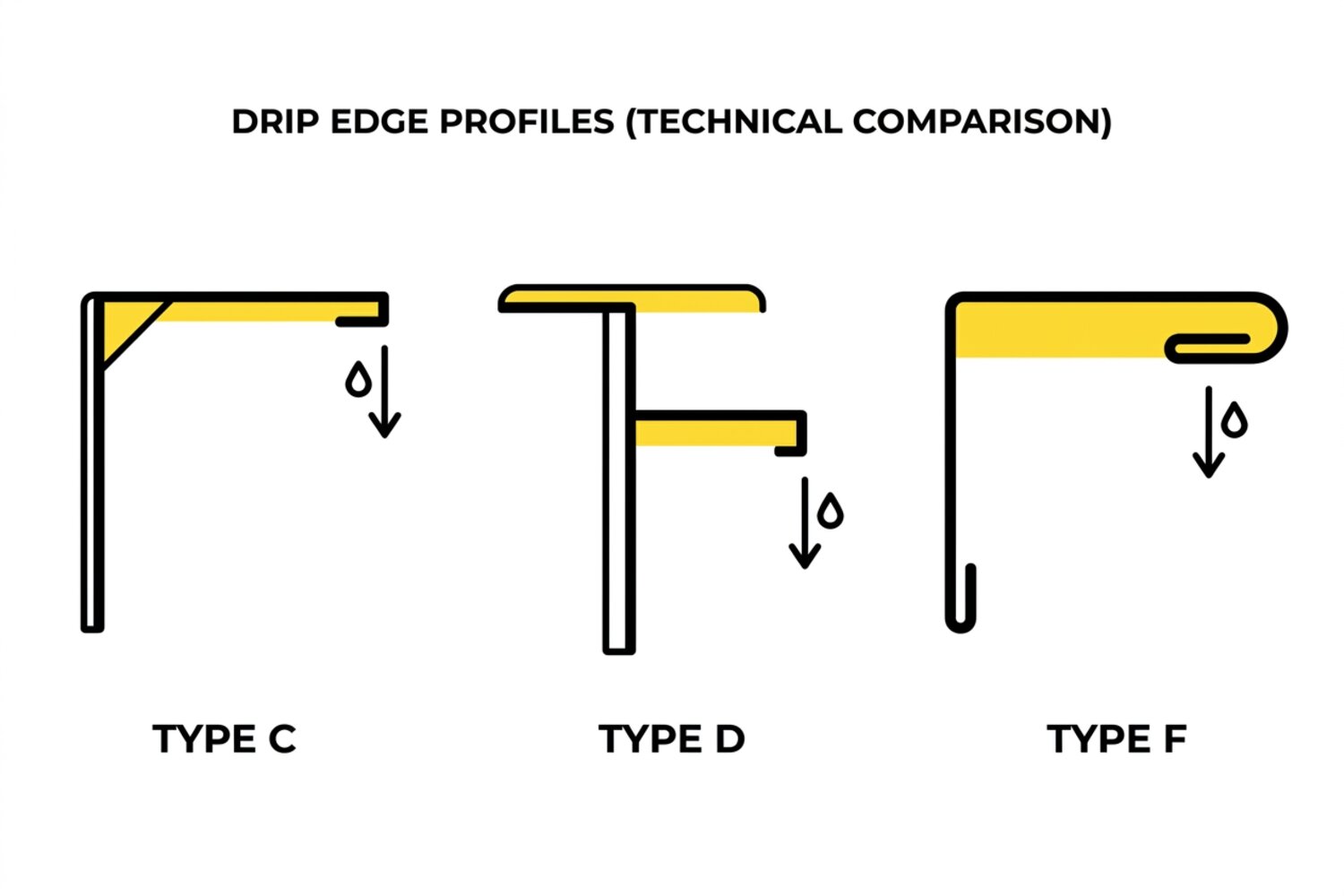
Some gutter guard installers remove the drip edge — the metal strip along your roof’s lower edge that directs water into the gutter — to create a flush mounting surface. This is a problem for two reasons.
First, removing the drip edge voids most shingle warranties outright. GAF, Owens Corning, and CertainTeed all require drip edge as part of a complete roofing system.
Second, the drip edge serves a structural purpose beyond directing water. It prevents wind-driven rain from getting under your shingles at the eave, and it keeps the fascia board dry during normal rainfall. Removing it to install a gutter guard trades one form of protection for another — and you end up with less protection overall.
Common gutter guard installation mistakes include removing or bending the drip edge, using oversized fasteners that crack shingles, and failing to maintain proper pitch for debris shedding. Any reputable installer should be able to work with your existing drip edge, not around it.
Questions to Ask Your Installer
Before signing a gutter guard contract, ask these specific questions:
“Does your product attach to my shingles or my gutter?” — The answer should be “gutter and/or fascia.” If they mention roof deck fasteners, ask about warranty implications.
“Will you remove or modify my drip edge?” — The answer should be no.
“Do you have a written approval letter from my shingle manufacturer?” — If they install under shingles, they should be able to produce this.
“What happens if I need a roof replacement in 5 years?” — Good guards should be removable and reinstallable without damage.
Frequently Asked Questions
Will gutter guards void my roof warranty?
Not automatically. Guards that attach only to the gutter or fascia with no roof contact don’t affect your warranty. Guards that require fasteners through shingles, shingle removal, or drip edge removal will void warranty coverage for the affected area. Check your shingle manufacturer’s specific position before installation.
Should gutter guards be installed over or under the drip edge?
Over. The drip edge should remain in place with the gutter guard mounted on top of or in front of it. Removing or bending the drip edge voids most roof warranties and reduces water management performance at the eave line.
Can gutter guards cause roof leaks?
Improperly installed guards can. If shingles are lifted enough to break the adhesive seal, water can penetrate during wind-driven rain. If the guard’s pitch sends water backward under the shingles instead of into the gutter, water reaches the fascia and roof deck. Properly installed guards don’t cause leaks.
Do I need to remove gutter guards for a roof replacement?
Yes. Any guard system — whether gutter-mounted or under-shingle — needs to be removed during a roof replacement. Quality guards can be reinstalled after the new roof is complete. Ask your roofing contractor about guard removal and reinstallation costs as part of the replacement estimate.
What type of gutter guard is safest for my roof?
Guards that mount entirely to the gutter lip or fascia board are the safest for your roof warranty and shingle integrity. If you prefer under-shingle placement, choose a product with written manufacturer approval from your specific shingle brand. Call us at (573) 424-9008 to discuss which option fits your home.
Ready to Get Started?
We’ve been serving Mid-Missouri homeowners for over 25 years with premium roofing and exterior solutions. As GAF Master Elite, OC Platinum Preferred, and James Hardie Elite Preferred contractors, we understand how every component of your roof system works together — including gutter guards.
How Long Does a TPO Roof Last? What Mid-Missouri Property Owners Should Know
Key Takeaways:
Standard TPO roofs last 20-30 years when properly installed and maintained, with premium installations lasting even longer.
Membrane thickness matters: 60-mil TPO outperforms 45-mil in long-term flexibility and weather resistance.
Mid-Missouri weather is tough on flat roofs — hail, UV exposure, and freeze-thaw cycles all affect how long your TPO membrane holds up.
Regular maintenance extends TPO lifespan significantly — annual inspections catch small issues before they become costly repairs.
Manufacturer warranties typically cover 15-20 years, but your roof can outlast the warranty with proper care.
What Determines How Long a TPO Roof Actually Lasts?
If you own a commercial building or a home with a flat or low-slope roof in Mid-Missouri, you’ve probably heard TPO (thermoplastic polyolefin) recommended as one of the better membrane options. The natural follow-up question: how long will it actually protect your building?
The short answer is 20-30 years under normal conditions. But that range is wide for a reason — several factors push your roof toward either end of that spectrum. Research published in Professional Roofing by the NRCA found that under standard operating conditions where roof surfaces reach around 130 degrees Fahrenheit, TPO membranes are projected to last 25-30 years. Premium-grade installations in favorable conditions can push past 35 years.
Here in Columbia and Jefferson City, your TPO roof deals with a specific set of challenges that national averages don’t always account for. Let’s break down what actually controls your roof’s lifespan.
How Membrane Thickness Affects TPO Longevity
Not all TPO is created equal. The membrane comes in three standard thicknesses: 45-mil, 60-mil, and 80-mil. This isn’t just a marketing upsell — thickness directly impacts how long the roof performs.
A field study published by IIBEC examined TPO membranes with 12-19 years of real-world exposure across 20 roofs nationwide. Both 45-mil and 60-mil samples still met current ASTM manufacturing standards after more than a decade of service. But there was a critical difference: 60-mil membranes maintained cold-temperature flexibility down to -40 degrees Fahrenheit, while 45-mil samples began cracking at -35 degrees.
For Mid-Missouri, where winter temperatures regularly drop below zero and ice storms aren’t unusual, that cold-flexibility difference matters. We recommend 60-mil as the minimum thickness for any TPO installation in our service area. The upfront cost difference is modest compared to the added years of reliable performance.
TPO Thickness
Typical Lifespan
Cold Flexibility
Best For
45-mil
15-20 years
Cracking risk below -35F
Budget projects, mild climates
60-mil
20-30 years
Flexible to -40F
Mid-Missouri commercial and residential
80-mil
25-35+ years
Best cold performance
High-value buildings, maximum lifespan
Mid-Missouri Weather and Your TPO Roof
Central Missouri throws just about everything at a flat roof. Summer temperatures push roof surfaces well above 130 degrees. Spring brings hail — Columbia averages 79 confirmed hail reports within a 10-mile radius in a typical year. Winter delivers freeze-thaw cycles that stress seams and flashing. And tornado season adds wind uplift concerns from April through June.
Each of these factors chips away at the anti-aging components built into your TPO membrane. UV absorbers and antioxidants are mixed into the material during manufacturing, but they deplete over time — faster in hotter conditions. The U.S. Department of Energy notes that cool roofs like TPO can stay more than 50 degrees cooler than conventional dark roofing on sunny days. That reflective quality is one reason TPO lasts as long as it does — but it’s also why keeping the membrane clean matters. Dirt buildup reduces reflectivity, raises surface temperatures, and accelerates aging.
If you have rooftop HVAC units, satellite dishes, or solar panels mounted directly to your TPO membrane, those areas experience higher heat concentration. Adjacent reflective surfaces can also create hot spots. These factors are worth discussing with your contractor during installation because they directly affect how many years you’ll get from the roof.
Installation Quality Makes or Breaks Lifespan
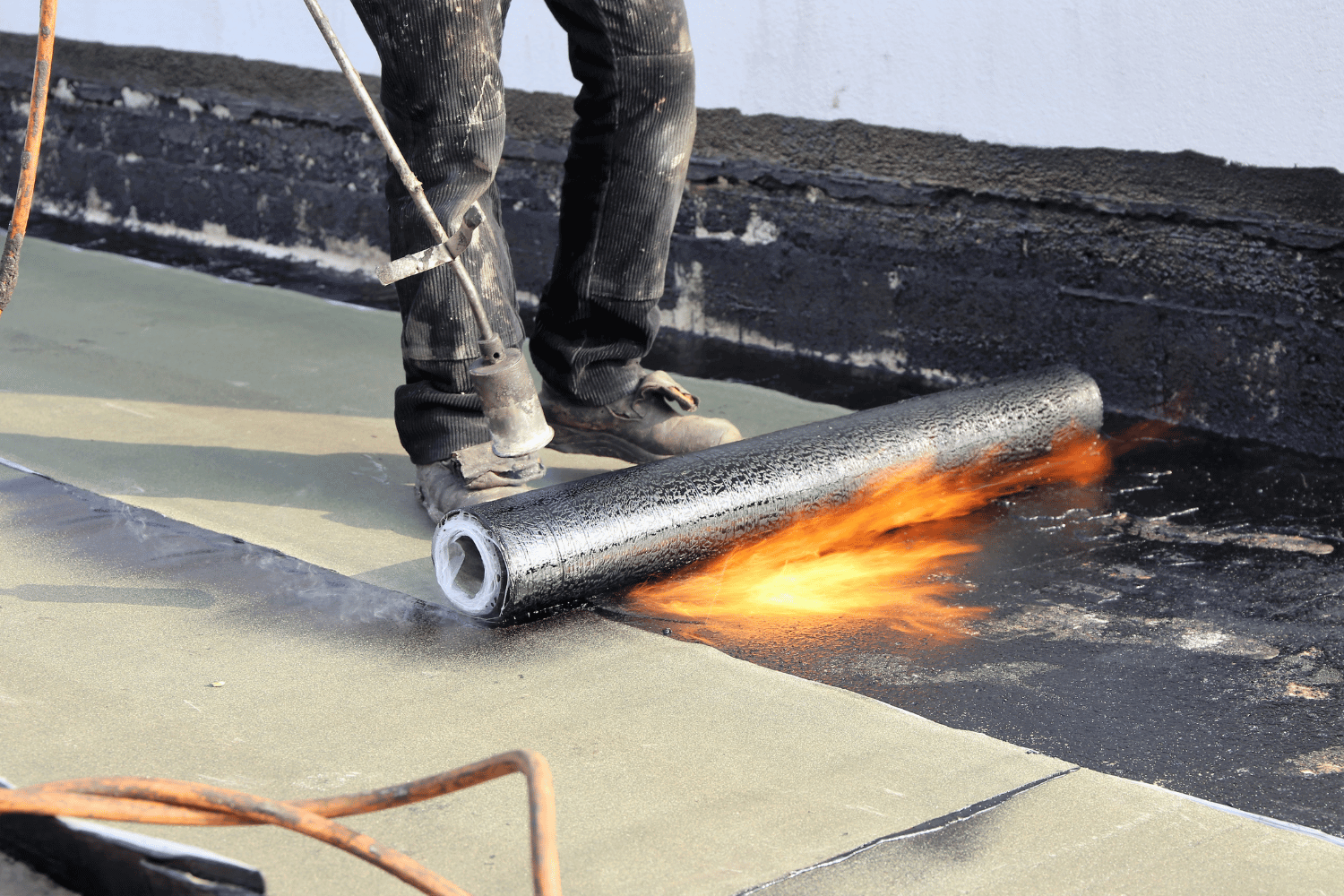
A TPO membrane is only as good as its seams. Unlike EPDM (which uses adhesive or tape), TPO seams are heat-welded together — the installer uses a hot-air gun to fuse overlapping sheets into a single waterproof layer. When done correctly, the welded seam is actually stronger than the membrane itself.
When done incorrectly, those seams become the first failure point. Under-heated seams don’t bond fully. Over-heated seams can thin the material. Either way, water finds its way in.
When you’re evaluating roofing contractors in Columbia, ask whether their crew has specific TPO manufacturer certification. A certified installer doesn’t just improve quality — it’s also required to activate manufacturer warranties that typically cover 15-20 years of material and labor.
Maintenance That Actually Extends TPO Life
TPO is marketed as “low maintenance,” and compared to built-up roofing or modified bitumen, that’s true. But low maintenance doesn’t mean no maintenance. Here’s what keeps a TPO roof performing for the full 25-30 year window:
Annual inspections: Walk the roof (or hire someone to) at least once a year, ideally in spring after winter weather and before storm season. Look for membrane punctures, seam separation, ponding water, and flashing gaps around penetrations.
Debris removal: Leaves, branches, and dirt that accumulate on a flat roof trap moisture and create conditions for biological growth. In Mid-Missouri’s humid summers, algae and mold can develop on neglected membranes.
Drain and scupper maintenance: Clogged drains cause ponding water, which is one of the fastest ways to age a TPO membrane. Standing water accelerates chemical breakdown and adds structural load.
Prompt repair of punctures: The IIBEC study found that repairs to aged TPO — new membrane welded to old — produced adhesion values of 43-57 pounds-force per inch, actually exceeding industry averages for new membranes. That means repairs hold. But only if you catch damage early, before water infiltrates the insulation below.
Keep it clean: A clean white TPO membrane reflects significantly more solar energy than a dirty one. Power washing every 2-3 years maintains reflectivity and slows the depletion of UV-blocking additives.
TPO vs Other Flat Roof Options: Lifespan Comparison
To put TPO’s lifespan in context, here’s how it stacks up against other common flat and low-slope roofing materials used in Mid-Missouri:
Roofing Material
Typical Lifespan
Maintenance Level
Energy Efficiency
TPO (60-mil)
20-30 years
Low
High (cool roof)
EPDM (rubber)
20-25 years
Low-Medium
Moderate
PVC membrane
20-30 years
Low
High
Modified bitumen
15-20 years
Medium
Low-Moderate
Built-up roofing (BUR)
15-25 years
Medium-High
Low
TPO competes directly with PVC on lifespan and energy efficiency but typically costs less per square foot. EPDM is comparable in durability but lacks TPO’s reflective properties — a meaningful difference when cooling costs matter. If you’re weighing your options, our TPO vs EPDM comparison goes deeper into the tradeoffs.
Frequently Asked Questions
How long does a TPO roof last in Missouri’s climate?
With proper installation and maintenance, a 60-mil TPO roof in Mid-Missouri typically lasts 20-30 years. Our freeze-thaw cycles and hail exposure can shorten that range compared to milder climates, which makes membrane thickness and installation quality especially important here.
What is the average lifespan of a TPO commercial roof?
The industry average is 20-30 years for standard-grade TPO. NRCA research projects 25-30 years under normal operating conditions and 35+ years for premium installations with ideal maintenance. Actual lifespan depends on membrane thickness, installation quality, and environmental exposure.
Does TPO roofing come with a warranty?
Yes. Most major manufacturers offer 15-20 year total system warranties that cover both material defects and labor costs for repairs. These warranties require installation by a certified contractor — an uncertified installation can void coverage entirely.
Can you repair a TPO roof, or does it need full replacement?
TPO repairs are highly effective. Independent testing shows that new membrane welded to aged TPO creates bonds stronger than industry averages for brand-new installations. Small punctures, seam repairs, and flashing replacements can extend your roof’s life without a full tear-off.
Is a TPO roof a good investment for a home with a flat roof section?
Absolutely. While TPO is most common on commercial buildings, it works well on residential flat roof sections like additions, garages, and sunrooms. The combination of 20-30 year lifespan, energy savings from reflectivity, and lower cost compared to PVC makes it a strong choice. Call us at (573) 424-9008 to discuss whether TPO is the right fit for your home.
How often should a TPO roof be inspected?
At minimum, once per year — ideally in early spring before Mid-Missouri’s storm season. After any severe hail event or tornado, an additional inspection is worth the effort. Catching a small seam separation or puncture early costs a fraction of what water damage repair runs.
Ready to Get Started?
We’ve been serving Mid-Missouri property owners for over 25 years with premium roofing solutions — including TPO membrane installations on commercial buildings and residential flat roof sections throughout Columbia, Jefferson City, and the surrounding area. As GAF Master Elite, OC Platinum Preferred, and James Hardie Elite Preferred contractors, we bring certified expertise to every project.
Snow Melt, Refreezing, and Hidden Leaks: How Winter Moisture Gets Into Roof Systems
Key Takeaways
Mid-Missouri’s freeze-thaw cycles cause snow to melt during warm days, then refreeze at the colder eaves overnight. This creates ice dams that push water back up under shingles, leading to “mystery” winter leaks that appear without any rain.
Many winter leaks aren’t caused by faulty roof installations—they stem from ice dam formation, attic condensation, and poor insulation or ventilation that allow hidden moisture into the roof system from below.
Watch for warning signs between January and March: water stains on ceilings or exterior walls, wet insulation in the attic, large icicles at the eaves, and musty odors in the attic space. Early action prevents expensive structural repairs.
CoMo Premium Exteriors is Mid-Missouri’s only triple-certified roofing and exterior contractor (GAF Master Elite, Owens Corning Platinum, James Hardie Elite), equipped to inspect, diagnose, and permanently fix winter moisture problems—not just patch interior damage.
Schedule a free winter roof and attic inspection anywhere in Columbia, Jefferson City, Boonville, Moberly, or Lake of the Ozarks by calling (573) 424-9008.
How Snow Melt and Refreezing Create Hidden Winter Leaks
It’s mid-February in Columbia, and a winter storm just dropped six inches of snow on your roof. Two days later, the sun comes out and temperatures climb into the low 40s. You’re feeling good—the snow is melting, the worst is over. Then that night, the mercury plunges back below freezing.
The next morning, you notice a small brown ring on your living room ceiling. There’s no rain in the forecast. No pipes above that spot. So where’s the water coming from?
This scenario plays out in homes across Mid-Missouri every winter. The culprit isn’t a sudden roof failure or a burst pipe—it’s the melt-refreeze cycle that our region’s variable weather creates.
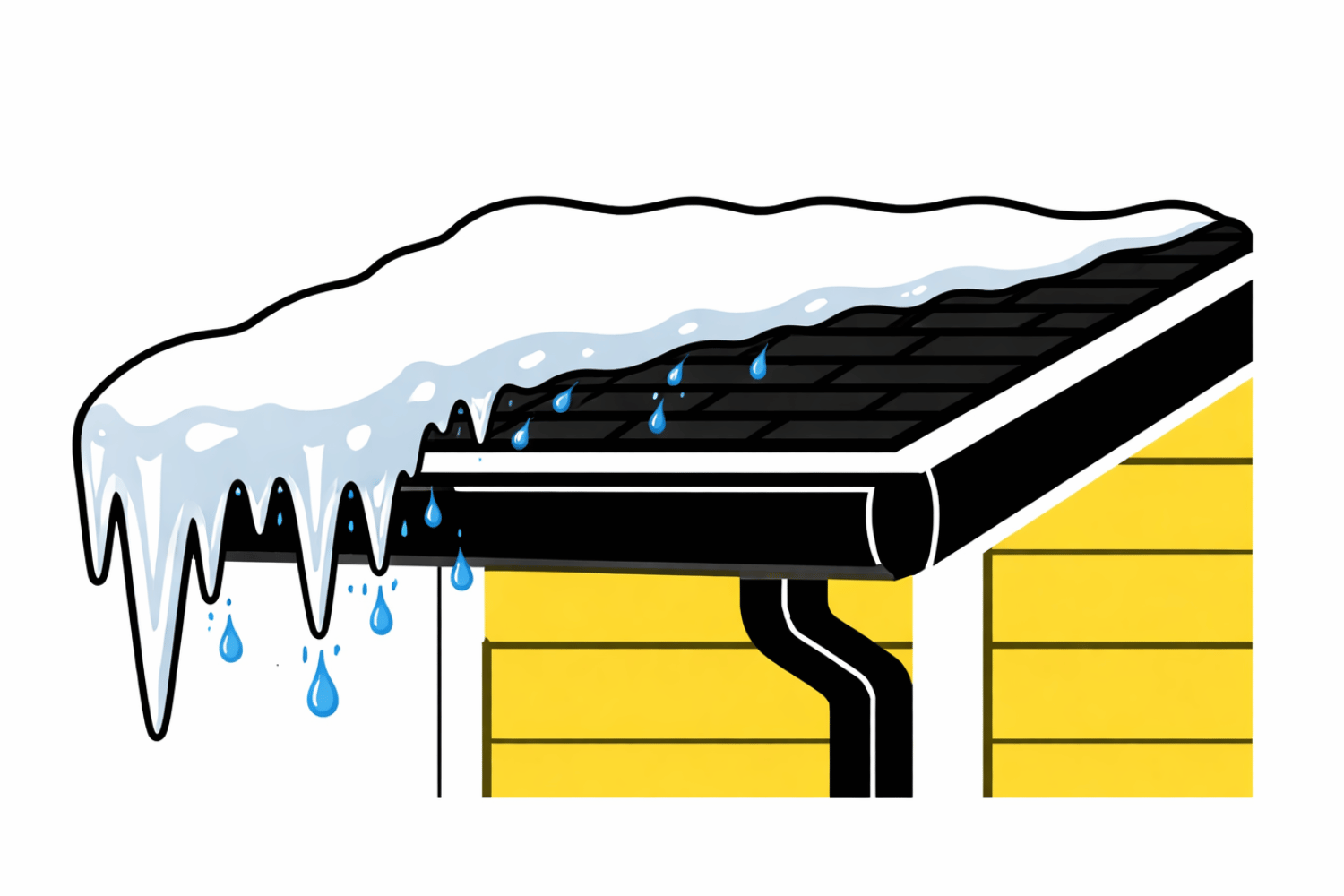
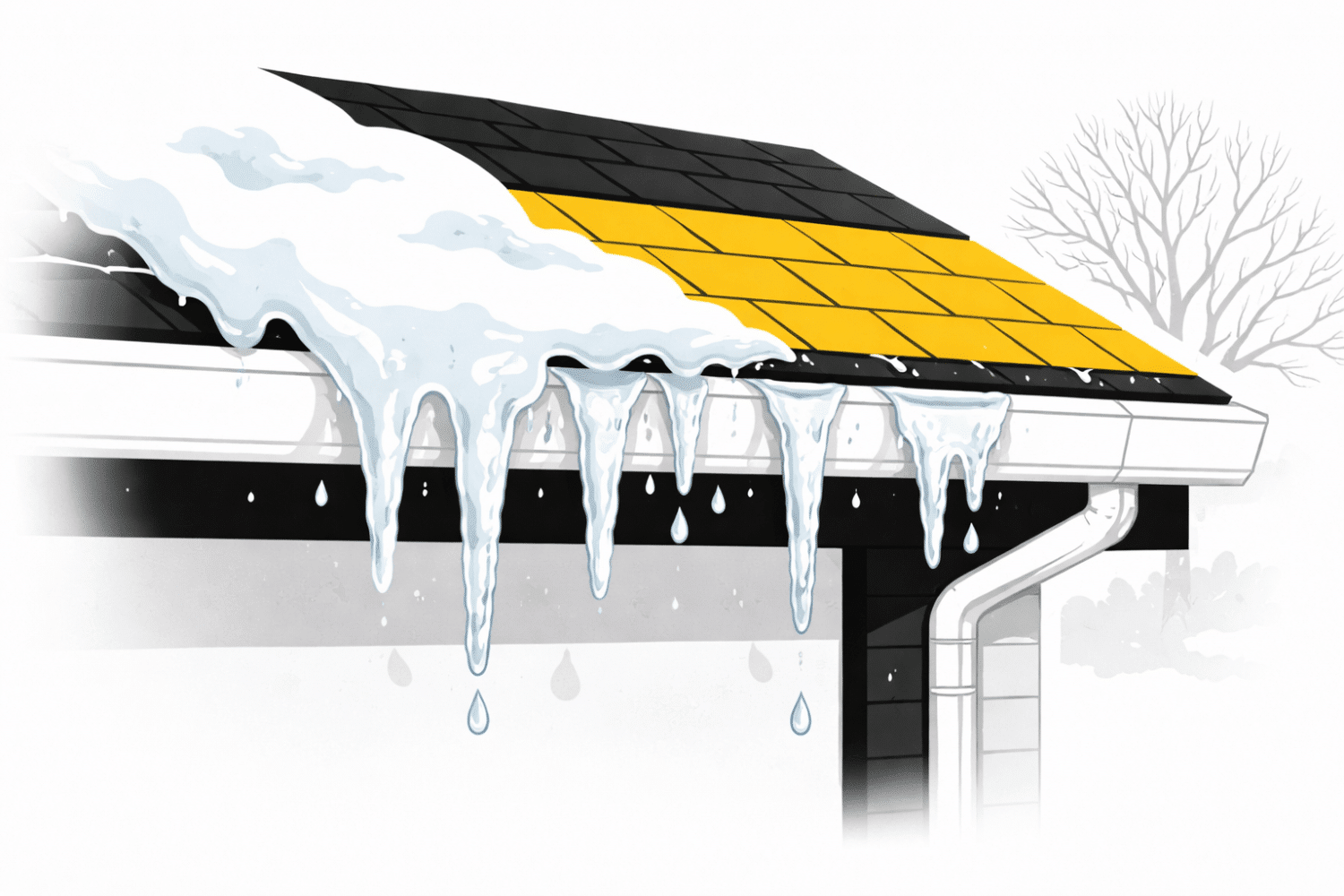
Here’s how it works: During the day, the sun and heat escaping from your attic warm the upper sections of your roof. Snow in these warmer zones begins to melt, and that water flows downhill toward the eaves and gutters. But those lower sections of the roof—especially the overhangs that extend beyond your heated living space—stay colder. When temperatures drop at night, that flowing water refreezes, building a ridge of ice along the roof edge.
This ice ridge, commonly called an ice dam, acts like a small dam on a river. As more snow melts and flows down, it has nowhere to go. Water pools behind the ice barrier and eventually finds its way under shingles, over underlayment, and into nail holes. From there, it can drip into your attic, run along wall cavities, or seep into light fixtures—sometimes showing up as a ceiling stain days after the snow event.
In central and northern Missouri—from Columbia to Moberly to the Lake of the Ozarks—this cycle can repeat dozens of times between December and early March. According to research from the Minnesota Department of Transportation (which shares similar winter patterns with our region), an average of 86 freeze-thaw cycles occur at shallow depths from October to April over a 10-year period. That’s 86 opportunities for water to infiltrate small cracks, expand by approximately 9% when it freezes, and gradually widen those entry points.
Many homeowners first notice issues as small ceiling stains or damp window trim, often assuming a plumbing leak. But when there’s no plumbing above that spot and the weather has been alternating between thaws and freezes, the real culprit is usually snow melt refreezing at the roof edge.
Ice Dams: The Visible Sign of an Invisible Moisture Problem
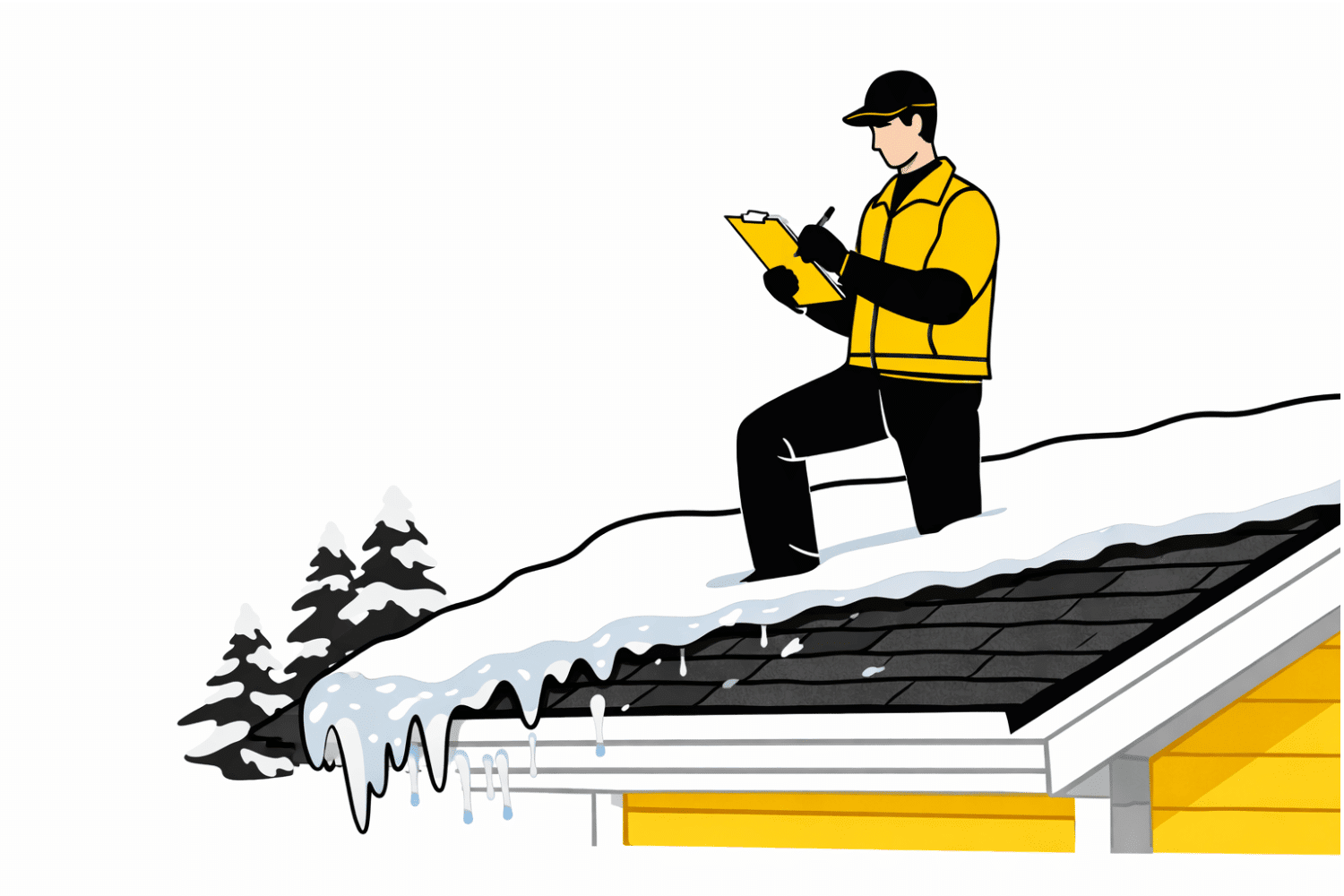
An ice dam is a solid ridge of ice that forms along the eaves and gutters, blocking normal snowmelt from draining off the roof. While the ice itself is visible from the ground, the moisture damage it causes is often hidden inside your roof system for weeks or months.
How Ice Dams Form
Ice dams form when temperatures across your roof surface are uneven. Here’s the typical sequence:
Heat escaping from your attic warms the upper portion of the roof above 32°F
Snow on this warmer section begins to melt, even when outdoor temperatures are below freezing
The meltwater flows down toward the eaves, which are colder because they extend beyond the heated living space
At the cold eaves, the water refreezes, building up a layer of ice
As more melt flows down and refreezes, the ice dam grows thicker
Eventually, liquid water pools behind the dam with nowhere to drain
The University of Minnesota Extension explains that for ice dams to develop, sustained average temperatures must keep lower roof areas below freezing while upper areas thaw snow. The dam essentially self-limits to these cold zones—but it traps water that exploits every crack in your roof’s exterior covering.
Visible Signs of Ice Dam Problems
What to Look For
Where to Check
What It Indicates
Thick icicles hanging from gutters
Roof edges, especially north-facing
Active ice dam with melt-refreeze occurring
Solid band of ice at roof edge
Along eaves above exterior walls
Significant blockage of normal drainage
Ice-filled or sagging gutters
All gutter runs
Debris may be trapping water; drainage compromised
Ice in roof valleys
Where two roof slopes meet
Vulnerable area for water backup
These signs are especially common on north-facing roof slopes in Columbia and Jefferson City, where the sun provides less warming and ice persists longer.
Hidden Effects You Can’t See from the Ground
The real damage from ice dams happens out of sight:
Water backing up beneath shingles saturates the roof deck
Wet insulation loses its effectiveness and can take weeks to dry
Moisture seeps into exterior wall cavities
Weeks later, you may notice bubbling paint, cracked drywall, or mold growth
Here’s an important point many homeowners miss: a good-quality, correctly installed roof can still experience ice dams if the attic isn’t properly insulated and ventilated. The “roof system” includes the attic, ventilation, and insulation—not just shingles. Addressing only the visible roof surface while ignoring what’s underneath often leads to recurring problems.
Attic Heat, Condensation, and Uneven Roof Temperatures
Ice dams and winter moisture issues almost always tie back to what’s happening under the roof deck—especially in the attic space above living areas and garages. Understanding this connection is key to solving the problem permanently.
How Warm Air Escapes Into Your Attic
Warm interior air from your furnace, showers, and cooking constantly tries to rise and escape through the building envelope. Common escape routes include:
Gaps around recessed lights (can lights)
Unsealed attic hatches and pull-down stairs
Plumbing stacks and electrical penetrations
Gaps at the top plates where interior walls meet the attic floor
HVAC ductwork running through unconditioned attic space
When this warm air reaches the attic, it does two things that cause winter moisture problems:
It melts snow on the upper roof – This creates the temperature differential that leads to ice dam formation
It carries moist air that condenses on cold surfaces – During January cold snaps, moisture-laden air hitting the cold underside of roof sheathing forms frost or dripping water
This condensation can mimic a roof leak in surprising ways: wet sheathing, dripping nails, damp insulation, and frost buildup that melts on the first warm day. Homeowners often assume their roof is leaking when the moisture is actually coming from inside the house.
Specific Contributors in Mid-Missouri Homes
In our 25+ years serving Central Missouri, we’ve identified common issues in local homes:
Bathroom fans vented into the attic – Instead of exhausting moist air outdoors, these fans dump humidity directly into the attic space where it freezes and later melts
Older masonry chimneys – The mass of brick retains heat and warms nearby framing, creating localized hot spots that melt snow unevenly
Uninsulated knee walls – Common in 1½-story homes, these walls allow significant heat loss into attic areas behind them
Cathedral ceilings with inadequate air channels – Without proper venting between insulation and roof sheathing, these areas trap heat
Common Indoor Heat Sources That Trigger Winter Moisture Problems
A thorough winter moisture inspection needs to look beyond shingles and flashing. Here are the interior sources we check:
Heat/Moisture Source
How It Affects the Roof System
Recessed (can) lights
Create hot spots that melt snow directly above; gaps allow warm air into attic
Unsealed attic hatches
Major air leakage pathway; warm air flows directly into attic space
Leaky HVAC ductwork
Heats the attic, melts snow above; can also add humidity if connected to humidifier
Whole-house fans
If not sealed in winter, allow significant heat loss to attic
Bath/kitchen exhaust vents terminating in attic
Add large amounts of humidity; condensation forms on cold sheathing
When we perform a winter moisture assessment, checking these penetration points is just as important as examining the roof surface from your driveways or walking the roof itself.
Where Winter Moisture Sneaks In: Typical Leak Paths in Roof Systems
Winter moisture doesn’t always come straight through obvious holes. Water often travels along framing members, nails, and joints, so the leak may show up far from the actual entry point. This is why dripping water in your living room doesn’t necessarily mean the problem is directly above.
Common Vulnerable Areas
Certain locations on any roof are more susceptible to winter moisture infiltration:
Roof valleys – Where two roof slopes meet, snow accumulates deeper and ice dams form easily
Chimney surroundings – Counter-flashing and step flashing joints are common failure points
Skylights – The intersection of glass, frame, and roofing creates multiple potential leak paths
Plumbing vent boots – Rubber and plastic boots crack in freeze-thaw cycles
Sidewalls – Where a lower roof meets second-story siding, step flashing must be correctly integrated
Low-slope sections – Porches, additions, and dormers with shallow pitches hold snow longer
During mid-winter thaws, backed-up snowmelt can push water up under shingles in valleys, around step flashing near second-story walls, and beneath metal counter-flashing at chimneys. The water doesn’t need a large opening—capillary action can draw moisture into surprisingly small gaps.
In homes built before about 2005 in Mid-Missouri, we commonly find limited or no ice-and-water shield membrane at the eaves and valleys. This self-adhering underlayment wasn’t required by code in many areas until more recently, leaving older roofs more vulnerable to wind-driven snow and ice dam backup.
A proper inspection by our team includes not only the top side of the roof, but also attic-side evidence: darkened sheathing, rusty nail heads, wet insulation, and staining around penetration points. Sometimes the attic tells us more about moisture problems than the shingles do.
How Hidden Leaks Show Up Inside the Home
Interior warning signs often appear in January and February, though they may not be recognized as roof-related problems at first:
Common indicators:
Faint yellow-brown rings on ceilings
Sagging or cracked drywall at exterior corners
Swollen or warped window trim
Peeling paint near outside walls
Bubbling wallpaper
Less obvious signs:
Musty smell in the attic
Higher-than-normal winter humidity on main floors
Frost on exposed nail tips in the attic
Ice forming on the underside of roof sheathing during extreme cold
Moisture can flow along the back of drywall or run down top plates, so the visible stain may be several feet away from where water entered the roof system. This makes diagnosis tricky without an attic inspection.
We recommend that homeowners in Columbia, Jefferson City, and surrounding areas do a quick attic check with a flashlight after major snowstorms followed by a warm-up. Look for dark spots on sheathing, damp insulation, or frost patterns—these are early warnings that moisture is getting where it shouldn’t be.
Long-Term Damage from Winter Roof Moisture (and Why Speed Matters)
One ice dam event or condensation episode may seem minor—a small stain, a little dampness. But repeated winter moisture can create serious long-term issues inside the roof system that become expensive to repair.
Structural Risks
When roof decking and framing stay wet through multiple freeze-thaw cycles, deterioration begins:
Rotting roof decking – Plywood and OSB sheathing absorb moisture and eventually delaminate or rot
Soft or spongy spots – Walking on the roof reveals areas where decking has weakened
Weakened rafters or trusses – Chronic dampness leads to wood decay in structural members
Corroded fasteners – Nails and screws rust, losing their holding power
Interior Risks
The damage doesn’t stop at the roof structure:
Mold growth – In attic insulation and wall cavities, mold can develop within 24-48 hours of sustained moisture. Studies suggest 60-70% of untreated attic leaks develop mold within months.
Deteriorating drywall – Repeated wetting weakens drywall, leading to sagging ceilings and crumbling walls
Ruined insulation – Wet insulation compresses and loses R-value, reducing energy efficiency
Increased heating costs – Damaged insulation means your furnace works harder, and you’ll see this reflected in higher energy costs throughout winter
Health Implications
Chronic attic moisture creates health risks for your household:
Mold and mildew can aggravate allergies and respiratory conditions
Spores spread through HVAC systems into living spaces
Winter homes with limited fresh air exchange concentrate these contaminants
Children, elderly residents, and those with asthma face heightened risk
Cost Implications
Here’s the financial reality: repairing minor insulation and flashing issues after the first signs of trouble is far less expensive than replacing sheathing, insulation, and interior finishes after several untreated seasons. What might be a $500-1,500 repair in year one can become a $10,000+ restoration project if moisture damage compounds over three or four winters.
How Winter Moisture Shortens Roof Lifespan
Repeated wetting and refreezing of the roof deck accelerates aging in several ways:
Sheathing warps, causing shingles to lose proper contact and adhesion
Freeze-thaw cycles loosen shingle fasteners
Ice pressing against materials creates new gaps and entry points
Granule loss accelerates on repeatedly frozen shingles
A well-installed roof with good attic ventilation and insulation can last 25-30 years in Mid-Missouri’s climate. A similar roof plagued by chronic moisture issues may show major problems in just 10-15 years.
An important note on warranties: Manufacturer warranties from GAF, Owens Corning, and other major brands assume proper ventilation and underlayment installation. Chronic ice damming and poor attic conditions can compromise warranty coverage, leaving homeowners responsible for repairs that might otherwise be covered.
Preventing Ice Dams, Condensation, and Winter Leaks in Mid-Missouri
Effective winter moisture control isn’t about any single fix—it’s about the whole system working together: roof covering, underlayment, ventilation, insulation, and air sealing.
Short-Term Emergency Measures
When you’re dealing with an active ice dam or leak, here are immediate steps:
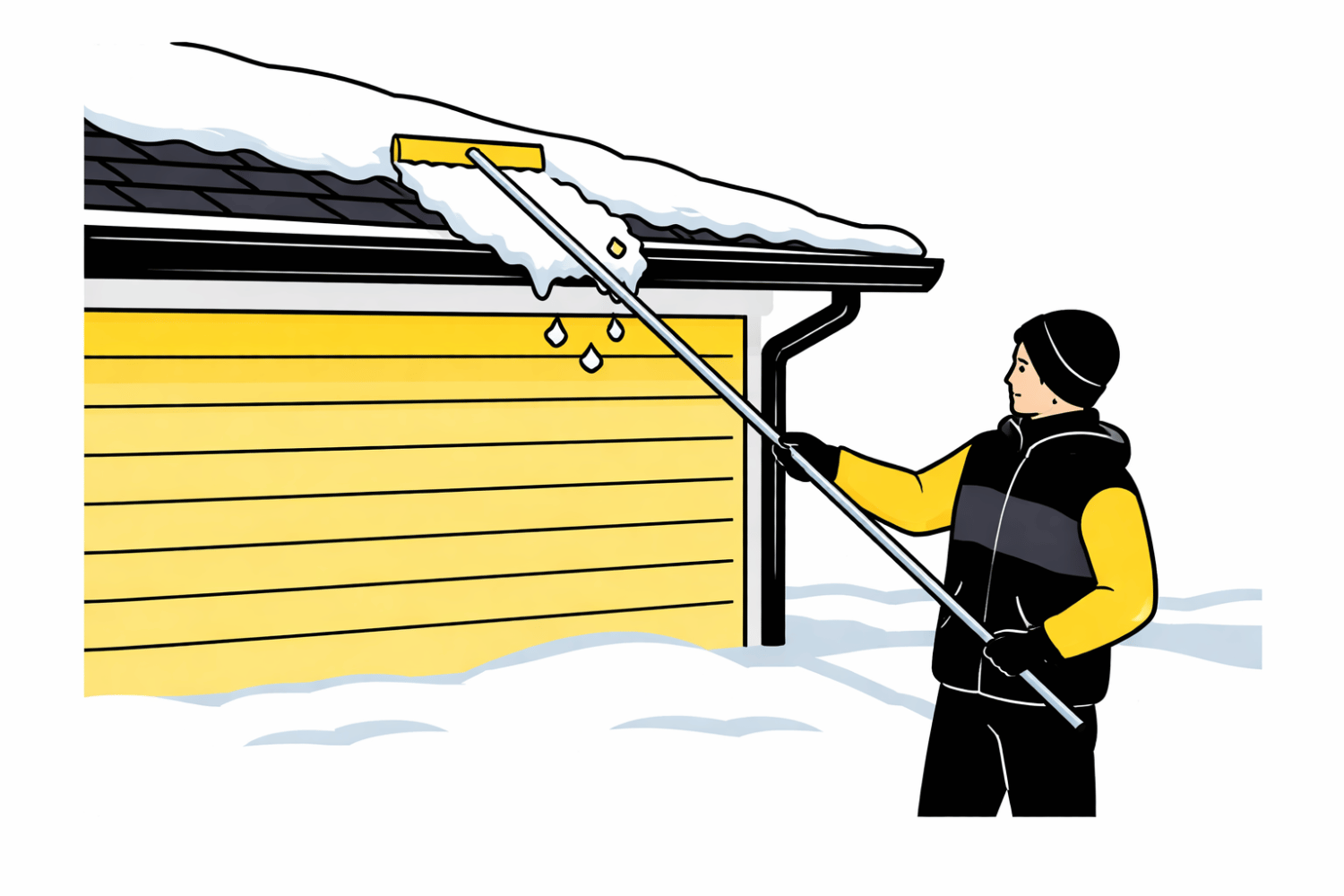
Remove snow from the roof edge – A roof rake (used from the ground) can clear the lower 3-4 feet of roof, reducing melt feeding the ice dam
Create drainage channels – In severe cases, professionals can carefully melt channels through ice dams to allow trapped water to escape
Control interior moisture sources – Run bathroom fans longer, reduce humidifier settings, and ensure dryer vents are clear
However, these are emergency measures, not long-term fixes. Roof raking every storm isn’t sustainable, and aggressive ice removal risks damaging shingles and gutters.
Long-Term Solutions
Based on hundreds of winter moisture cases across Mid-Missouri, here’s what we commonly recommend:
Upgrade attic insulation – Bringing insulation to R-49 (the current Mid-Missouri code minimum for attics) significantly reduces heat loss through the ceiling
Improve attic ventilation – Balanced intake and exhaust ventilation keeps attic temperatures closer to outdoor conditions
Air-seal ceiling penetrations – Sealing gaps around lights, plumbing, and wiring stops warm air leakage at the source
Install ice-and-water shield during reroofing – This self-adhering membrane at eaves, valleys, and penetrations provides a waterproof backup
Solutions should be tailored to each home’s design. Ranch homes in Columbia behave differently than two-story homes in Jefferson City, and lake homes with complex roofs at Lake of the Ozarks present their own challenges. There’s no one-size-fits-all approach.
The good news: properly addressing winter moisture issues often improves comfort and reduces energy costs year-round, not just during snow season.
Ventilation and Insulation Best Practices for Our Climate
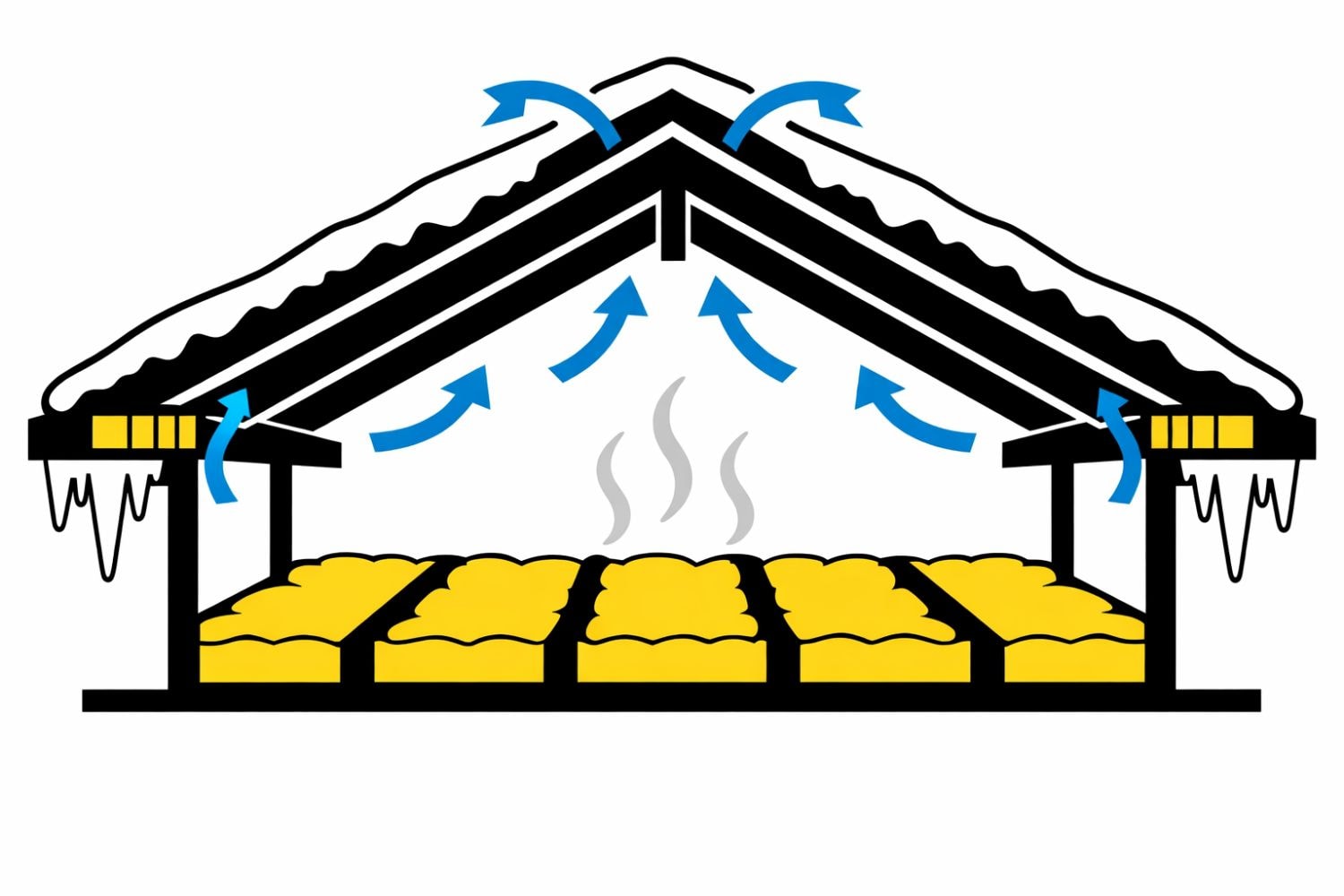
A balanced attic ventilation system works by creating airflow from intake to exhaust:
Intake vents at the soffits or eaves allow cool outside air to enter
Exhaust vents at the ridge or high on the roof let warm air escape
This circulation keeps attic temperatures more uniform, reducing the temperature differential that causes ice dams
For central Missouri homes, we typically follow current building code ratios for net free ventilation area—though many older homes fall short of these standards. The concept is straightforward: prevent your attic from becoming significantly warmer than the outdoors during winter.
Good attic insulation should:
Provide even coverage across the entire attic floor
Maintain proper depth (not compressed or settled)
Include baffles at the eaves to protect soffit vents from being blocked
Remain dry and fluffy, not wet or compacted
If insulation is damaged, wet, or missing in areas, it needs to be corrected before other improvements will be fully effective.
A word of caution: We don’t recommend DIY-ing major ventilation changes in winter. Cutting new vents in freezing weather creates its own risks, and improper vent placement can actually worsen moisture problems. Schedule an assessment with a certified roofing contractor who understands both manufacturer specifications and local conditions.
Roofing Upgrades That Protect Against Winter Moisture
When we install or replace a roof, specific components help limit winter leaks:
Ice-and-water shield membranes – Self-adhering waterproof layer at eaves, valleys, and around penetrations
High-quality synthetic underlayment – Better water resistance and durability than traditional felt
Properly flashed chimneys and sidewalls – Correct integration of step flashing, counter-flashing, and kickout diverters
Correctly sized gutters and downspouts – Adequate capacity to handle snowmelt without backing up
We typically extend ice-and-water protection beyond the minimum code requirements in known trouble spots like low-slope eaves and long valleys. Mid-Missouri’s weather demands this extra margin.
Our triple-certified installation approach (GAF Master Elite, Owens Corning Platinum, James Hardie Elite for siding tie-ins) ensures these details are done to factory standards. This matters for winter performance because manufacturers have engineered their systems to work together—when installation shortcuts happen, winter is often when problems appear.
If your roof was installed before modern underlayment and flashing practices became standard in the 2000s-2010s, a proactive evaluation may prevent potential water damage before it starts.
How CoMo Premium Exteriors Diagnoses and Fixes Winter Roof Moisture Issues
As a local Mid-Missouri contractor, we’ve seen hundreds of winter leak scenarios across Columbia, Jefferson City, Boonville, Moberly, and the Lake of the Ozarks. After 25+ years, patterns repeat—and that experience helps us quickly identify what’s actually going on with your roof system.
Our Inspection Process
When you contact us about a winter moisture concern, here’s what to expect:
Exterior roof assessment – When conditions allow safe access, we inspect the roof surface for missing shingles, damaged flashing, ice dam evidence, and vulnerable areas
Attic inspection – We check for moisture evidence, frost patterns, ventilation adequacy, insulation levels, and air leakage points
Documentation – We photograph conditions and explain what we’re seeing in plain English
Diagnosis – We differentiate between true roof failures (missing shingles, failed flashing) and building-science issues (heat loss, condensation)
This last point is critical. Sometimes the solution is a flashing repair. Sometimes it’s adding insulation and sealing air leaks. And sometimes it’s both. We want you to invest money where it actually solves the problem, not just where it’s most visible.
Creating a Prioritized Plan
Based on our findings, we develop a plan that addresses:
Immediate leak control – If water is actively entering your home, we prioritize stopping it
Short-term stabilization – Temporary measures to maintain safe conditions through the rest of winter
Long-term fixes – Air sealing, ventilation upgrades, insulation improvements, and targeted roof repairs or full replacement if necessary
We also offer free estimates and can coordinate with insurance when winter moisture stems from storm-related damage. We help homeowners understand what is and isn’t typically covered, and we’re experienced in documenting damage for adjusters.
When to Call Us (and What to Expect)
Contact CoMo Premium Exteriors if you notice:
A new ceiling stain appearing after snow, especially without rain
Recurring winter leaks in the same area year after year
Heavy icicles and thick ice bands at the roof edge
Visible frost, dripping, or moisture in the attic
What happens after you call:
We schedule an on-site assessment at a time that works for you
We perform a thorough inspection of roof, attic, and relevant interior areas
We explain our findings in clear, straightforward language
We provide a written estimate with options (repair vs. long-term solution)
There’s no high-pressure sales pitch. Our goal is to educate you and let you decide when and how to move forward. Many of our customers appreciate having the information even if they’re not ready to act immediately.
Ready to get answers? Call us at (573) 424-9008 or request an inspection through our website. With more freeze-thaw cycles ahead this winter, acting before the next major snow or temperature swing helps prevent the situation from getting worse.
FAQs
Can an ice dam damage my roof even if I don’t see water inside the house?
Yes. Ice dams can soak roof decking and insulation without immediately causing interior stains. The moisture may saturate sheathing and insulation for weeks before it eventually shows up as sagging drywall, a musty attic odor, or mold on stored items.
If you see heavy icicles or thick ice at the eaves during January or February, we recommend scheduling a roof and attic inspection even if there’s no active leak yet. Early inspections often let us identify and fix minor issues—like localized underlayment or flashing problems—before they lead to major repairs.
Is it safe to remove ice dams myself with a shovel, hammer, or roof rake?
Using a roof rake from the ground to remove fresh snow is generally safe when done carefully. However, aggressive chipping at ice with hammers, shovels, or picks can easily break shingles, dent gutters, and damage fasteners—creating new leak points that show up during spring rains.
For severe ice dams, professional steam-based removal is safer than mechanical methods. But the real answer is prevention: proper insulation, ventilation, and air sealing address the root cause so you’re not managing an emergency situation every winter.
Will my homeowners insurance cover damage from ice dams or winter roof leaks?
Many policies in Missouri cover resulting interior water damage from sudden ice dam events—things like stained ceilings, damaged drywall, and ruined flooring. However, policies typically don’t cover the underlying cause, such as inadequate attic insulation, poor ventilation, or pre-existing roof wear.
Coverage varies significantly by policy and carrier. We recommend reviewing your policy or talking with your agent to confirm specifics. When appropriate, CoMo Premium Exteriors assists homeowners in documenting winter damage and communicating with adjusters so they understand what repairs are needed. We can help you file a claim correctly when winter damage qualifies.
When is the best time of year to fix winter moisture problems with my roof and attic?
We can perform emergency leak-control work any time, including during winter weather. However, major fixes—like full roof replacements, extensive ventilation modifications, or large insulation projects—are typically best scheduled for spring through fall when weather conditions allow for proper installation.
The key is to call as soon as you notice an issue. We can stabilize the situation, prevent further damage, and plan permanent solutions for the next available weather window. Waiting multiple seasons often compounds the damage, increasing both repair cost and disruption to your household.
How do I know if I need a full roof replacement or just targeted repairs and attic improvements?
The answer depends on several factors: the age of your roof, visible wear patterns (curling shingles, significant missing granules, exposed fasteners), and how widespread the moisture damage is to decking and underlayment.
We evaluate both the roof surface and the attic to determine whether strategic repairs plus insulation and ventilation improvements will solve the problem, or whether a full replacement is the more cost-effective long-term option. Sometimes a 15-year-old roof with localized ice dam damage needs only flashing work and attic upgrades. Other times, widespread sheathing damage makes replacement the smarter investment.
We share photos and clear explanations so you can see exactly what we see before making any decision. Our role is to give you the information—not to pressure you into a particular choice.
Winter Roof Replacement: Can You Really Replace Your Roof in a Mid‑Missouri Winter?
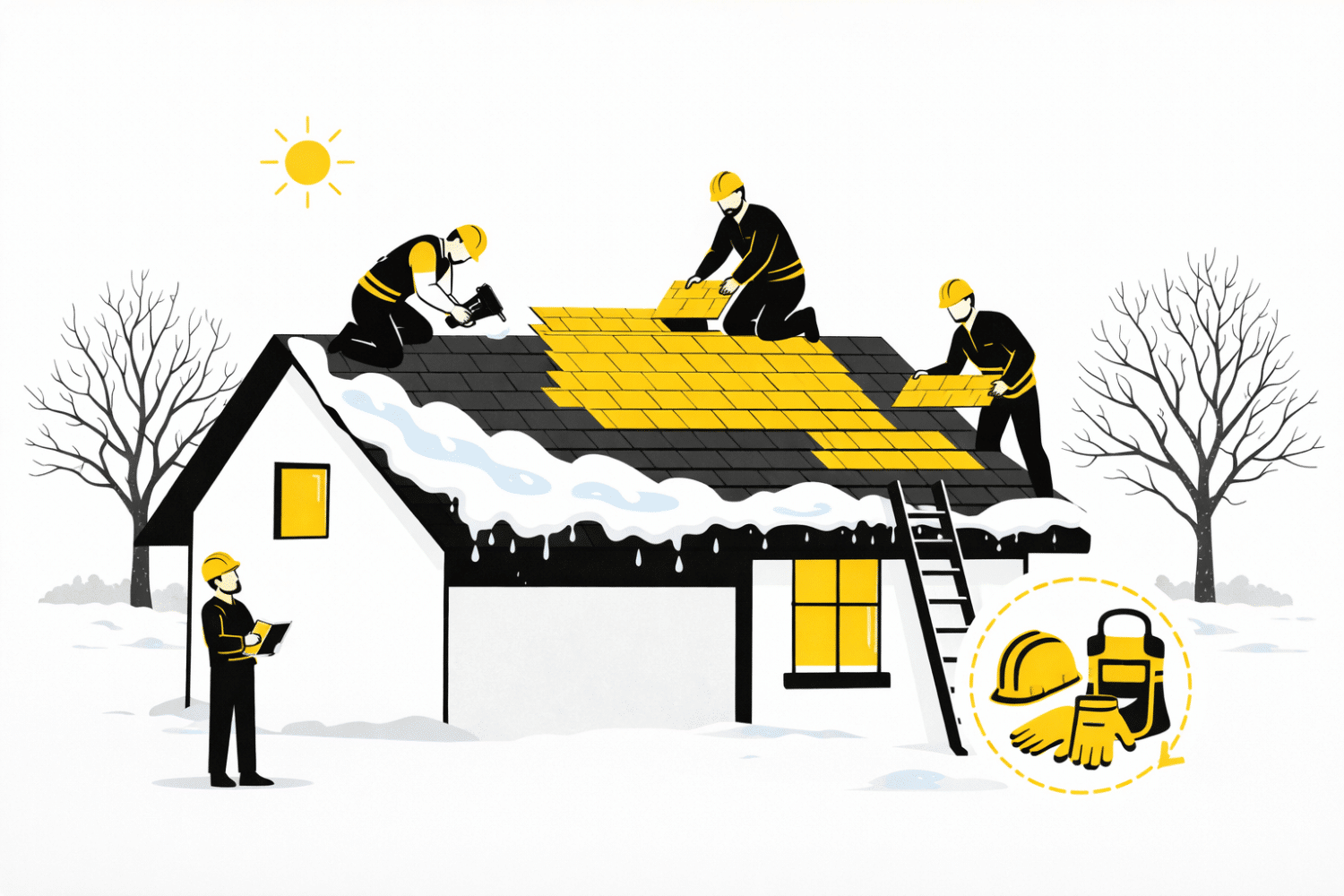
Replacing your roof during the winter months might seem daunting, especially in Mid-Missouri’s cold weather. However, with the right conditions, materials, and experienced roofing contractors, a winter roof replacement can be both safe and effective. While colder temperatures do affect roofing materials like asphalt shingles, proper techniques and careful planning ensure your roof is installed correctly and protected against winter storms. In this guide, we’ll explore everything you need to know about winter roofing projects, including temperature considerations, safety precautions, and how to prepare your home for a successful winter roof replacement.
Key Takeaways
Yes, you can replace a roof in a Mid-Missouri winter, but it requires the right temperatures, materials, and an experienced crew. Most shingle manufacturers prefer 40°F and rising, though with hand-sealing and proper jobsite prep, we can work effectively down into the mid-30s on sunny, dry days.
Winter roof replacement stops active leaks, prevents ice dam damage, and often offers better scheduling flexibility and pricing than the spring rush. If your home’s roof is already compromised, waiting until April can turn small problems into major structural issues.
Cold temperatures change how roofing materials behave—asphalt shingles become brittle below 40°F, and factory sealant strips need heat to activate. Experienced roofing professionals compensate with warmed materials, manual sealing, and adjusted tool settings.
Is Winter Roof Replacement in Mid‑Missouri Really a Good Idea?
We get this question every December, usually from a homeowner staring at a ceiling stain or watching shingles blow off during a cold front. The honest answer? Winter roofing is absolutely possible—but it’s not ideal for every situation, and it takes a roofing team that knows what they’re doing.
In Central Missouri—whether you’re in Columbia, Jefferson City, or out by Lake Ozark—we typically see usable winter roofing windows on dry days in the 35–50°F range. When the sun’s out and the wind stays calm, that’s often enough to get quality work done. We’ve installed over 500 roofs across the region, and a good portion of those happened between November and March.
Here’s the thing: emergency situations shouldn’t wait. If you’ve got active leaks, damage from winter storms, or a roof deck that’s starting to fail, delaying until spring can mean thousands more in repairs. Water doesn’t care what month it is—it just keeps finding its way in.
That said, winter projects do come with tradeoffs:
Pros
Cons
Stops leaks before freeze-thaw damage worsens
Slower progress due to shorter days
Often faster scheduling (less backlog)
More weather delays possible
Prevents ice dam damage
Extra care needed with cold materials
Ready before late-winter storms
Shingle sealing takes longer
A trusted contractor should walk you through whether a temporary repair, partial replacement, or full winter reroof makes the most sense for your specific roof and budget. That’s exactly what we do at CoMo Premium Exteriors—no pressure, just straight answers based on what your roof actually needs.
What Temperatures Are Too Cold for a Winter Roof Replacement?
Temperature matters for two reasons in cold weather roofing: keeping workers safe on potentially icy roof surfaces, and making sure roofing materials perform the way they should. In Mid-Missouri winters, understanding these thresholds helps you know when winter work makes sense.
Manufacturer guidance is straightforward: Most standard asphalt shingles are designed for installation at 40°F (4°C) and above. The ideal range sits between 50–80°F, where shingles stay flexible and the thermally-activated sealant strips bond quickly.
Here’s how we break down the temperature ranges:
Temperature Range
Workability
What We Do
50°F+
Ideal conditions
Standard installation techniques
40–50°F
Good with care
Monitor sealant activation, work during warmest hours
32–40°F
Workable
Hand-sealing, warmed materials, midday scheduling
Below 30°F
Not recommended
Emergency tarping and temporary measures only
Between roughly 32–40°F, careful crews can still replace roofs using specific cold weather techniques. We store materials in warm spaces, apply roofing cement manually under shingle tabs, and schedule work during the warmest hours of the day—typically 10 AM to 3 PM.
A sunny 38°F January day in Columbia? That’s workable with the right approach. A 28°F cloudy, windy morning with frost on the roof surface? We’re rescheduling. CoMo Premium Exteriors will always reschedule rather than risk a poor install or unsafe winter conditions.
How Cold Weather Affects Asphalt Shingles and Other Roofing Materials
Cold doesn’t just make the job uncomfortable—it fundamentally changes how roofing materials behave and how long they’ll last. Understanding this helps explain why winter projects require different techniques.
Shingle flexibility is the biggest concern. Under about 40°F, asphalt shingles become stiffer and more brittle. The asphalt matrix that gives shingles their pliability stiffens up, and studies show cracking rates can increase by up to 30% if materials aren’t properly warmed before installing asphalt shingles. That means more care when handling, nailing, and walking on them.
Sealant behavior changes dramatically too. Every asphalt shingle has a factory adhesive strip designed to bond under the sun’s heat. In a July installation, this happens naturally within days. In January in Columbia, that bond might take weeks—or it might not happen at all until spring without intervention. That’s why manual sealing becomes essential in cold conditions, using quarter-sized dabs of approved roofing cement under each tab.
Other roofing materials have their own cold weather quirks:
Metal roofs can be installed in colder conditions since they don’t rely on adhesive bonding, but crews need to watch for condensation, thermal expansion, and proper fastener torque
EPDM and low-slope membranes often need 45°F+ to bond correctly
Slate tiles become more susceptible to cracking in freezing temperatures
An experienced crew adjusts everything—tool settings on nail guns, air pressure, storage locations, work timing—to match the actual temperatures on installation day.
Installer Safety and Project Timing in Winter
Ice, frost, and shorter December–February days change everything about how we plan roofing projects across Mid-Missouri.
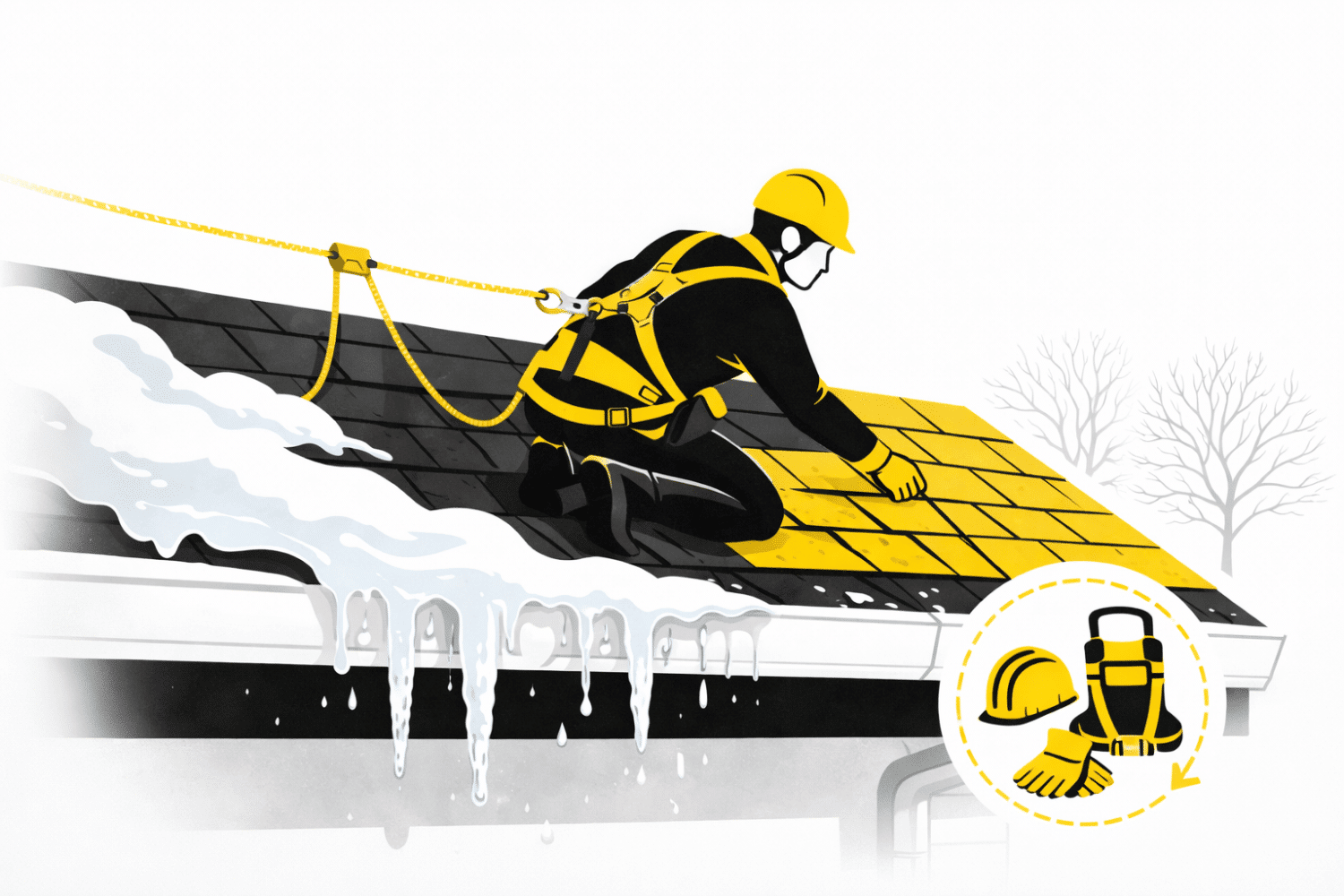
Safety comes first. Snow and ice, frost, and wet leaves make roofs dangerously slick. Our crews use harnesses, anchors, roof jacks, and winter-rated boots. They often work more slowly than in warm weather—and that’s intentional. The extra safety precautions aren’t optional when temperatures fall and surfaces get treacherous.
Winter days are simply shorter. A roof that might take two long summer days could require three or four shorter winter days, especially when start times get pushed back by morning frost. We typically wait until the roof’s edge and surface have thawed and dried before sending anyone up.
At CoMo Premium Exteriors, we build weather buffers into every winter schedule. If a cold snap or heavy snow hits, we pause the project, secure the site, and resume when conditions allow proper installation. The home stays “dried-in” each day before we leave—underlayment and flashings installed so you’re protected overnight, even if shingles extend into additional days.
Projects take a bit longer in January, but the focus is on correct installation and safety precautions, not rushing to finish by dark.
Pros and Cons of Replacing Your Roof During the Winter
Winter isn’t automatically bad or good for a new roof—it depends entirely on your roof’s condition and your timing. Let’s lay out the honest tradeoffs.
Advantages of winter roof replacement:
Potentially faster scheduling since there’s less backlog than April–June
Sometimes better pricing or off season promotions
Stops active leaks before freeze–thaw cycles cause additional roof damage
Gets your roofing system ready before severe late-winter storms
Insurance claims from winter storms can often be processed more smoothly in the off season
Drawbacks to consider:
More weather-related delays are likely
Longer total project timeline
Shingles need more careful handling to avoid cracking
Slower shingle sealing compared to a July installation
Crews work shorter days
Think about your specific scenario: A roof leaking in January after a windstorm near Jefferson City probably shouldn’t wait. But a cosmetically aged roof that’s still watertight? That might be a good candidate for a scheduled spring replacement.
CoMo Premium Exteriors will walk you through both options—winter versus spring replacement—so you can choose what fits your risk tolerance, schedule, and budget.
Potential Cost and Scheduling Benefits
Winter is typically a lighter season for roofing volume in Mid-Missouri, which can actually work in your favor.
Because many homeowners delay until warmer months, winter calendars often have more flexibility. That means faster start dates and more accommodating time slots. While you might wait 4–6 weeks for a spring appointment during peak season, winter projects often start within 1–2 weeks.
Some roofing contractors, including us, occasionally offer off-season bundled deals—like combining a roof with gutter upgrades—when schedules are less compressed. That said, quality and materials should never be discounted. Be wary of any reputable roofing company offering dramatically lower prices; it usually means corners are being cut.
The less obvious cost savings? Replacing a failing roof in winter avoids emergency call-outs, interior water damage, and the higher repair bills that come from waiting while problems compound. Melting snow finding its way through damaged shingles can ruin insulation, drywall, and even flooring—costs that dwarf the premium of a winter install.
Ask any contractor, including CoMo Premium Exteriors, about timing, availability, and whether winter scheduling might reduce wait time compared to peak season.
Risks of Waiting Until Spring
Sometimes waiting for warmer temperatures makes sense. But if your roof is already compromised, that delay carries real risks.
Freeze-thaw cycles are the enemy. From December through March in Central Missouri, water gets into small openings—missing shingles, cracked flashing, worn pipe boots—then freezes and expands overnight. This repeated cycle turns minor issues into rotten decking, soaked insulation, and interior ceiling damage. We’ve seen homeowners turn a $12,000 roof into a $20,000 project by waiting.
Ice dams form when poor attic insulation and ventilation combine with an aging roof. Heat escapes through the attic, melts snow on the upper roof, and that water refreezes at the roof’s edge where it’s colder. The ice dam formation backs water under shingles and into walls or soffits. Proper ventilation helps, but a compromised roof makes ice dams far more damaging.
Spring backlogs catch homeowners off guard. Many roofing contractors see their schedules explode in March and April. If you postpone a January decision, you might find yourself behind dozens of hail claims after an early-spring storm hits Columbia or Lake Ozark. Nationally, 15–20% of roofs are replaced during winter months, but that rises to 25% in Midwest storm zones like ours—because smart homeowners know waiting creates problems.
Have a professional roof inspections done before deciding to wait. CoMo Premium Exteriors can document your roof’s condition with photos and explain which issues can safely hold and which really shouldn’t.
How CoMo Premium Exteriors Handles Winter Roof Replacements
Winter roofing projects simply require more planning. After 25+ years in Mid-Missouri, we’ve learned how to work with our weather—not against it.
Our triple certifications—GAF Master Elite, Owens Corning Platinum, and James Hardie Elite —require ongoing factory training and strict quality standards that we maintain year-round. GAF’s cool-weather testing shows that properly sealed roofs withstand 110 mph wind speeds even when installed in cold climates. That’s the standard we hold ourselves to.
Here’s how we evaluate each winter job:
Forecast review – Looking at temperature ranges for the entire project window
Sun exposure assessment – Different roof slopes get different amounts of warming
Roof complexity analysis – Valleys, chimneys, skylights, and wall intersections need extra attention
Material planning – Ensuring everything stays warm and flexible until installation
We prioritize “dry-in” each day. That means underlayment and flashings are installed so your home is protected overnight, even if shingles or finishing details extend into additional days. If a cold snap hits, we pause, secure the site, and resume when the roof can be installed correctly to manufacturer standards.
We never force a job into unsafe or below-spec weather conditions.
Cold-Weather Installation Techniques We Use
Winter roof replacement isn’t about magic products—it’s about disciplined techniques, proper storage, and quality control on site.
Material storage matters. We store shingles, sealants, and coil nails in heated or insulated spaces—trailers, garages, or hot boxes—so they stay at 50–55°F and remain flexible. Power blanket-style material warmers can maintain 70°F in bundles, reducing brittle failures by up to 75% according to industry studies.
Manual sealing is essential. On colder days, especially along rakes, eaves, and ridges, our crews apply approved roofing cement manually under each shingle tab. This mimics the waterproof seal that would normally form from solar heat. Using a caulk gun or trowel, we apply quarter-sized dabs of adhesive to ensure proper bonding even before warm weather arrives.
Tool adjustments prevent damage. We dial in air pressure on nail guns so nails set correctly without over-driving through cold, brittle shingles. We monitor for jams caused by condensation or freezing moisture. GAF Master Elite guidelines require checking compressor pressure hourly in cold conditions.
Our crews pay extra attention to key details in winter:
Valleys – Where two roof planes meet and water concentrates
Pipe boots – Rubber seals that crack in extreme weather
Step flashing – Where roof meets walls, common leak points
For information on flat roof materials, including their longevity and best practices, see our comprehensive guide.
These are the first places winter leaks show up if not installed correctly. We install ice-and-water shield underlayment in all valleys and along eaves for enhanced protection.
Safety, Site Protection, and Clean-Up in Winter
Winter isn’t just harder on workers—it affects your landscaping, driveway, and how debris gets handled.
Pre-work preparation:
We clear snow, frost, and loose ice from work areas before starting
Morning start times may be delayed until roof surfaces are safe
Heavy snow gets removed using safe methods that avoid structural damage
Safety systems we use:
Guardrails or roof jacks on steeper shingle roofs
Harnesses and anchors on every project
Warning lines to protect both crew and anyone on the ground
Winter-rated footwear with aggressive tread
Property protection:
Layered tarps catch shingles and nails on snow or frozen ground
Dumpsters placed where driveway ice won’t create hazards
Magnet sweeps performed even when winter snow is present
Landscape protection in frozen conditions
We leave the site safe at the end of each day—no exposed roof deck, no loose materials at risk of blowing off in high winds, and clear communication on what’s completed and what’s scheduled next.
Preparing Your Home and Roof for Winter (Whether or Not You Replace It)
Even if a full winter replacement isn’t needed, every Mid-Missouri homeowner can take steps to protect their roof before and during the winter season.
Schedule an inspection. Either inspect your roof yourself from the ground using binoculars or have a professional evaluation done by a reputable company. Look for missing shingles, cracked pipe boots, or failing flashing. Catching problems early is always cheaper than emergency roof repairs.
Clean gutters and downspouts. Do this in late October or early November before temperatures drop below freezing. Clogged gutters contribute to ice dam formation along eaves. Roof rakes can help manage winter snow buildup, but clean gutters are the first line of defense.
Check attic insulation and ventilation. Proper ventilation keeps roof temperatures more even, lowering ice dam risk and improving your home’s energy efficiency. Most Mid-Missouri homes should have insulation meeting R-49 standards—we always inspect this during evaluations.
Trim overhanging branches. Heavy, wet Mid-Missouri snows can break limbs onto shingles and gutters. Removing overhanging branches before winter storms prevents damage and costly repairs.
Know your roof’s age. Most asphalt shingles last 20–30 years depending on quality and maintenance. If yours are approaching that range, a winter inspection helps you plan rather than react.
Addressing Small Problems Before They Become Winter Emergencies
Winter is not the time you want to discover a “small” issue has turned into a ceiling stain or sagging drywall.
Watch for these early warning signs:
Lifted or missing shingles after a November windstorm
Granules building up in gutters (a sign shingles are deteriorating)
Flashing pulling away from chimney or sidewall
Daylight visible in attic spaces
Moisture or frost in the attic
Minor roof repairs—securing loose shingles, resealing flashing, replacing a cracked pipe boot—can often be done quickly in winter-friendly weather windows. These small fixes can add years of life to an otherwise sound roofing system.
CoMo Premium Exteriors documents all findings with photos and walks homeowners through whether they’re looking at a simple repair, a “watch and wait” situation, or a roof nearing the end of its service life.
Don’t ignore ceiling stains, attic moisture, or moldy insulation during winter. These signs mean water is already getting in and should be evaluated promptly. Waiting typically means the problem spreads—and the bill grows.
How to Decide: Repair, Temporary Fix, or Full Winter Replacement?
Deciding what to do in January when you spot damage can feel overwhelming and urgent. Let’s simplify the decision.
The choice usually comes down to three paths: for example, deciding how often you need a roof inspection is an important consideration.
Option
Best For
Considerations
Targeted repair
Isolated damage on newer roofs
Quick, affordable, preserves existing roof
Temporary protection
Emergency situations, severe weather coming
Buys time until full replacement in warmer months
Full replacement
Older roofs, widespread damage
Best long-term solution, requires careful winter planning
General guidelines:
Roofs under 10–12 years old with isolated damage from a recent storm are often good candidates for repair, especially if the rest is in solid shape
Very old roofs (20+ years for standard asphalt shingles) with widespread cracking, curling, or missing granules often make more sense to replace than keep patching
Active leaks almost always require immediate action—at minimum, temporary protection
Shingle manufacturers like GAF and Owens Corning design their products to last, but every roof has a lifespan. When repairs start costing more than they’re worth, it’s time for a conversation about replacement.
Get a written inspection and photo documentation so you can make the decision with clear information—not just urgency or guesswork. That’s exactly what we provide.
Insurance, Storm Damage, and Winter Claims
Winter storms in Mid-Missouri—especially strong winds and sub zero temperatures followed by rapid warming—can create damage that may be covered by homeowners insurance.
Timely documentation is critical. Photos of missing shingles after a December windstorm, interior water damage, or damaged flashing can support a claim even if full replacement happens weeks later. Don’t assume damage isn’t covered just because it happened in winter.
As experienced insurance claims advocates, CoMo Premium Exteriors helps homeowners understand the difference between ACV and RCV:
ACV (Actual Cash Value) – Insurance pays what your roof is worth today, accounting for age and wear
RCV (Replacement Cost Value) – Covers the full cost of a new roof
We’ve recovered full costs on 95% of claims by speaking adjusters’ language so homeowners don’t have to.
Insurers typically require the roof to be protected from further damage—temporary tarping or emergency repairs—which is another reason not to wait until spring if you already see active leaks. Failing to mitigate damage can actually hurt your claim.
Call us if you’re unsure whether winter damage might be an insurance claim. We can inspect, take photos, and help you have a more informed conversation with your adjuster.
Conclusion
Your roof shouldn’t have to wait until April to get the protection it needs. Whether you’re dealing with winter storm damage, an active leak, or just want professional eyes on that aging roof, CoMo Premium Exteriors is here with honest answers and proven cold weather expertise.
Give us a call at (573) 424-9008 for a no-pressure winter roof evaluation. We’ll document everything with photos, explain your options, and help you make the right decision—whether that’s a quick repair, an immediate replacement, or a plan for spring. That’s what neighbors are for.
FAQ: Winter Roof Replacement in Mid‑Missouri
Can you replace only part of my roof in winter and finish the rest in spring?
Partial replacements are sometimes possible—for example, repairing a heavily damaged slope while leaving intact sections alone. However, transitions between old and new roofing must be carefully detailed so warranties and waterproofing aren’t compromised. We’ll advise on a case-by-case basis whether this makes sense for your specific situation, and help you understand how long your roofing lasts in Missouri.
Will my shingle warranty still be valid if the roof is installed in January?
Warranties depend on following roofing manufacturers’ instructions, not the month on the calendar. If temperature protocols, installation techniques, and materials meet guidelines—including proper hand-sealing in cold conditions—a winter installation can qualify for full manufacturer coverage, including GAF’s 50-year warranties.
How long will it take a winter-installed roof to fully seal?
The adhesive strip continues to bond as warmer temperatures return and the sun hits the roof. In Mid-Missouri, that typically means full sealing happens over the first few warm spells of late winter and early spring. Hand-sealing done during installation speeds this process significantly at critical areas like rakes, eaves, and ridges.
Will a winter roof replacement make my house very cold while you work?
Our crews tear off and replace in sections, keeping the home dried-in as they go. Attic insulation remains in place throughout the project. Most homeowners notice indoor temperatures drop only a few degrees while work is underway—far less than you might expect.
How do I know if I should call now or wait until warmer weather?
Simple guidance: If you see active leaks, missing shingles, sagging areas, or storm damage, call for an inspection right away. If the roof simply looks older but isn’t leaking, a scheduled evaluation can help plan for spring or summer replacement without pressure. Either way, knowing what you’re dealing with is better than guessing.
How Do I Know if I Need a New Roof? Signs for Mid-Missouri Homeowners
It’s easy to take your roof for granted—until you discover a leak or see shingles scattered across your yard after a Mid-Missouri storm. Knowing when your roof needs attention can help you avoid bigger headaches and protect your home’s value. Recognizing the right time to replace your roof can prevent costly repairs down the road. So, how do you know if you need a new roof? Let’s look at the key warning signs every Mid-Missouri homeowner should watch for.
At CoMo Premium Exteriors, we believe in honest, informed guidance so you can make the best decision for your home. Understanding when it’s time to replace your roof is crucial to maintaining your home’s integrity. Here’s what you need to know.
Introduction to Roofing Needs
Determining whether you need a new roof can feel overwhelming, especially if you’re not sure what to look for. That’s where a professional roofing contractor comes in. Regular maintenance and timely inspections are essential for catching early warning signs before they turn into costly repairs. For many Mid-Missouri homeowners, asphalt shingle roofs are the most common roofing material, and while they’re durable, they typically need replacement after 20 to 30 years.
Some of the most common signs that you may need a new roof include loose granules collecting in your gutters, missing shingles after a storm, or moss growth spreading across your roof’s surface. These issues can compromise your roof’s ability to protect your home from the elements. By staying alert to these warning signs and scheduling regular inspections, you can determine when it’s time to call a roofing contractor and take proactive steps to protect your investment. Don’t wait for a major leak or visible damage—regular maintenance is the key to extending the life of your roof and avoiding unexpected repairs.
Key Takeaways
Leaks, missing shingles, and sagging are major warning signs that you may need a new roof.
Roofs over 20 years old are often due for replacement, especially after severe Mid-Missouri weather.
Consider the cost of roof replacement when evaluating your options, as expenses can vary depending on the extent of damage and materials needed.
A professional inspection can reveal hidden problems and help you decide whether to repair or if a roof replacement is necessary.
Visible Roof Damage
One of the most obvious signs you may need a new roof is visible damage. Look for:
Missing, cracked, or curling shingles
Bald spots where granules have worn away
Damage around roof penetrations like chimneys, vents, and skylights
Dark streaks, which can indicate algae growth or moisture issues
Damage to asphalt shingles, such as curling, cracking, granule loss, or missing shingle tabs
Hail damage can cause visible dents or cracks in asphalt shingles and may result in many shingles being damaged or missing after a storm. Some damage can be seen from ground level, but a professional inspection is recommended for a thorough assessment.
These issues often follow Mid-Missouri storms, which bring strong winds and hail capable of dislodging or fracturing roofing materials. Even small areas of damage can allow water to seep into your home.
Learn more about our storm damage restoration services.
Roof Leaks or Water Stains
Water stains on ceilings or walls are red flags. Leaking is a common issue that can lead to water stains and significant damage if not addressed promptly. Even if you don’t see dripping water, moisture can travel along beams and surfaces before becoming visible inside your home. Leaks are not always directly under the damaged part of the roof, making it crucial to have a professional inspection to pinpoint the source.
Mid-Missouri’s unpredictable weather means roofs often endure heavy rains, ice, and wind-driven moisture. Water leaks can result from issues like an ice dam forming on the roof during winter, which causes melting snow to refreeze at the eaves and back up under shingles. A roof that leaks during storms needs immediate attention to prevent mold, insulation damage, and structural issues.
Granule Loss in Gutters
Finding shingle granules, often made of crushed stone, in your gutter or downspouts is another sign your roof may be reaching the end of its lifespan, especially if you have an asphalt roof. Granules protect shingles from UV damage and improve fire resistance. Accumulation of these crushed stone granules in the gutter can indicate that the protective layer of your asphalt roof is deteriorating. Excessive granule loss leaves shingles vulnerable to the elements, accelerating wear and tear.
This is especially common in older roofs or roofs that have endured multiple hailstorms—an all-too-frequent event in our region.
Explore our roofing solutions designed for Mid-Missouri weather.
Sagging Roof Deck
A sagging or uneven roof line is a serious indicator of structural problems. This could result from:
Long-term water damage
Rotting roof decking
Failing roof supports or framing
Problems with the home’s foundation, such as cracks or settling, can also cause roof sagging or unevenness. Additionally, damage to other elements, such as fascia boards or soffits, can contribute to structural roof issues.
If your roofline appears to dip or curve, contact a professional immediately. Ignoring structural issues can lead to costly repairs and safety risks.
Age of Your Roof
Even if your roof appears intact, age matters. Asphalt shingle roofs typically last 20 to 25 years, while premium materials like metal or tile can last longer. If your roof is over 20 years old—or if you’re unsure of its age—it’s wise to schedule an inspection. If your roof is showing signs of wear, it may need to be replaced within a few years. Additionally, if you notice many homes in your neighborhood getting new roofs, it could be a sign that your own roof is nearing the end of its lifespan.
Roofing technology has advanced significantly over the years. Replacing an older roof can improve energy efficiency, enhance curb appeal, and protect your home from Mid-Missouri’s extreme weather patterns.
See examples of our roofing projects across Mid-Missouri.
Higher Energy Bills
An aging or damaged roof can allow heated or cooled air to escape, driving up your energy costs. If your energy bills have increased without a clear reason, your roof could be part of the problem. Poor insulation or gaps in your roofing system compromise your home’s energy efficiency.
A new roof with modern underlayment and ventilation can help regulate your indoor temperature and reduce utility costs.
Assessing Roof Condition
Knowing the true condition of your roof is the first step in deciding whether you need a new roof or if repairs will suffice. A thorough inspection by a professional roofing contractor goes beyond a simple visual check from the ground. During a professional inspection, the contractor will look for curled shingles, damaged shingles, and areas of granule loss that may not be obvious at first glance. They’ll also check for water stains and signs of water penetration, which can indicate a hidden roof leak or even mold growth in your attic or walls.
The age and type of your roof, as well as the extent of any damage, all play a role in determining whether a repair or a full replacement is the best solution. By investing in a professional inspection, you’ll get a clear picture of your roof’s health and receive expert recommendations tailored to your home’s needs. This approach helps you avoid unnecessary repairs and ensures your roof continues to protect your home for years to come.
Roof Performance and Safety
Your roof’s performance and safety are vital to the well-being of your home and family. When a roof is compromised—whether by missing shingles, loose granules, or moss growth—it becomes vulnerable to water penetration and the damaging effects of Mid-Missouri’s unpredictable weather conditions. For example, moss growth can trap moisture against the shingles, leading to mold and rot, while ice dams in winter can cause water to back up under the roofing materials, increasing the risk of leaks and structural damage.
Regular maintenance and timely inspections by a professional roofing contractor are essential for identifying these issues early. Addressing problems like water penetration, mold, or even the first sign of a leak can prevent more serious damage to your home’s structure and foundation. By prioritizing your roof’s performance and safety, you’re not only protecting your investment but also ensuring peace of mind for your family. If you notice any signs of trouble, don’t hesitate to contact a roofing professional for an expert assessment and recommendations for repairs or replacement.
What Happens During a Roof Inspection?
A professional roof inspection involves:
Checking for visible exterior damage
Inspecting flashing around chimneys and vents
Examining attic spaces for moisture or mold
Assessing overall roof condition and lifespan
Performing a visual inspection to assess the condition of the entire roof system
At CoMo Premium Exteriors, we provide free, no-obligation inspections to help homeowners make informed choices. During the inspection, a professional will inspect all components of your roof system to identify any issues and determine the best course of action. If repairs are possible, we’ll tell you. If replacement is the better solution, we’ll explain why—and we’ll help you navigate financing and insurance claims if needed.
Can a roof leak be repaired instead of replaced? Small leaks can sometimes be repaired. However, widespread damage or an aging roof may require replacement.
Is it normal to see granules in my gutters? Some granule loss is normal over time, but large amounts signal that shingles may be deteriorating.
What’s the average lifespan of a roof in Mid-Missouri? Most asphalt roofs last 20–25 years. Severe weather can shorten that lifespan.
Will a new roof increase my home’s value? Yes! A new roof improves curb appeal and reassures buyers that the home is protected from weather damage.
What are signs my asphalt roof needs attention? Signs your asphalt roof needs attention include missing or curled shingles, significant granule loss, and visible wear or damage after storms.
Should I contact my insurance company after storm damage? Yes, if your roof suffers storm or hail damage, contact your insurance company to assess if a claim is justified and to help with the repair or replacement process.
What is the difference between a repair and a re roof? A repair addresses specific issues like leaks or damaged shingles, while a re roof involves installing a new layer of shingles or replacing the entire roof when damage is extensive.
Can improper installation cause roof problems? Yes, improper installation can lead to issues such as curled or missing shingles, roof decking damage, and even structural deterioration, which may require repairs or a full replacement.
What factors affect roof damage from storms? Roof damage from storms depends on many factors, including hailstone size, weight, temperature, and the angle of impact, all of which influence the extent of the damage.
Ready for Peace of Mind? We’ve Got You Covered.
If you’re wondering whether it’s time for a new roof, CoMo Premium Exteriors is here to help. Our team serves Columbia, Jefferson City, Lake Ozark, and surrounding Mid-Missouri communities with honest advice and expert craftsmanship. Don’t wait until small problems become costly repairs—schedule your free inspection and know where you stand.
How Long Does it Take to Replace a Roof? Timeline for Mid-Missouri Homes
When you’re facing the prospect of a new roof, one of the first questions that comes to mind is, “How long will it take?” The good news for homeowners in Mid-Missouri is that roof replacement can be surprisingly quick. For most homes, the entire process—from tearing off the old materials to installing new roofing—can be completed in just one day. However, certain factors can extend that timeline to two or even three days. For more complex projects, such as those involving specialty or less common roofing materials, the process can sometimes take a few weeks.
At CoMo Premium Exteriors, we believe in keeping homeowners informed so you can plan around the project with confidence. Let’s look at the details that influence how long it takes to replace a roof and what you should expect. Many factors can affect the timeline, including the choice of common roofing materials, crew size, and material availability.
Key Takeaways
Most residential roofs in Mid-Missouri can be replaced in one day, start to finish.
The average installation time for an asphalt shingle roof is typically 1–2 days, depending on conditions.
Factors like roof size, material choice, and weather can extend replacement to 1–3 days.
Planning your project around special events and discussing timelines with your roofing contractor helps ensure minimal disruption.
Introduction to Roof Replacement
Roof replacement is a critical part of maintaining your home’s safety and value. This process involves removing your old roof and installing a brand new one, ensuring your house remains protected from the elements and maintains its structural integrity. While the idea of replacing a roof might seem daunting, understanding what’s involved can make the project feel much more manageable.
Several factors can affect the roof replacement timeline, including the type of roofing material you choose, the size and design of your roof, and the weather conditions during installation. Asphalt shingles are a popular choice for many Mid-Missouri homeowners because they offer a balance of affordability, durability, and quick installation time. However, the overall duration of a roof replacement project can vary depending on these factors. For some homes, the process may take just a few days, while more complex projects could extend over several weeks. The experience and efficiency of your roofing crew also play a significant role in how quickly your new roof is installed.
By understanding these variables, you can better plan for your roof replacement and ensure a smooth, stress-free experience from start to finish.
Why Most Roofs Take Only One Day
Thanks to experienced crews, modern tools, and efficient processes, roof replacement for many Mid-Missouri homes is completed in a single day. An asphalt shingle roof is the most common type installed and is typically completed within this timeframe. Crews arrive early, remove old shingles, inspect the decking, install underlayment, and apply new roofing materials—all before sunset in most cases.
This fast turnaround means less disruption to your daily routine, fewer concerns about weather exposure, and a quicker path to the protection and curb appeal of your new roof.
Learn more about our roofing services in Columbia, MO for an overview of materials and installation options.
Factors That Influence Roof Replacement Time
While a one-day replacement is common, some projects require more time. Various factors, such as weather, roof design, and material choice, can influence how long your roof replacement takes. Here’s what can affect how long your roof replacement takes:
The Size of Your Roof
Larger roofs naturally take longer to replace because of the increased surface area and materials involved. The square footage of the roof is a primary factor in determining how long the project will take. A small ranch home may be completed in a day, while a larger multi-level house might require additional time. Larger homes with more square footage can significantly extend the replacement timeline.
The Size of the Crew
A larger crew can complete a roof faster. Hiring a professional crew ensures efficient and high-quality workmanship, giving you peace of mind that the job will be done right. Experienced roofing companies like CoMo Premium Exteriors deploy the right number of skilled installers to keep your project moving efficiently.
Roof Steepness (Pitch)
Steep roofs take longer because they require more safety measures and careful footwork. Roofs with steep slopes require additional precautions and can increase installation time. Working at sharper angles slows installation to ensure safety and proper craftsmanship.
See how we manage complex roof projects in our Mid-Missouri service areas.
Number of Stories
Multi-story homes can add time to a project because materials and debris must be moved up and down additional levels. This increases labor and requires careful logistics. Homes with easy access allow for a smoother workflow and can reduce project duration.
Time of Year
Seasonal daylight affects how long crews can work safely. In winter, shorter days might push projects into a second day. Mid-Missouri’s unpredictable weather can also impact schedules, particularly during storm seasons. Inclement weather, such as rain or snow, can delay roofing projects and complicate the installation process. Scheduling during optimal conditions helps minimize delays and ensures quality work. Rain, especially heavy rain, can halt work entirely and require additional precautions to protect exposed roofing materials and prevent water damage.
Type of Shingle or Roofing Material
Some materials install faster than others. Asphalt shingles are the most common and quick to install, while premium materials like metal roofs, concrete tiles, and wooden shingles can extend installation times due to specialized techniques and increased durability. Concrete tiles, for example, are known for their long-lasting, weather-resistant qualities but typically require 8-9 days to install, making them a premium, long-term solution compared to other roofing materials. Wooden shingles also offer unique aesthetic appeal and durability, but their installation process is more involved than that of asphalt shingles.
For most homes and buildings, roof replacement takes one to three days, with the majority of homes being completed in a single day. However, installation times for metal roofs and other roofing materials, such as concrete tiles, can take up to one week or more, especially for larger or more complex projects. The time required to remove and install roof shingles can vary based on the roof’s design and complexity. Simple, pretty straightforward roof designs are completed faster, while intricate roofs with multiple angles, dormers, or chimneys take longer. A complete replacement, which involves thoroughly removing all old materials before installing new ones, will also take more time than simply layering new materials over existing shingles. It’s wise to talk through your specific situation with your contractor.
Importance of Timely Replacement
Replacing your roof at the right time is essential for protecting your home and your investment. An old or damaged roof can quickly lead to bigger problems, such as water leaks, mold growth, and even structural damage that can be costly to repair. By scheduling a roof replacement before these issues arise, homeowners can avoid frequent repairs and the headaches that come with them.
A new roof doesn’t just prevent damage—it can also improve your home’s energy efficiency, helping to lower your utility bills and keep your living spaces comfortable year-round. Plus, a fresh roof adds instant curb appeal, boosting your property’s value and making it more attractive to potential buyers.
Professional roofing companies understand the importance of a timely roof replacement and offer free estimates to help you plan your project with confidence. With expert crews and a commitment to a stress-free process, you can rest easy knowing your home is in good hands and your new roof will provide lasting protection.
Roof Replacement Process
The roof replacement process is a series of carefully coordinated steps designed to ensure your new roof is installed safely and efficiently. It begins with the removal of your old roof, including all existing shingles and underlayment. Once the old materials are cleared away, the roofing crew will inspect the roof deck for any signs of damage and make necessary repairs to ensure a solid foundation for your new roofing material.
Next, the installation of your chosen roofing material begins. Asphalt shingles are among the quickest to install, making them a popular option for homeowners looking for minimal disruption. If you opt for metal roofing or other specialized materials, the installation process may take a bit longer due to the need for precise techniques and specialized labor.
Throughout the roof replacement process, several factors can affect the installation time, including the size and complexity of your roof, the experience of the roofing crew, and weather conditions. A professional roofing company will manage these variables to keep your project on track, ensuring your new roof is installed with care and expertise.
Clean Up and Debris Removal
A thorough clean up and debris removal is a critical part of any roof replacement process. Once your new roof is installed, a professional roofing crew will take the time to remove all old materials, including shingles, underlayment, and any other debris generated during the project. This step is essential for leaving your property safe, tidy, and ready to enjoy.
The crew will also use magnets and other tools to collect stray nails, screws, and fasteners, ensuring your yard, driveway, and landscaping are free from hazards. Protecting your gardens and outdoor spaces is a top priority, and a reputable roofing company will take extra care to prevent any damage during installation and clean up.
By the end of the replacement process, you’ll be left with a spotless property and a new roof that’s ready to provide years of reliable protection—without any mess left behind.
Communicating Your Timeline Needs
One of the best ways to ensure a smooth experience is to discuss your schedule and any special events in advance. For example, if you’re hosting a family gathering or preparing your home for sale, timing your roof replacement is crucial.
When you receive your roof replacement proposal, talk with your roofing representative about:
Specific dates you’d like the work done
Any events at your home that might affect scheduling
Concerns about noise, debris, or access to your home during the project
At CoMo Premium Exteriors, our team provides honest estimates and clear communication so you’ll know what to expect. Our priority is a job well done with minimal disruption to your life.
How CoMo Premium Exteriors Keeps Projects on Track
We’ve replaced thousands of roofs across Mid-Missouri, and our team takes pride in precision, efficiency, and respect for your property. Our experienced roofers ensure your roof is replaced quickly and safely, providing fast turnaround times and expert service. Here’s what helps keep your project moving:
Free inspections and detailed proposals
Skilled crews sized appropriately for each job
Owens Corning Platinum Preferred and GAF Master Elite certifications
Commitment to thorough cleanup and protection of landscaping
Transparent communication about timing and weather delays
Explore our portfolio of roofing projects to see the quality and scope of our work.
FAQs: Roof Replacement Timeline
How fast can you replace a typical roof? Most standard asphalt shingle roofs can be replaced in a single day, weather permitting. An experienced roofer can often complete the job within this timeframe, depending on site conditions.
Can a roof replacement take longer than one day? Yes. Factors like roof size, steepness, material choice, and weather can extend the project to 2–3 days.
Does winter slow down roofing projects? Shorter daylight hours and cold weather can impact installation speed, sometimes requiring an extra day.
Will I need to leave my home during roof replacement? In most cases, you can remain at home, though it will be noisy. Let your contractor know if you have pets or other concerns.
How can I plan for roof replacement timing? Discuss any upcoming events or schedule constraints with your contractor when reviewing your proposal.
Ready to Plan Your Roof Replacement?
Replacing your roof is a significant investment—and timing is a big part of a stress-free experience. At CoMo Premium Exteriors, we’ve got you covered. Our team serves Columbia, Jefferson City, Lake Ozark, and surrounding Mid-Missouri communities with expertise and honesty.
Schedule your free roof inspection today, and let’s plan your project for the perfect time.
There are certain telltale signs that should convince you it’s time for a roof inspection. As a homeowner, you don’t have to wait until half the shingles are missing to obtain a professional consultation. Some of these common problems can creep up on you fast, so we’d like to go over them and help you avoid major trouble. Regular roof inspection is crucial as it helps inspect various elements of the roof, such as eaves, gutters, and chimneys, to identify potential issues early.
Introduction to Roof Maintenance
Regular roof maintenance is the cornerstone of a long-lasting roof. By keeping up with routine inspections and minor repairs, homeowners can prevent costly issues down the line. A well-maintained roof acts as a shield against water damage, mold growth, and structural problems. Prioritizing regular roof inspections allows you to catch potential problems early, such as missing shingles, damaged flashing, or excessive moisture buildup.
A professional roof inspection is invaluable in identifying these issues. Proper ventilation is another critical aspect of roof maintenance, as it prevents trapped moisture that can lead to mold growth and rot. Regular inspections also help in preventing ice dams, which can cause significant damage to your roof. Consulting with a roofing contractor can provide you with the best maintenance practices tailored to your specific roofing system. While asphalt shingles are a popular choice due to their durability, they still require regular upkeep to ensure their useful life.
Signs That It’s Time to Get a Roof Inspection
Dark stains or spots on your ceiling are often the first indicators of a leak or water damage. Missing or damaged shingles can compromise your roof’s integrity, leading to further damage if not addressed promptly. Cracked or broken flashings are another red flag, as they allow water to infiltrate your roof, causing significant damage over time.
If you notice your roofline sagging or appearing uneven, it could indicate structural issues or excessive moisture. Mold or mildew growth on your walls or ceilings is a clear sign of a roof leak or poor ventilation. Regular inspections can help identify these potential problems before they escalate into bigger issues. A professional roof inspection can determine the current state of your roof and highlight areas that need repair or replacement. If you notice any signs of roof damage or deterioration, it’s crucial to contact a roofing contractor immediately.
Roof Age and Vulnerability
The age of your roof plays a significant role in its vulnerability to damage and wear and tear. Asphalt shingles, for instance, typically have a lifespan of 20-30 years, but this can vary based on weather conditions and maintenance. Regular maintenance and inspections can extend your roof’s useful life, ensuring it remains in good condition for as long as possible.
Homeowners should be vigilant about the signs of an aging roof, such as cracked or curled shingles, and take action to address these issues promptly. A professional roof inspection can assess the condition of your roof and identify areas of concern. Regular inspections help prevent costly repairs and ensure your roof remains in good condition. A roofing contractor can provide guidance on the best practices for maintaining your roof and extending its lifespan. Prioritizing regular roof inspections is essential to ensure your roof remains safe and secure.
Interior Inspection
An interior inspection is a crucial component of a comprehensive roof inspection. A professional roof inspector will look for signs of water damage, mold growth, and structural issues inside your home. This includes examining the attic, ceilings, and walls for any indications of roof-related problems.
Proper ventilation is essential to prevent trapped moisture, which can lead to mold growth and rot. During the inspection, the roof inspector will look for signs of excessive moisture, such as water stains or dark spots, which can indicate a roof leak. They will also check for any signs of pest infestation or rot, which can compromise your roof’s integrity. A thorough interior inspection can help identify potential problems before they become significant issues. Homeowners should work with a professional roofing contractor to ensure a comprehensive interior inspection is performed, safeguarding the overall health of their roof.
Signs That It’s Time to Get a Roof Inspection
The typical signs of roof damage include shingles going off into your yard and progressive damage to your roof’s accessories. If you lose a lot of granule material or find it in the gutters, you know you have a problem. For a closer inspection of the roof, consider using a ladder to safely examine the condition of your shingles and other elements.
Granule loss is very similar to tread on a tire. Once you lose it, it’s only a matter of time before you’ll have to replace it. When you begin to lose too much of the granules from your shingles you’ll notice you can see the matting in the single. When you see this it is probably past time to replace your roof and you should contact a professional for an inspection. Additionally, be on the lookout for rusted nails, as they can compromise your roof’s protection and require immediate attention.
Don’t forget about the obvious issues like interior leaks. Many homeowners delay doing anything about an old roof until they have serious leakage and maybe even a mold problem. Also, if you haven’t had an inspection or any repair work within the last 10 years, it’s a good idea to schedule one soon. A good roofing contractor can help you assess any potential damages as well as recommend possible roof repairs that can help you get another couple years of life out of your roof. Inspecting for cracks in various roof elements, such as shingles and flashing, is crucial to prevent water damage. Furthermore, ensure that skylights are properly sealed to avoid potential leaks.
Dark streaks on shingles can indicate the presence of algae, which may require cleaning or preventive measures. Roof penetrations, such as those around pipes and vents, should be inspected to ensure they are properly sealed and free from vulnerabilities.
An inspection report is essential for understanding the condition of your roof and planning necessary repairs or replacements. Assessing the roof’s integrity, especially in vulnerable areas like eaves and overhangs, is crucial for maintaining its overall health.
Leaking can lead to significant water damage inside your home, so regular inspections to detect and address leaks are important. Removing debris from your roof, gutters, and downspouts is also necessary to prevent water drainage issues.
Extensive damage may require a complete roof replacement, highlighting the importance of regular inspections to catch minor issues early. Preventing water infiltration is key to maintaining the integrity of your roof.
Vents play a crucial role in ensuring proper roof ventilation and health, affecting airflow and moisture levels in the attic. Inspecting eaves for damage, such as water damage or rot, is also important for maintaining the roof’s integrity.
Identifying shingle damage, such as cracks, brittleness, or curling, is essential for timely repairs. Algae growth on shingles can signify excessive moisture and may necessitate cleaning or preventive measures.
Inspecting various roof elements, such as eaves, overhangs, and metal flashings, is important to identify potential problems. Hiring a professional roofer for inspections ensures that early signs of damage are effectively identified and addressed.
Roof repair is crucial for addressing signs of damage and determining whether a roof needs repair or replacement. Various factors, such as the roof’s age and weather conditions, influence the frequency and cost of roof inspections.
Storms can significantly impact your roof, making it important to assess and repair any damage caused by such weather events. Lastly, inspecting chimneys for water damage and potential cracks is essential to prevent leaks and maintain the roof’s integrity.
When Do You Need a Replacement Roof?
If you ignore these signs of minor or moderate roof damage, they will eventually degrade into bigger problems. When water leaks are left unaddressed you find you incur a large expense for the replacement and repainting of drywall. As soon as you notice a leak it is important to immediately have it inspected and stopped. If stopped quickly enough, most interior leaks will dry out and you can paint over the stain without having to replace the drywall. However, if the damage is extensive, the roof may need to be replaced to prevent further issues.
The quality of roofing materials plays a crucial role in the replacement process, as poor ventilation and moisture can lead to the decay of sheathing, which supports the roof.
If it is time to replace your roof it is important that you do your homework and select a licensed, insured, and trusted roofing contractor. With the right roofing contractor you will receive the appropriate information to make a well informed decision and you will never feel pressured into signing a contract you are comfortable with. We hope you’ll review our helpful homeowner’s guide to choosing a new roof for more information to help you make this important decision.
Professional roofers are essential in the replacement process, as their expertise ensures that all potential issues are identified and addressed properly.
Benefits of Roof Replacement
Don’t forget there are several terrific reasons to replace your roof when the time arrives. A new roof also offers enhanced protection against the elements, ensuring the longevity and durability of your home.
You can increase home value by an average of $15,000, which would be enough to recover more than half of the project costs. This is a big factor for homeowners who want to sell soon.
Many homes find that they have old or unreported hail damage to their home’s roof which can be covered by their homeowners insurance. By selecting a reputable and knowledgeable contractor they will be able to help you assess if this applies to your situation.
Call CoMo Premium Exteriors for a Roof Inspection Today
We hope you don’t wait too long to get an inspection if you think you’re losing granules, shingles, or any other roof material. If you elect to redo your entire roof, then you’re in expert hands with us. CoMo Premium Exteriors has certification as a Platinum Preferred Contractor for Owens Corning materials, and we have plenty of experience with other brands like CertainTeed and GAF
Our previous clients can’t say enough about our outstanding workmanship, which you can verify by reading some of our recent reviews. Those are from homeowners, like you, who hail from Mid-Missouri communities such as Columbia, Ashland, Jefferson City, Moberly, and others.
So, if you’ve already noticed these problems and want to resolve them immediately, then contact us today for a comprehensive roof inspection.
Flat Roof Waterproofing Tips for Central Missouri Homes and Businesses
Waterproofing for flat roofs matters for preventing leaks and water damage—especially in Central Missouri, where heavy spring rains, summer storms, and freeze-thaw cycles put flat roofing systems to the test. Flat roofs don’t naturally drain water like pitched roofs, which means they’re more susceptible to water pooling and subsequent leaks. This article covers the best methods for waterproofing flat roofs, how to spot damage, and maintenance tips to keep your flat roof in top condition throughout Mid-Missouri’s unpredictable weather.
Key Takeaways
Waterproofing for flat roofs is non-negotiable to prevent water pooling and UV damage, ensuring longevity and structural integrity.
Regular inspections for cracks, blisters, and water pooling are crucial for early detection and repair, minimizing potential damage.
Choosing the right waterproofing method and sealants, such as liquid rubber or elastomeric coatings, enhances flat roof durability and performance.
Understanding Flat Roof Waterproofing
Flat roof waterproofing techniques for Central Missouri properties.
Waterproofing flat roofs matters because it shields the structure from water damage and prolongs the roof’s lifespan. In Columbia, Jefferson City, and surrounding Mid-Missouri communities, flat roofs face particular challenges: spring thunderstorms can dump several inches of rain in hours—NOAA storm data shows Central Missouri averages 40+ severe thunderstorm days annually—while summer heat and winter freeze-thaw cycles stress roofing materials year-round.
Flat roofs commonly face issues such as water pooling and UV damage. Water pooling can lead to leaks, while prolonged sun exposure causes roofing materials to break down, creating cracks and holes. These issues compromise the watertight seal of the roof, allowing moisture to seep in and cause further damage. Therefore, regular maintenance and effective waterproofing are essential to avoid costly repairs and roof replacement.
Different waterproofing methods, such as liquid waterproofing and reinforced bitumen membranes, offer various benefits tailored to the unique needs of flat roofing. Selecting the appropriate waterproof material and method not only ensures protection against water damage but also enhances the durability and performance of low-slope roofs. With proper waterproofing, your flat roof can withstand Missouri’s weather extremes, keeping your residential or commercial property safe and dry.
Inspecting Your Flat Roof for Damage
Before diving into waterproofing, it pays to inspect your flat roof for any signs of damage. Ensuring safety during the inspection is paramount; use secured ladders and check for anti-skid coatings to prevent accidents. A thorough inspection should focus on areas prone to damage, such as roofing membranes and gutters, as well as any visible signs of wear and tear.
Look for common damage signs such as blisters, cracks, and pooling water. Upon discovering leaks, promptly patching or repairing the damaged sections can avert extensive water damage. Keeping gutters clear of dirt and debris ensures effective water management on flat roofs.
Identifying Cracks and Holes
Spotting cracks and holes in flat roofs is vital, as unaddressed damage can become significant. Alligatoring, a common type of cracking caused by sun exposure and moisture, creates a pattern resembling alligator skin. Missouri’s freeze-thaw cycles make this especially common (NWS St. Louis tracks freeze-thaw patterns for the region)—water seeps into small cracks, freezes overnight, and expands, widening the damage over time.
Regularly inspecting the whole surface of your flat roof can help you spot these cracks early. Repair cracks wider than 10mm using a flexible mesh with products like GAF commercial coatings or similar professional-grade sealants. Promptly addressing these issues can prevent further damage and extend the life of your flat roof.
Recognizing Blisters
Blisters occur as air bubbles or pockets of moisture trapped under the roofing membrane. They form when air or moisture is trapped beneath the membrane, posing potential damage. The expansion of these blisters is primarily caused by temperature changes that heat the trapped air inside, causing them to grow.
If blisters are intact, it’s best to leave them alone to avoid further damage. However, if blisters burst, they need to be patched quickly to prevent water from infiltrating the roof and causing more severe issues. Regular inspections can help you monitor these blisters and decide the best course of action.
Spotting Pools of Water
Ponding or standing water can significantly damage a flat roof’s protective membrane, indicating drainage issues. If water pools on a flat roof for more than 48 hours, it indicates a drainage problem that should be addressed promptly. After heavy Mid-Missouri rainstorms, check your flat roof within a day or two to ensure water has drained properly.
Standing water can damage the protective membrane of the roof, leading to leaks and other issues. Regularly inspecting your flat roof, especially after storms, can help you spot and resolve water pooling issues before they cause extensive damage. Ensuring proper drainage and maintaining the roof’s surface can prevent these problems and extend the roof’s lifespan.
Essential Maintenance Tips for Flat Roofs
Flat roof maintenance checklist for Missouri property owners.
Conducting visual inspections of flat roofs at least twice a year, ideally in spring and fall, is recommended for Mid-Missouri property owners. Focus routine inspections on identifying cracks and holes, critical points for potential leaks. Implement safety measures like secured ladders and anti-skid coatings to prevent accidents during inspections.
Removing debris from the roof is another crucial maintenance task. Leaves, branches, and other debris from Missouri’s mature trees can accumulate quickly, preventing drainage and causing water accumulation. Regular debris removal prevents drainage issues that could cause leaks. Trimming trees and vegetation can prevent surface damage and reduce debris buildup.
Proper drainage maintenance on flat roofs matters. Keeping gutters clean and ensuring the correct gradient can prevent ponding. In winter, removing snow and ice can reduce weight and prevent collapse—particularly important for older commercial buildings in Columbia and surrounding areas. Preparing a maintenance plan for extreme weather events and budgeting for regular maintenance and repairs can help you avoid costly future issues.
Choosing the Right Waterproofing Method
Comparing waterproofing methods for flat roofs in Central Missouri.
Picking the right waterproofing method protects flat roofs from water damage. Main waterproofing methods for flat roofs include liquid waterproofing, reinforced bitumen membranes, and single-ply membranes. Each method offers unique benefits suited to specific flat roof requirements and Missouri’s climate conditions.
Liquid waterproofing solutions, reinforced bitumen membranes, and single-ply membranes all provide effective protection. Factors such as the roof’s specific needs, budget, and local weather patterns should be considered when selecting a waterproof material. A watertight seal prevents leaks, extends the roof’s lifespan, and reduces costly repairs.
Liquid Waterproofing Solutions
Acrylic coatings, a type of liquid waterproofing, are praised for strong UV resistance and adaptability. These coatings create a tough elastic overlay that stops moisture and allows trapped moisture to evaporate, making them ideal for flat roofs. Liquid waterproofing membranes bond directly to the substrate without seams, preventing lateral water migration and offering reliable water protection.
These membranes can adhere to various substrates, including concrete, bituminous membranes, PVC, TPO, and EPDM. Their flexibility, durability, and ease of application make liquid waterproofing solutions practical and effective for protecting flat roofs throughout Mid-Missouri’s varied weather conditions.
Reinforced Bitumen Membranes (RBM)
Reinforced Bitumen Membranes (RBM) are tailored for flat roofing, offering superior waterproofing and durability. RBMs typically employ 2-3 layers for optimal waterproofing, installed using methods like hot, cold adhesive, and torching techniques. This multi-layer application and durable materials contribute to their excellent waterproofing capabilities.
RBM installation can involve materials like hot bitumen, cold adhesive, and self-adhesive methods. These methods ensure a strong bond, making RBMs reliable for both residential and commercial flat roofs. Superior puncture and UV resistance make them ideal for long-lasting protection against Missouri’s weather extremes.
Single Ply Membranes
Single ply membranes like TPO and PVC roofing offer benefits including energy efficiency, durability, and a 25-30 year lifespan. Installation techniques for single ply membranes include ballasting, adhesion, and fastening, with heat-welding used to secure seams. These methods ensure a strong bond, offering reliable protection against water infiltration.
Single ply membranes are mainly synthetic rubber, with EPDM representing ethylene propylene diene monomer. Known for flexibility and UV resistance, these membranes are a practical, long-lasting waterproofing solution. Ease of installation and maintenance further enhance their appeal for residential and commercial applications in Central Missouri.
Top-Rated Flat Roof Sealants
Best sealants for flat roof waterproofing in Missouri climate.
Selecting the right sealant is vital for maintaining flat roofs’ integrity and waterproofing. Liquid Rubber Waterproof Sealant is regarded as the best overall due to its thicker consistency, ideal for larger gaps and cracks. These sealants offer strong waterproofing, extending flat roofs’ lifespans by preventing leaks.
Proper surface preparation and application techniques are vital for these sealants’ effectiveness. This section introduces top-rated sealants, including liquid rubber, elastomeric, and silicone sealants, each offering unique benefits for flat roofing applications.
Liquid Rubber Sealants
Liquid rubber sealants like Rubberseal offer superior water protection and durable membranes, effectively withstanding pooling water and temperature changes. Flex Seal Liquid forms a strong waterproof barrier that withstands extreme weather, demonstrating solid durability.
The elastomeric properties of liquid rubber sealants allow them to expand and contract, preventing cracks and ensuring long-lasting performance. This flexibility and UV resistance make them a practical choice for various roofing applications, providing reliable protection against water damage and environmental challenges.
Elastomeric Sealants
Elastomeric sealants are known for flexibility and stretchability, offering excellent adhesion and accommodating roofing material movement. Often available in white, these sealants enhance reflectivity and energy efficiency, making them a cost-effective flat roof solution.
Their capacity to expand and contract with temperature changes ensures a durable, watertight seal, preventing leaks and extending the roof’s lifespan. Elastomeric sealants are a versatile and effective option for maintaining the integrity of flat roofing systems.
Silicone Sealants
Silicone sealants are prized for their exceptional waterproof properties, suitable for various weather conditions. UV ray resistance helps maintain their integrity under sunlight, ensuring long-lasting performance.
Silicone sealants form a long-lasting barrier, enhancing roof waterproofing durability. Superior protection against water infiltration and environmental elements makes them reliable for residential and commercial flat roofs.
Professional Help for Flat Roof Waterproofing
Professional flat roof waterproofing services in Mid-Missouri.
Hiring professionals for flat roof sealant application is vital due to the task’s time-consuming nature and specific skills required. CoMo Premium Exteriors provides services including emergency repairs, routine maintenance, residential roofing, and commercial roofing repair throughout Columbia, Jefferson City, Moberly, and the Lake of the Ozarks region. Their use of top-grade roofing materials ensures durability and high-quality results.
Regular professional inspections can catch hidden issues that may cause significant damage, maintaining the roof’s condition. CoMo Premium Exteriors assists with insurance claims for hail or storm damage, leveraging extensive experience to simplify the process. Customers highly rate CoMo Premium Exteriors for superior customer service, quick response times, and quality workmanship.
CoMo Premium Exteriors is committed to the Mid-Missouri community through local project involvement, enhancing aesthetic and structural resilience. They offer warranties including a 5-Year Workmanship Warranty and a 1-Year Clean Up Guarantee, providing peace of mind and quality assurance. Contact CoMo Premium Exteriors for a free flat roof inspection and waterproofing assessment.
Summary
Waterproofing a flat roof does the real work of protecting the structure and extending its lifespan—particularly in Central Missouri, where weather patterns challenge flat roofing systems year-round. Regular inspections, proper maintenance, and choosing the right waterproofing methods and sealants can prevent water damage and costly repairs. By understanding the unique challenges of flat roofing and taking proactive measures, homeowners and commercial property managers can ensure their roofs remain in top condition.
Whether you opt for DIY solutions or professional help, the key is to act promptly and effectively. CoMo Premium Exteriors is here to assist with all your flat roofing needs across Mid-Missouri, offering expert services and quality materials to keep your roof waterproofed and durable. Trust in the expertise and commitment of local professionals to safeguard your investment and maintain the integrity of your flat roof.
Frequently Asked Questions
Which coating is best for a flat roof?
The Ure-A-Sil (urethane-silicone) System is considered the best flat roof coating due to its superior performance and value, while silicone-based coatings like ROOF X TENDER 985 are ideal for roofs prone to ponding. Choosing either option will ensure optimal protection for your flat roof.
Why is waterproofing essential for flat roofs?
Waterproofing for flat roofing prevents water damage and extends the roof’s lifespan. Given their vulnerability to water pooling—especially after heavy Mid-Missouri rainstorms—effective waterproofing safeguards the building’s integrity and prevents costly repairs.
What are the common signs of damage to look for during a flat roof inspection?
During a flat roof inspection, common signs of damage include blisters, cracks, alligatoring patterns, and standing water that remains for over 48 hours, indicating potential drainage problems. Address these issues promptly to maintain the roof’s integrity.
What are the benefits of using liquid waterproofing solutions for flat roofs?
Using liquid waterproofing solutions for flat roofs provides excellent UV resistance and creates a seamless, flexible membrane that prevents water infiltration. This makes them a highly effective option for protecting your roof from potential water damage in Missouri’s varied climate.
How do reinforced bitumen membranes (RBM) ensure the durability of flat roofs?
Reinforced Bitumen Membranes (RBM) ensure flat roof durability through their multi-layer applications and strong materials, which offer excellent waterproofing, puncture resistance, and UV resistance. This makes RBMs an outstanding choice for maintaining long-lasting roof protection against Central Missouri weather extremes.
How often should flat roof waterproofing be reapplied in Missouri?
Most flat roof waterproofing coatings and membranes last 5 to 15 years depending on the material and exposure. In Central Missouri, where UV intensity, severe storms, and freeze-thaw cycles accelerate wear, plan to have a professional assess your waterproofing every 3 to 5 years. Liquid coatings like elastomeric or silicone typically need reapplication every 7 to 10 years, while single-ply membranes can perform for 20+ years with proper maintenance.
Can I waterproof a flat roof myself, or should I hire a professional?
Small repairs and minor sealant applications are manageable as DIY projects for experienced property owners. However, full waterproofing system installation—especially for commercial flat roofs or membranes requiring heat-welding—is best left to licensed contractors. Improper application can void material warranties and leave your property vulnerable to water damage. CoMo Premium Exteriors offers free inspections throughout Columbia, Jefferson City, and surrounding Mid-Missouri areas to help you determine the right approach.
Drip Edges for Roofs: What Missouri Homeowners Need to Know
Drip Edges for Roofs: What Missouri Homeowners Need to Know 1
Drip edges are metal flashing strips installed along your roof’s edge. They direct water away from the fascia and into the gutters, preventing rot, leaks, and pest damage. If your Columbia-area home has ever had water stains on the soffit or fascia boards turning soft, a missing or failing drip edge is often the reason.
This guide covers the types of drip edges available, which materials hold up best in Mid-Missouri weather, and how proper installation protects your roofing system from the kind of storm and ice damage common across Boone County and the surrounding area.
What Is a Drip Edge?
A drip edge is a strip of metal flashing installed along the roof’s edge to guide water away from the roof deck and underlying structures. Without one, water can seep under shingles, run down fascia boards, or pool behind gutters—leading to wood rot, leaks, and pest problems.
Think of it as the first line of defense for your roof edge. The flashing protects the fascia, soffit, and roof deck from moisture. Most building codes, including the International Residential Code (IRC) Section R905, require drip edge installation on new roofs and replacements.
Drip edges also keep pests out. By sealing the gap between the roof deck and fascia, they block entry points for insects, birds, and small animals that can nest in your roof space.
Why Drip Edges Matter on Missouri Roofs
Mid-Missouri weather puts roofs through heavy rain, wind-driven storms, and freeze-thaw cycles. Drip edges are especially important here for three reasons:
Storm protection: Wind-driven rain can push water under shingles. A properly installed drip edge redirects that water into the gutters instead of behind them.
Winter resilience: Drip edges help prevent ice dams by keeping meltwater flowing off the roof instead of backing up under shingles during Columbia’s repeated freeze-thaw cycles.
Humidity control: By keeping the fascia and roof deck dry, drip edges reduce the risk of mold and wood rot in Missouri’s humid summers.
According to NOAA climate data, central Missouri averages 40+ inches of precipitation per year, much of it coming in heavy spring and summer downpours. That volume of water needs a clear path off your roof, and drip edges are a key part of that path.
Types of Drip Edge Profiles
Three common drip edge profiles: Type C, Type D, and Type F — each designed for different roofing conditions.
Drip edges come in three primary profiles. Each has specific applications depending on your roof design and local weather.
Type C (L-Style)
The Type C drip edge has a simple L-shaped profile. It guides water away from the roof edge and prevents seepage under the shingles. This straightforward design works for many residential roofing projects and is often the default choice from roofing suppliers.
Type D (T-Style)
Shaped like a T, the Type D drip edge has an extra flange that extends beneath the roofing material. This design directs rainwater further away from the fascia, making it a strong choice for residential roofs in areas with heavy rainfall. The lower flange also helps prevent wind-driven rain from blowing back onto the fascia — which is why many Missouri roofers prefer Type D.
Type F
Type F drip edges have a longer leading edge and are typically used on finished roofs or where gutters are already installed. The extended edge provides extra protection by directing water further from the fascia. Aluminum is a popular material choice for Type F because it can be painted to match the home’s exterior.
Materials Used in Drip Edges
Aluminum
Aluminum is lightweight, corrosion-resistant, and easy to work with. It won’t rust and can be painted to match gutters, fascia, or trim. Aluminum drip edges work well across most of Missouri’s climate range. GAF and other major manufacturers offer aluminum drip edges in a range of colors.
Galvanized Steel
Galvanized steel is coated with zinc for rust protection. It’s stronger than aluminum and holds up well in areas with high winds or heavy debris. For homes in exposed locations — think open farmland outside of Ashland or Rocheport — galvanized steel offers added durability against wind-blown branches and hail impacts.
Copper
Copper drip edges develop a protective patina over time and offer a distinctive look for higher-end homes. They’re highly durable and corrosion-resistant, making them a premium choice for homeowners who want both performance and aesthetics. Copper is less common in production roofing but worth considering for custom homes or historic properties in neighborhoods like Old Southwest Columbia.
How to Install Drip Edges
Installing drip edges correctly matters. The best time to install is during a roof replacement, but drip edges can also be added to an existing roof if needed.
Tools you’ll need:
Ladder
Flat pry bar
Hammer
Galvanized roofing nails
Tin snips
Installation steps:
Start at the eaves. Install the drip edge along the eaves first, before the underlayment goes down. This ensures water flows into the gutters.
Secure with nails. Place nails every 12 inches along the drip edge to hold it firmly in place.
Overlap sections. Overlap each section by at least 2 inches to create a continuous water barrier.
Install underlayment. After the eaves drip edge is in place, install the roof underlayment over it.
Add rake drip edge. Install the drip edge along the rakes (the sloped edges of the roof) on top of the underlayment.
Check overhang. Make sure the drip edge extends past the fascia by ¼ to ¾ inch so water drips into the gutter, not behind it.
Signs Your Drip Edge Needs Replacement
Even well-installed drip edges can fail over time. Watch for these warning signs:
Rotten or discolored fascia: Water running behind the gutters instead of into them.
Rust or corrosion: Metal drip edges that are deteriorating won’t protect the roof effectively.
Peeling paint on fascia or soffit: Moisture is getting where it shouldn’t.
Visible gaps: Sections that have pulled away or shifted can let water and pests in.
Water stains on interior ceilings: May indicate a leak starting at the roof edge.
If you notice any of these, have a professional inspect your roof edge. Catching problems early prevents more extensive damage to your fascia boards, soffit, and roof deck.
Benefits of Installing Drip Edges
Prevents water damage: Directs water into gutters instead of behind them, protecting fascia, soffit, and siding.
Extends roof life: Keeps water from seeping under shingles, reducing the risk of rot and mold.
Blocks pests: Seals gaps where insects, birds, and small animals could enter the roof space.
Meets building codes: Required by the IRC and most local building codes for new roofs and replacements.
Protects against ice dams: Helps keep meltwater flowing off the roof during winter freeze-thaw cycles.
Common Installation Mistakes to Avoid
Installing too close to the fascia: Water can run back onto the fascia instead of dripping into the gutter.
Inadequate overlap: Sections must overlap by at least 2 inches to maintain a continuous barrier.
Wrong nail spacing: Nails should be 8–12 inches apart. Too few nails, and the drip edge can shift or pull away.
Shingles extending too far or not far enough: Shingles should overhang the drip edge by ⅜ to ½ inch for proper water shedding.
Using the wrong type for the climate: In rainy areas like Missouri, T-style drip edges generally perform better than narrow L-style profiles.
Frequently Asked Questions
Are drip edges required by building code?
Yes. The International Residential Code (IRC) requires drip edges on roof eaves and rakes for most new construction and roof replacements. Most building departments in Missouri enforce this requirement, including the City of Columbia’s building permit office.
Can I add a drip edge to an existing roof?
Yes, but it’s more involved than installing during a replacement. The old drip edge (if present) needs to be removed, and the shingles along the edge may need to be carefully lifted to install the new flashing. A roofing professional can usually handle this in a day or less.
Which drip edge type is best for Missouri homes?
Type D (T-style) is often the best choice for Missouri because it directs water further from the fascia and handles wind-driven rain well. However, the right choice depends on your specific roof design, gutter setup, and local conditions.
How long do drip edges last?
Drip edges typically last 20–30 years, depending on the material and exposure. Galvanized steel and copper last longer than aluminum, but all three materials can provide decades of protection when properly installed.
What happens if I don’t have a drip edge?
Without a drip edge, water can run down the fascia, seep under shingles, and pool behind gutters. Over time, this leads to wood rot, mold growth, pest infestations, and potentially costly repairs to the fascia, soffit, and roof deck.
Should shingles overhang the drip edge?
Yes. Shingles should extend ⅜ to ½ inch over the drip edge. This allows water to shed cleanly into the gutter without wicking back under the shingles.
How much does drip edge installation cost?
Drip edge flashing itself is relatively inexpensive — typically $1 to $3 per linear foot for aluminum, and more for copper. The labor cost depends on whether it’s part of a full roof replacement or a standalone repair. Most professional roofers include drip edge installation as part of a replacement bid.
When to Call a Professional
If you’re comfortable working on a ladder and have basic roofing tools, installing drip edges on a small outbuilding can be a DIY project. But for most homes, it makes sense to have a professional handle the job — especially during a roof replacement in Columbia or anywhere in Mid-Missouri.
A professional roofer can ensure the drip edge is installed correctly, choose the right profile and material for your home, and identify any underlying damage that needs attention before it becomes a bigger problem.
Need help with your roof?Schedule a free inspection with CoMo Premium Exteriors. We serve Columbia, Jefferson City, Moberly, and communities throughout Mid-Missouri.
Top Shingle Sealant: Essential Protection for Your Roof’s Longevity
Looking to protect your roof and extend its lifespan? Shingle sealant is essential for bonding shingles, preventing leaks, and enhancing your roof’s durability. This guide will help you understand what shingle sealants are, the benefits they offer, and how to apply them for optimal protection.
Key Takeaways
Shingle sealants provide crucial bonding for asphalt shingles, enhancing roof durability and protecting against harsh weather conditions.
Using quality sealants extends roof lifespan, reduces moisture penetration, and minimizes repair needs, leading to long-term cost savings for homeowners.
Proper application and surface preparation are essential for sealant effectiveness, ensuring optimal performance and protection against leaks and UV degradation.
Understanding Shingle Sealants
An overview of various shingle sealants used on asphalt shingles.
Shingle sealants are asphalt-based materials specifically designed to bond individual asphalt shingles together, creating a cohesive and robust covering for your asphalt shingle roof. These sealants are activated by heat and UV rays, which soften the material and enhance its adhesive properties. This bonding action is crucial for maintaining the structural integrity of your roof, especially in areas prone to high winds and storms.
Proper installation of shingle sealants is vital to their performance. When applied correctly, they effectively bond shingles together, providing enhanced protection against water leaks and UV degradation.
Choosing the right sealant involves evaluating its water resistance and UV protection to ensure it meets the specific needs of your roof. With a well-installed shingle sealant, your roof can withstand the harshest elements, ensuring a longer lifespan and better protection for your home.
Benefits of Using Shingle Sealant
A well-maintained asphalt shingle roof showcasing the benefits of using shingle sealant.
Using shingle sealants offers numerous benefits that go beyond merely bonding shingles together. Here are some key advantages:
They significantly extend the lifespan of your roof by enhancing its overall durability.
Sealants decrease shingle permeability, making them less prone to moisture penetration.
They help prevent leaks and water damage.
Moreover, shingle sealants improve wind resistance and protect against various elements such as UV rays, hail, moisture, and sun. This added layer of protection not only safeguards the shingle roof structure but also minimizes the need for frequent repairs, ultimately saving homeowners money in the long run. Additionally, roof shingles can benefit from these sealants.
Investing in a quality shingle sealant means investing in a more resilient roof that stands the test of time.
Types of Shingle Sealants
When it comes to shingle sealants, there are several types to choose from, each with its unique properties and advantages. One popular option is Shingle Saver, a 100% acrylic elastomeric sealant that can be used on a variety of surfaces, including asphalt, fiberglass, and slate shingles. Acrylic sealants are known for their excellent UV protection and cost-effectiveness, though they should not be applied in freezing conditions.
Other types of shingle sealants include silicone and oil-based options. Silicone coatings offer strong adhesion and high elasticity, making them effective against ponding water and harsh weather conditions. Oil-based sealants, on the other hand, provide durable protection and are well-suited for various roofing materials.
The key to choosing the right sealant is to ensure compatibility with your roofing material for effective adhesion.
How to Apply Shingle Sealant
Shingle sealant involves several critical steps to ensure optimal performance.
Applying shingle sealant involves several critical steps to ensure optimal performance. Using appropriate tools such as a high-quality brush or sprayer can significantly improve the distribution of the sealant.
Additionally, following the manufacturer’s instructions regarding drying times and application techniques is crucial for effective application.
Preparing the Roof Surface
Preparation is the first and most crucial step in applying shingle sealant. Start by thoroughly cleaning the roof deck to ensure proper adhesion of the sealant. This involves removing all dirt, debris, and moss, which can be achieved through pressure washing. A clean surface is essential for the sealant to bond effectively and provide maximum protection.
Once the roof is clean, it’s important to allow it to dry completely before applying the sealant. Moisture can hinder the bonding process, so make sure the roof is thoroughly dry. This step ensures that the sealant adheres properly and performs as expected, providing a durable and long-lasting protective layer for your roof.
Applying the Sealant
When applying the sealant, start from the highest point of the roof to prevent excess sealant from dripping onto already covered areas. Use a brush, roller, or sprayer to apply the sealant evenly, paying special attention to seams and joints to prevent leaks. Ensuring even coverage is key to creating a strong, cohesive protective layer.
Post-Application Care
After applying the sealant, it’s essential to follow the manufacturer’s instructions for curing time to achieve the best results. Post-application care, including sufficient drying time and proper roof maintenance, ensures the sealant’s longevity and effectiveness.
This care rejuvenates aging roofs by hydrating them and maintaining shingle pliability, essential for withstanding storm-related wind damage.
Choosing the Right Shingle Sealant
Different types of shingle sealants suitable for various roofing needs.
Selecting the right shingle sealant involves considering various factors, including the local climate, roof material, and specific needs of your roof. Silicone coatings, for instance, offer strong adhesion and high elasticity, making them suitable for areas prone to ponding water and harsh weather conditions. Acrylic sealants provide excellent UV protection and are cost-effective, though they are not ideal for freezing conditions.
Research and compare different sealant products to make an informed choice that balances quality and price. Consider the lifespan of the sealant and whether it aligns with your roof’s lifespan to reduce the frequency of reapplication. Some sealants offer added benefits such as UV protection or energy efficiency, which may justify higher prices for long-term savings.
Common Issues with Shingle Sealants
While shingle sealants offer numerous benefits, they can sometimes present common issues. Cracking is a frequent problem in aging shingles and may indicate installation mistakes or ventilation problems if seen in newer roofs. Granule loss from shingles, often caused by uneven asphalt application or overheating, can lead to roof failure if not addressed.
Mold, mildew, and algae growth on shingles can trap moisture, leading to more severe damage if not treated quickly. Regular maintenance checks are necessary to identify areas where the sealant may need reapplication to ensure ongoing roof protection, especially after a rain.
Inspect the roof after curing to identify any missed spots that may need reapplication.
Cost Considerations
Consider the cost factors of shingle sealants for effective budgeting. The application method can influence overall cost, with professional installation being more expensive than DIY applications. Additionally, the quantity of sealant needed for a given area will directly affect the total cost, as larger roof surfaces require more sealant.
Homeowners should consider various factors such as the price of materials, application method, and quantity required to make informed decisions about shingle sealants. Understanding these cost factors helps homeowners manage their roofing budgets and invest in the appropriate sealant.
Case Studies: Success Stories with Shingle Sealants
Before and after images of a roof treated with shingle sealant.
Real-life success stories highlight the practical benefits of using shingle sealants. For instance, a homeowner in Lagos transformed a worn roof with shingle sealants, enhancing its energy efficiency and curb appeal. This not only improved the appearance of the roof but also contributed to significant energy savings.
In another example, an industrial facility in Port Harcourt benefited from a high-performance coated roof overlay, which improved productivity and reduced long-term maintenance expenses. Facilities utilizing high-performance sealants have reported increased durability and significant cost savings on maintenance, thanks to the coating applied.
These success stories demonstrate the tangible benefits and improved outcomes that shingle sealants can provide.
Summary
In summary, shingle sealants play a crucial role in protecting and extending the life of your roof. They offer numerous benefits, including enhanced durability, improved resistance to elements, and cost savings on repairs. By selecting the right type of sealant and applying it correctly, homeowners can ensure their roofs remain resilient and long-lasting.
Investing in a quality shingle sealant is a wise decision that pays off in the long run. Whether you’re dealing with an aging roof or looking to enhance the protection of a new one, shingle sealants provide a reliable and effective solution. Take the time to research and choose the best sealant for your needs, and enjoy the peace of mind that comes with a well-protected roof.
Frequently Asked Questions
Can I put roof coating on shingles?
It is not advisable to apply roof coating on shingles, as it can negatively impact their performance, including resistance to impact, algae, and fire, as well as disrupt ventilation, potentially leading to moisture issues. Such actions could compromise the integrity of the roofing system.
What to put on shingles to stop leak?
To stop a leak in shingles, apply roofing cement or an appropriate sealant to fill any imperfections and create a watertight barrier. This will effectively protect against future leaks.
What is the best way to seal asphalt shingles?
The best way to seal asphalt shingles is to use polyurethane sealants for their strong adhesion or hot melt adhesive, particularly when addressing imperfections in the roof deck. Both methods ensure effective bonding and longevity of the shingles.
What are shingle sealants made of?
Shingle sealants are primarily made from asphalt-based materials, which bond individual shingles together to form a cohesive roofing system.
How do shingle sealants extend the lifespan of a roof?
Shingle sealants significantly extend a roof’s lifespan by lowering moisture absorption, enhancing resistance to wind and UV rays, and providing protection against hail damage. This proactive measure ensures your roof remains durable and resilient over time.