Gutter Problems: How They Damage Your Home (and What To Do About Them)
Gutter Problems: How They Damage Your Home (and What To Do About Them)
Key Takeaways
- Clogged, sagging, or leaking gutters in Mid-Missouri can lead to roof leaks, ceiling stains, foundation cracks, and rotted fascia—often before you notice the gutters themselves are failing.
- Most gutter damage is preventable with twice-yearly cleaning, proper slope toward downspouts, and periodic professional inspections.
- Many insurance policies cover sudden storm damage to gutters but exclude water damage caused by neglected maintenance or chronic clogs.
- Catching gutter issues early saves thousands compared to waiting until roof edges, interior ceilings, or foundations need major repairs.
- CoMo Premium Exteriors offers gutter inspection, repair, replacement, and storm-damage assistance across Columbia, Jefferson City, Boonville, Moberly, and Lake of the Ozarks.
Why Gutters Matter More Than Most Homeowners Realize
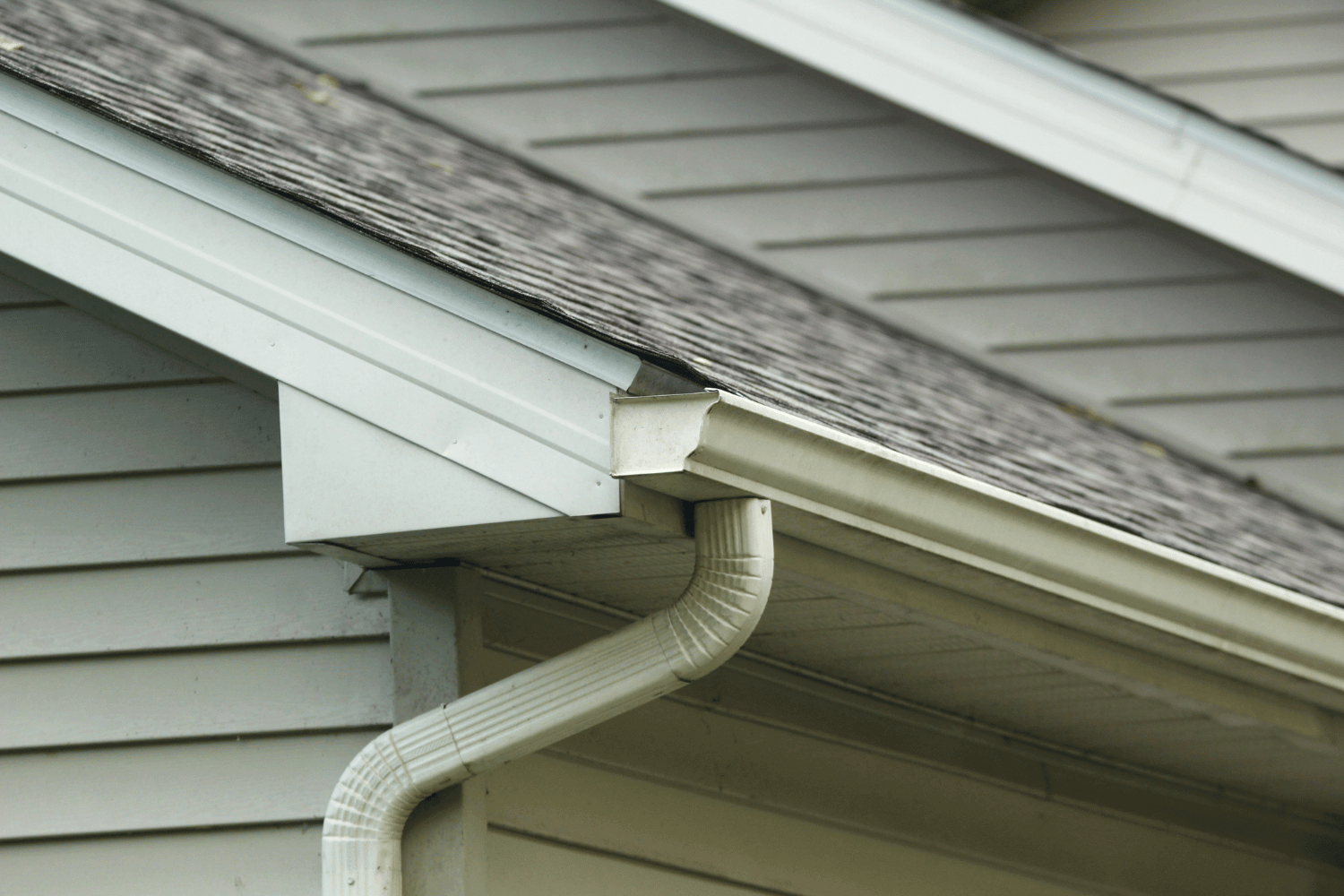
On a typical Columbia or Jefferson City home, gutters do one critical job: they collect rainwater from the roof and move it safely away from your foundation. When that system works, you barely notice it. When it fails, the damage spreads fast.
A properly functioning gutter system channels water through downspouts and deposits it at least 3–4 feet away from your foundation walls. This protects basements, crawlspaces, and concrete slabs from the constant moisture exposure that leads to cracks, settling, and water intrusion. Without this controlled drainage path, every rainstorm sends hundreds of gallons of water cascading directly next to your house.
Mid-Missouri weather puts extra stress on gutters compared to drier climates. Heavy spring storms dump inches of rain in short bursts. Late-fall leaf drop from oak and maple trees clogs troughs just before winter. And our freeze-thaw cycles—where temperatures swing above and below freezing repeatedly—can crack seams, loosen hangers, and accelerate rust in ways that homeowners in more stable climates rarely experience.
Gutters also connect directly to other exterior components we work with at CoMo Premium Exteriors: roofing shingles rely on gutters to carry water away from their edges, fascia boards support the gutter weight, soffits ventilate the eaves behind them, and siding depends on proper water flow to stay dry. When one part of this system fails, the others often follow.
Here’s what catches many homeowners off guard: when gutters fail, the damage often shows up first in the roof edges, ceilings, and foundation—not in the gutters themselves. By the time you notice brown spots on a ceiling or cracks in a basement wall, the gutter problem has been brewing for months or years.
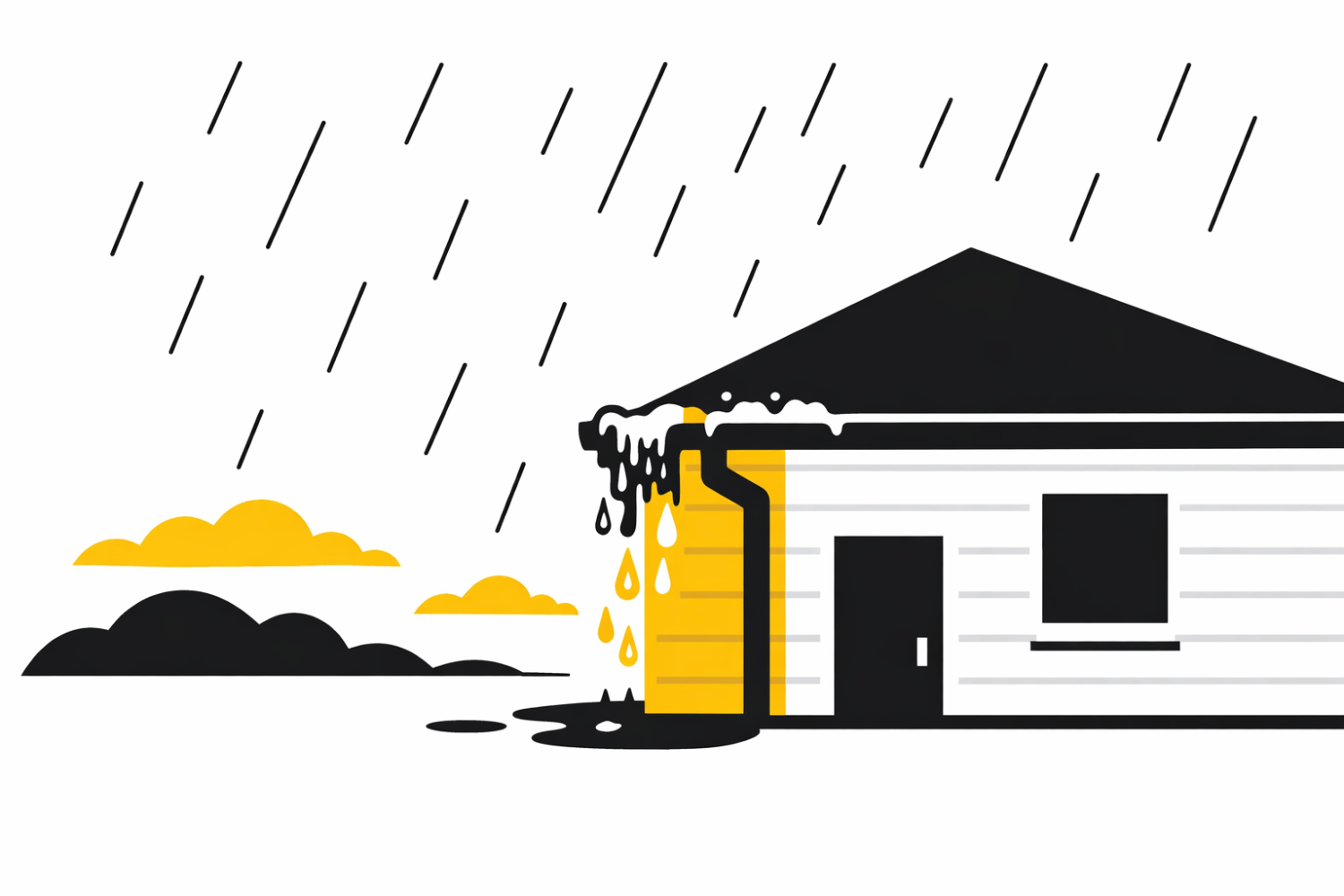
7 Common Gutter Problems We See in Mid-Missouri
These are the issues our crews most often find on inspections across Columbia, Lake of the Ozarks, Jefferson City, and surrounding towns. Some start as minor annoyances—a small seam leak, a slight dip in one section—but can quickly escalate into roof leaks, fascia rot, or foundation erosion if ignored.
The seven key problems include:
- Clogged or blocked gutters
- Sagging gutters and pulling away from fascia
- Leaking gutters and rusted seams
- Improper gutter slope (pitch) and standing water
- Damaged, dented, or missing sections
- Downspout problems and poor drainage
- Winter ice, snow, and gutter-related ice dams
As you read through this list, compare it to what you see on your own home. Do gutters overflow like waterfalls during storms? Are there stains on siding below the gutter line? Do sections appear to be pulling away from the house? Any of these signs suggests it’s time for a closer look.
Clogged or Blocked Gutters
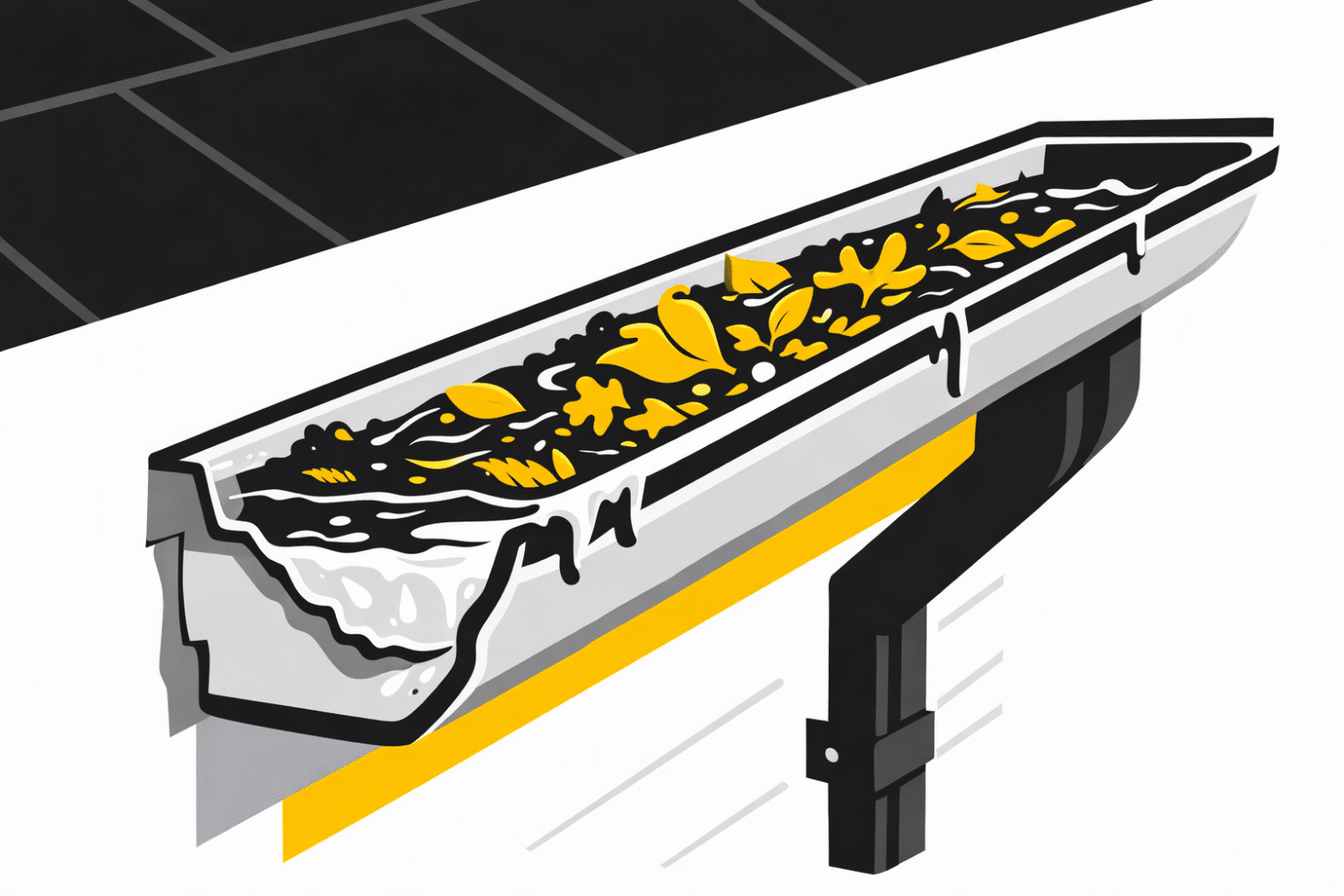
Clogged gutters are the most common gutter problem on homes, especially in older tree-lined neighborhoods throughout Columbia and Jefferson City. Leaves, shingle grit, twigs, acorns, and other debris accumulate over months, eventually blocking water flow entirely.
When debris buildup stops proper drainage, rain has nowhere to go. It spills over the front and back of the gutter, soaking fascia boards, siding, and the soil along your foundation. This overflow isn’t just an inconvenience—it’s actively damaging your home every time it rains.
Warning signs of clogged gutters:
- Water pouring over gutter edges like a waterfall during moderate storms
- Visible plant growth or “gutter gardens” sprouting from debris
- Standing water in gutters days after rain stops
- Staining or discoloration on siding directly below gutter runs
For most Mid-Missouri homes, cleaning gutters 2–4 times per year keeps clogs under control. Late October through early November catches the bulk of fall leaves, while a spring cleaning removes anything that accumulated over winter. Additional cleanings after major wind or hail events can prevent sudden blockages.
If you’re tired of climbing a ladder every few months or dealing with chronic clogs, seamless aluminum gutters with properly matched gutter guards can dramatically reduce maintenance while improving water flow during heavy rain.
Sagging Gutters and Pulling Away From Fascia
Gutters sag or bow when they stay full of water and debris for extended periods, when hangers are spaced too far apart, or when fasteners pull out of rotted fascia boards. Each gallon of trapped water adds about 8 pounds of extra weight—and a 30-foot gutter run holding several inches of water plus wet leaves can easily exceed 100 pounds.
That weight creates low spots where pooling water collects permanently, which adds even more stress and increases the risk of the entire gutter section tearing away during the next storm. Sagging gutters also misalign the gutter slope needed for proper drainage, making the problem worse over time.
Signs of sagging or separating gutters:
- Visible gaps between the back of the gutter and the fascia boards
- Gutters tipping forward or tilting away from the house
- Sections that visibly bend or bow under their own weight
- Water pooling in specific spots rather than draining toward downspouts
Basic repairs involve re-hanging gutters with stronger hangers into solid wood, adding additional brackets every 2 feet, or upgrading from old spike-and-ferrule systems to modern screws that hold twice as effectively. However, if fascia boards have rotted, they’ll need replacement before any gutter work can hold long-term.
Significant sagging should be evaluated by a professional because hidden damage to fascia, roof edges, and even rafter tails is common. What looks like a simple gutter fix often reveals rotten wood that’s been absorbing water for years.
Leaking Gutters and Rusted Seams
Leaky gutters often show up at seams, corners, end caps, and small impact points from hail or falling branches—all common after severe Mid-Missouri storms. Traditional sectional gutters have joints every 10–20 feet, and each joint represents a potential failure point where sealant can crack, rust can develop, or connections can separate.
The tricky part about gutter leaks is their stealth. Slow, steady drips behind the gutter can soak fascia and roof decking for months before homeowners notice interior ceiling stains. By the time water stains appear on an interior ceiling, significant damage may have already occurred to wood components you can’t see.
Simple homeowner checks for leaks:
- Run a garden hose in the gutter on a dry day and watch for drips
- Look for streaks, staining, or mineral deposits on siding below seams
- Check for water marks or erosion on the ground directly below joints
- Inspect for rust spots, small holes, or separated connections
For small leaks, cleaning and resealing seams with silicone-based sealant can work. Holes under 1/4 inch can often be patched. But when gutters are badly rusted, full of small holes, or leaking at multiple seams, gutter replacement with seamless aluminum is usually more cost-effective than repeated patching. Seamless systems have no mid-run joints, eliminating the most common leak points entirely.
Improper Gutter Slope (Pitch) and Standing Water
Gutters aren’t installed level—they need a subtle slope (typically about 1/4 inch per 10 feet) toward the nearest downspout to keep water moving. When slope is too flat, too steep, or reversed from poor installation or settling, water pools instead of draining.
Standing water in gutters accelerates rust and corrosion, creates a perfect breeding ground for mosquitoes in warm weather, and dramatically increases winter ice buildup along the roof edge. That pooled water also adds constant weight that stresses hangers and seams even when it’s not raining.
Signs of slope problems:
- Water that never fully drains after storms
- Mildew smell near eaves and overhangs
- Visible puddles in the trough when viewed from a ladder
- Mosquitoes concentrated near certain gutter sections
- Ice formations in specific spots during winter
Fixing slope usually requires loosening or removing hangers and carefully re-setting the entire run—a process that’s best done by an experienced crew with proper levels and measurement tools. Getting slope right matters: too shallow and water pools, too steep and water overshoots the downspouts during heavy rain.
When we replace gutters at CoMo Premium Exteriors, we check and correct slope across each run rather than just swapping material into the same position. Starting fresh with correct pitch prevents the drainage problems that plagued the old system.
Damaged, Dented, or Missing Gutter Sections
Hail, falling limbs, ladders leaned against gutters, and high winds common in Mid-Missouri can bend, crease, or rip off sections of gutter and downspout. Even moderate dents reduce a gutter’s capacity by 20–30%, and severe damage can completely block water flow or create gaps where water bypasses the system entirely.
Gaps in the gutter system expose roof edges, fascia boards, and siding directly to heavy rainfall. Instead of controlled drainage, you get concentrated streams of water hitting the same spots repeatedly—leading to localized rot, staining, and erosion that wouldn’t occur with an intact system.
Inspection checklist for physical damage:
- Crushed or flattened spots that restrict water flow
- Sharp bends or kinks in gutter runs
- Cracked or separated joints
- Missing sections, especially after storms
- Damaged shingles near gutter edges from impact or ice
Small, isolated damage may be repairable with section replacement. But older, heavily dented systems with multiple problem areas are often better candidates for full gutter replacement—especially when combined with other storm repairs to roofing, siding, or windows.
Downspout Problems and Poor Drainage Away From the House
Even if gutters are clean and properly pitched, clogged or disconnected downspouts can cause water to back up along the roof line and pour directly next to your foundation. Downspouts are the primary way water exits your gutter system—when they fail, the entire system fails.
Common downspout issues:
- Elbows packed with compressed leaves and debris
- Underground extensions filled with dirt, roots, or debris
- Missing splash blocks or extensions at ground level
- Disconnected sections that allow water to pool at the base of walls
- Undersized downspouts that can’t handle heavy rain volume
After heavy rain, check each downspout by confirming water exits strongly and flows at least 3–4 feet away from the house. Extensions, splash blocks, or underground drainage lines should direct water toward areas where it can absorb safely—not toward driveways, walkways, or neighboring properties.
Downspout upgrades can significantly reduce foundation and basement moisture problems. Options include larger-capacity downspouts, additional outlets on long gutter runs, or rerouting extensions away from problem areas. In some cases, underground drainage systems may be the best solution for chronic water pooling.
If water regularly pools near foundation walls or seeps into basements in your Columbia, Boonville, or Jefferson City home, a combined gutter and drainage evaluation is worth scheduling. The issue is rarely just one component—it’s usually the whole water path from roof to ground.
Winter Ice, Snow, and Gutter-Related Ice Dams
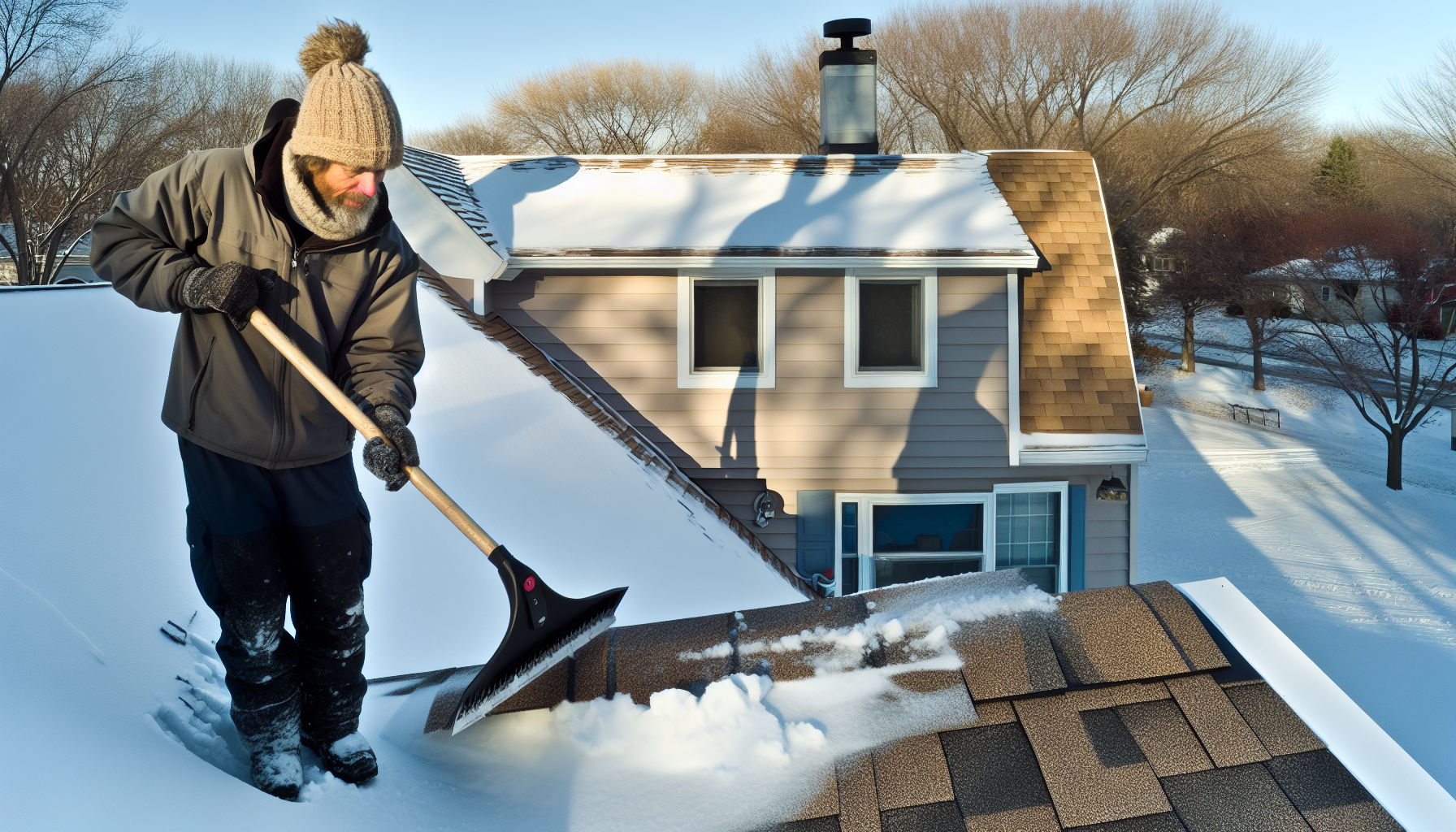
Standing water in gutters can freeze during Mid-Missouri cold snaps, adding substantial weight and helping form ice dams along the roof edge. While clogged gutters don’t directly cause ice dams (those form from attic heat loss and inadequate insulation), they often make ice dams worse by trapping meltwater at the eave where it can refreeze and creep under shingles.
In cold climates like Mid-Missouri’s winter months, this freeze-thaw pattern repeats constantly. Water melts during sunny afternoons, flows toward gutters clogged with ice and debris, then refreezes overnight. Over weeks, this builds thick ice ridges that can back water up under roofing materials and into your home’s interior.
Warning signs of ice-related gutter problems:
- Icicles hanging off gutters for days at a time
- Thick ridges of ice along the eaves
- Wintertime leaks at ceilings near exterior walls
- Gutters pulling away from the house after spring thaw
- Water stains appearing on ceilings only during cold months
Prevention starts before the first freeze. Keep gutters clean in late fall, address any sagging or low spots that hold water, and consider improving attic insulation and ventilation to reduce the heat loss that contributes to ice dam formation. For homes with persistent problems, heated cables can prevent ice buildup—though they’re most effective as part of a comprehensive approach.
We can inspect both gutters and roof ventilation to recommend balanced solutions ahead of the late-winter storms that often hit Mid-Missouri in February and March.
How Gutter Problems Damage Roofs, Ceilings, and Foundations
Gutter issues rarely stay “just” gutter issues. Left unaddressed, they spread into roofing materials, wall cavities, and structural components—often causing interior damage and expensive repairs that far exceed the cost of fixing the original gutter problem.
Understanding these connections helps explain why a $200 gutter cleaning or $500 repair can prevent $5,000 in drywall work or $20,000 in foundation repairs. We’ve seen it repeatedly: homeowners who ignored overflowing gutters for a few seasons eventually needed roof edge replacement, ceiling repairs, and fascia rebuilding as water worked its way through multiple systems.
Catching these problems early means addressing one component instead of three. Let’s walk through the specific types of damage gutter failures cause.
Roof and Ceiling Leaks From Failing Gutters
Water backing up at the roof edge can slip under shingles or metal drip edge, saturating roof decking and eventually showing up as ceiling stains inside your home. This is one of the most common ways gutter related roof damage manifests—and one of the most misunderstood.
Typical interior signs:
- Brown rings or water stains on ceilings near exterior walls
- Peeling paint where ceilings meet walls
- Musty smells after heavy rain
- Bubbling or warped drywall
- Ceiling tiles showing moisture damage or sagging
Many homeowners assume they have a leaking roof problem and call for shingle replacement, only to learn the leak started at the gutter line. When gutters overflow or back up, water doesn’t just fall to the ground—it can travel horizontally under roofing materials, behind drip edges, and into the roof deck. The actual entry point may be 10 feet from where the ceiling leak appears.
When ceiling leaks show up, especially after heavy rain events or storm seasons, have both the roof and gutter system inspected together. Our teams regularly replace both damaged shingles and problem gutters in a single project to address the full water path and prevent future repairs.
Rotting Fascia, Soffit, and Roof Edge Components
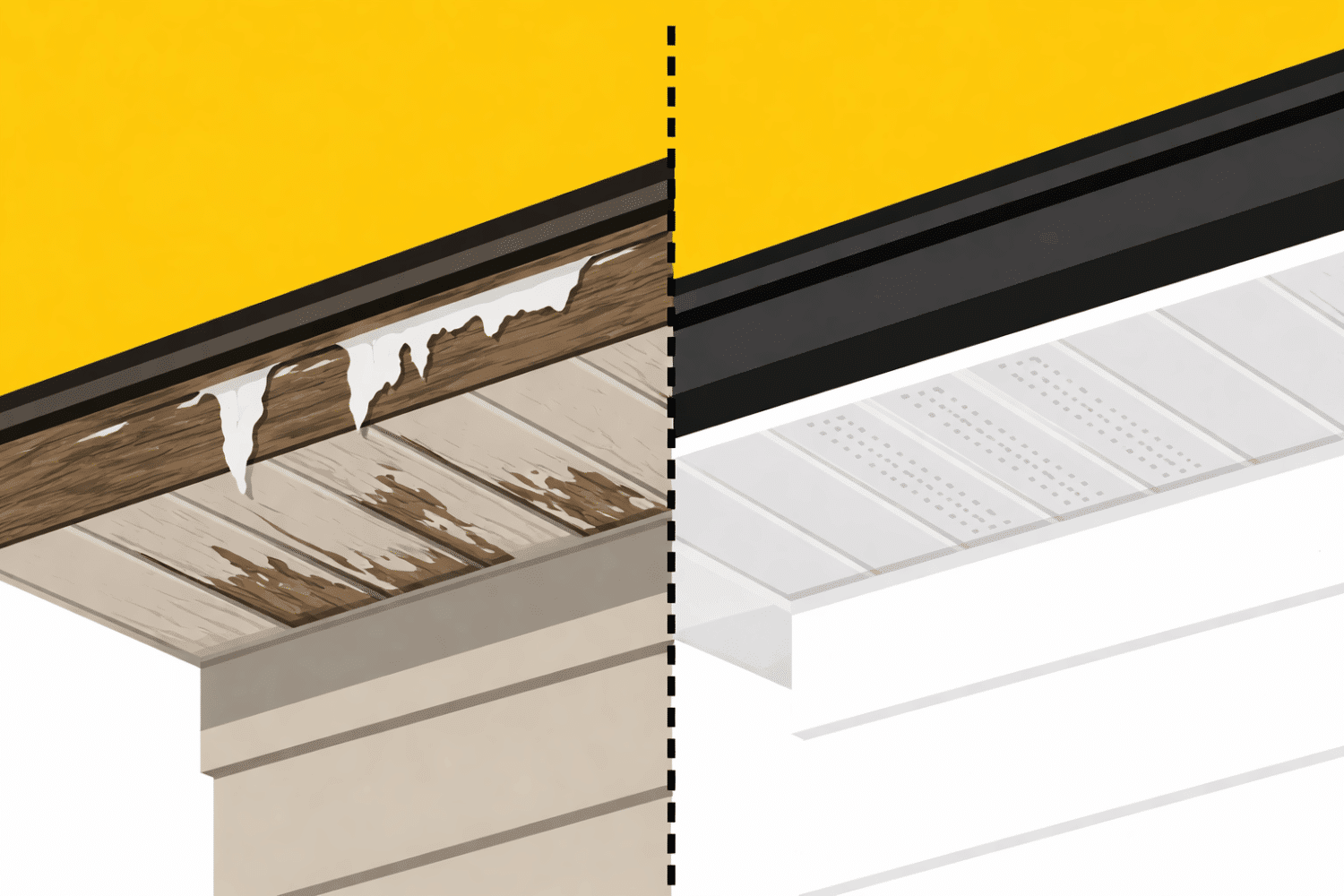
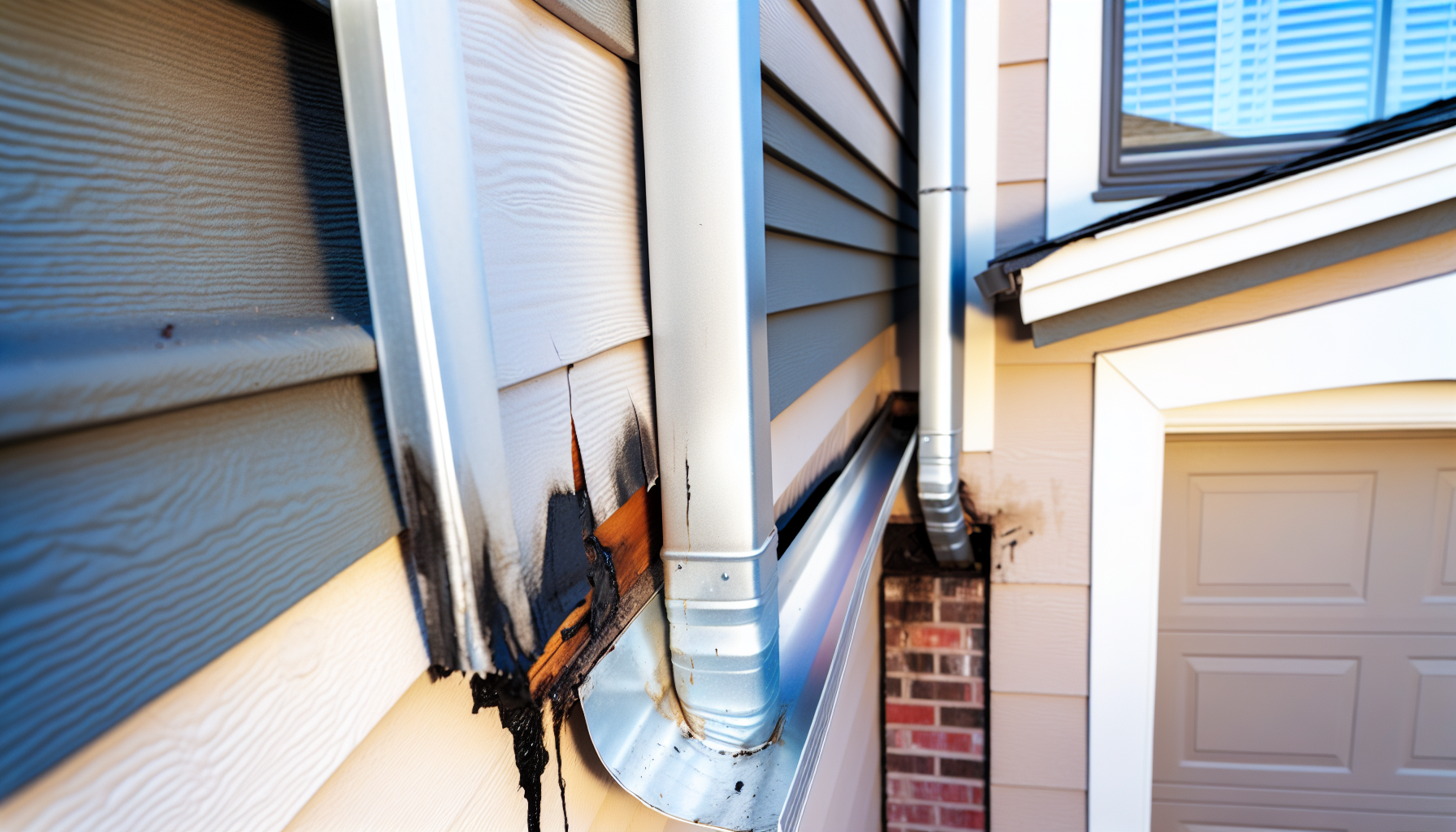
Fascia boards are the vertical boards your gutters attach to—usually wood or wood-composite on older Mid-Missouri homes. Soffits are the horizontal panels under the eaves. Both are vulnerable to rotten wood, moisture damage, and decay when gutters overflow, leak, or allow water to run behind them.
Chronic overflow or leaks keep these boards damp, leading to soft, crumbling wood that can’t support gutter weight. As fascia deteriorates, gutters pull away, creating gaps where more water enters—and where pests can access your attic.
Visual checks for fascia and soffit damage:
- Dark streaks or staining under gutters
- Soft or spongy wood when gently probed
- Peeling or bubbling paint on fascia or soffit panels
- Small holes or cracks where insects may enter
- Visible rot or sections that appear darker than surrounding areas
Fixing this damage properly means removing gutters, replacing affected fascia and soffit sections, inspecting and repairing any damaged roof decking, and then reinstalling correctly sized gutters. Partial fixes that leave rotted wood in place just delay the inevitable.
When replacing fascia and soffit, upgrading to composite or PVC materials provides better long-term performance in Mid-Missouri’s humidity and storm exposure. These materials resist moisture buildup and won’t rot like traditional wood.
Siding, Wall, and Interior Moisture Damage
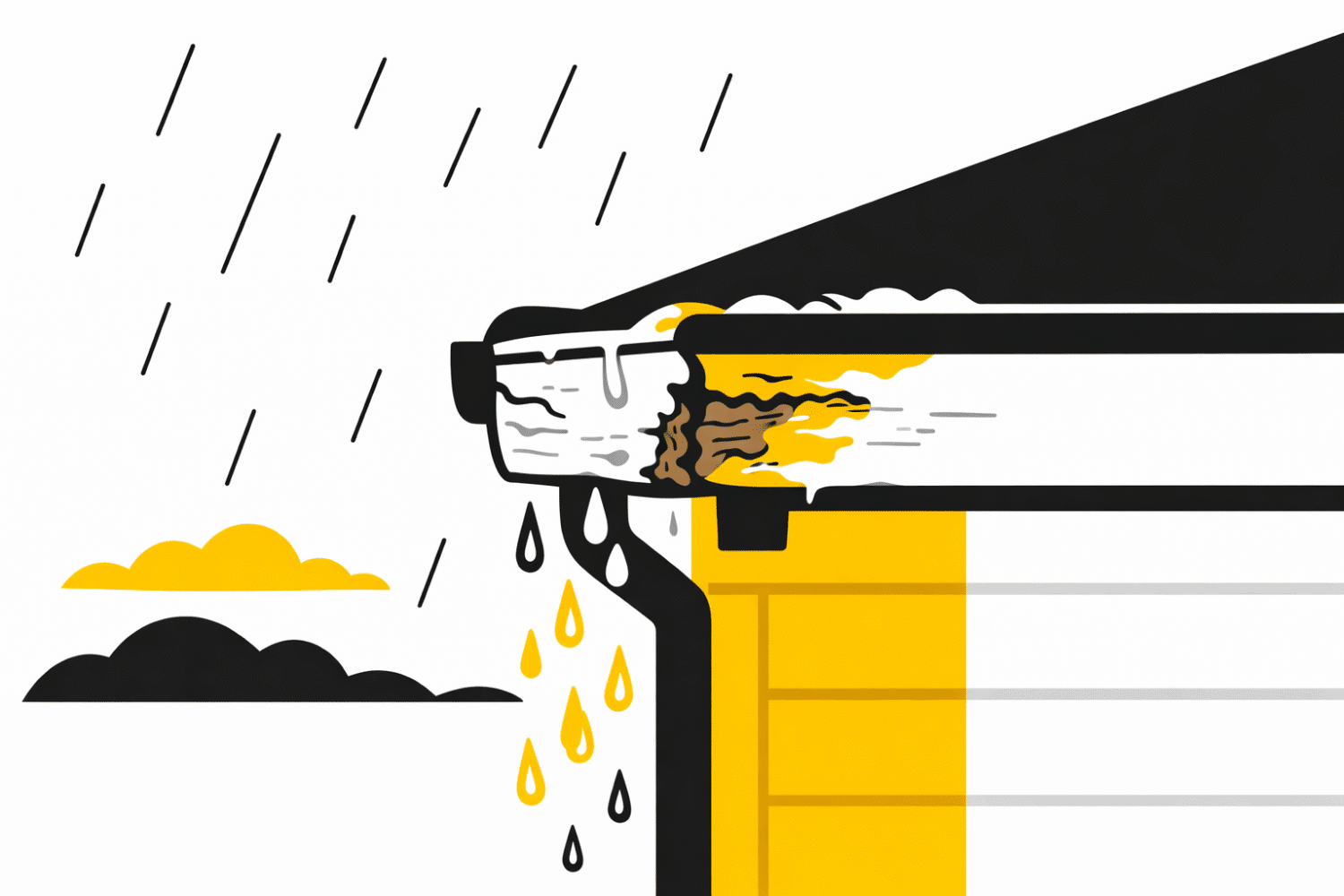
When clogged gutters overflow, water doesn’t just drop to the ground—it runs down the face of siding, behind siding panels, and into wall cavities. Once inside walls, water wets insulation, soaks framing lumber, and dampens drywall from the inside out. This improper drainage pattern causes problems that may take months or years to become visible.
Symptoms homeowners may notice:
- Warped, buckled, or stained siding panels
- Blistering or peeling exterior paint
- Damp baseboards or moldy smells inside
- Visible mold growth on interior walls
- Water leaks appearing far from windows or obvious entry points
Water inside walls often travels along framing members, so visible damage may appear several feet away from the actual gutter overflow point. A wet spot on an interior wall doesn’t necessarily mean the closest window or roof edge is leaking—tracing the path often leads back to a gutter problem on an entirely different part of the home’s exterior.
When unexplained wall moisture shows up, a full exterior review—roof, gutters, and siding together—is important rather than treating only interior drywall symptoms. Our experience across roofing, siding, windows, doors, and gutters allows us to trace moisture paths across multiple systems and find the actual source.
Foundation Problems and Wet Basements
Water pouring straight off a roof—or from overflowing gutters—lands right next to your foundation. That concentrated moisture saturates soil, erodes backfill, and increases hydrostatic pressure on basement walls. Over time, this causes foundational damage that far exceeds any gutter repair cost.
Common signs of foundation-related water problems:
- Cracks in foundation walls that widen over time
- Basement leaks after hard rains
- Standing water or saturated soil near the base of the house
- Doors and windows that begin sticking
- Uneven floors or walls that lean
Many homeowner policies do not cover foundation damage or basement moisture caused by neglected gutter maintenance or poor drainage. This is classified as maintenance-related damage rather than sudden accidental loss—meaning the repair bills fall entirely on the homeowner.
Next time heavy summer thunderstorms roll through, watch how water behaves around your home. If it cascades next to the house, pools near walls, or ponds in areas that don’t drain, your gutter and drainage system needs attention before allowing water to continue saturating your foundation.
In some Mid-Missouri cases, we recommend both gutter improvements and referral to drainage or foundation specialists for long-term stability. The gutter fix stops the water source; foundation work addresses any damage already done.
Mold Growth, Insects, and Other Hidden Side Effects
Constant dampness around roof edges, walls, or basements from bad gutters creates an inviting place for mold growth and insect infestations. These secondary problems often surprise homeowners who thought they were just dealing with water damage.
Typical pest and mold issues from gutter problems:
- Mosquitoes breeding in standing water collected in clogged gutters
- Ants and termites attracted to wet, rotting wood
- Wasps and hornets building nests in rotted eave openings
- Mold colonies on framing, insulation, and drywall behind walls
- Musty odors that persist despite cleaning
Moisture buildup inside walls or attics creates ideal mold conditions—warm, dark, and consistently damp. You might detect mold first as a musty smell or see it on a basement wall before realizing the moisture source is two stories up at a failing gutter seam.
Addressing the moisture source—often a gutter problem—is essential before mold remediation or pest control will provide lasting results. Treating mold without fixing the water source just means it grows back. Treating termites without addressing the wet wood that attracted them means they’ll return.
During exterior inspections, we frequently find mold evidence or pest entry points and can repair the structural openings where water and insects get in. Fixing these gaps as part of gutter and roof work prevents repeat infestations.
Prevention: How to Avoid Costly Gutter Problems
Simple, regular maintenance and early repairs are far cheaper than waiting until roof leaks, ceiling stains, or foundation cracks appear. A few hours of attention each year can save thousands in future repairs and help keep your insurance coverage intact.
Think of gutter maintenance as part of your existing seasonal routines: spring yard work includes a gutter inspection, and fall leaf cleanup in October or early November should include clearing gutters before winter. Tie these tasks together and they become automatic rather than forgotten.
Keeping basic records of cleanings and inspections also supports insurance claims when storm damage does occur. Adjusters can see that the system has been reasonably maintained, which helps distinguish covered storm damage from excluded neglect.
How Often to Clean and Inspect Your Gutters
Most Mid-Missouri homeowners should plan on cleaning gutters at least twice a year:
|
Season |
Timing |
Focus |
|---|---|---|
|
Late Spring |
May–June |
Clear spring debris, check for winter damage, ensure downspouts drain properly |
|
Late Fall |
Early November |
Remove fallen leaves before first freeze, prevent ice-related clogs |
Homes under large trees or in heavily wooded lake areas may need cleaning 3–4 times per year due to constant leaf and twig accumulation. If you can see debris piling up in gutters from the ground, it’s time to clean regardless of the schedule.
Pair gutter cleaning with a quick visual inspection of shingles, fascia, and downspouts for early signs of trouble. This takes only a few extra minutes but catches problems before they spread.
For homeowners uncomfortable with ladders or living in two-story homes, professional cleaning and inspection is worth the investment for safety alone. Falls from ladders cause over 12,000 injuries annually, and the roof edge is an especially hazardous work area. We can provide routine inspections as part of broader exterior checkups, especially after major storms.
DIY Checks Homeowners Can Safely Do
You don’t need to climb onto the roof to spot most gutter problems. Ground-level observations during and after rain reveal a surprising amount:
During rainstorms, watch for:
- Water overflowing gutter edges
- Gutters not draining properly to downspouts
- Water cascading in specific spots
- Splashing or pooling near foundation walls
After rain clears, look for:
- Standing water near foundations
- Sagging gutter lines visible from the yard
- Stains or streaking on siding below gutter runs
- Erosion patterns in landscaping near downspouts
Binoculars or zoom photos from the ground can help you spot debris piles, loose sections, and visible gaps without climbing. On a dry day, run a garden hose into gutters to see if water flows smoothly to downspouts and exits strongly at the bottom.
If you do choose to use a ladder, follow basic safety: work on stable ground, have someone else home, don’t overreach to the side, and never stand on the top two rungs. Even then, leave structural issues like major sagging, rot, or complex leaks to experienced crews with proper safety equipment.
When to Consider Gutter Guards or Upgraded Systems
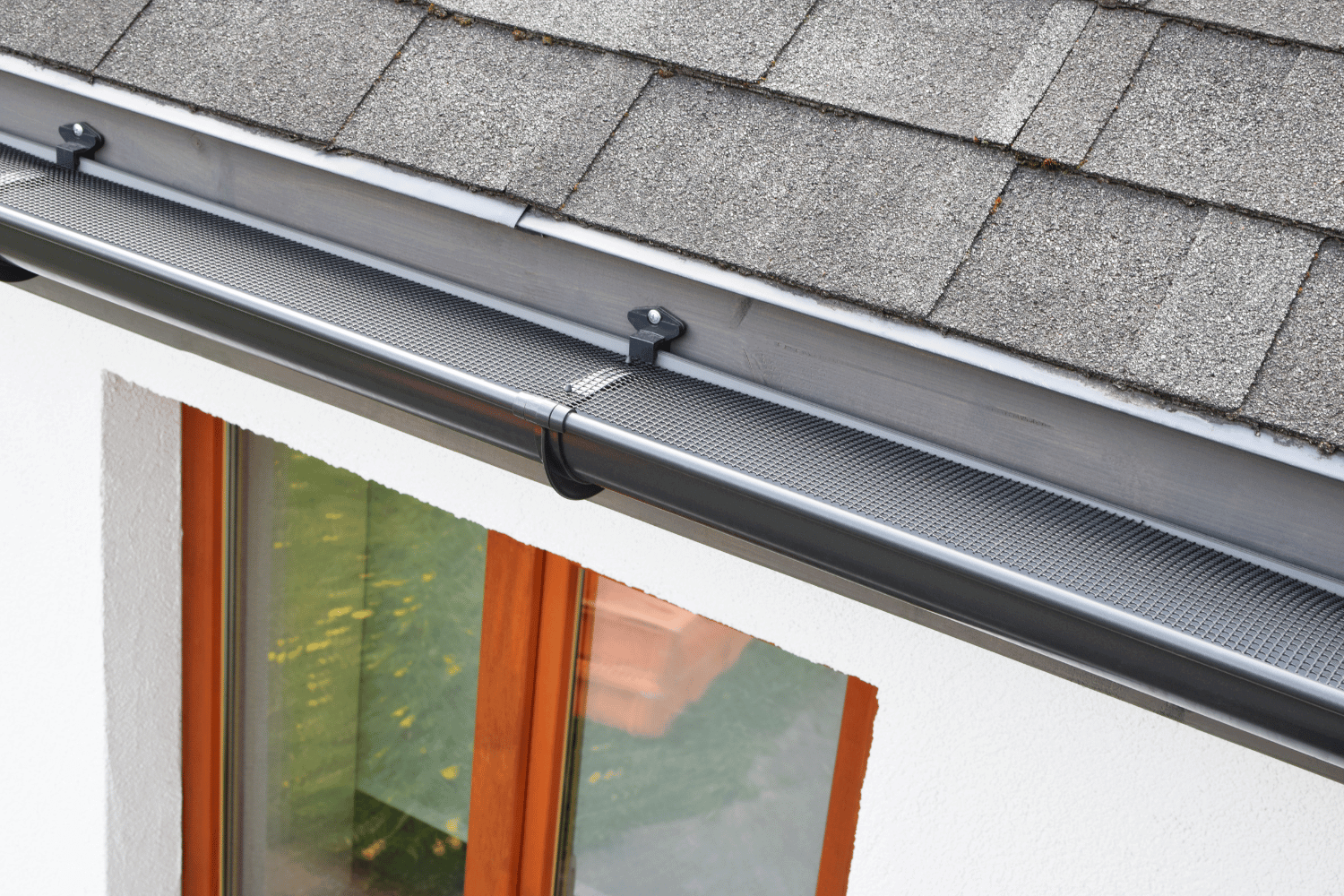
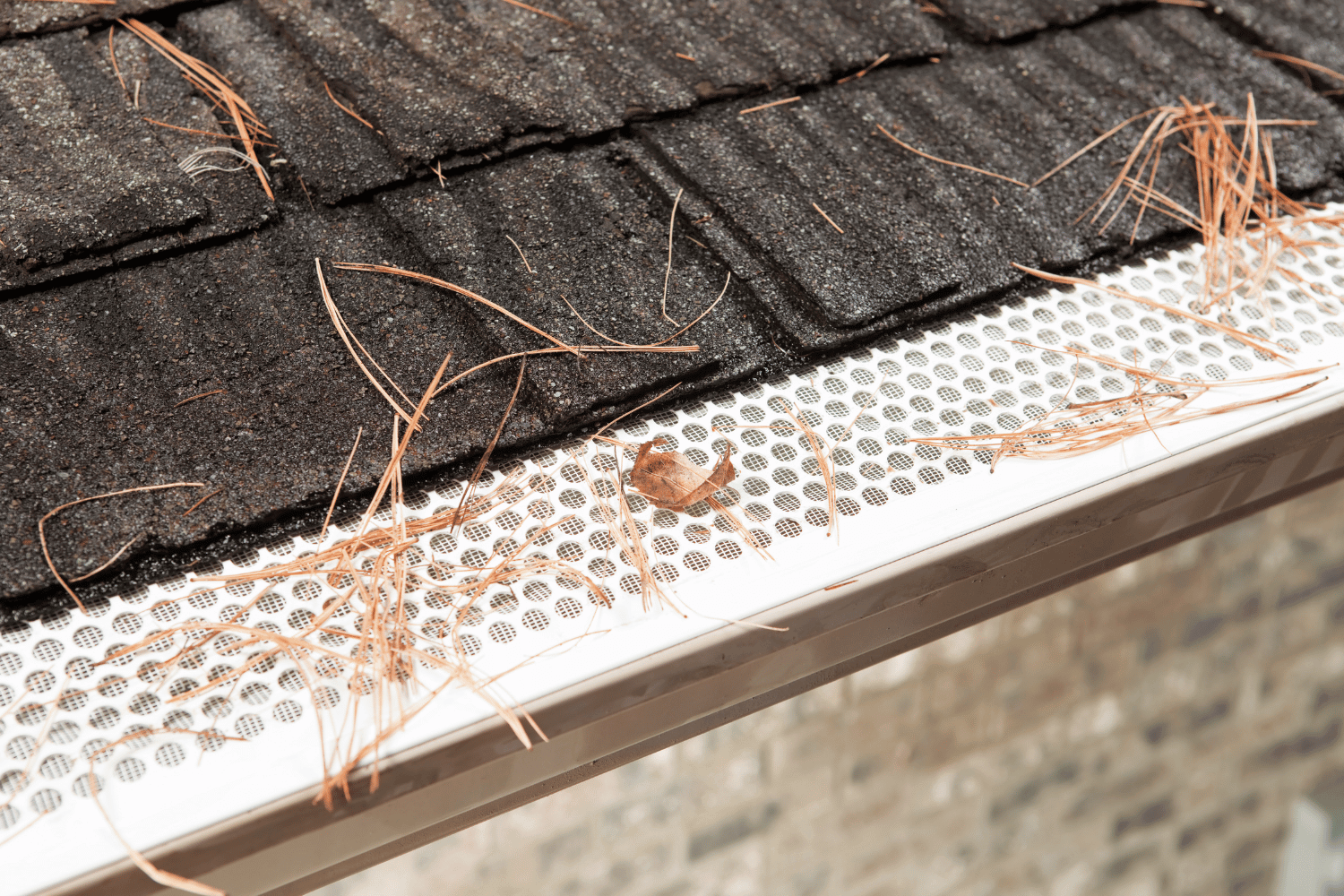
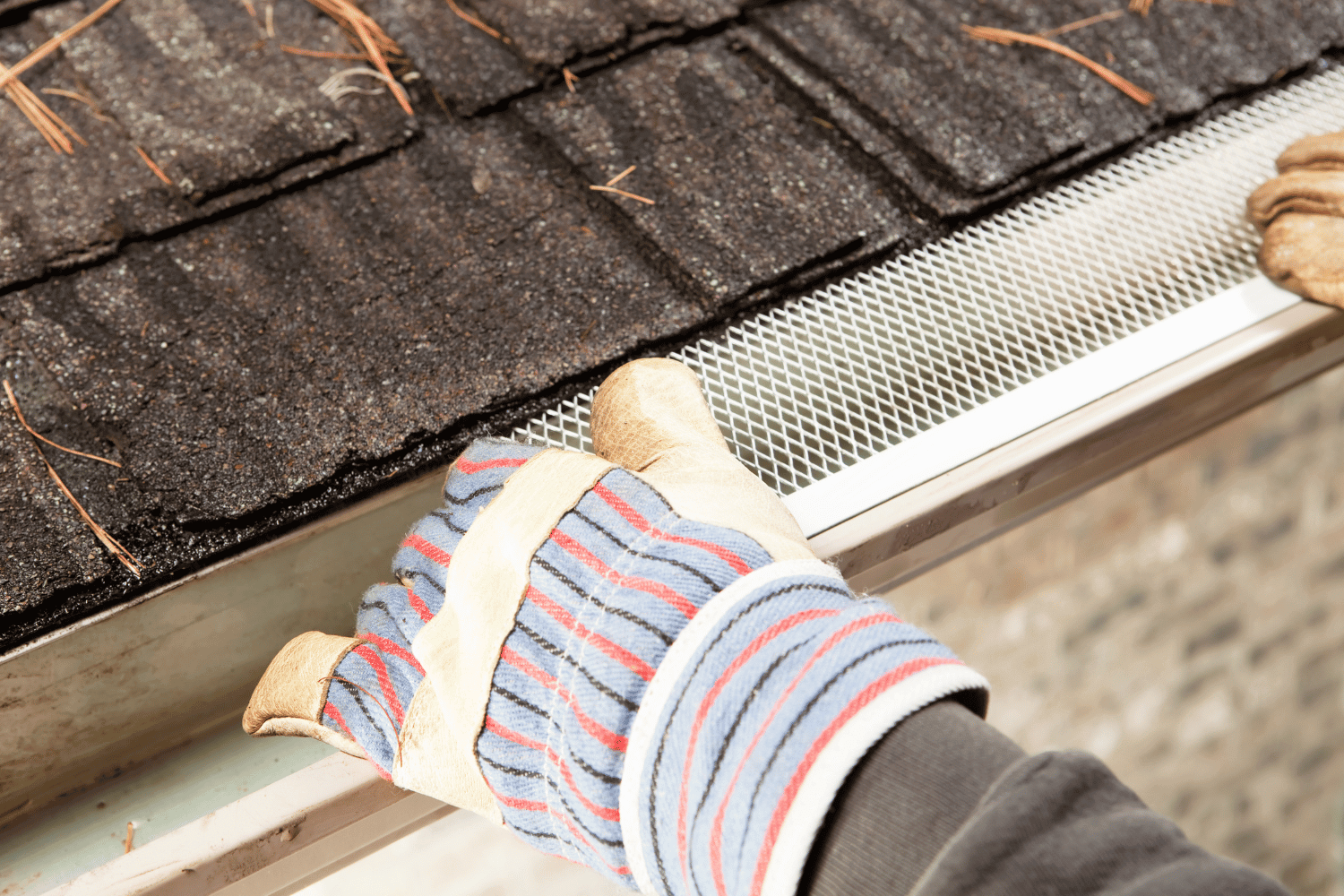
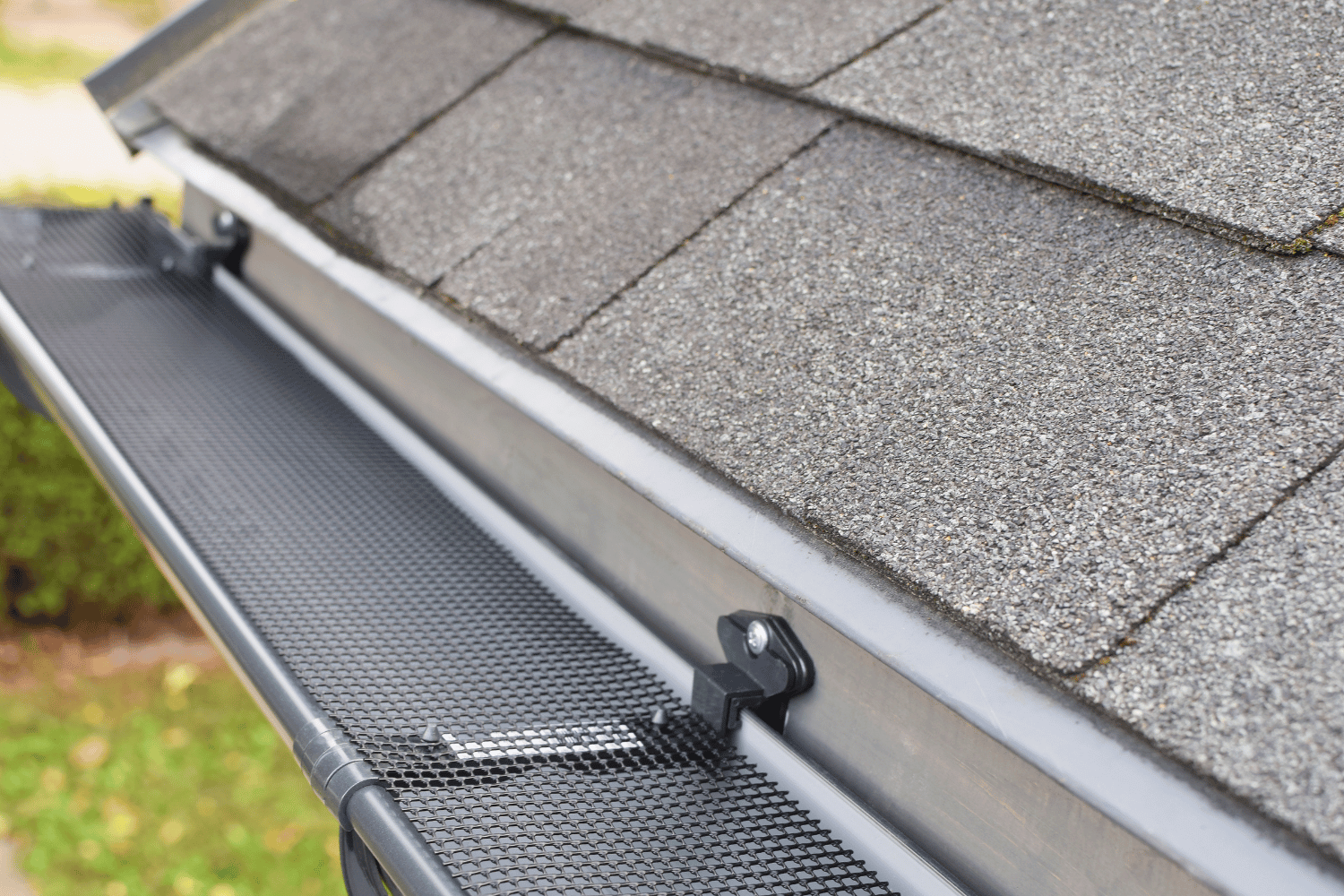
Gutter guards, screens, and covers can reduce—but not entirely eliminate—the need for cleaning. For homeowners in mature tree areas like parts of Columbia and Lake of the Ozarks, guards make a meaningful difference in maintenance time.
Potential benefits:
- Fewer major clogs requiring ladder work
- Better performance during heavy fall leaf seasons
- Reduced debris entering downspouts
- Less standing water between cleanings
Limitations to understand:
- Guards still require occasional inspection and rinsing
- Top surfaces can clog with fine debris and shingle granules
- Low-quality products may cause water to overshoot during heavy rain
- Some designs trap debris on top rather than letting it wash away
If you install gutter guards, plan on periodic checks, especially after heavy wind or hail storms that drop small debris. Guards don’t make gutters maintenance-free—they make maintenance less frequent and less time consuming.
For homeowners with older, undersized gutters or frequent clogs, consider upgrading to 5” or 6” seamless aluminum gutters with properly sized downspouts and well-matched guards. We can recommend guard options that fit your home’s roof pitch, local tree types, and typical Mid-Missouri rainfall patterns.

Insurance, Storm Damage, and When to Call a Professional
Storm damage, hail, and wind are common drivers of gutter problems across Mid-Missouri—and insurance may help cover repairs in many situations. Understanding what’s typically covered versus what falls under maintenance responsibility helps you make better decisions about when and how to file claims.
At CoMo Premium Exteriors, we provide both storm-restoration work and homeowner education on navigating the claim process. We’ve seen how adjusters evaluate gutter and roof damage, what documentation helps, and where homeowners often miss covered damage because they didn’t know to look.
Don’t wait until obvious leaks show before reaching out, especially after large hailstorms or wind events that impact entire neighborhoods. Early inspection often reveals damage that’s covered before it leads to secondary problems that aren’t.
What Damage Is (and Isn’t) Typically Covered
Insurance policies distinguish between sudden storm events and gradual damage from neglect. Understanding this distinction prevents surprises when you file a claim.
Generally covered (when caused by sudden events):
- Hail-dented gutters and downspouts
- Wind-torn or detached gutter sections
- Storm-damaged roof edges and drip edge
- Tree limb impact damage
- Ice storm damage to gutters and fascia
Often excluded as maintenance-related:
- Damage from long-term clogged gutters
- Water stains and rot from years of neglect
- Foundation problems from improper drainage
- Leaks that developed gradually over multiple seasons
- Rust and deterioration from normal aging
Homeowners in Mid-Missouri should review their policy’s language on water damage and maintenance exclusions. Keeping basic records of gutter cleanings and inspections—even just photos and dates—can help establish that the system was reasonably maintained when serious problems arise.
When storms hit, document the date, take photos of any visible damage, and call for a professional inspection soon after the event. This creates a timeline that supports legitimate claims and distinguishes storm impacts from pre-existing issues.
How CoMo Premium Exteriors Helps With Gutter and Roof Problems
As a local, triple-certified exterior contractor—the only one in Mid-Missouri holding GAF Master Elite, OC Platinum Preferred, and James Hardie Elite Preferred certifications—we serve Columbia, Jefferson City, Boonville, Moberly, and Lake of the Ozarks with comprehensive exterior services.
When you call for a gutter inspection, our teams can evaluate gutters, roof edges, siding, and related components together. This gives you a complete picture instead of piecemeal opinions from multiple contractors. If roof damage contributed to gutter problems, or if gutter overflow damaged siding, we can address the full scope in one project.
What to expect when you contact us:
- Free estimates with no pressure
- Clear explanations of what we find and what it means
- Long-term-focused recommendations, not quick temporary patches
- Honest assessment of what’s worth repairing versus replacing
- Insurance claim support when storm damage is involved
When storm damage affects your gutters and roof, we can help communicate with insurance adjusters and ensure repairs are properly documented. Adjusters sometimes miss secondary damage in valleys and flashing—we know what to look for and how to present findings clearly.
If you’ve noticed overflow during recent storms, staining below gutters, or any of the serious problems described in this article, we’re happy to take a look. A quick inspection now can prevent structural damage and expensive repairs later. Give us a call at (573) 424-9008 or request a free estimate to get started.
FAQs
How can I tell if my ceiling leak is from the roof or the gutters?
Many ceiling leaks near exterior walls start at the roof edge where overflowing gutters back water up under shingles. Water can travel horizontally under roofing materials before dropping through to ceilings, making the source hard to pinpoint. We recommend having a professional inspect both the roof system and gutters together to trace the exact water path before starting repairs. Fixing only one component often leaves the actual entry point untreated.
Are seamless gutters really worth the upgrade?
Seamless gutters reduce the number of joints where leaks typically begin—every seam in a sectional gutter is a potential failure point. For long runs and heavy Mid-Missouri rains, seamless systems with proper slope and correctly sized downspouts significantly reduce leak risks. They also tend to look cleaner on the home since there are no visible joints every 10–20 feet. The upfront cost is higher, but reduced maintenance and longer lifespan often make them more cost-effective over time.
Do gutter guards mean I’ll never have to clean my gutters again?
Guards dramatically reduce large debris like leaves and twigs, but they still require occasional inspection and rinsing. Fine materials—shingle granules, pollen, small seeds—can accumulate on or beneath guards over time. After heavy wind or hail storms that drop small debris, a quick check ensures water can still flow. Plan on annual inspections even with guards installed, and more frequent checks in heavily wooded areas.
How long should a quality gutter system last in Mid-Missouri?
Well-installed aluminum gutters typically last 20–30 years with proper maintenance. Copper can last 50+ years. However, lifespan depends heavily on maintenance frequency, tree coverage, storm exposure, and installation quality—especially correct slope and fastening. Homes under heavy tree cover or in areas with frequent hail may see shorter lifespans. Neglected gutters can fail in under 10 years regardless of material quality.
Can I replace my gutters without replacing my roof?
In many cases, yes—gutters can be replaced independently without touching the roof. However, if the roof is near the end of its useful life or if fascia and drip edge are damaged, coordinating gutter replacement with roofing work is often more cost-effective. You avoid paying for labor twice and ensure all components are properly integrated. We can evaluate both systems and help you time projects efficiently, whether that means immediate replacement or planning for coordinated work in a future season.